Lessons in Motherhood and Gift-Giving

Lessons in Motherhood and Gift-Giving

A few days ago, my oldest, Evangeline, turned 4-years-old. I had been planning to start a new tradition of making a photo book of the year for each of my kids birthdays – but after going through all my photos and photo books and scrapbooks, I’ve realized I need to choose a more “green” option that jives with my new minimalist lifestyle. So, I put together a quick video of highlights from her first year using the Google Photos app.

Voila! Memories stored for a lifetime! [Assuming there is no apocalyptic event that destroys all power on the planet – and in that case, I probably won’t be strolling down memory lane very often anyway.]

You can watch the video at this link:

Today was the party – a unicorn party.

Even though it was a small “family only” gathering and the majority of our local family couldn’t come, it was still a lot of fun – maybe even more fun because the absence of kids forced the adults to participate in the “Pin the Horn on the Unicorn” game. [Yes, there is video evidence below.]

Because of the changes we’ve been making to our perspective on waste and excess and consumerism and …life in general, we made two changes to how we celebrate birthdays in our family.

First, we emphasize experiences over gifts. On her actual birthday, Brett took the day off so we could all enjoy a day at the community pool [which is more like a water park]. We gave her a gift, but rather than making that a focal point of the day, we set it out in the living room the night before so she could discover it in the morning and then we didn’t talk about gifts again. We focused the day around the activities we were doing together.

To be honest, I’m having a hard time figuring out where I stand on the gift-giving thing. On the one hand, I love to give gifts. Brett and I enjoy giving gifts to our family members on holidays and birthdays and we make it a priority to give a gift to all the nieces and nephews each year. But on the other hand, I don’t want my kids thinking that birthdays and holidays are all about getting stuff, so I prefer that people not give gifts to my kids on these occasions. But I realize that is hypocritical of me, so I am trying to find a solution. I think we are going to try to find a way to give more experience gifts and fewer objects – and whenever possible, give the gift of quality time, which is the best gift we can give to our loved ones.

Second, we gave Evangeline a used gift. It was something she really, really wanted – a baby stroller – and of course, she has no idea that it wasn’t new nor does she care in the least. The motive here is not at all financial. It is sustainability. I don’t care what an item costs. I’m more concerned about the environmental impact of constantly making new things while sending old things to a landfill. I’m committed to buying used toys [just like my commitment to buying used or sustainably sourced clothing] because this just makes sense.

I realize that this won’t always work because my kids will undoubtedly grow up some day [😭] and start caring about price tags and all that [though not if I can help it] and they will want the latest and greatest stuff. But at 4-years-old, my daughter just wanted something with wheels to push her stuffed animals around in. If only life would stay this simple forever.

Happy Birthday, my sweet Evangeline. 💕

Karis
Why I decided not to DIY laundry detergent

Why I decided not to DIY laundry detergent

Since we began reducing our waste, I’ve been changing the products that we purchase, but I’ve also been changing the way that we make purchases and even the reasons that we make purchases. So, when our laundry detergent ran out, I didn’t just head to Walmart to replace the bottle as I may have done in the past. I also didn’t scour the couponing world to see if I could find some for super cheap.

Instead, I thought about how to find [or make] an effective and no waste alternative. I read recipes. I read reviews. I read tips and tricks. I read pros and cons. [Geez, trying to be a responsible consumer is time-consuming!] But, in the end, I realized there is no purely waste-free option available to me [outside of growing and harvesting my own soap nuts]. Even if I make my own detergent, I will have to buy washing soda and borax and citric acid or whatever else – and it will all come in packaging. So, I would be making my own detergent [yay, me! I’m so crunchy and thrifty] but still creating waste from the packaging of several different ingredients that I need to make the detergent in the first place.

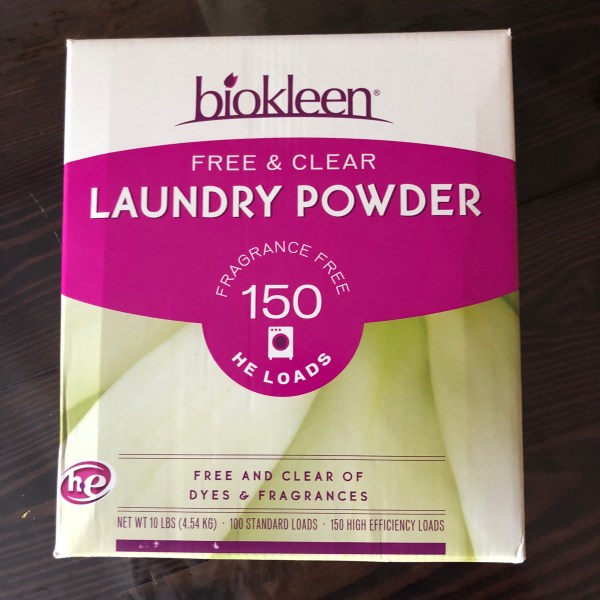
So instead of making my own, I decided to purchase my detergent from an eco-friendly, responsible company who cares about our planet and also about getting my clothes clean.

Turns out, this brought to light an even greater need than just my own waste reduction: the need to support businesses that are reducing waste.

Environmentally-friendly, ethical companies NEED our consumer dollars. We need to support businesses that protect and preserve natural resources, that value quality and sustainability, and that treat their employees right. And we should EXPECT to pay more for these products because it costs more money to produce a product ethically and responsibly. If we do not support these businesses then they will not be able to stay in business. And I won’t be able to buy ethically sourced, environmentally-friendly laundry detergent.

So then the choice becomes what organization do I want to support with my business?

I decided to go with the company that I am already using for my cloth diaper laundering. I’m not sure why I had a separate detergent for diapers, as if the “natural” detergent was not good enough for my regular clothes. But, regardless, I’m consolidating down to one brand, one detergent, purchased in as big a box as I can find and paying whatever they want me to pay, because my priority is the earth, not money. Which feels great, by the way. It is an honor to support companies that share my values – even if they cost more.

I love that Biokleen is family owned and operated, that their products are made in the USA [guaranteeing a fair wage for their employees and supporting the American economy], and that they are producing “natural and effective cleaners…with a passion for innovation, dedication to performance and a guiding commitment to our planet.”

These folks are right up my alley.

I also chose them because I have already been using their products and think they are great.

[No, I’m not making money off this advertising – you’re welcome, Biokleen!]

In fact, the only thing that would make them better would be if they were local to me [rather than in Vancouver, WA] because I really like supporting local businesses.

Of course, there are plenty of other eco-friendly companies out there to support. I also really like Charlie’s Soap and will probably purchase their detergent in the future too.

I’m not ONLY trying to reduce my personal waste. I want to reduce ALL waste. So by supporting the businesses that are being responsible with our natural resources, I am doing a much greater thing than just buying a product without packaging. While I think both are important, the former will change the way products are made and the latter is only going to change how the product is packaged.

Anyway, time to do some laundry!

Karis

Recycling Pens & Markers

Recycling Pens & Markers

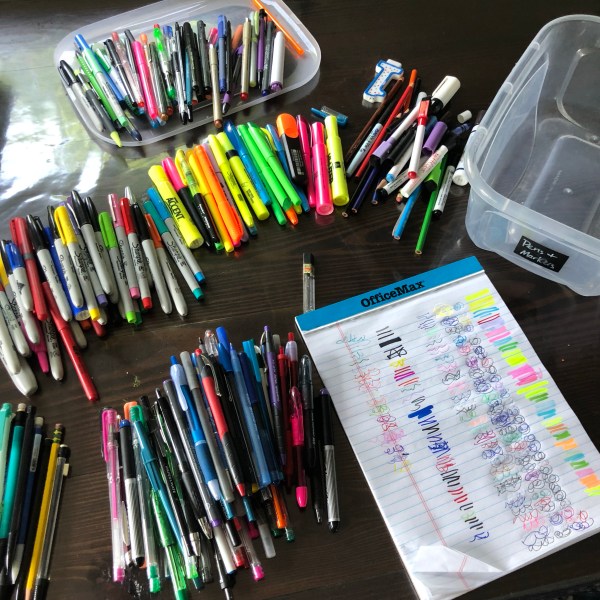
When we moved into this house [18 months ago], I brought with me every writing utensil that was in our last home and I was super proud of myself for gathering them all into this one organized [and even labeled] plastic container.

My goodness, how things have changed.

Anyway, today was the day to go through this EXCESSIVE amount of pens, pencils, markers and highlighters and PURGE!

First, I needed to determine how many of them actually still work.

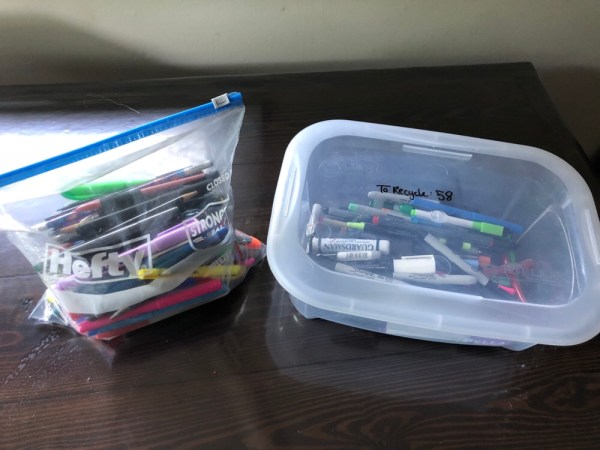
The vast majority still have plenty of life in them. The ones on the lid [a grand total of 58] are empty and headed for recycling.

Of the ones that work, I have chosen to keep these:

The sharpies and colorful pens are for craft and art projects – which have been the only reasons I have reached for this container in the past year.

Everything else is getting donated.

The grand total came to 109 utensils to donate and 58 to recycle.

Sad thing about recycling, though, is that I need five pounds [or roughly 350 pieces] in order to mail them in to TerraCycle…so, anyone got some empty pens they are looking get rid of? Realistically, I will probably have to find a place that collects them because it will probably take me the rest of my life to use 300 more pens.

[As a side note, if you work for a big company that is not currently recycling their pens – you should encourage them to start. More info in recycling pens RecycleNation.com.]

As for the ones that are still good, I’m going to donate to the gym I work at which is run by the park district [they seem to ALWAYS be short on pens], or to a school maybe, or to PenGuyArt.com, or …well, I’m open to suggestions.

Anyone need some pens?

Karis

30 Day Minimalism Game: Days 17 – 23

30 Day Minimalism Game: Days 17 – 23

Well, this is definitely getting harder.

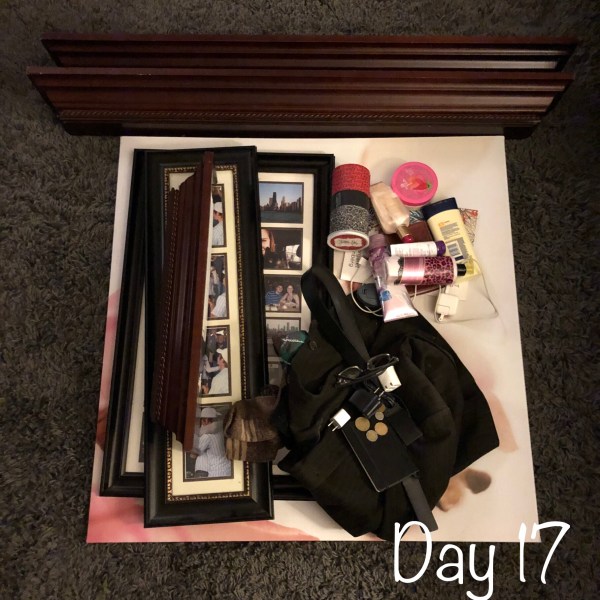
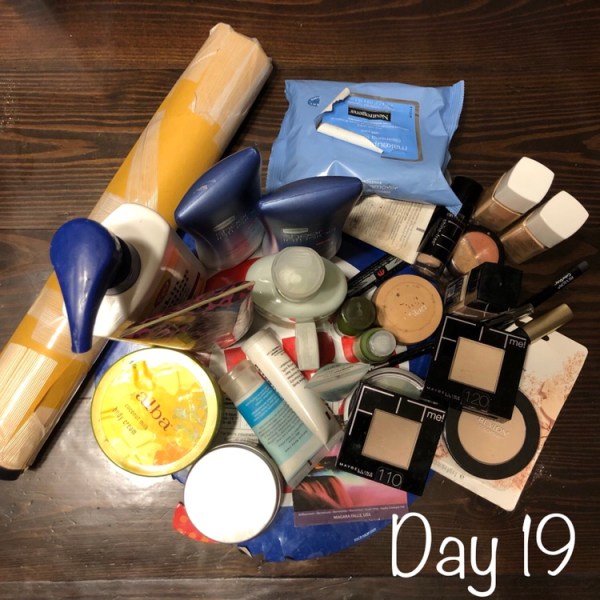
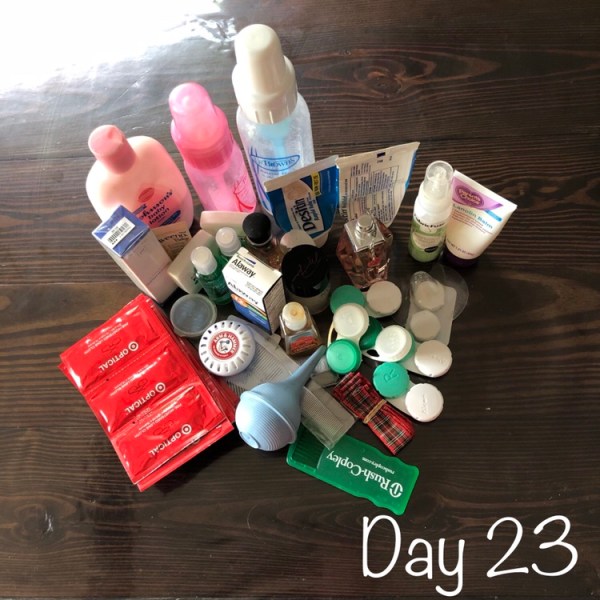
We fell behind for a day or two [so I guess we technically “lost”] but we just kept right on going, sometimes reaching into the organizers in our closet and just grabbing handfuls of hotel shampoo bottles we’ve apparently been hoarding for years in order to reach our quota [which at one point was a total of 66 items] for the day.

Tip for you aspiring gamers – DON’T FALL BEHIND! The numbers get overwhelming really quickly.

Also, the game has basically turned into a joint effort to reach our collective goal each day since Brett doesn’t have the time to find all these items. That means that today I am finding 40 things to accompany the 8 that Brett picked out before leaving for work this morning.

I’ve learned more interesting things about donating foreign coins and recycling half used bottles of lotion. We also are up to six different organizations who are [hopefully] benefiting from our purge.

I did throw away a small bag of little things that can’t be recycled and couldn’t be sold in a thrift shop or even reused. Sad, but it had to be done.

And the greatest challenge is yet to come because not only do we have a whopping 378 items left to go before we reach the end of this madness…but we are leaving town on Wednesday so we have to get rid of them all in the next THREE DAYS.

Heaven help us.

Karis

Recycling Wine Corks

Recycling Wine Corks

Since beginning the 30-Day Minimalism Game, I have been continually confronted with things that I don’t know how to recycle. Of course, first I ask myself if I can reuse the item or give it away to a person or charity, and if the answer to both of those questions is “no,” then I ask myself, “can this be recycled?” Then follows an oftentimes lengthy research project via google to find the best, most appropriate [and, honestly, most convenient] way to recycle the object.

Or in this case – the entire coffee tin full of objects.

These wine corks are just another reminder to me of how little I paid attention to the waste I have been creating. Besides the ones I’ve been hoarding in this tin [for some crafty DIY project, no doubt], I have thrown many corks in the trash without even thinking about them.

Turns out that real corks can be recycled by taking them to a collection site [visit RECORK for the location nearest you] where they are gathered and made into items like cork bobbers and cork boards and cork blocks for yoga and cork shoe soles, etc. All fabulous.

Synthetic corks are apparently made out of #7 plastic [which is the “catchall” category of plastics] and can go to whatever recycling facilities take these types of plastic; BUT, #7 plastics should really be avoided anyway.

[CorkClub will apparently send you a free shipping label to send all of your corks – real and synthetic – to them and they will reuse the cork and recycle the plastic. AND they donate $.02 per cork received to organizations that support ocean and forest conservation. Sounds great, but I haven’t done this myself.]

So, I’ll be buying my wine with the real deal corks from now on and recycling them. Unfortunately, corks can’t be reused for wine because of contamination or something like that. So, this is the best I can do – besides not buy wine at all. But that definitely isn’t going to happen any time soon.

For realz…this mama needs her wine.

PLUS, fun little fact about cork:

Not a single tree, each of which can live up to 300 years, is cut down during cork extraction. Instead, bark is harvested by hand every nine to 12 years. (Read more at Earth911.com)

Cork seems like a great sustainable source for a lot of products – and recycling the stuff makes it even better!

Happy sipping! 🍷

Karis

Our New Trash Problem

Our New Trash Problem

Today was trash day once again and I am very happy to report that our trash for one week fit easily into our new tiny trash can – even with the 75 photos [and other miscellaneous things] that I threw away for the Minimalism challenge! We had so little trash that we could go for months without needing a trash pickup. BUT we definitely need a weekly recycling pickup because our recycling can is filled to overflowing.

Here is our tiny trash can – next to two boxes of products that we need to phase out [proof that we are not perfect and that this is a process].
So now we have a new problem. We are recycling too much. It may be better than sending waste to a landfill, but it is still unnecessary waste. The key is still to REDUCE, then REUSE, and then recycle. The best way to reduce my waste is to not create it in the first place.

I have been purposefully choosing recycle-able containers over things that are not when I can’t find [or am not committed enough to buy] a waste free option. But I just need to get myself more strongly committed to the cause. Although, I will have to start with a recycling inventory because I don’t even know what fills that can each week. It doesn’t seem like much when I’m throwing it in the recycling basket – but then, come Wednesday, the can is entirely full.

This is the box we throw recycling into throughout the day. We empty it into the can outside once or twice a day.

For the next week, I’m going to pay closer attention to what we are recycling and see where I can make changes to reduce that too.

I guess I might as well start now…

Recycling basket currently contains packaging from some photos we ordered and – wait, where did that bottle come from?!? BRETT!!!

[Side note: It would be SO NICE to not need a trash pickup at all because Brett and I are SO BAD at remembering to put the cans out! Embarrassing, but true!]

Oh I’m so excited to start analyzing our garbage…kidding.

Wish me luck!

Karis

One Month of [Nearly] Zero Processed Foods

One Month of [Nearly] Zero Processed Foods

Besides reducing waste and clutter, I have also been slowly eliminating processed foods from our home and replacing them with homemade alternatives – in an attempt to simplify our eating habits. But I wanted to stop buying pre-made foods altogether – immediately. It took some time, but Brett [miraculously] agreed to give the idea a trial run during the month of June.

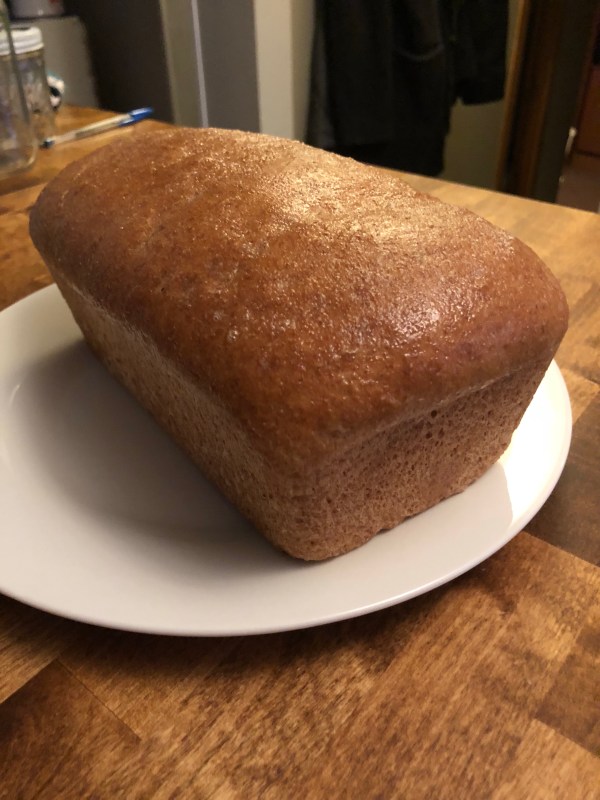
100% whole wheat bread that I make every ten days or so. Takes me 2 hours, including rise and bake time – and I knead by hand so a stand mixer would make it even faster!

So, Rather than buying pre-made, packaged, and convenience foods, I am only buying the foods that I cannot make myself. Everything else, I am making from scratch – or doing without. I am still buying milk, cheese, meat, seafood, seasonings, and the basic baking necessities [i.e. flour, sugar, yeast, baking powder, olive oil, etc.] – which are all “processed” to a degree, but that I can’t process myself. Unprocessed foods that we buy are fresh fruits and vegetables, raw nuts, legumes, grains, and seeds, pure honey and maple syrup.

This change will [hopefully] allow us to improve our health, reduce our waste, and save some money in the grocery department.

Homemade rosemary and sea salt crackers. Took me 20 minutes to make one batch which was the perfect number of crackers for my kids’ afternoon snack.

This means more work for me in the kitchen, but it’s not really as bad as it might sound. I started very small about a year ago, with just making my own peanut butter every two weeks. Over time, I’ve added things that I can easily fit into my schedule. And now I am making jam, bread, yogurt, cottage cheese, applesauce, vegetable stock, pasta sauce, salsa, hummus, crackers, tortillas, potato chips [baked, of course], donuts [also baked and on rare occasions], granola bars, muffins, biscuits, pesto, nut milks and even vegan cheese. Some things I make regularly to keep stocked, and other things I make as needed. Pretty much anything we could need, I can make with just the basic ingredients I keep in my home. It may sound time consuming, but most of the things I make don’t require very much hands on involvement from me.

[I know that a lot of people work full-time and aren’t able to dedicate much time to making food from scratch, but you may be surprised at how many things are quick and easy to make – like peanut butter, which only takes three minutes to make in my Ninja or the cashew milk below.]

Cashew milk I made for breakfast smoothies yesterday. Took all of three minutes to make, not counting soaking the cashews overnight.

I’m doing this partly because it is the simplest, healthiest way to eat and partly because it significantly reduces our waste AND partly because I’m curious to see if this will be more expensive. The most common reason I hear for not eating healthy foods is that it’s too expensive. Since healthy, natural, organic foods are typically more expensive than their processed counterparts, I’m curious to see if it costs us more financially. I suspect that healthy eating actually saves money, but costs more time. [Then, of course, “time is money” to some people, and that is exactly why convenience foods were created in the first place.] Regardless, I doubt I’ll regret the change because the healthiest thing is always best – even if it does cost more money and more time.

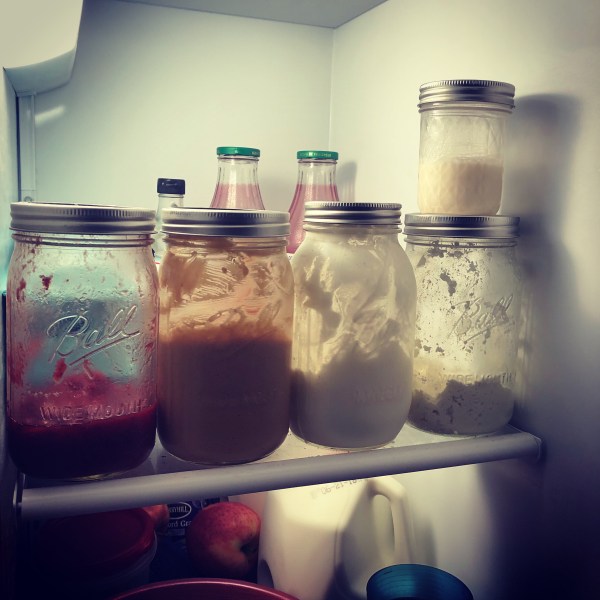
Besides all that, making things from scratch is rewarding and makes my fridge look clean and organized! [If my 20-year-old self could hear me now, she would probably pass out from shock. I guess I’m proof that people can change. 😁]

Karis

Goodbye, Old Friend

Goodbye, Old Friend

Tomorrow is trash day in our neighborhood, which always has me thinking about our trash output. As I mentioned before, we are not exactly without waste, but we are making improvements. Today’s improvement happened to have a visual impact.

We have had a large black trash can in our kitchen since Brett and I got married 7.5 years ago. I don’t actually remember buying it [maybe it was a wedding gift], but it is one of the few possessions that have stood the test of time [others being our wedding rings and childhood photos], until now.

[I should mention as a side note how pathetic it is that we have had so few belongings actually last seven years. It is proof that we have spent most of our married lives prioritizing the cost over the quality and it is further proof of our desire for a constant influx of new “stuff.” Sad, but true – until recently.]

Anyway, today we gave the old friend a demotion and have sent him to the basement, where he won’t collect any garbage at all, but just sit around waiting for us to determine his fate [anyone need a trash can]?

After collecting the trash this week, we realized that we no longer need a tall trash can. [I also realized that we have a lot of trash cans sitting around not collecting any trash at all.] So, we took a small can from another room in the house and put it under the sink. The size difference is significant. But how nice not to have this huge trash can in our kitchen anymore!

This is partly a big win, and partly a leap of faith. Will our trash for a whole week actually fit into this teeny-weeny can? We will see, I guess. Worst case scenario, we have to change the bag mid-week…but I’m not planning on giving myself permission to do that. I’m just going to go for it.

It’s like I always tell my personal training clients – you’ll never know what you’re able to do unless you give it a try.

[Nearly] zero waste, here we come.

Karis

Our First [Nearly] Zero Waste Grocery Trip

Our First [Nearly] Zero Waste Grocery Trip

Reducing our waste to [nearly] zero – the way I like to describe our efforts at sustainability – has been a process. Not to imply that we have arrived, because we are continually making small [and occasionally large] changes in our habits that we think benefit the planet. But we hope to arrive someday at [nearly] zero.

I say “nearly” because I know I won’t be storing a year’s worth of trash in a mason jar any time soon…or maybe ever. My goal is to aim for zero but be satisfied with nearly zero.

We’ve been slowly reducing our waste for a few months. We now compulsively recycle and religiously compost [which is “rot” for our list of sustainability R’s]. Those two things alone reduced our trash output to less than one full kitchen trash bag per week – which is significantly better than it was, but we could do a lot better [like stop using trash bags, for instance]. We also always shop with our own reusable canvas bags and bag produce in our mesh produce bags. And today we made our first bulk bin purchases at Whole Foods using our own cotton muslin bags.

Here is our haul.

The only waste was the stickers that we had to print in order to purchase and the receipt.

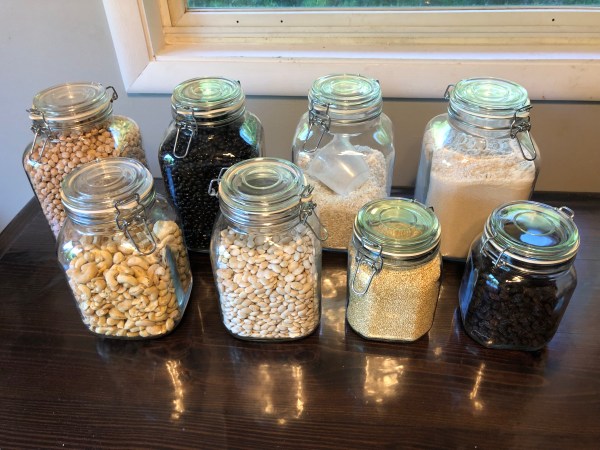
Then we got home and reorganized our pantry so we could store all of our newly acquired zero waste bulk goods.

Something about the zero waste life appeals to my inner neat freak. But even more than that, it appeals to my inner health nut. Look at all of that plant-based, healthy food!

Today is also the first day of a new month, which means we refilled our cash budget envelopes [yay!] Also, we are doing the 30-Day Minimalism Game this month. More on that tomorrow.

But for now, I’m happy with the efforts we’ve made toward being [nearly] zero waste.

Karis