Just wanted to pop in to wish everyone a very merry Christmas! We had a beautiful day sharing gifts with our loved ones and celebrating our many blessings. I hope that you did too. No matter what the day brought, remember that you are important, you are loved, and you are worthy of all the good things.
In 2018, I read a story in my local paper about a man who needed a living kidney donor, and that’s when I knew I wanted to donate my kidney someday. I decided to wait until after I gave birth to my last baby, which I did in June of 2019, so in January of 2020, I volunteered to donate my kidney, naming the local man as my recipient.
After a lengthy delay thanks to COVID, I finally got all the testing done and was approved to donate in November 2020. Unfortunately, I wasn’t a match for the man from the newspaper, but I agreed to donate to anyone.
Then, just last month, a full year after I was approved to donate, I received a call that they had found me a match and wanted to have the procedure right away. So I got busy organizing childcare, pet care, and my own post-op care.
It turned out that I would be the start of a chain of donations that would allow several people [at least three at the time] to receive new kidneys.
Before the surgery.
The surgery ended up being pushed back once, but then on 11/30/2021, I underwent a nephrectomy and my left kidney was implanted into the recipient.
It is a privilege to be healthy enough to do this for someone and I’m grateful to the excellent transplant center nurses, surgeons, and medical team who took such great care of me.
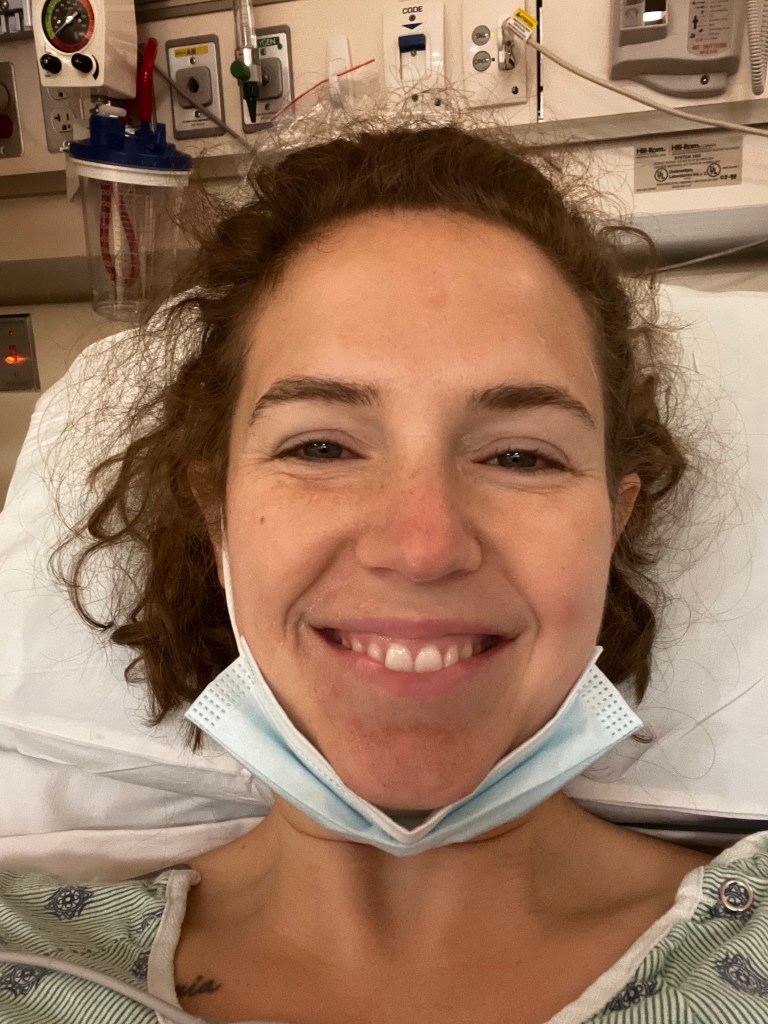
After the surgery [I took this picture to show my husband that I was ok because he couldn’t see me right away after the procedure]
If you have any questions about living kidney donation, please feel free to ask! I will be posting with more detail about the process of donating and the recovery from donating in the future.
Today, I’m writing a personal letter to share about a big change I’ve made in my personal life in the last month.
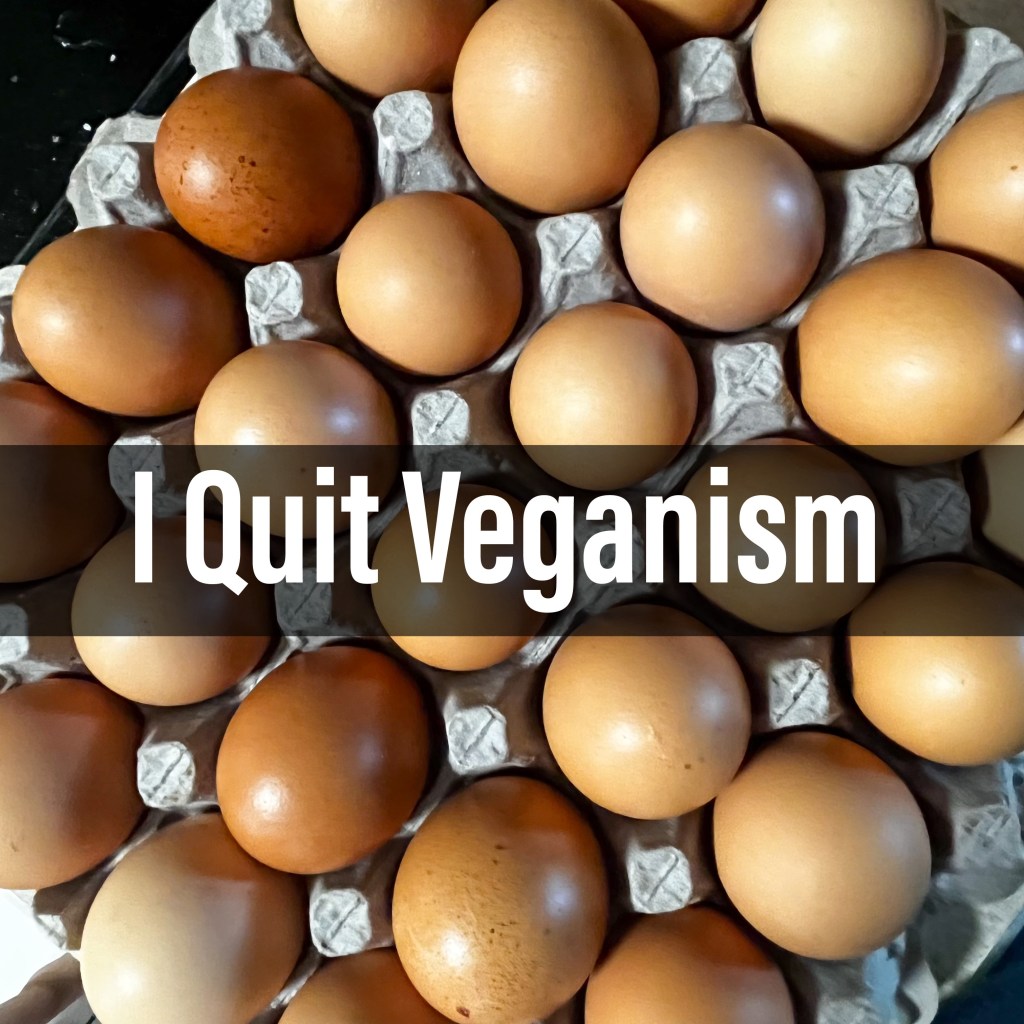
I quit veganism.
Before all my vegan readers swear me off for good, let me explain…
When it comes to what I eat, I’ve been on quite a journey, which began over ten years ago when I decided to get healthy and led me all the way to the past year of being vegan. I’ve read books, watched documentaries, studied nutrition in formal classes and on my own. All of this has lead me to improve my eating habits by eliminating processed foods, making food from scratch, buying fresh, whole foods, choosing organic whenever possible, eating plenty of fruits and vegetables every day, reducing meat and dairy, increasing plant-based foods, and so on.
Then last year I became convinced of the ethical and sustainable imperative to stop eating animal products, and so I did. I read Eating Animals by Jonathan Safran Foer, which shared horrifying details about the conditions in which American food animals are raised and slaughtered. I watched David Attenborough: A Life on Our Planet, which described how our choices as humans are impacting the planet and in which he states that the simplest thing we can do to combat climate change is stop eating meat. Other sources of information are How Not to Die, by Dr. Michael Greger, the short film Meet Your Meat, and the documentary The Game Changers. These [and other] sources of information led me to a year of veganism.
All of that is still true, but I’ve realized that meat and eggs in small quantities from ethical, sustainable, and local sources are an important part of a well-balanced diet and so I became determined to find a source of meat that wouldn’t violate any of my ethical and sustainable standards.
[There are several sources of information that led me to this change including: RealFood by Nina Planck and Animal, Vegetable, Miracle by Barbara Kingsolver – the latter of which has a very compelling argument for eating local, sustainable meat.]
After much searching, I found a farm about an hour away that raises 100% grass-fed beef and pasture-raised chickens, turkeys, and lambs. Early one morning, we drove up to the farm for a tour. We met the animals, stood in the chicken coop, held the freshly laid eggs, and I immediately knew that this was a farm I could support. So we started purchasing meat from them.
Homemade chicken noodle soup featuring pasture-raised chicken from a local farm
As you may guess, buying meat from a local farm is expensive, so we buy limited quantities, only have meat once or twice a week, and make sure to fill up on plant-based foods at meals.
Egg from local, pasture-raised chicken.
Though I am not vegan anymore, the past year of veganism has been totally transformative for me and my family. Because of the past year, we no longer think of meals as requiring a meat, and we now know how to prepare various delicious plant-based meals. I have become a pretty decent vegan baker and most of my baking will remain vegan forever. Even my [previously] “meat and potatoes” partner has embraced almond milk, tofu, tempeh, and cashew cheese.
For some people, finding and affording ethical, sustainable, and local meat products will be impossible. If it were impossible for me, I would remain vegan. It is not worth the cost to my health or the health of the planet to eat meat from factory farms. So if the only meat available to you is full of antibiotics, raised in inhumane and unsanitary conditions, and fed a diet of grains and dead animals, veganism is still the best and healthiest option. BUT the more we use our dollars to vote for a healthier and more ethical food supply, the more ethical and sustainable meat will be come available to everyone.
We all have to make the best choice we can with what is available to us.
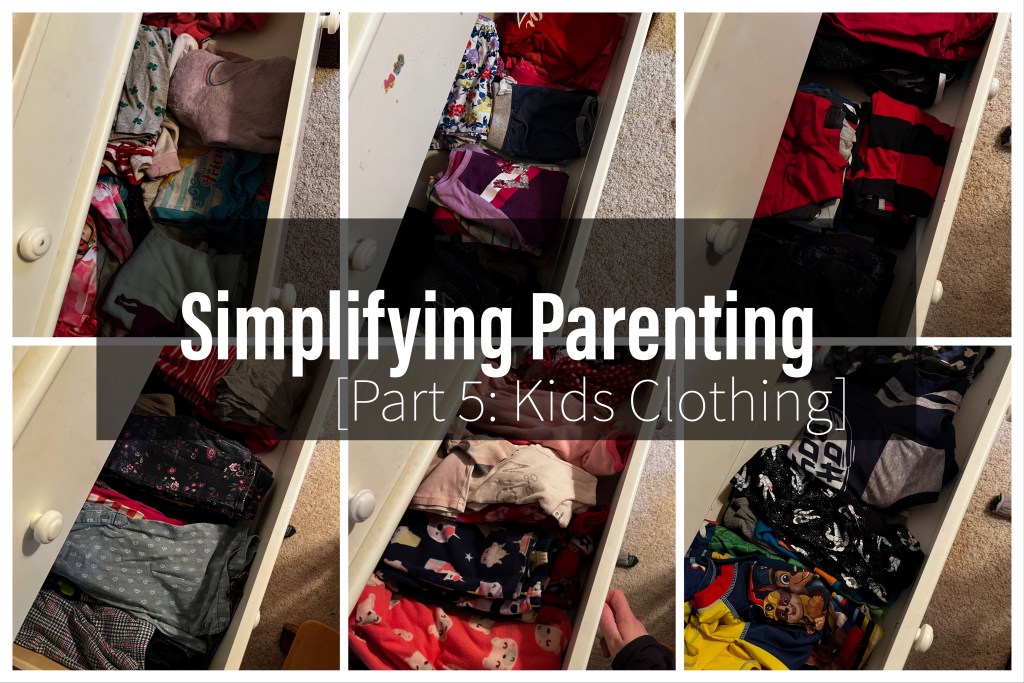
When it comes to my own wardrobe, I’m a minimalist, fitting all of my clothing into three small drawers that fit into my closet [plus some hanging clothes that I rarely wear but keep for “just in case purposes” such as a black dress for funerals]. A few years back when I went through all of my clothes and purged everything I didn’t need or love, I found the whole process to be immensely gratifying. And, I’m pleased to report, that simplifying my kids’ clothes has every bit as satisfying.
Principle #1: Only clothes that are needed.
How do you know how much clothes your child will need? First determine how often you do laundry. I dedicate one day per week to laundry. Which means my kids need seven days worth of clothes [and maybe a few extras for accidents or emergencies]. Since a lot of our clothes are hand-me-downs, we do end up with extras of some things, but I make it a point to avoid getting extra clothes we don’t need.
For example, when I switched my son’s wardrobe over to warmer clothes, I found he needed more long-sleeved shirts and a few more pairs of pants for the winter. Brett found someone selling a used set of clothes — seven pairs of pants, two t-shirts, one sweat pant outfit — all for $15. But we didn’t need most of it, so we paid $8 for two pairs of pants and the sweat pant set. I found three long-sleeved shirts at a resale shop, and that was all that he needed. Theo is now all set for the winter.
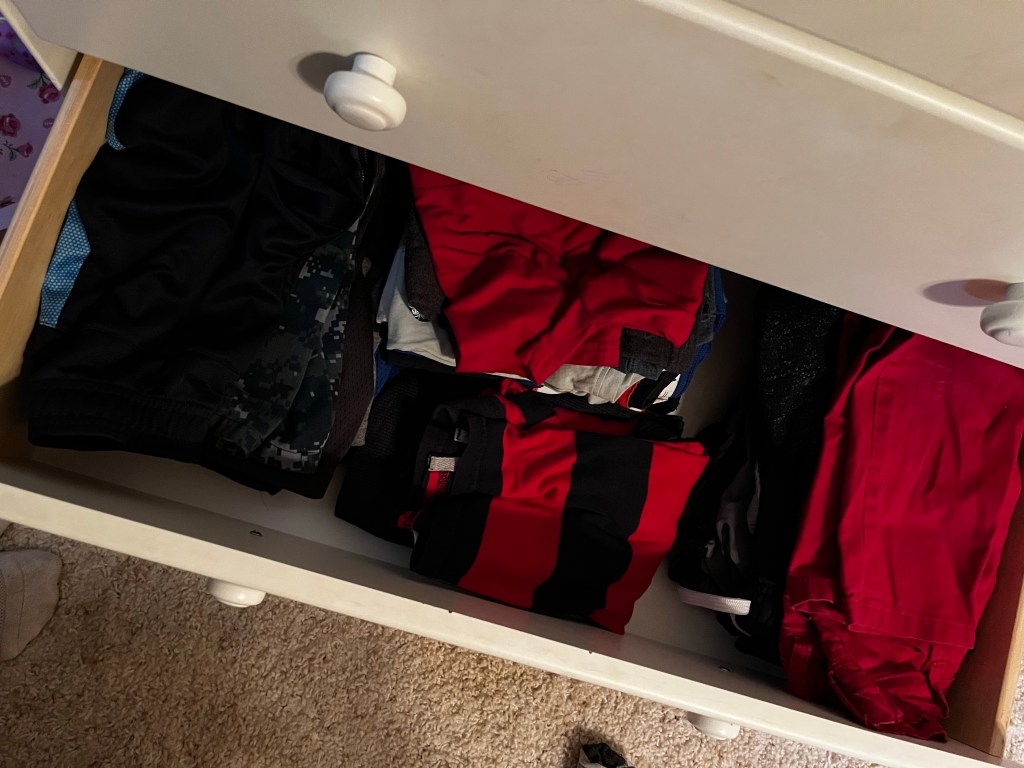
Theo’s clothes [both summer and winter] all fit in two drawers in the dresser that he shares with Jojo.
Principle #2: Only clothesthat are used…for the most part.
This is so important to me since I have learned about the clothing industry and how it continues to wreak havoc on our planet and hurt economies and take advantage of workers around the world. So, as a principle, we always get our clothes used, unless of course there are certain items that we can’t find used. Underwear is one of those things, so I buy my underwear from Boody and I get my kids underwear from Pact — both ethical, sustainable brands that I love to support.
I mean, really, it is criminal that kids clothing gets worn for a season and then tossed. We need to keep clothes in circulation for as long as possible since each item of clothing represents costly natural resources and a lot of labor. I wouldn’t even care if used clothes cost more, but, of course, buying used is cheaper which makes it a win-win. And we find really nice stuff used!
Evangeline’s drawer of adorable hand-me-down and used clothes for winter.
We like to use Facebook marketplace [Brett handles that since I am not on Fb] or OfferUp or nearby consignment shops and even resale stores like Goodwill and Salvation Army to find used clothing. In our small town we have a resale shop where I have found new tennis shoes for Theo, an Express undershirt for Brett, and jeans for Evangeline. [I also found a beautiful North Face sweater that I really wanted, but didn’t need, so I passed on it. Hopefully someone who needs it finds that treasure.]
Principle #3: Only clothes to play in.
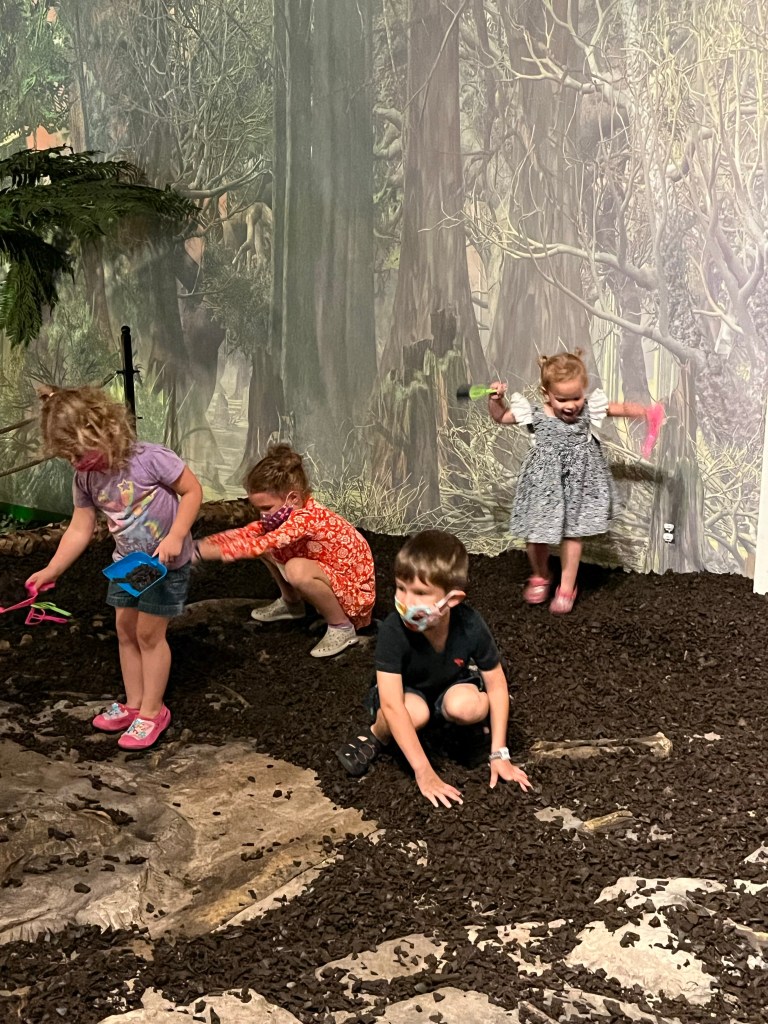
Two of my daughters are wearing dresses [with shorts for modesty purposes] as they dig for fossils in the dinosaur museum.
It’s a bit of a pet-peeve of mine how parents like to dress up their children. All of their life experiences until the first grade revolve around play, so they should be dressed for play. It makes absolutely no sense to me to put a little kid into dressy clothing and then try to keep that child from playing in it or getting it dirty. Let the kids be kids for goodness sake! Even at church, Christmas dinner, and weddings, kids should be dressed in play clothes.
The other problem with dressing up kids is that it requires you to keep an entirely separate set of clothes. Your kid will need a full wardrobe of play clothes and a full set of dress clothes. Why on earth?
We just keep one type of clothing for the kids: play clothing. They can wear it on vacation, on a hike, to church, to school and to play in the backyard. My daughters each have some dresses that they love and these are not special occasion dresses. Their dresses get as much use as the rest of their clothes. Which is fine. They like to wear frilly pretty clothes, and I expect these items to get throughly played in, dirty, messy, and worn out.
Principle #4: Only clothes they love.
In this Easter picture, my middle daughter is wearing her pajamas. Still cute!
I let my kids dress themselves. I have since each of them were three and old enough to open a drawer and pull out an outfit for the day. This relieves me of the stress of fighting with my kids about what to wear and allows them to choose clothes that they love and that express their unique personalities.
It seems to me that, as parents, we want our kids to look like mini fashion models because it improves our own image. I don’t think the kids care – nor should they! So what if they want to wear plaid with polka-dots? Who really cares?
I definitely don’t want to send the message to my kids that what they wear matters, that they need to dress a certain way to “fit in” or be accepted, that love is based on how someone looks. These messages are everywhere in our society, but I don’t want them in my home. I also don’t want to teach my kids to conform to fashion trends. Instead, I’d rather teach them to wear what is practical, comfortable and something they love – something that shows the world a piece of themselves rather than just a reflection of everyone else.
I’m having a hard time finding pictures of my kids in unusual outfits – they usually dress so cute! No one would guess they always choose their own clothes.
Over the years, with absolutely no help from me, my oldest daughter [now 7] has figured out her own way of dressing that is unique and absolutely adorable. I wouldn’t change anything about her style.
[I once wrote an essay for Parents Magazine about this very topic, which they published in 2018. You can read it here.]
Don’t be afraid to pare down the kids’ clothing! It feels GREAT!
Every week I bake a lot of bread, which means that we inevitably have some dried out, day-old bits. I do my best to bake only what we need and eat everything I bake; however, life happens. BUT it doesn’t have to be wasted.
Now, I’ll be the first to admit that there is no shortage of great options for using up day-old bread, but in my house, croutons are the favorite because they are so quick and easy to make and my children LOVE them.
Before I tell you how I make the croutons, here are some other ways I use up old bread:
Bread crumbs for Buffalo Cauliflower Bites [NoraCooks.com]
Avocado Toast [or any kind of toast]
ALT [Avocado, Lettuce and Tomato] Sandwich
We’ve done all of these things at one time or another, but croutons are my favorite because they can be made in just a few minutes and thrown on soup or salad [my two favorite food groups].
I actually learned how to make croutons from my brief stint as a bakery associate at Panera bread about thirteen years ago. Did you know they make their croutons in store? [At least they used to.] And Panera has the BEST croutons.
Croutons can be made on the stove top or in the oven. [The Panera method is in the oven.]
Stove top croutons
Cubed two-day-old sourdough bread
To make croutons on the stove top, just heat up some oil in a skillet, cube and season your bread, then add to the skillet and toss occasionally until brown and crispy on the outside.
You have to watch them so they don’t burn, but it only takes a few minutes – maybe 3-5.
I season them with literally whatever I have on hand. Usually some version of garlic salt and then a green herb like oregano or thyme, but I’ve been known to get funky and throw smoked paprika on them [I put that sh*t on everything]. Just plain ol’ salt and pepper works great too.
Oven baked croutons
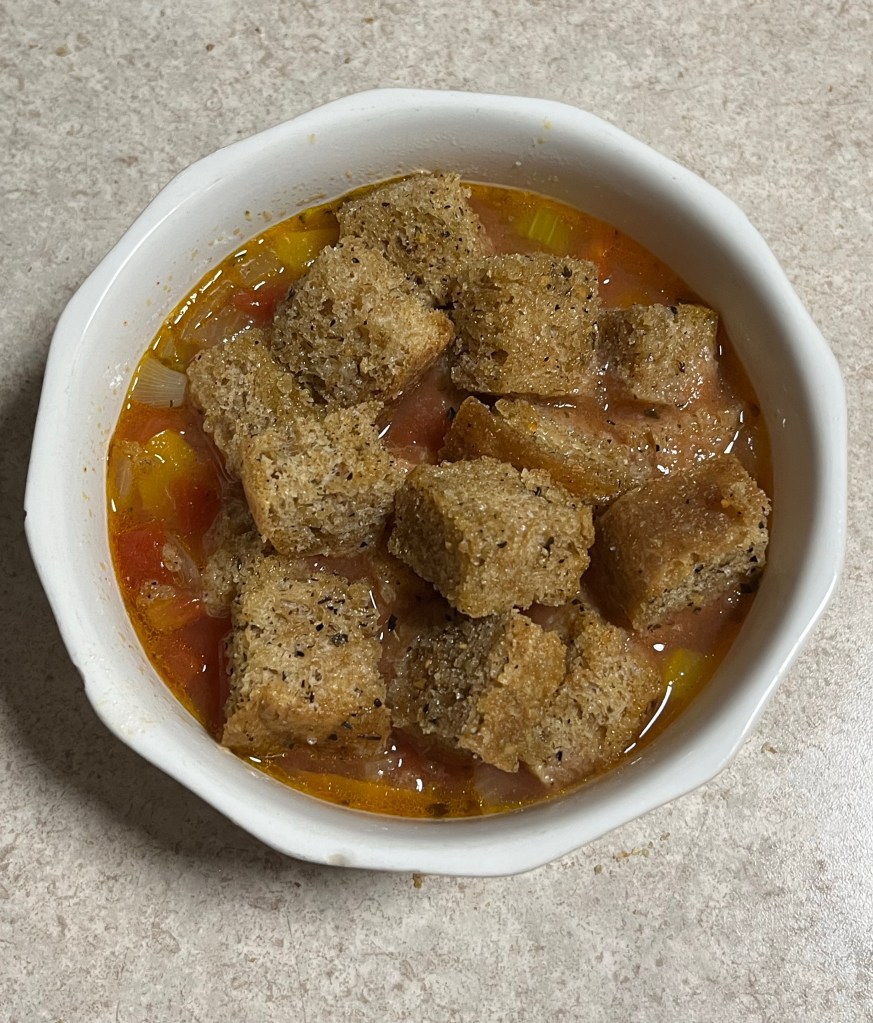
Cubed day-old whole wheat bread ready to go in the oven [and you can spy my homemade veggie soup simmering too]
The process is very similar with baked croutons. Cube the bread and toss with seasonings and olive oil, then spread on a baking try and bake at 350° for roughly 7-10 minutes. I usually toss them once to get them crispy all over.
No matter how you make them, they are delicious!
Perfect for fall soup season! Add croutons to the list of things you’ll never need to buy again.
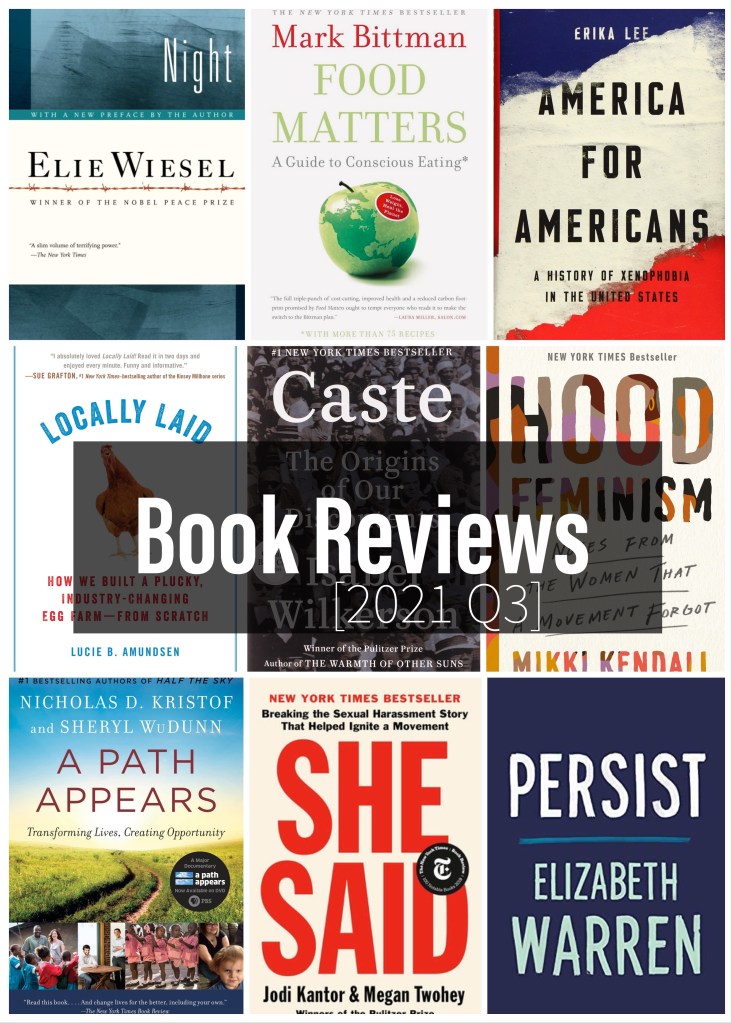
In the past three months, I read 16 books, making my total so far for this year 46! Not too shabby.
I’ve tried condensing down my blurbs about each book since, geez Louise, I get exhausted writing these things, I can’t imagine how bored ya’ll must be reading them! This post is still too long, but I did my best.
🤷♀️
[As usual, my star reviews are just to indicate how much I personally enjoyed reading the book. They are not to be taken too seriously.]
July
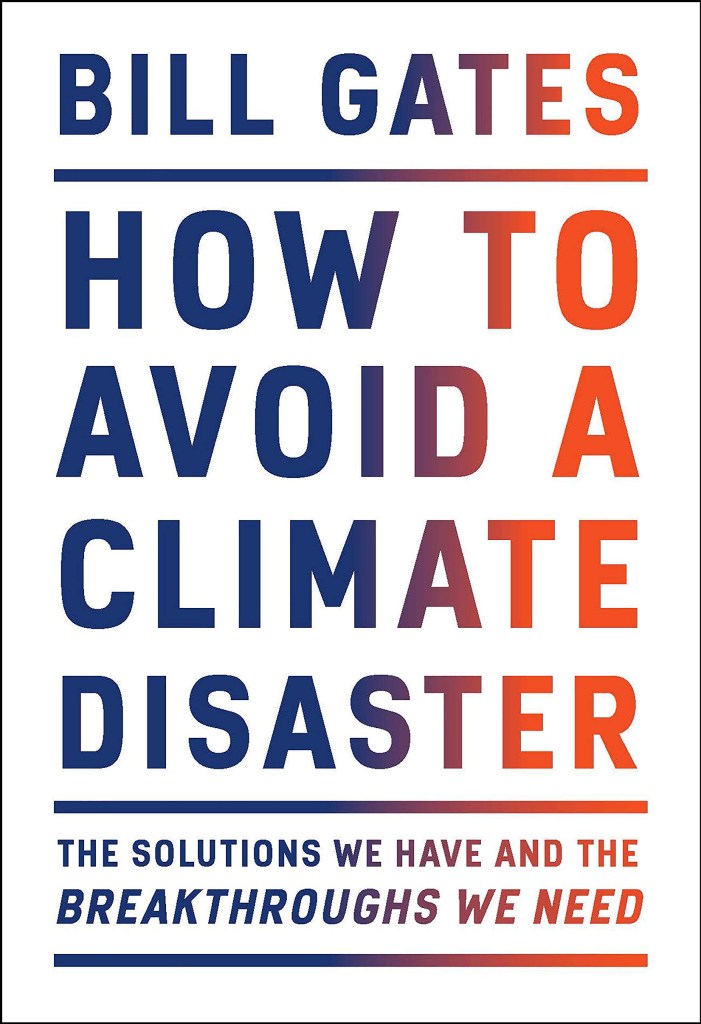
How To Avoid a Climate Crisis by Bill Gates
⭐️⭐️⭐️⭐️
I have mad respect for Bill Gates, not just for being a brilliant mind and exceptional business man, but for being a philanthropist who has focused a lot of his wealth and resources on saving lives around the world. I love the Bill and Melinda Gates Foundation and follow the work that they do around the world because they ensure that every dollar does the most good possible.
That aside, Bill Gates is also super intelligent and usually right [like when he predicted an air-borne virus would ravage they world], and when I heard he had a book about climate change, I knew I wanted to read it.
I will say this, though, How to Avoid a Climate Disaster is not exactly a riveting read. It is often scientific and talks about technology that I have absolutely zero understand of – BUT, what I appreciate the most is his commitment to protecting the planet and protecting the underprivileged. He has a unique perspective in the environmentalist camp that calls for new technology to end climate change, rather than trying to hold back progress around the world. In fact, his whole perspective seems to be one of progress as a human population. And he puts his money where his mouth is, supporting many new companies that are testing out creative solutions for climate change.
Ultimately, this book gave me a lot of hope for the future. And we all need some hope right about now.
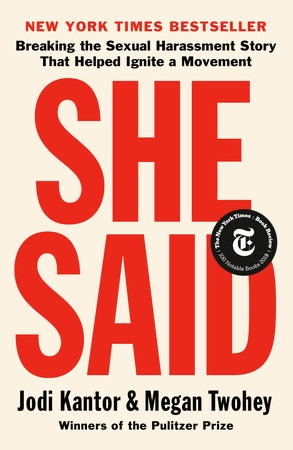
She Saidby Jodi Kantor & Megan Twohey
⭐️⭐️⭐️⭐️
As a feminist, this story and the Me Too movement are so important to me and I loved reading the back story of how these persistent journalists exposed Harvey Weinstein and, as the subtitle says, ignited a movement. This is the perfect example of how powerful good journalism is. It has the power to change society, as these two women’s reporting did. I’m so glad that they pursued the truth and exposed – not only one sexual predator – but a culture of abuse that had been hidden from view for as long as we can remember.
That being said, I liked this book mostly for its subject matter and relevance to current feminist issues, but I wouldn’t say it was the most riveting book I’ve read. I still would recommend it for anyone who wants to know more about why the Me Too movement is so important because this book clearly shows the lengths to which powerful men will go to keep their sexual predation and abuse hidden.
Caste by Isabel Wilkerson
⭐️⭐️⭐️⭐️
In this book, Isabel Wilkerson draws parallels between American racism and the caste system in India [and even the caste system established by Hitler in Nazi Germany]. Well, I am no historian or social expert, so I have no comment on whether racism in America is more like a caste system. But I will say that racism is a huge problem that continues to plague our society and denial of its existence is only making things worse.
My favorite part of the book is when she compares racism in America to owning an old home. We might not have built the house, but it’s ours now and whatever problems it has, we are now responsible to fix.
“The owner of an old house knows that whatever you are ignoring will never go away. Whatever is lurking will fester whether you choose to look or not. Ignorance is no protection from the consequences of inaction. Whatever you are wishing away will gnaw at you until you gather the courage to face what you would rather not see.”
Isabel Wilkerson, Caste
Let’s stop denying the house is falling apart, stop blaming it on the previous owners, stop putting it off or wishing it away. Instead, let’s get to work.
Other parts of the book that really moved me are the true stories of racism throughout. Some are Wilkerson’s personal experiences, some are infamous stories from history like the murder of Emmett Till, some are stories of horrific lynchings, some are current stories of prejudice and injustice, but all are heart-wrenching and angering.
I don’t know how it is possible for anyone to believe that racism isn’t alive and well in this country, but if there is, they need to read this book.
Hillbilly Elegyby J. D. Vance
⭐️⭐️⭐️⭐️
Before reading this book I didn’t know anything about what it’s like to grow up in a poor rural working-class white community like the one that J.D. Vance did – like nothing. Most of my understanding of poverty is in relationship to racism or single parenthood. So this book was an education about a group of people that I haven’t had a chance to cross paths with. I have always lived in the suburbs and been squarely middle class. It was eye-opening and sad and all the things that I’m sure it was meant to be. However, whether it be due to the distance between me and Appalachia or just my general ignorance, I found this book to be a little disappointing. I’ve had it on my list for so long because I love a story of rising out of humbling beginnings, but I think it was maybe too sad for me. It was extremely upsetting to read about a mother that threatens her child. And I know that many people today grow up in struggling communities, in broken families, in less-than-ideal situations, but…I guess it just breaks my heart.
The book is also more political than I expected, but since Vance appears to be a right-leaning moderate, I benefited from his “see-it-from-both-sides” perspective – which I personally am woefully lacking. He also acknowledges that much of what the right views as “laziness” is actually hopelessness.
“Psychologists call it “learned helplessness” when a person believes, as I did during my youth, that the choices I made had no effect on the outcomes in my life.”
J.D.Vance, Hillbilly Elegy
This is really key to the struggle we all face to help new generations rise above their circumstances. And neither the left nor the right are doing it very well right now. We need to instill in young people – no matter their race, class, social status, grades, or abilities the belief that they can be successful and that their choices do make a difference. But, of course, we also have to make sure that it’s true. I think that is the big takeaway [for me anyway] from this book.
“I don’t know what the answer is, precisely, but I know it starts when we stop blaming Obama or Bush or faceless companies and ask ourselves what we can do to make things better.”
J.D.Vance, Hillbilly Elegy
We can’t just give people money, but neither can we just tell them to stop being lazy bums. We have to give them hope.
The Last Black Unicorn by Tiffany Haddish
⭐️⭐️⭐️⭐️
I’m just going to give a warning here at the beginning: most people I know would be offended by much of the content in this book. BUT this is Tiffany Haddish telling her truth and I love her for it.
I have been a Tiffany Haddish fan since I saw her in Girls Trip. She is hilarious and so natural that I instantly fell in love with her. Turns out, she just is naturally that funny. I listened to the audio version of this book which I highly recommend because it’s basically a one-woman stand-up show.
Ok, ok. I take that back. There is a lot of stuff in her story that is really rough. At times, it sounded like she was literally crying and it made my heart break for her. She has not had it easy. But, oh my goodness, she finds a way to make you laugh the whole way.
I have a newfound respect for this woman. And I am still a super fan!
August
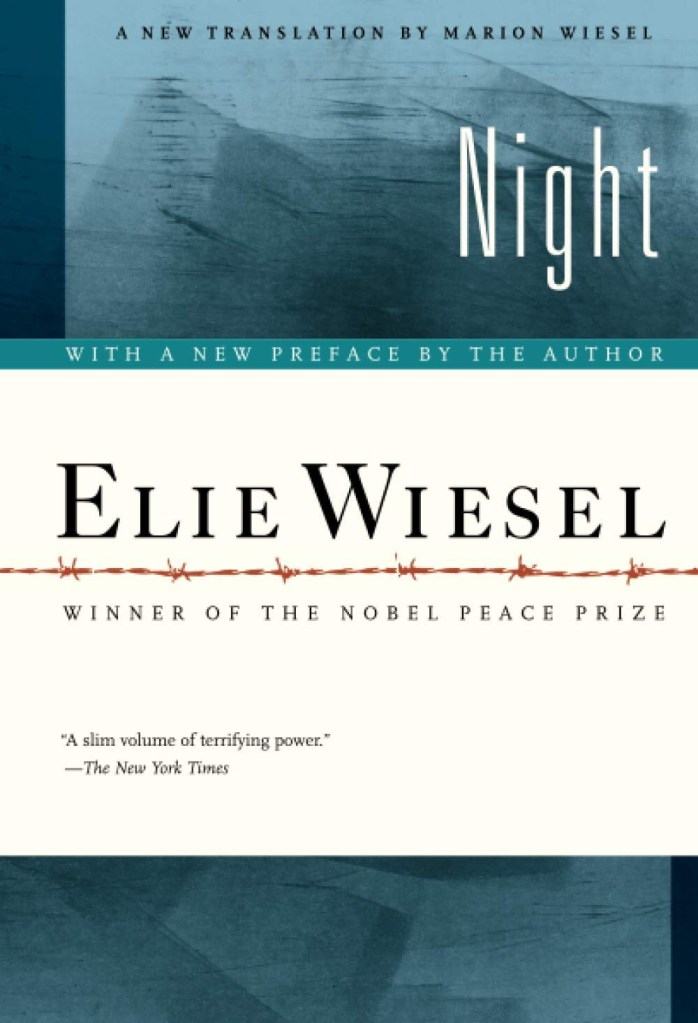
Night by Elie Wiesel
⭐️⭐️⭐️⭐️⭐️
I’ve had this book on my list for several years, and I finally read it. This book is right up there with The Diary of Anne Frank for being a true and truly horrifying account of what the Jews suffered during the Holocaust. In fact, I think Night is even more powerful because it is a first-hand account of a man who survived Auschwitz, the infamous nazi concentration camp.
It might sound morbid, but I like to read books like these every so often as a reminder of what humans are capable of when they start following one another instead of their god-given conscience. Remembering these events, as painful as it may be, is necessary to avoid repeating our mistakes.
As Elie Wiesel said,
“There may be times when we are powerless to prevent injustice, but there must never be a time when we fail to protest.”
Elie Wiesel
It is also important to remember that, though the Holocaust is not currently happening, other injustices exist today. The slave trade, sex trade, racism, xenophobia, and extreme poverty are some of the injustices that we should be protesting today.
Two other great books about the Holocaust that I read a few years ago are The Tattooist of Auschwitz and Number the Stars. And a good movie is The Zookeeper’s Wife.
Meat: A Love Story by Susan Bourette
⭐️⭐️⭐️
It was strange reading a book praising the unusual customs surrounding meat consumption – like eating whale blubber in Alaska, frying bull testicles in Texas, and eating all raw meat in Wisconsin – especially as a vegan.
I totally agree that eating meat is a cultural experience. But now that I think about it, the cultural traditions are really just about consumption in general, not specifically meat. Pretty much any geographical place in the world can be defined by certain types or methods or traditions surrounding the foods they eat, but they do not always include meat. However, even with the exploration of the various cultures surrounding meat in this book, none of them lead me to believe that eating meat is necessary. They also don’t prove that eating meat is healthy. They also don’t prove that vegetarian and vegan meals can’t also be a celebration of culture – albeit a different and more modern culture. But, hey. I’m all for progress.
I will say, I loved the writing in this book. There is just something about the works of journalists that I find so well written, no matter how mundane the topic. It takes me back to my college days of studying journalism and dreaming of some day joining the ranks of these inspiring writers. So it’s always a pleasure to pick up a book like this one…
But I’m still not into meat.
🤷♀️
Persist by Elizabeth Warren
⭐️⭐️⭐️⭐️⭐️
Just like Kamala Harris, I didn’t know anything about Elizabeth Warren when she appeared as a candidate in the 2020 presidential race. But, man oh man, I wish I had read this book before the primaries. I would have been on the Elizabeth Warren bandwagon for sure.
If all you know about Elizabeth Warren is what you’ve heard second-hand or through the media, I highly recommend you read this book and hear her story and what she’s passionate about.
Reading Elizabeth’s personal story of becoming a lawyer and then tenured professor all while struggling to find childcare for her kids gave me the motivation I needed to get back to school. I’d been wanting to go back to school for nursing so I can become a midwife for several years, but it always seemed so challenging while I was taking care of four little kids. But Elizabeth Warren showed me that I can do it. I don’t have to wait to get busy working toward my dreams.
She is an inspiration – and her plans for improving the lives of Americans are so awesome, I can only hope that she will make another run for the presidency someday. She will have my vote.
Food Mattersby Mark Bittman
⭐️⭐️⭐️⭐️
This is one of eight books about nutrition that a friend lent me, and it is my favorite so far. [Funny enough, I didn’t even realize until after I finished this book that I have on my shelf Mark Bittman’s cookbook, How to Cook Everything – which I have never touched.]
The first half of this book serves as a great summary of the many fascinating things I’ve learned about food from Michael Pollan over the past few years. So if you don’t want to read all of Pollan’s books, pick this one up and you’ll get the overall idea. This book also provides lots of great whole food recipes. I personally have been cooking with whole, natural foods for the past five years, so I’m comfortable with preparing meals this way, but I will be gifting this book to friends and family who are always asking me about healthy eating. This book is short, to the point, accessible and practical.
Hood Feminismby Mikki Kendall
⭐️⭐️⭐️⭐️
You know I love me a book about feminism! And although I don’t agree with everything in this book, I do know that if women are going to continue to make progress in this world, we cannot leave an entire demographic of women behind. The complaints in this book are valid. And the leaders of the feminist movement need to listen to the women who have, as she says in the subtitle, “been forgotten.”
However, I disagree with Kendall’s apparent accusation that feminists are willfully being elitist and entitled. The problem is that women on opposite ends of the spectrum have a difficult time understanding the position of the polar opposite. Both may still be women, but that doesn’t mean that their concerns and issues within the feminist dialogue are the same. Different women want to see different changes. But, in general, yes, mainstream feminism needs to be more inclusive of the huge range of women’s needs – not just those at the top.
But let me tell you, I read Gloria Steinem’s book and I don’t for a second believe that she left out women intentionally. [Kendall never speaks about Steinem specifically, I’m just using her as my own personal example here.] Those who have been “forgotten” need to also show a little grace to those whose perspectives may be different and not automatically vilify them as only self-serving.
Anyway, disagreements aside, she does discuss important feminist issues that affect colored minorities such as cultural appropriation, code-switching, colorism/texturism, femicide, and respectability. Each of these issues were educational for me and and tremendously insightful. If you are unfamiliar with any of the topics above, I highly encourage you to read this book.
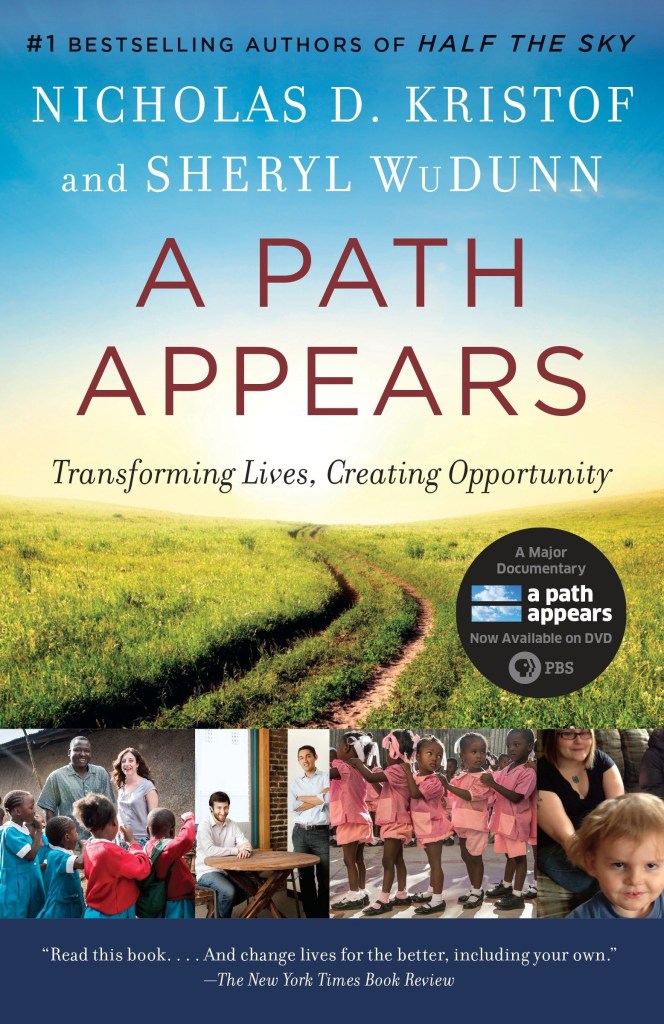
A Path Appearsby Nicholas D. Kristof and Sheryl WuDunn
⭐️⭐️⭐️⭐️⭐️
Last year, I read Kristof and WuDunn’s book Half the Sky, which focuses on women’s suffering around the world and was really moving. Now, A Path Appears is here to help show the way forward. I’m extremely interested in the topic of humanitarian relief and how the wealthy countries [and individuals] in the world can [or rather, should], be helping to end poverty. I’ve read many books on the topic, and truthfully, this book repeated a lot of information that I learned in Peter Singer’s book, The Life You Can Save, and Melinda Gate’s book, The Moment of Lift – but there is one important difference which is exactly what makes Kristof and WuDunn so successful in this area: they share stories.
This book is filled with stories of real people – wealthy and not – who are helping to change the world for the better. Kristof and WuDunn completely destroy the myth that you have to be a millionaire or a politician to change the world. In truth you just have to see the problem and want to change it.
“Let’s recognize that success in life is a reflection not only of enterprise and willpower but also of chance and early upbringing, and that compassion isn’t a sign of weakness but a mark of civilization.”
Nicholas D. Kristof, A Path Appears
Love, love, love this. I hope this book inspires many, many more people to join the fight to end poverty on this planet.
Locally Laidby Lucie B. Amundsen
⭐️⭐️⭐️⭐️⭐️
Oh my gosh, I love this book! This author is hilarious. It is such an easy and entertaining read.
Locally Laid is about how Amundsen and her husband decide to start a pasture-raised commercial egg company, without any farming experience whatsoever. Of course, they are successful in the end [the company is also called Locally Laid], but not without a lot of struggles, unexpected expenses, hassling from inspectors, and chickens who don’t know how to be chickens.
I’ve been dreaming of my own backyard flock of chickens for years, and this book gave me hope. If the Amundsens can go from zero to 8,000 chickens, then I can surely manage five or six.
September
America for Americansby Erika Lee
⭐️⭐️⭐️
I wish this book was a more engaging read, but unfortunately, it reminded me of my high school history textbook – which is to say, very informative, but not exactly a book I get excited about reading.
Still, I learned a lot of interesting things about how xenophobic America has been from its inception. Of course, a lot of this can be gleaned from history books if you read between the lines, but this book is straight to the point. Turns out that our southern neighbors were not the first to receive the good ol’ American shove back-to-where-you-came-from. They also aren’t the first to be called “criminals” in order to stir up fear of immigration. We’ve actually been doing that to people groups all over the world since we founded this country: Irish Catholics, Chinese immigrants, Italians, Jews, Eastern Europeans, Mexican Americans, Japanese Americans, and now Muslim Americans. America has always been xenophobic, racist, and fearful of other religions. We’ve been deporting people, closing our borders, and refusing refugees since America was founded, we have simply become better at politicizing our reasons, so as not to appear xenophobic.
Am I surprised? No, not at all.
America has always been for Americans. And apparently no one in America seems to see the irony and delusion behind that belief.
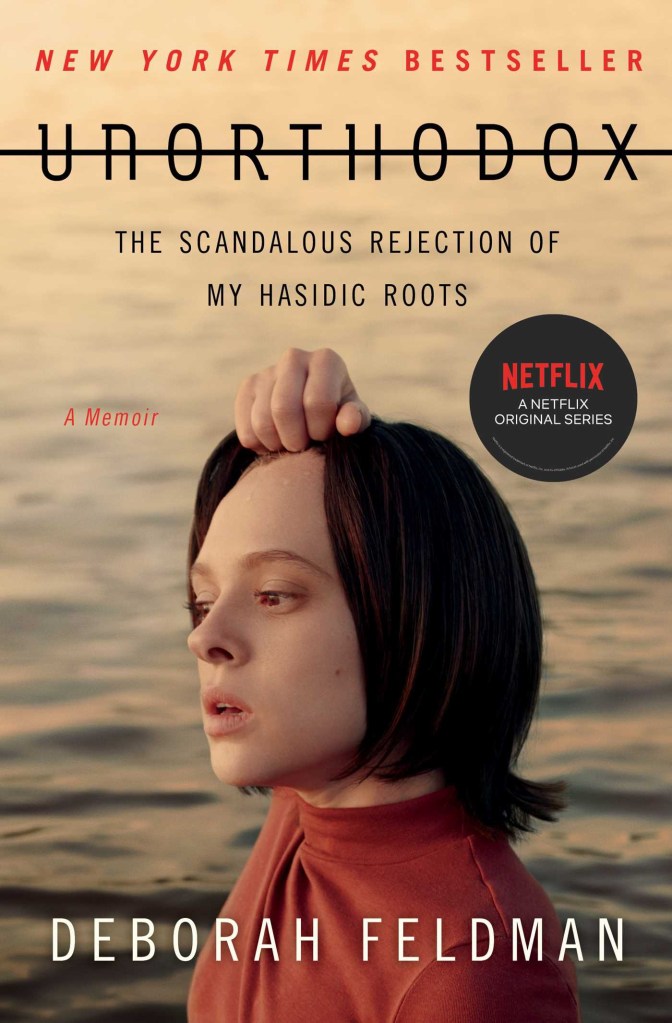
Unorthodox by Deborah Feldman
⭐️⭐️⭐️⭐️
I wanted to read this book before watching the Netflix show with the same title and based on this true story of a woman who leaves Hasidic Judaism.
As someone who also left the religion in which I was raised, I could relate to A LOT of this book. I didn’t know anything about Hasidic Jews or their beliefs, customs, and traditions before reading this book, but it is so similar to my own personal experience leaving mainstream Evangelicalism, and the book I read earlier this year, Educated, in which Tara Westover leaves Mormonism. Though the religions could not be more different, with varying levels of strictness, they are all equally difficult to leave behind…and also impossible to remain as a woman who wants to be seen as more than a womb and a “helpmeet.” I mean, the feminist thing isn’t the only reason I left, there was also a lot of logic and reasoning involved, but in addition to that, I simply could not accept that I must be subservient to men my entire life just because I happened to be born without a penis.
[Let’s be real. Penises haven’t done anything other than cause trouble for as long as they have existed.]
Ok, this took an unexpected turn…
Back to the topic, I thought the book was enlightening about this mysterious religious subculture that I was quite honestly completely unaware of. And I’m glad to know there is another brave rebel out there willing to leave her roots in search of freedom.
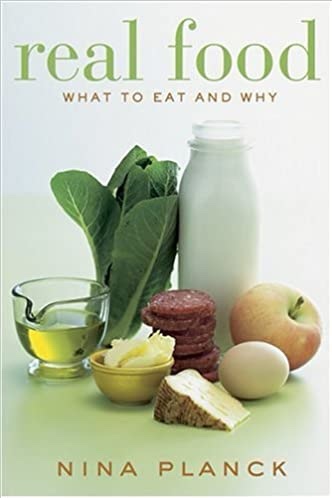
Real Food by Nina Planck
⭐️⭐️⭐️⭐️
I have a real love-hate relationship with this book. On the one hand, I’m 100% for eating real foods. I’ve been harping on that for five years now, frequently doing long stints of not buying or eating a single processed thing. So I totally agree with the premise of this book. However, I don’t fully trust Plank’s health assertions, especially after reading How Not To Die by Dr. Greger, and I feel like she basically wanted to do battle with the vegetarians and vegans of the world [of which I am one]. She makes good arguments for eating fish and beef, but misses an important caveat regarding moderation.
In the end, though, I have been convinced to eat local, grass-fed beef, local pasture-raised. poultry, and wild-caught salmon – so I guess she got what she wanted.
🤷♀️
Waking Upby Sam Harris
⭐️⭐️⭐️
This was a little too New Age-y for me, but I do think that starting a practice of meditation would do me good. I may add that to my New Year’s resolution list…we’ll see.
I’d didn’t love this book overall, but oh man, when I got to the part about the split brain theory…
🤯
I mean, that was WILD. I recommend this book just for that part alone.
Well, that’s a wrap for 2021 Q3 books!
As always, if you have book recommendations, please share them!
I could not be happier for fall to arrive this year, but still I was a little surprised when all my neighbors started putting out pumpkins and scarecrows and Halloween decorations. I mean, it was still 90° around here! Certainly didn’t feel like fall. [This is my first time living this far south – and I’m just in southern Illinois.] Appropriately, today is a beautiful fall day – cool, crisp, windy, rainy. I LOVE it!
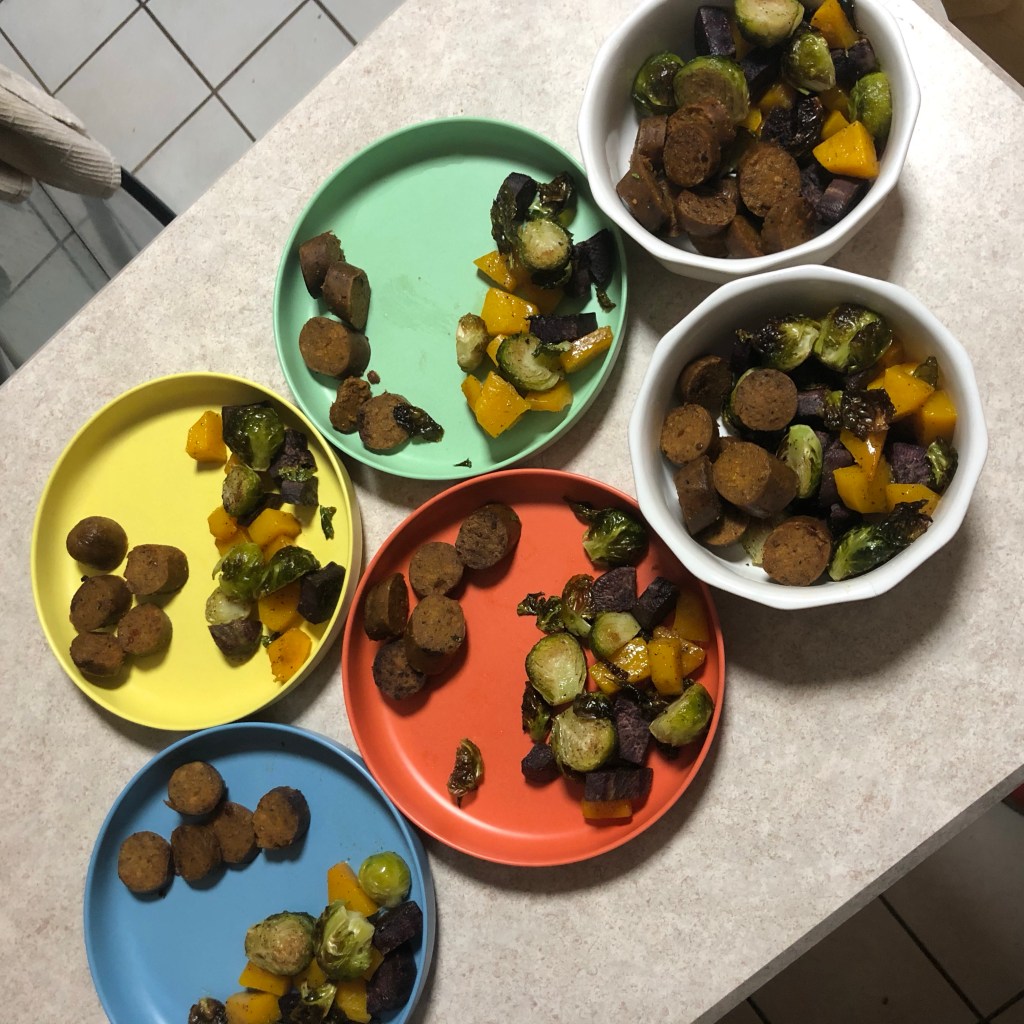
Besides today’s weather, the local produce is also screaming fall, so I decided to make my favorite fall meal [or side dish], comprised of my favorite fall vegetables roasted to perfection and tossed together.
Roasted Sweet Potato, Butternut Squash, and Brussels Sprouts
[I need to work on the name of this meal…it’s quite lengthy…]
I make this every year as a side dish for our Thanksgiving meal, but I make it as a stand-alone for my family many times during the fall. This is the perfect fall meal, because these are perfect fall foods that are in abundance during this time of year.
It also couldn’t be easier.
Peel and chop some butternut squash.
Peel and chop some sweet potatoes. [I like the color contrast provided by these purple sweet potatoes, but I usually just use regular.]
De-stem and half some Brussels sprouts.
Toss them all with olive oil, salt and pepper and spread on a baking sheet. Roast for 25-30 minutes at 425°.
Then serve.
We ate it with a side of vegan Tofurky sausage, but these vegetables are hearty and filling and can be a stand-alone meal too, which we have done many times. [If you’re not used to eating only vegetables for dinner, this is a great place to start.]
Side note: Roasted Brussels sprouts are a family favorite in our home. Despite their terrible reputation, Brussels sprouts are SO DELICIOUS. If you haven’t tried them, or more importantly haven’t tried them roasted, this is the time to do it. Like, right now. I have converted many Brussels sprout skeptics with my roasted side dish using the same method as above.
For my family of six [four of which are young kids], I roasted one small squash, two sweet potatoes, and 12oz Brussels sprouts. We had a little squash leftover, but otherwise, everything was gone.
Five years into my zero waste journey and I FINALLY got a safety razor! It was a birthday present from my partner who knew how badly I wanted one, but also knew I have an extreme aversion to buying things for myself. And besides that, we still had a supply of disposable razors and I like to use up what we already have before buying something new. [Side note: I discovered that our local compassion center accepts donated disposable razors, even open packages!]
👍👍👍
What is a Safety Razor?
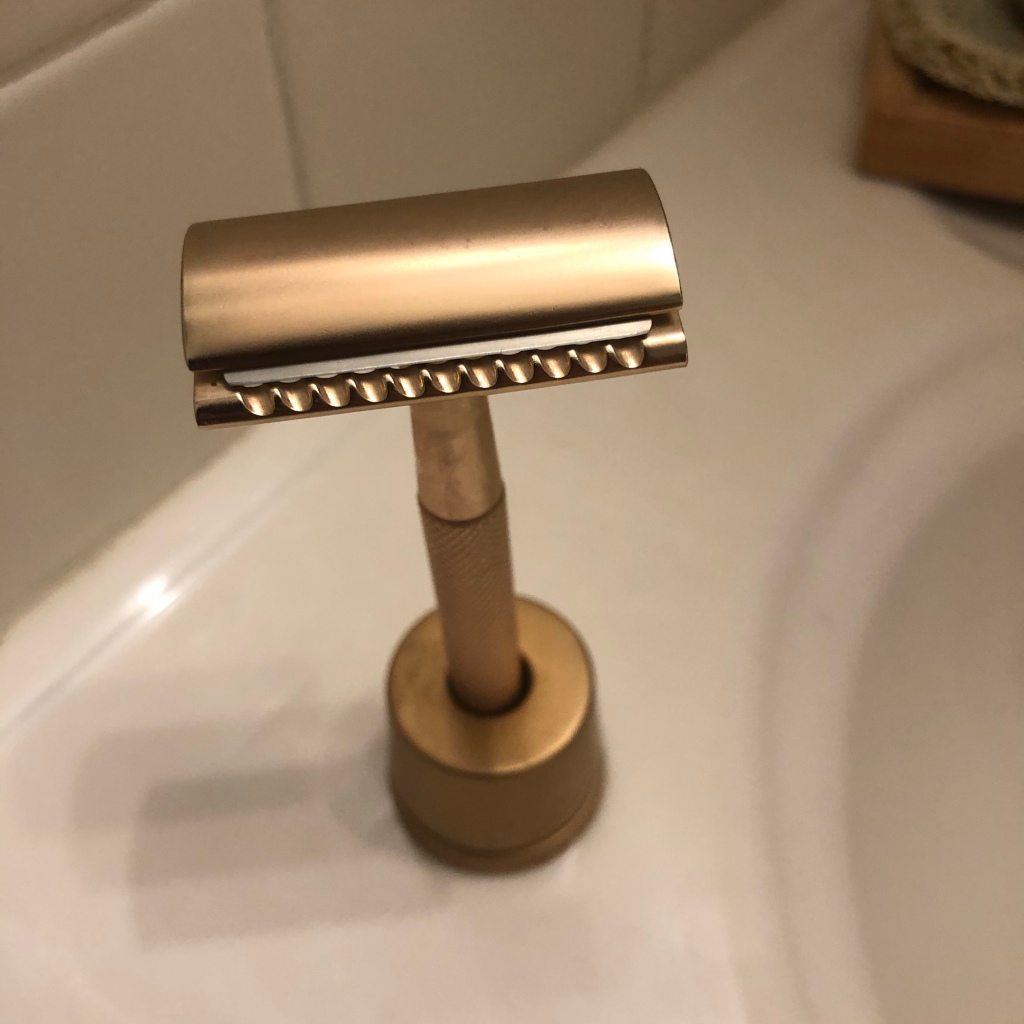
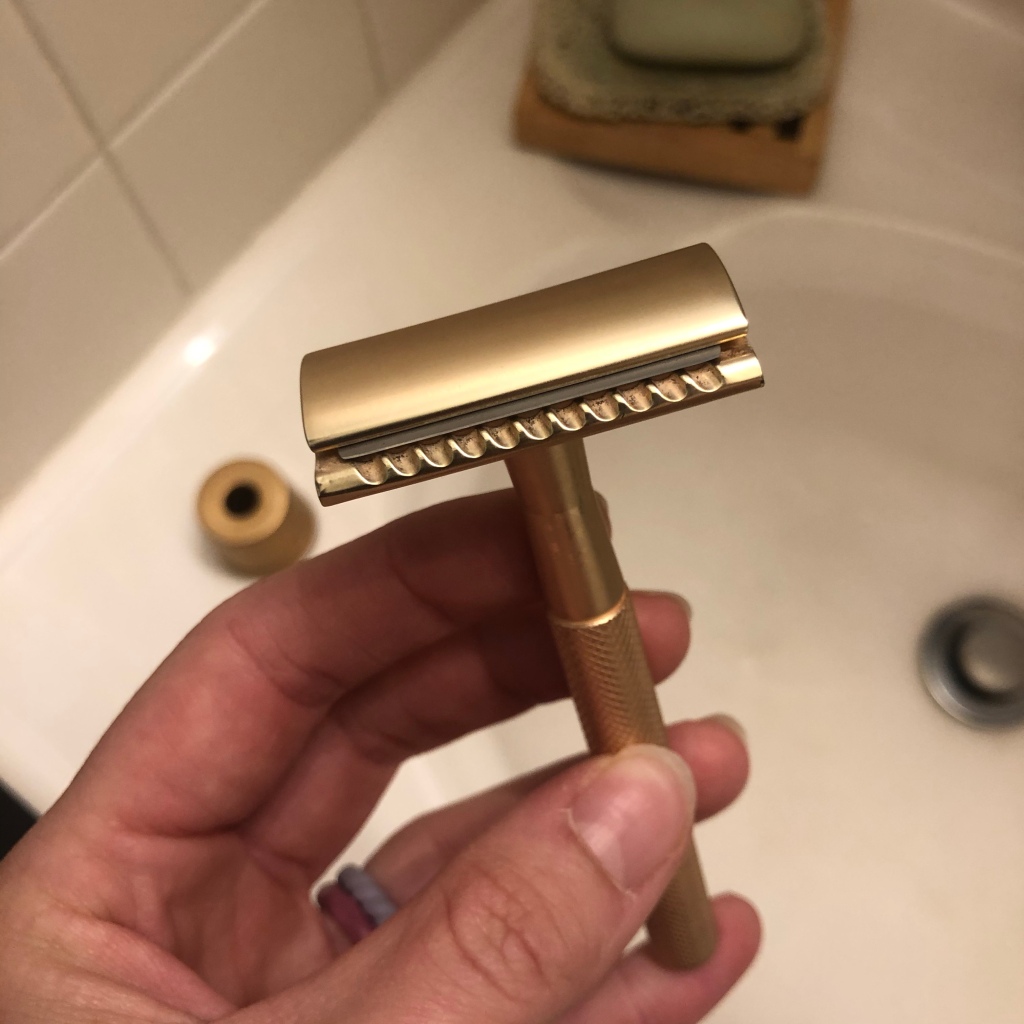
If you’ve been around the zero waste community for long, you’ve probably seen these sleek, exotic beauties floating around Instagram. If you’ve never seen one before, let me be the first to show you.
😍
First of all, let’s just admire how pretty this razor is…especially compared to the plastic disposable kind.
Of course, beauty alone is not a reason to buy a razor. The safety razor is environmentally friendly and zero waste because it is made of metal and has replaceable blades.
It may seem like something new and fancy, but actually safety razors are old [like 200 years old] and made their first appearance as a “safer” alternative [hence the name] to the then-popular, now a horror movie murder-weapon, the straight razor.
As with many other parts of society, we are slowly realizing that the old-fashioned way of doing things may actually have been better. There are some things that convenience and disposability simply cannot trump – like the health of our water and land and the human species.
My Experience
I love this razor. After three months of using it, I don’t have a single complaint.
I do, however, have to make sure to soap really well, because safety razors don’t have those gel strips…do you know what I’m talking about?
[I’m talking about these pink and blue strips on disposable razors that make shaving cream optional]
The razor is two-sided, so I switch the blades when I notice that neither side is shaving very smoothly. I started using mine in June and just switched the blade this week. But I don’t shave as frequently as some people, so I’m not making any promises or anything. I typically shave my armpits every three days and my legs about once a week [or less]. I’ve read that a blade is good for 7 shaves, but I definitely use them for longer than that.
Brett also gave me this set of 100 replacement blades. So, at my current rate of usage, I won’t need more blades for…roughly 25 years! [Wait, can that be right???]
The old blades go into this razor blade safe which can then be recycled when it’s full. [Check your local jurisdiction for recycling guidelines.]
But honestly, this safe says it holds 300 blades, so that means it will take me 75 years to fill it up!!! [Ok, I’m going to have Brett check my math on this. That just seems crazy!] But I’m totally planning on living another 75 years, so I may get to recycle this someday.
Doesn’t hurt to be optimistic. 🤷♀️
So let’s review:
Pros:
Eco-friendly materials
Recyclable blades
Never needs to be replaced – just replace the blades
Easy, close shave that is still “safe”
Maintains beautiful aesthetic of a zero waste bathroom
Cons:
Initial price. Of course, this was a gift, but according to Amazon, you can buy a safety razor with a stand, a razor blade safe and 100 replacement blades for under $40. Now if that lasts you 25 years like it might last me, then it will actually save you money in the long run. But, anyway, can you really put a price on saving the planet???
Overall, my experience has been great and I highly recommend switching to this eco-friendly shaving alternative as soon as you can. And you can donate any unused disposable razors you may have to a local shelter that can give them away.
Win-win!
And while you’re at it, why not go the full mile and swap the shaving cream for a bar of soap? In our bathroom we use bar shampoo, bar conditioner, and bar soap – all of which work great and create no plastic waste.
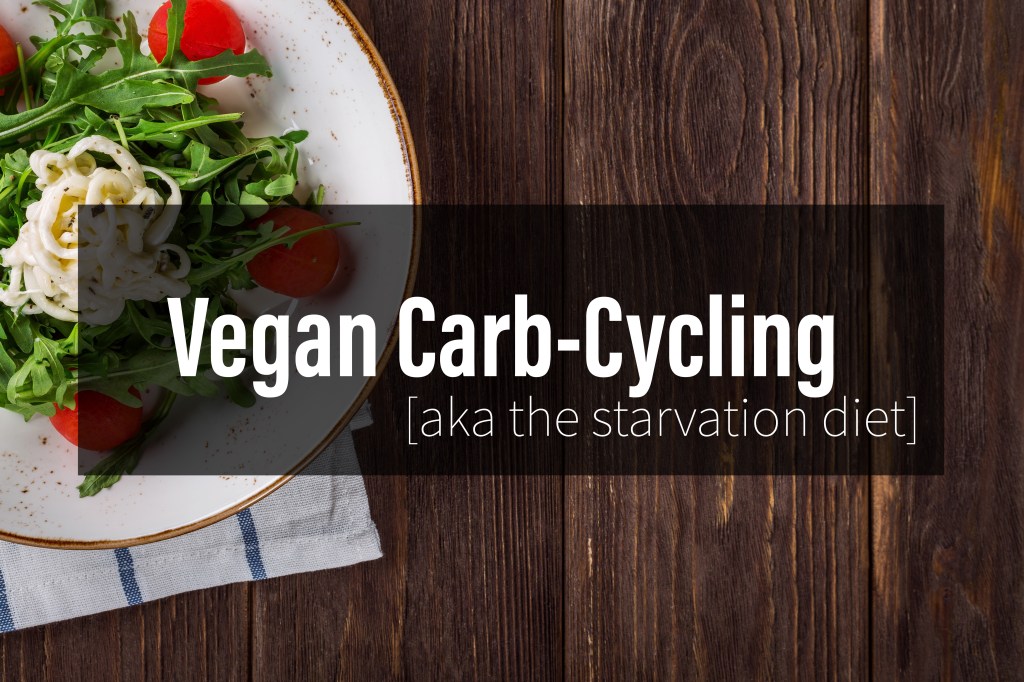
[I’m kidding about vegan carb-cycling being a starvation diet…but only partially kidding. When your going low carb as a vegan, the pickin’s are slim.]
Since I’ve been talking a lot recently about what I eat, I thought I’d mention that I recently gave a new dieting fad, carb-cycling, a try. When I first started doing this, I scoured the internet for information on carb-cycling for vegans and found very little info and basically no personal experiences, so I’m here to share my story for any vegans wanting to give carb-cycling a try.
What is carb-cycling?
Truthfully, carb-cycling isn’t new. This method of rotating macronutrients to get super lean has been a part of body-building for a long time. It’s only just recently become mainstream, popularized by the ever-growing community of online fitness professionals.
Historically, carb-cycling has been very strict and, admittedly, very unhealthy as a long term diet. But it is so effective at getting body builders in prime shape for competition day, that many, many people put their bodies through this unnatural regimen in order to compete.
Now, however, carb-cycling has been modified to fit the every-day fitness buff who wants to get lean without giving up all the foods they love.
Here’s how it works:
You basically divide up your week into carb days and no-carb [or in my case, low-carb] days. The exact ratio depends on your goals, but if you’re looking to get cut or lose weight, you will have more no-carb days. My plan was to have two low-carb days followed by one carb day and then repeat. This is a pretty typical carb-cycle for every day fitness. On the no [or low] carb days, less than 20% of total caloric intake should be from carbs. And on the carb days, you can eat as many carbs as you want. In fact, you are encouraged to eat a lot of carbs so that your body doesn’t think you’re starving it.
Without getting to science-y on you, carb cycling works because if you don’t feed your body carbs, it will choose an alternative energy source to burn [ideally fat], which is good for losing weight…until your body realizes that you’re not going to give it any carbs and then it freaks out and starts burning as little fuel as possible to conserve energy stores. In other words, your metabolism will go to shit if you go without carbs for too long. So, by only giving your body carbs every few days, you keep it from going into survival mode on you and your body continues to burn fat [fingers crossed].
That’s the theory behind carb cycling, anyway. And I can tell you as a student of a previous body builder, carb cycling is definitely affective. However, the question always is…at what cost?
Carb-Cycling for Vegans
I’ll just tell you right off the bat, most people doing this are not vegans because nearly everything that vegans eat is high in carbs. Vegetables are mostly carbs, legumes have a ton of carbs, grains obviously are high in carbs. It’s actually really challenging to find low carb vegan foods. A typical low- or no-carb day would consist of lots of meat and cheese – the only two food groups that have no carbs. Of course there are also some fat foods like avocados, nuts, and oils, but you can really only eat so much of those things.
So basically, if you want to attempt this as a vegan, you are in for a challenge. Is it doable? Yes. Is it easy? No.
Foods I could eat on low-carb days:
Nuts
Seeds
Avocados
Tofu
Dark chocolate
Leafy greens and other low carb vegetables
Low carb fruit [of which there are not many]
What my food typically looked like:
Breakfast: tofu scramble with spinach
Lunch: salad with oil and vinegar and avocado
Snack: mixed nuts
Dinner: vegetable stir-fry
OR
Breakfast: vegan keto bar [these things are NOT yummy]
Lunch: an avocado, tomatoes with oil and vinegar
Snack: two tablespoons natural peanut butter
Dinner: green goddess salad with tofu
What my low-carb macros typically looked like:
I managed to eat 1000-1200 calories per day [which is not enough for me with exercise] and I managed to maintain this carb-to-fat ratio. But it was HARD. It was hard to eat enough calories. It was hard to find foods that I could eat that didn’t have carbs so I ended up eating a lot of the same things. And I mean, A LOT.
But…I did it.
🤷♀️
However, there was a downside.
My carb-cycling experience
Besides the question of whether carb-cycling is doable, I needed to ask is this healthy?
Based on my experience – No.
At least, not for me, not right now.
As a fitness professional and health nut, I’m always interested in trying new things, but this messed me up. I was originally planning to try it for a month, but I only lasted two weeks.
To start with, I had intense stomach cramping for the first few nights as my body rebelled against this no-carb idea. Then I bonked on a five mile run for the first time in my life. A FIVE MILE RUN! [For my non-runner friends, to “bonk,” or hit the wall, is when you run out of energy stores in your muscles and basically feel like you can’t go another step.] In all my years of running long distances, I’ve never hit a wall like that before. I could barely workout on my low-carb days, and forget about cardio. So I would workout like crazy on my carb days, but I like to exercise six days a week, so a sudden switch to only two days was just not working for me.
Besides physical pain and lethargy, I was only eating a handful of foods, when before I was eating the rainbow of plant-based options. And the work required to maintain this diet made it completely unappealing.
Of course, the carb days were fine. I could eat like I always did [except I would avoid all fats], but there were so few of them that I constantly felt weak and slow and lazy. I think advocates for this way of eating would tell you that it gets better as your body adjusts, but I really had no reason to continue to torture myself. I don’t need to lose weight. I’m not training for a bikini competition.
Basically, I don’t want it that bad.
We live in a carb-hating society right now. I’ve worked with many trainers and athletes [even ultra marathoners and Ironman competitors] who never eat any carbs. They live on lean meats and dairy with a side of leafy greens. And that works for them. [Though I could write a whole post about the negative impacts of low-carb diet on athletic performance.] As for me, I prefer to fuel my exercise with carbs – plant-based, whole food carbs.
So, anyway, my advice to vegans wanting to carb-cycle: proceed with caution.
Last month was a bit of a shit show, if I’m being honest. I spent the first two weeks of the month scrambling to prepare for school to start: getting my kids registered at their new school [which I had to do twice because communication is not this school district’s strength], sorting out the confusing bus situation [in the end, I decided to screw it and walk my kids to school], making all the necessary doctor, dentist and eye appointments, buying school supplies, backpacks, and tennis shoes.
Yes, I admit, my brain was still so stuck in summer mode that I didn’t realize until two days before school started that my daughter didn’t have any tennis shoes and these are apparently required for gym class. 🤦♀️ And, if you’ve been around my blog long enough, you know that I don’t buy new footwear unless it is ethical and sustainable, so I couldn’t very well go out and buy tennis shoes at Walmart [the only store in this town that sells shoes]. Thankfully, before I descended into a full-on panic, I remembered that my sister-in-law was coming to visit and usually brings some hand-me-downs for Evangeline, and voila! New [to Eva] tennis shoes for school arrived right in time for school to start.
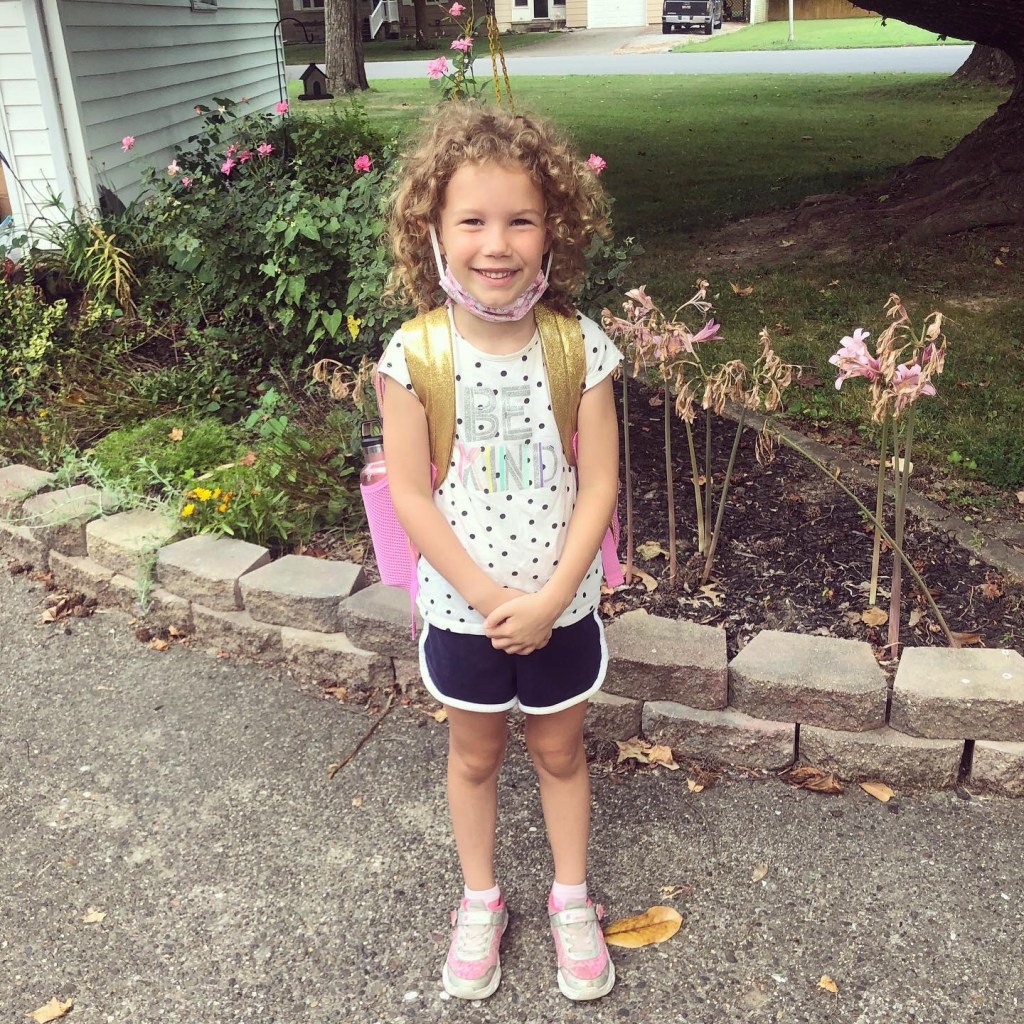
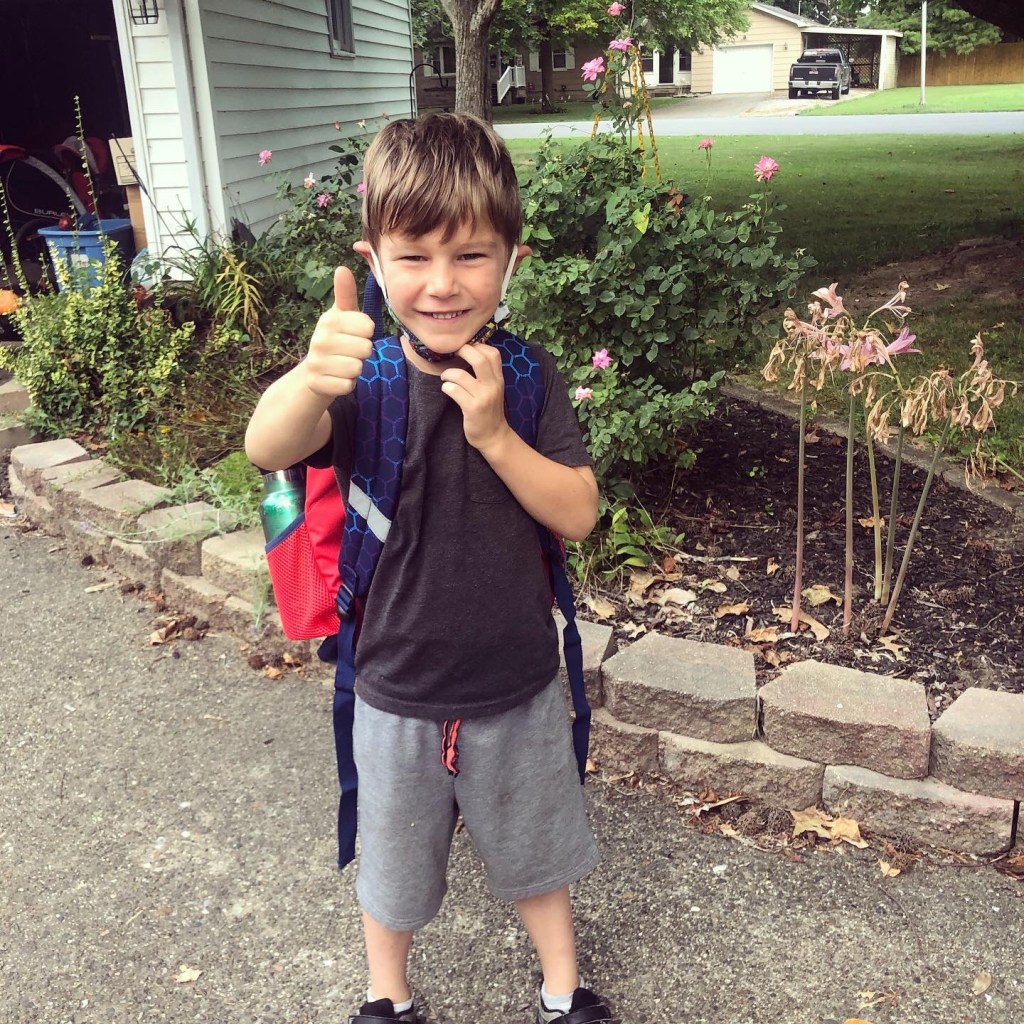
[Evangeline is in 2nd grade – and check out those nice sneakers!][Theo is in Kindergarten]
I also was scrambling to get myself registered to take some classes at the local community college. Turns out, having a bachelors degree and trying to return to college after fifteen years is a huge headache. I had to call every school I’ve ever been to, every testing center I’ve received credits from, and every person on the college staff to try to get registered in time for classes to start.
Somehow, miraculously, it all came together just in the nick of time and I am now taking two prerequisite classes for the nursing program at Southeastern Illinois College.
On top of that, we had family in town for a week [the first week of school for me and the kids, no less] which was fun, but exhausting.
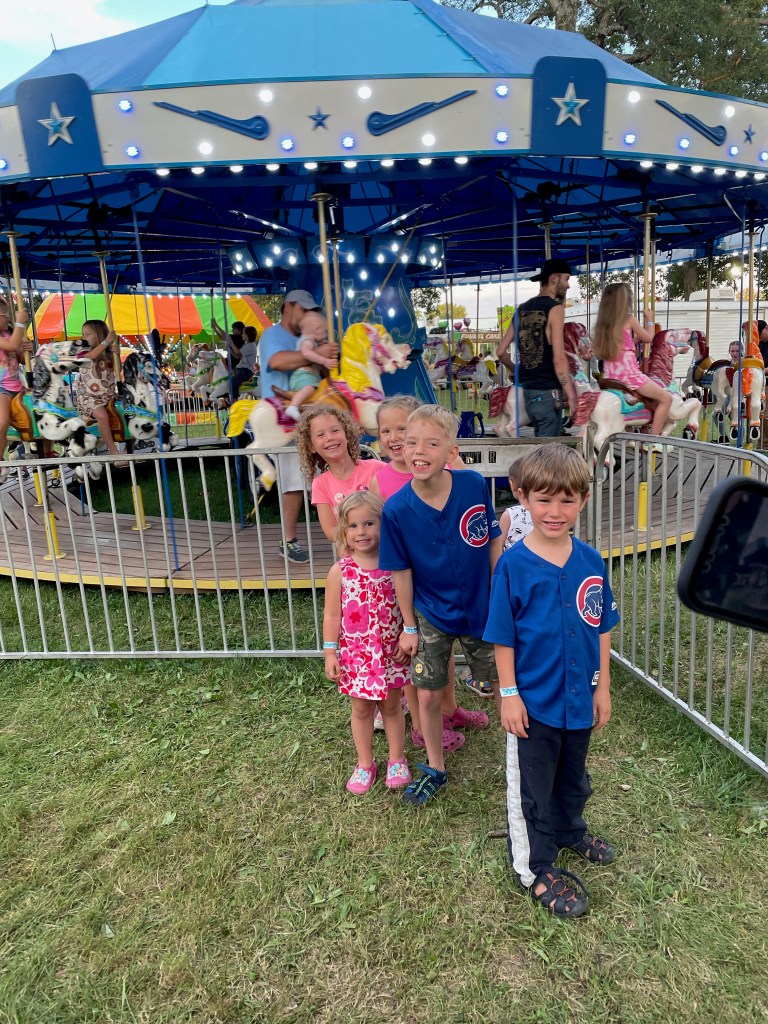
[My two youngest girls and their cousins at the zoo][At the county fair][At the park]
Also, our cat [and by “our cat” I mean a stray that my kids fell in love with and we now feed and let live in our garage] had a litter of five kittens who are absolutely adorable, but began wreaking havoc in our garage and created an absolute infestation of fleas, which had to be treated, and then treated again, and then treated again. And now we have five kittens wreaking havoc in our kitchen.
[Proud and exhausted momma cat with her day-old kittens][As irritating as it is that we took in a stray cat just in time for her to have FIVE MORE CATS, they are really stinkin’ cute].
And last, but not least, I’ve been sick for two weeks now with some sort of cold, cough, allergy thing that has me using my son’s nebulizer three times a day. We’ve ruled out Covid, though I never thought it was Covid because I never had a fever or any flu symptoms, just this frustrating and frightening inability to get oxygen into my lungs.
I think the kittens might be to blame.
🤔
So, anyway, I’ve been basically in survival mode. Each day is a desperate attempt to get my kids to school, my own school work done, my household chores managed, my pets [now totaling 9!!!] all fed and walked and let out and litter emptied, etc…and not hack up a lung or pass out from lack of oxygen in the process.
[This is what survival mode often looks like in my house]
Sometimes, being the one who stays home all day really sucks. Sometimes, it’s nice. Or at least, sometimes it’s nice in theory. But in reality, I’m just taking it day-by-day. Just trying to hang on until we get into a rhythm…or the kids graduate from high school…or at least until we find homes for these kittens!
But, lest I sound ungrateful for my incredibly privileged existence on this earth, here are some of the photos of good times last month [more as a reminder for me than anything else]:
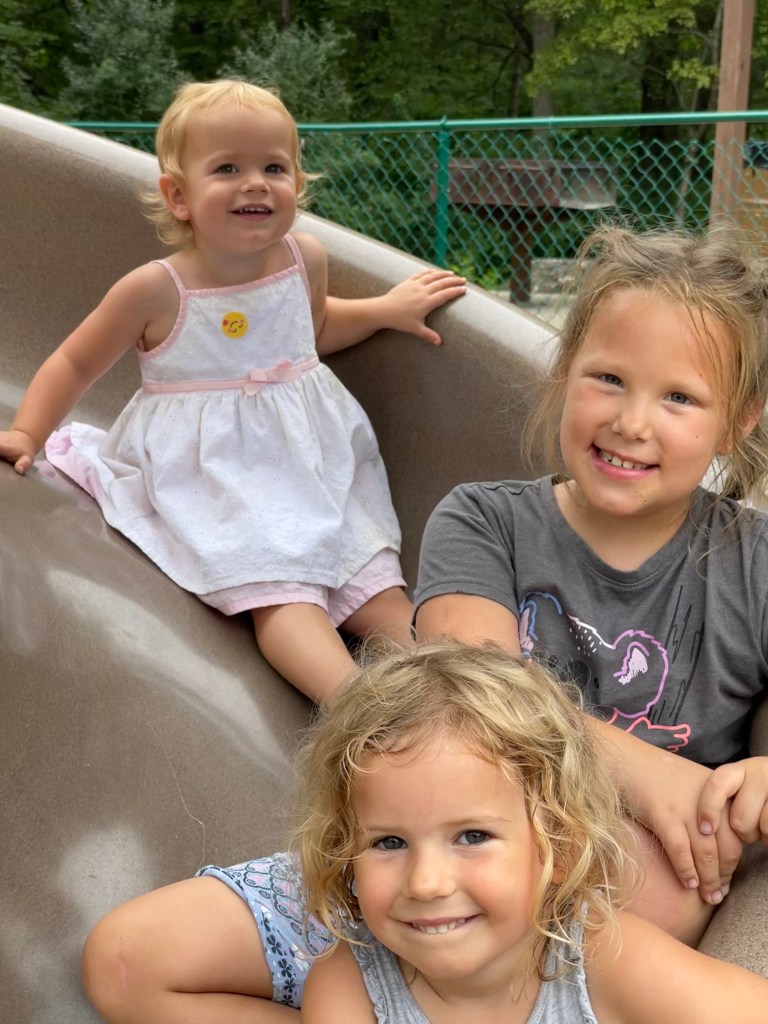
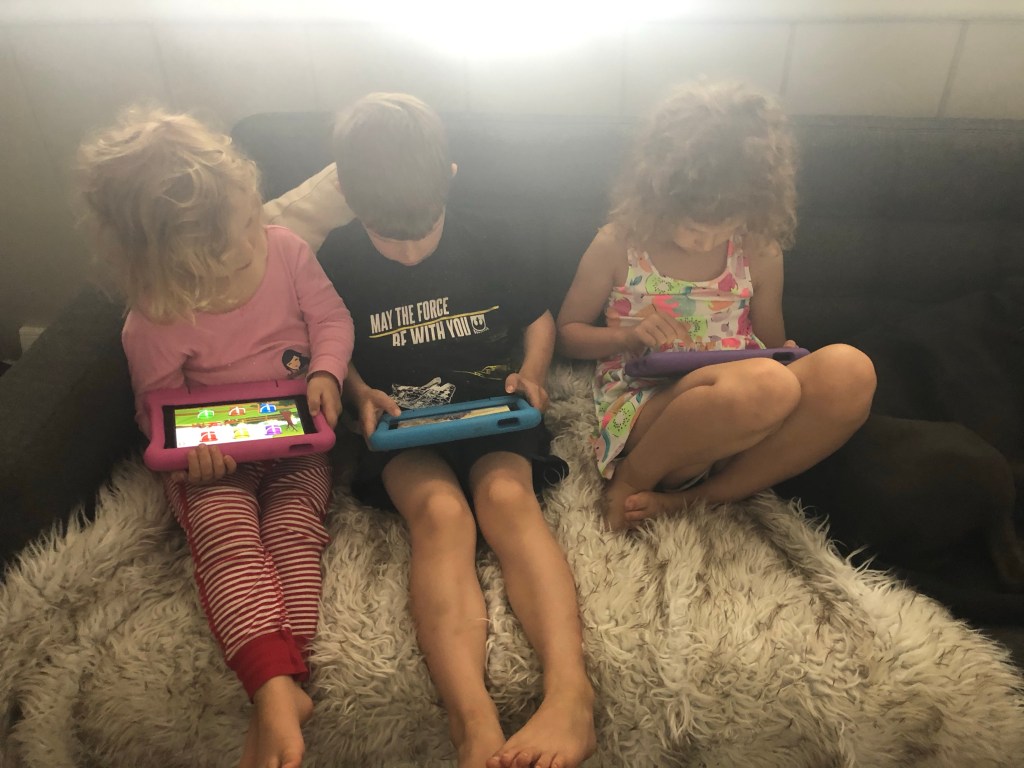
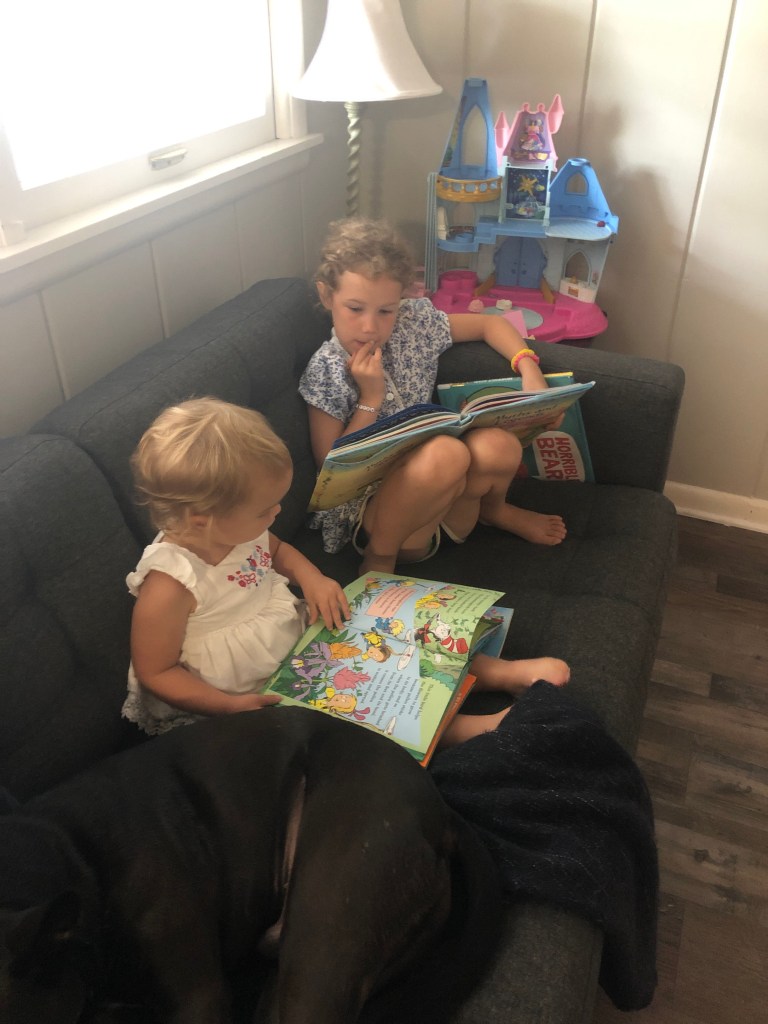
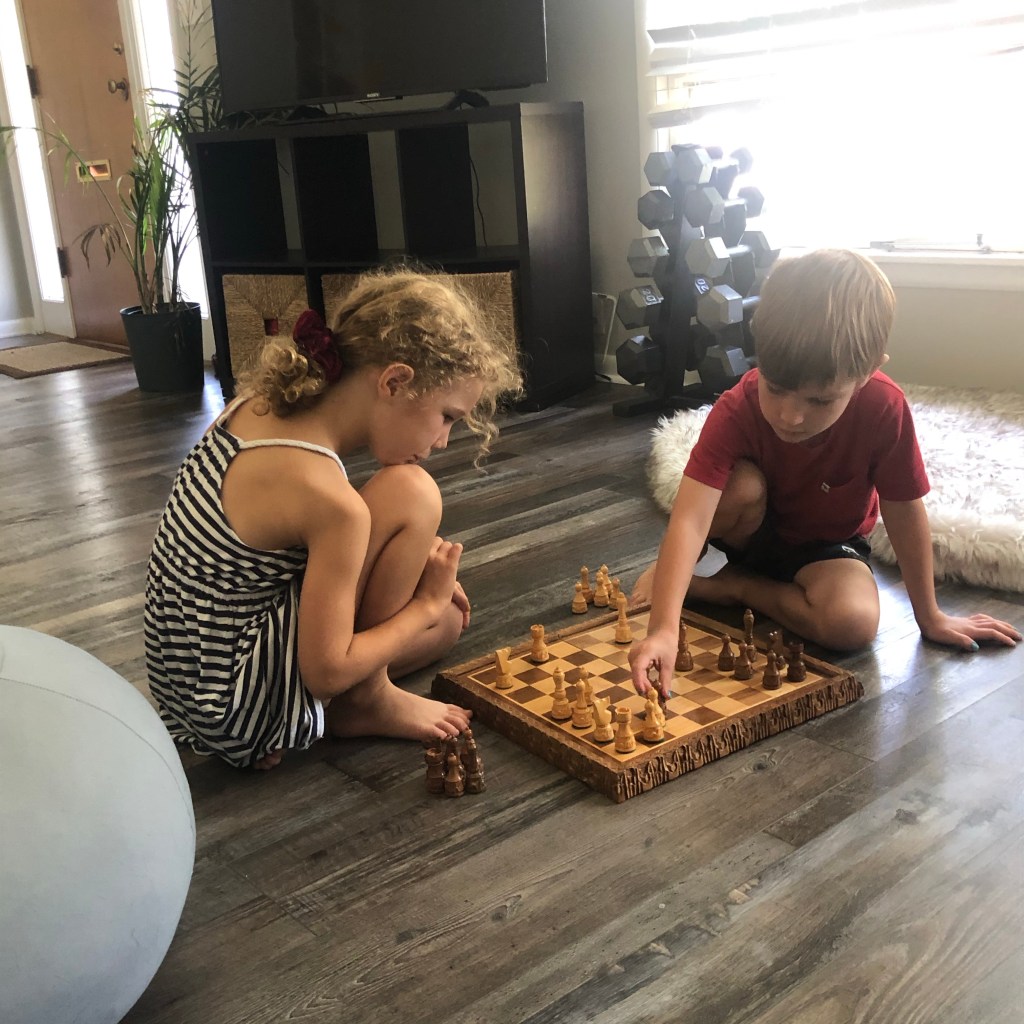
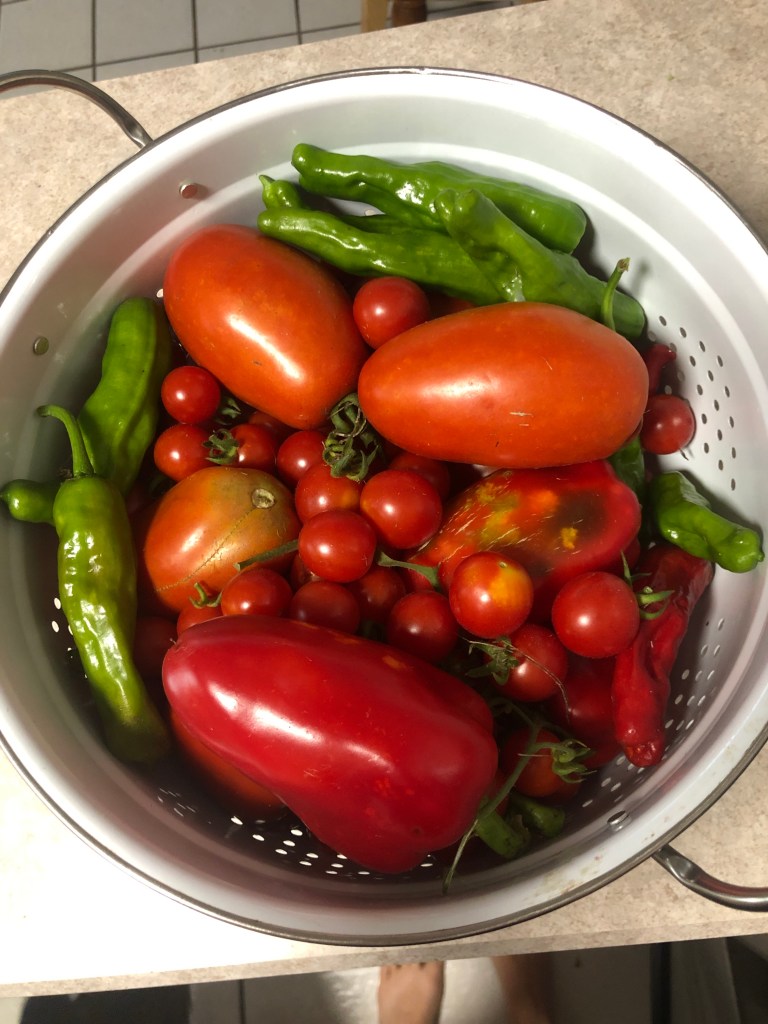
[Lots of time with my babies][Breakfast date][Baking muffins…lots and lots of muffins][These two are my book lovers][Learning to play chess – Theo LOVES it!][Evangeline got a karaoke machine for her birthday and she LOVES it!][Still getting lots of yummy food from our garden!]
Anyway, I didn’t post much last month because I’ve had a lot going on, but I am going to be better this month.
Some things I plan to write about are:
My attempt at vegan carb-cycling
My new safety razor
My family’s unprocessed meals
My kids minimalist wardrobes [another post in my Simplifying Parenting series]
And anything else that strikes my fancy…
Thanks for letting me unload all that on you! I hope everyone else had a better August than I did!




























 No Makeup Mama