Racism in America: Breaking the Cycle

Racism in America: Breaking the Cycle

I am a mother of four kids, who are my whole world. I have other identities – partner, minimalist, personal trainer, environmentalist, baker, health freak – but they all revolve around my primary role as a mother. Sometimes I am envious of other women who have glamorous corporate careers while I spend a large portion of my day chopping food into bite-sized pieces. But I am glad that I am able to spend these formative years with them, since this is a luxury that many mothers do not have.

Because being a mom is such a large part of my life, and because this blog is about motherhood [well, motherhood and other things, obviously], I wanted to share how I am trying to raise my kids to be racially-aware, inclusive, and anti-racist.

Are Kids Born Racist?

I don’t believe that racism is a part of the human nature, though its existence is evidence of the general selfishness of humanity. Rather, I believe that racism is a learned behavior, passed down through the generations, whether intentionally or subliminally.

Racism: a belief that race is the primary determinant of human traits and capacities and that racial differences produce an inherent superiority of a particular race

There is evidence to support both sides of the issue. Some studies have concluded that children are born with a preference for their own race, and other studies have shown that children learn racist beliefs from their parents, schools, and culture.

I agree with the research that indicates that we are most comfortable with people who share our race and culture because it is most familiar to us. That just makes sense. Our first encounter with a different race may be startling or uncomfortable, but that does not mean that we are racist – that we believe that our race is superior. It means that we fear the unknown. Which is why research has also found that the more time we engage with people of different races [and cultures and beliefs and lifestyles], the more comfortable we become with these differences.

Because institutional racism is so ingrained and so automatic and so accepted, without enough people wanting to enact true, long-lasting change, institutional racism ends up becoming our personal bias.

Sarah Gaither, Assistant Professor of Psychology and Neuroscience at Duke University

A great article about this can be found here [partially quoted above.]

I can also see from my own kids that we are not born racist. My children are happy to play with any other kid, it doesn’t matter in the least what color skin they have. My daughter, who is incredibly outgoing, won’t let race, age, gender or even a language barrier stop her from becoming best friends with other kids at the library or on the playground.

Breaking the Cycle of Racism

It is important to understand that racism is learned because that gives us hope that our children do not have to necessarily become racist adults.

[I know many adults don’t believe themselves to be racist, but as I wrote about it in My White Awakening, unless we have been actively working to overcome our own prejudices, we all have racial biases that inform our view of the world and we all benefit from a racist system based on white supremacy].

We have the ability to end the cycle of racism.

What this means to me is that I have to be especially careful not to taint their worldview with prejudices or biases or any negativity toward people who differ from us. Of course, I would never do that intentionally, but, as I realized while examining my own childhood [which I wrote about in my first racism post], racism often gets passed down from generation to generation very subtly. So in order to not unintentionally perpetuate racist beliefs, I have to intentionally teach my children inclusivity and equality.

It is up to us as parents to ensure that we put an end to the subliminal messages of racism.

1. Talking about our differences [including race]. The first thing that usually happens when kids encounter people who are different is that they ask about it – usually very loudly and in front of the person they are talking about. Rather than being embarrassed and trying to hush my kids, I usually give an apologetic smile to the individual and then give my kid an honest answer. Sometimes if the stranger is standing there, I let them answer for themselves. I view these moments as opportunities instead of embarrassments [even though they are usually still embarrassing], because they allow me to talk to my kids about how we are all different and that’s okay. And this is not limited to race. Some people ride in wheel chairs, some people have curly hair, some people wear hijabs, some people have nose rings, some people are missing teeth, some people speak a different language, some people have lighter skin, and some people have darker skin, because we are all different – but we are all people.

These are some unwritten rules that I have been teaching my kids:

  • We praise our differences. I allow my kids to ask questions, without feeling shamed for noticing differences. It is okay to notice that people are different from us. The key for me has been to speak positively about these differences. Differences do not divide us, they make us unique and special. They make the world a more enjoyable place to live.
  • We recognize that we are all different. I want my kids to understand that to us, someone’s skin may be dark, but to them, our skin is light. It works both ways. We may think they eat strange food, but they probably think that our food is strange, as well. I am trying to teach them that the world does not revolve around their perspective. This is the beginning of apathy and compassion for other people – being able to put ourselves in their shoes and imagine what they world feels like for them.
  • We treat everyone with kindness and respect. Again, this is not just limited to race. In fact, I think these are all very important lessons for loving and accepting all people, regardless of their race, culture, religion, orientation, family structure, outward appearance, abilities or disabilities. Teaching my kids the inherent worth of all human beings is vital to ending racism.

Of course, accepting that people are all different is great, but our culture will still teach them racist ideas if we don’t intentionally intervene, which is why the job is not done here.

2. Exposing them to many races and cultures. I love other cultures, so it is a lot of fun to learn how other people live. I want my children to understand that the world is a very big place and it is filled with all kinds of people who believe different things and eat different things and wear different things and, yes, sometimes look differently. One of our traditions during the Christmas season is to celebrate other holidays from around the world. We also like to attend the “Diverse Voices Story Time” at the library, which includes songs in another language and some stories about people from diverse backgrounds. Hanging out at libraries and parks and public places gives us the opportunity to meet people of different cultures and races. And we enjoy going to local festivals and events which offer opportunities to expose my kids to other cultures. As more of my kids enter school, they will meet more kids of different races and I look forward to watching their relationships develop unhindered by the negative affects of racism. I hope that all of my kids experience a much more multi-cultural upbringing than I did.

A children’s book that doesn’t explicitly deal with race, but shows multiple different races within one family and talks about different foods and customs.

As I mentioned previously, research has shown that the more exposure we have to different races [and differences, in general] the more positively we feel about them. This makes a lot of sense, because oftentimes, we don’t interact with people outside of our own race and so we really have no experience to teach us that racial stereotypes are wrong and hurtful. We have to engage with people who are different and when we do, we will discover that they are just people like us.

I don’t want to raise my kids in a white world – I want to raise them in the real world.

3. Teaching the history of racism. This year around MLK Day, we picked up several kids books about the Civil Rights Movement. These books were the perfect way to discuss some of the unpleasant truths about racism in America’s history. One of the books also talked about the holocaust and anti-Semitism. I realized that I need to be more intentional about teaching my kids these important stories. We need to talk about the injustice that minority groups around the world have suffered at the hands of white society. We need to know their stories of struggle. We need to feel the weight of our whiteness.
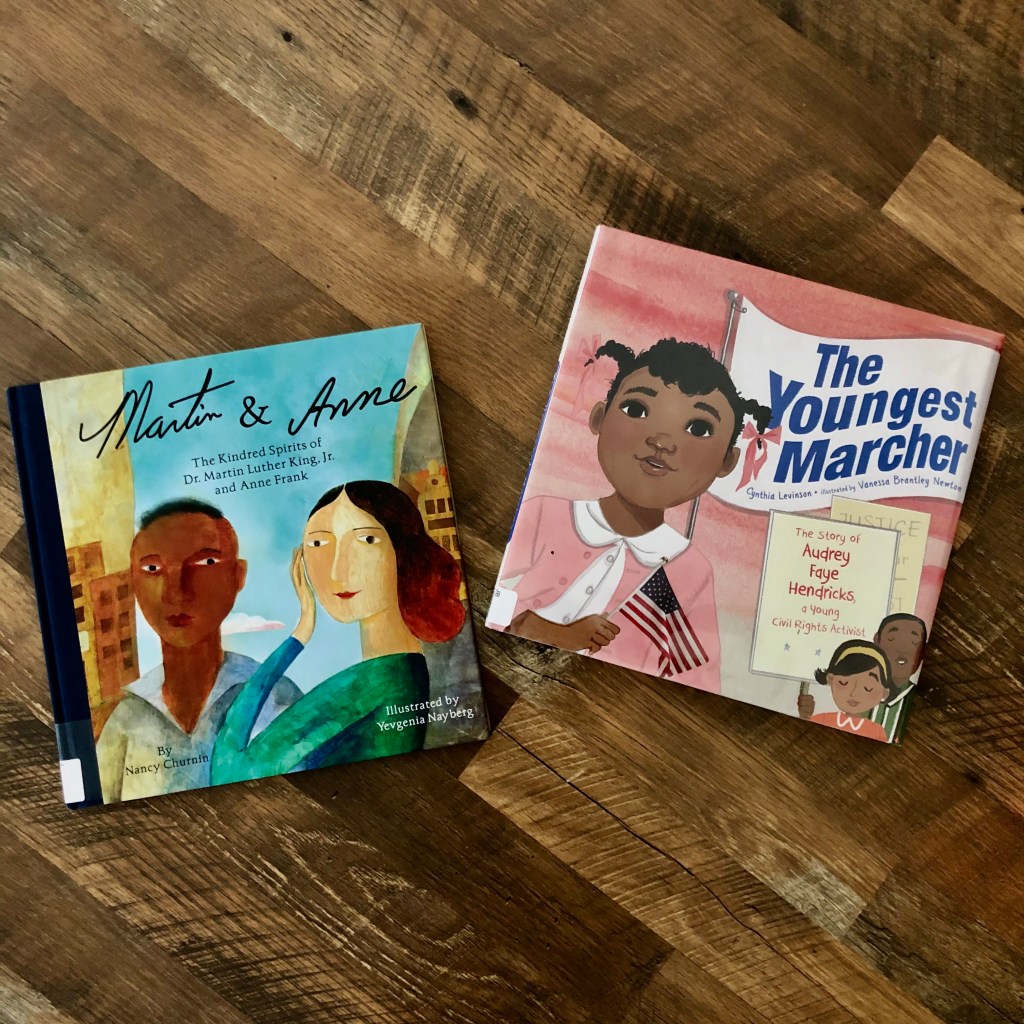
Additionally, I need to teach my kids stories of minority leaders and heroes and champions and victors. I cannot allow them to grow up with only white protagonists. The same books I mentioned earlier told the stories of MLK and Anne Frank and Audrey Faye Hendricks, real-life heroes who I want my kids to look up to. There are also excellent books about leaders, mathematicians, scientists who prove that race and gender do not determine intelligence or capabilities.

4. Providing diverse toys and books. As a white family, it is easy to end up with all white toys and books, but this is not sending the right message to my kids about other races. I want them to grow up surrounded by diversity, and that starts in the home. In order to do this, I have to basically enforce affirmative action for the toy bin. I want the toys and books and television programming that my kids experience at home to mimic the real world.
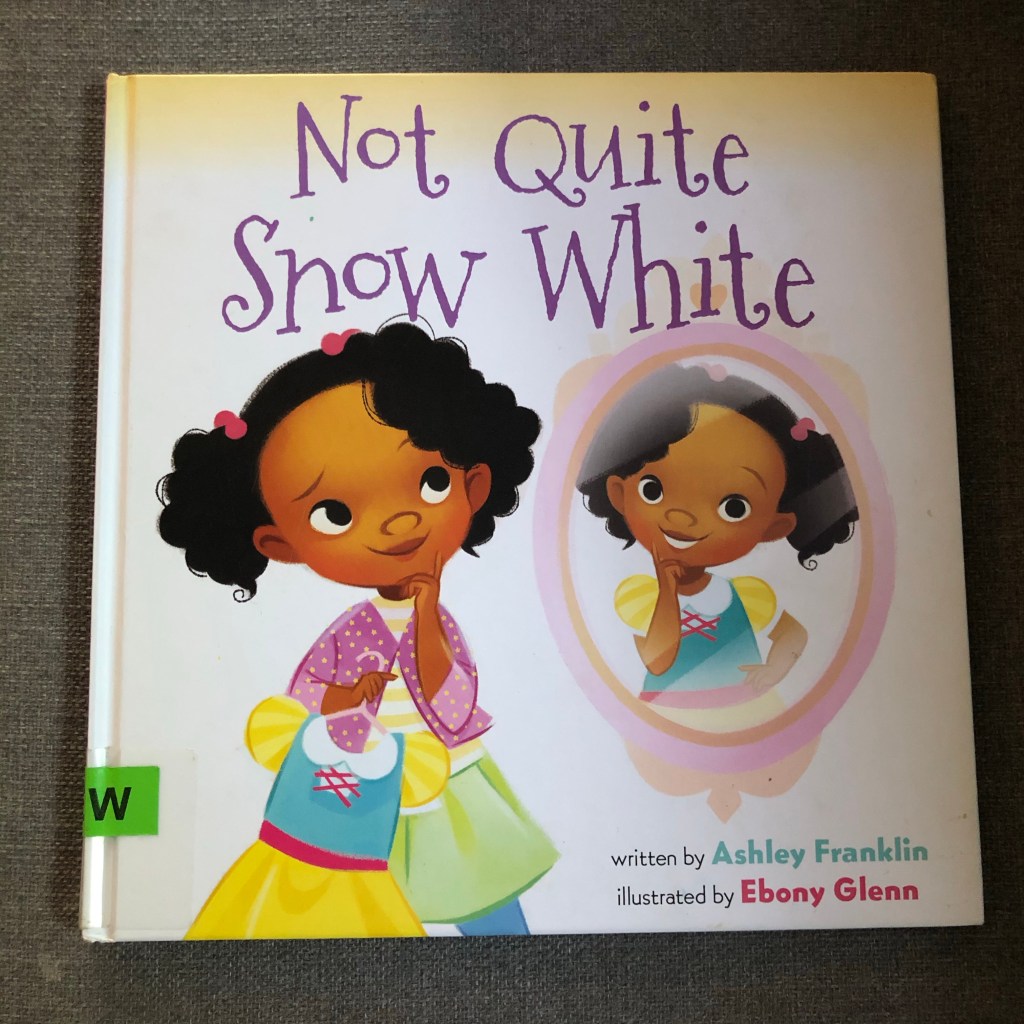
This is a great book that deals with race in an age-appropriate way.
I picked up this book because our family was moving and I thought it would help my daughter adjust to the idea. I love how my daughter only noticed how much she had in common with the little girl in this story – not how they are different.

We don’t buy a lot of toys for our kids [and at these ages, they are usually animals anyway – Paw Patrol, My Little Pony, Baby Shark] but I have started intentionally including diverse books and being more aware of what races are represented in our home. Black is not the only race that needs to be represented. My kids also need to be exposed other minority groups – some of which are harder to find represented in the toy aisle, evidence that we still have work to do.

We also no longer allow toys that depict racial stereotypes [such as “cowboys and Indians”]. We don’t allow programming that depicts certain races as inept or inferior or as always “the bad guy.” And, though a slightly different discussion, we don’t allow toy weapons of any kind because weapons are for the intention of harming someone or something, and that should never be a part of play.

5. Model anti-racist activism. In my previous post, I wrote about all the ways that I am supporting the racial justice movement. I can’t turn all my kids into little activists, but I can show them by my example that there are things that we can do about injustices that we see in the world.

As I have said before, there is a difference between “not being a racist,” and “being anti-racist.” An anti-racist actively denounces racism in all its forms and promotes equality for all races, ethnicities, and cultures. As a parent, I want my kids to not be racist, but I also want them to be anti-racist.

My hope is that by immersing my kids in the “melting pot” that is American society and modeling an anti-racist mindset, my kids will be able to break the cycle of systemic racism that is so often perpetuated in white families.

How are you promoting racial equality with your kids? Would love to hear other input – especially from parents of older kids.

👧🏼👦🏼👧🏼👶🏼

Karis

Racism in America: Becoming an Anti-Racist

Racism in America: Becoming an Anti-Racist

There is a big difference between “not being a racist” and “being anti-racist.” An anti-racist actively denounces racism in all its forms and promotes equality for all races. To be anti-racist implies action.

anti-racism (noun): the policy or practice of opposing racism and promoting racial tolerance.

Since I learned about the existence of systemic racism and white privilege several years ago, I have been asking, “What can I do about it?” I read book after book discussing the history and the reasons and the causes and the effects, but what do I do??? I basically wanted someone to say, “Call this number. Say ‘Black Lives Matter.’ And done. Problem solved.”

As if it was going to be that easy. But that’s what I wanted. I wanted an easy solution. I wanted something I could do quickly, that wouldn’t interrupt my day or challenge my lifestyle or disrupt my status quo. I wanted a solution that didn’t cost me anything.

Unfortunately, that’s not how change works. So I stopped asking, “What can I do?” and started asking “How much do I care?”

Turns out, I care enough to give money to the cause, to show up at the protests, to speak to all of my friends and family about race, to spend hours reading and re-learning history, to teach to my kids about racism, to fill my home with diverse toys and books, to participate in my communities interracial programs, to celebrate other cultures, to learn more about my own heritage, and more. The opportunities for involvement are endless, but first we must be willing to make some changes.

So, here’s how I’ve become an anti-racist, and how you can too, should you want to make the world a more just and fair place.

#1. Get Angry

I had to get angry enough to do something about racism. I cared before, but I wasn’t angry enough to do anything. I had to confront all of the uncomfortable truths about race and racism and how white people have treated people of color throughout history. I had to read the true stories of slaves being beaten, families being torn apart, segregation, lynchings, suffrage, black people being wrongfully accused, convicted, and murdered by the government, redlining, mass incarcerations, and voter suppression – many of these things continue to this day.

Last year, when the miniseries “When They See Us” was released on Netflix, I watched the preview and looked up the case of “The Central Park Five” since I had never heard the story. I was so horrified that I told Brett that I couldn’t watch it right then because I knew it would be very upsetting, but I added it to my list for later.

I should have watched it right away. I should have been willing to get angry back then. Instead, I preferred to not look too closely, to not confront the truth, to not get too uncomfortable, to not get angry.

As a white person, I don’t feel the effects of racial inequality personally, so it is easy for me to deny or forget that it exists. But when I watch an unarmed man being killed in the street because of racial bias, I get angry. When I watch the portrayal of Bloody Sunday in the movie, Selma, I get angry. When I read Solomon Northup’s story of being kidnapped and sold into slavery, I get angry. When I hear my brother’s stories of his best friend being harassed by police because he’s black, I get angry.

Anger at injustice is the fuel we need for change.

The black community in America is already angry, and rightly so. But as white people, we also need to get angry. And in order to do that, we need to know the truth. As James Baldwin said, in the film, I Am Not Your Negro, the problem is not that white Americans have anything against black people, the issue is apathy and ignorance. And we can solve both of these problems by opening our eyes and ears to the truth.

Relearning the Past

First, I had to understand the history of racism and how it remains deeply imbedded in our current society. If I don’t know how systemic racism came to be or how it still affects people of color today, then I won’t be of any use putting an end to it.

It continues to shock me that we actually have a “Black History Month,” practically admitting that we spend the other eleven months studying white history. The fact that this month exists shows that we have a problem. It is proof that we have not given black history enough of our attention in the past. If the schools won’t teach it, then we must teach ourselves.

Here are three sources of information that have had the biggest impact on my understanding of racism:

  • “Explained: The Racial Wealth Gap” – a 16 minute Netflix show explaining how the wealth gap is a result of systemic racism
  • 13th – a documentary by Ava DuVernay about the connection between our current system of mass incarceration and the racism that it perpetuates
  • Waking Up White – book by Debbie Irving about understanding racism as a white person

I have read many, many books, but I still have a very long list to read. I have watched numerous movies and documentaries that deal with race and racism, but I am still learning. This self-taught class on black history will most likely take me the rest of my life. But that is okay, because I need to be continually reminded that my life of privilege is at the expense of another life. This is what motivates me to take a stand against racism.

Listening to the Present

Besides just re-learning history, we have to learn about the current experiences of people of color. The best way to do this is to listen to the people of color around us. Sometimes it is easy to try to explain away a racist comment or make excuses about it or simply not believe someone’s experience, but if we want to know the truth, we have to be willing to listen and accept it.

As my friend Brianne puts it so well, “I don’t want people to feel ‘guilty’, but I do want them to acknowledge the things they have that others do not, and that one reason they have them is because of their skin tone. I would want them to try and be empathetic to the plight of millions of their countrymen and to listen to them when they try and explain how they feel. Don’t be defensive. Don’t tell me how you didn’t personally own slaves. Just listen to someone when they tell you the things that happen to them on a daily basis.”

We need to do more listening and less defending.

I attended a few “round table” discussions so that I could hear the responses of the black community to George Floyd’s murder. I also learned a lot from at my city’s protest about what it is like to be a person of color living in my town. And here are two more ways that I learned about what it is like to be black in America today:

  • “Where Do We Go From Here” – Oprah Winfrey’s Town Hall Special available on Youtube
  • Between the World and Me – a book by Ta-Nehisi Coates

I love this article by NPR, because it is 100% true. Educating ourselves about racism is just the first step to changing the system. And it’s also not a one-time fix. White America needs to be continually educating ourselves about race so that we do not allow the strong emotions surrounding George Floyd’s murder to slowly fade back to business as usual. In order to truly create change it will take time. We cannot correct five hundred years worth of wrongs overnight, or even over several months. It will require that we get angry, and that we stay angry until the problem has been solved. Which is why we have to move from being angry, to the next step.

#2. Show Up

Once I was angry enough to do something about racism, it was time to show up. I thought about saying “step up,” but the truth is that white people have a tendency take over. If history has taught us anything it is that white people always believe that their way is best. Sometimes, however, like in the fight for racial equality, it is best for white people to take a supporting role. It is not our job to dictate how or when or where protests happen. It is not our job to criticize or correct or give our unwanted advice. It is not our job to patronize or discredit the stories and experiences of people of color. What we need to do is be supportive and show up. Not take over. Just show up. We provide support with our presence, with our voices, with our fists in the air, when necessary, but always in support.

That being said, there are a lot of great ways to show support for the racial justice movement, and these are the ones that I am doing:

  • Giving money. As a white middle class American, throwing money at the problem is probably the easiest thing to do, so it was the first thing I did. If you are uncertain where to give money, look up organizations in your area that are promoting racial justice and policy change. Or you can give to Black Lives Matter, the NAACP, or the ACLU.  
  • Talking to people about race and racism.In the white culture I grew up in, no one talked about race. And when I did start talking to friends and family about race, it was not received well. I was viewed as “liberal” and “divisive” and “argumentative” and “accusatory.” Navigating these discussions can be tricky and you may upset a few people.  [I read the book Talking Across the Divide by Justin Lee to help me communicate more effectively with people who disagree with me on these issues. I highly recommend this book.]
  • Voting in local and federal elections. It is hard to admit that I didn’t used to vote at all, especially now that I understand how hard people of color and women have fought to have the right to vote. Voting is not the cure-all, as it is sometimes believed, but with the help of social change, voting can make a big difference. We have to vote for the people who will promote equality and justice, and we have to vote for the policies that ensure fair treatment for all people.
  • Signing petitions, making calls, and writing letters. Once we understand the issues, we have to make our voices heard to our local governments, our schools, our police departments. We have to ask for change.
  • Getting involved in protests. We show our support for the cause when we physically show up on the day of the march with our signs and say, “We care about your rights as much as our own.”  I went to my first protest a few weeks ago and it was a moving experience. If you believe in the movement, then I highly recommend you physically participate.
  • Examining my own racial prejudices and changing myself. I’ve done a lot of this work already, which I talked about in my last post, but it is an ongoing process. I still have work to do. Our worldviews are deeply ingrained and very hard to interrogate objectively, but we have to consider the possibility that we are in some ways [or many ways] part of the problem of racism in this society. And then, once we can accept our responsibility, we must commit to changing ourselves.
  • Breaking the cycle of racism by raising anti-racist kids. I will talk more about this in my next post.

This list is by no means exhaustive. There are many, many ways to promote equality, and I intend to continue to improve in this way over time.

I found that for myself personally, I wanted to do something, but not know what to do was becoming an excuse for not doing anything. I realized that if I really want to see change happen, I have to push myself out of my comfort zone and do things that are hard. It is easiest for me to give money and tell myself that I am doing my part, but I care more than that. I can do more than that.

Change never comes easy. I’m a personal trainer. I know. I work with people who want to change all the time, but the truth is, no one can change themselves or their community and definitely not their world without digging deep and doing the hard stuff.

That brings us to the final thing that I am doing about racism.

#3. Break the cycle.

As a white parent, the most important and most challenging responsibility I have is to raise anti-racist kids who will not only accept and embrace people of all colors and orientations and religions [as most of us were taught to do], but will actively take a stand against injustice at its root which is in the system and within ourselves.

Because this area is so important to me, I’m going to post separately about how I as a white parent am teaching my kids to be an anti-racist.

✊🏾✊🏿✊🏻

Karis

Racism in America: My White Awakening

Racism in America: My White Awakening

The current events around the murder of George Floyd have brought a lot of attention to racism in America and I want to share my story of how I became aware of my own whiteness and the ingrained racism that comes with it.

As a white person, I had the luxury of growing up without ever thinking about my race. This is one of the greatest privileges of being “white” – never having to feel like an outsider in my own country, never experiencing an act of racism or being called a racial epithet, never being in a situation where my race was not represented. In fact, I lived in a totally white world and my concept of race and racism was always in the context of other people.

My journey to racial awareness began in 2017 when I read Where Do We Go From Here: Chaos or Community by Martin Luther King Jr., which was the first time I really confronted the issue of racism and began asking questions. Shortly after reading the book, I watched an episode of Netflix’s docuseries “Explained” entitled “The Racial Wealth Gap.”This sixteen-minute show was the first time I really saw how unfair our current system is and I could not believe it. I began talking to all my white friends and family about race. I was amped up. I could not believe that no one had told me how unfair our system was. No one told me that there really was legitimate injustice embedded in our policies that has caused the wealth gap and ghettos and mass incarcerations and other forms of oppression that still exist today. I immediately began telling everyone that we had to do something. My understanding of the problem was very limited at the time, but I told my white friends and family that we [being all “white” people] had to correct this injustice by #1) apologizing to the black community for allowing this to continue and #2) providing reparations in the form of money or housing or land or whatever is necessary to right these wrongs.

Let me tell you, I was met with such a strong and powerful resistance from my white community. I have had many white people – God-fearing, Bible-believing, good white people – sit on my couch and tell me that there is no such thing as systemic racism or white privilege. That we don’t owe people of color anything. That slavery was unjust, but it is in the past and we don’t have to pay for the sins of our ancestors. That giving people handouts just makes them lazy and not want to work for anything. That handouts are what has caused the problems for poor communities to begin with. That people claim to be oppressed because of their race, when they are really just wanting special treatment. That reverse racism is the real evil in the world.

In my opinion, these statements are just excuses that we [white people] make to protect our wealth and interests. I believe that if white Americans took responsibility for the injustices that continue to oppress the black community, we would have to make sacrifices in order to right these wrongs – sacrifices that we, as of yet, are unwilling to make. If there is anything that I know about America [and maybe all of humanity], it is that we base our social, financial, and political decisions on protecting our wealth. If the love of money is the root of all evil, then America has to be the most evil place on this planet.

White Lies

There are so many white lies [and by “white lies” I’m talking about lies that white people tell themselves] that are purely for the purpose of justifying our selfishness. For example, white people love to tell themselves that they are not wealthy, despite being in the top 1% of the wealthiest people on the planet. White people love to tell themselves that they have worked hard for what they have and are entitled to it because of their efforts, completely ignoring the 400 years of slave labor they received which created their wealth in the first place. White people love to tell themselves that if other people worked as hard as they do, then they would also have plenty, despite the overwhelming evidence that all of our current systems work to assist white people and hinder people of color. But the most heinous of all the white lies is that racism doesn’t exist and the white community is not responsible for the suffering of the black community, when our success is directly related to their oppression.

These are the lies that I heard from the white people I discussed race with. And it simultaneously broke my heart and pissed me off. I can only imagine how infuriating it is to be a person of color in this country where racist ideas are so deeply ingrained that the majority don’t even believe that they exist. That is when I discovered that racism runs much, much deeper than just mean-spirited acts of racism or overt racist jokes and slurs. Racism is a much more subtle, insidious disease that affects even the most well-meaning white person.

Turns out, before I could even deal with what racism means for people of color, I had to confront my own whiteness and discover what racism means for me.

Growing Up White

I have started my own racial healing, by way of the book, The Racial Healing Workbook by Anneliese A. Singh. The first exercise in the book asked me to think about my own experiences of “race” and “racism.” It took me a while to even think of anything, but over several days, memories began coming out of nowhere to remind me that I was not isolated from the affects of race and racism. I am sharing these memories with you now in the hopes that you will see that even good, Christian white folks have experiences that shape their understanding of race and often times, though not mean-spirited, these experiences perpetuate our culture of racial prejudice rather than putting an end to it.

My first memory of recognizing a different race was when I was a little kid I saw a picture of myself as a baby being held by a black man. I was told that I loved this man, which surprised everyone. They had expected me to be afraid of him because he was “so black.”

Later, as a kid, one of my favorite movies was the Disney film, Polly, which [I’m horrified to admit] we always called “Black Pollyanna.” I didn’t even know the real name of the movie until I was an adult trying to look it up so I could revisit some of my favorite songs from the film.

In seventh grade, my private school performed the play, Helen Keller, and because there was only one black student in the school [a problem in and of itself], I was cast as one of the “servants” in the show and they literally painted my face black.

In my Christian High School and my Bible College, there were only one or two black students and everyone talked about them being the “token black kids” who were always called on for the school photo shoots to give the impression of a multi-racial campus life in the school brochure.

When I was growing up in Flint, Michigan, my church was all white, except for one family who attended for a short time. My father, the pastor of our church, told me how he had to ask a greeter in the church to stop wearing a confederate flag pin because it was offensive to this black family. What I don’t remember was him using that opportunity to explain to me all of the hatred and oppression represented by that one symbol. Then, just three years ago when I moved into my current home, I complained to my mother that my neighbor proudly hung a confederate flag. My mother defended him saying “Maybe his grandfather fought for the confederacy,” as if that makes it ok. [Side note: my neighbor’s flag has since been taken down.]

My grandfather, the wonderful man that he was, was apparently “uncomfortable with having a black pastor,” which is a nice way of saying that he was racist. But this was excused because he was living in Flint during the time of the race wars.

I have Native American heritage on my mother’s side of the family, but no one knows who or when or how. It’s as if this part of our family history has been completely expunged, my grandmother preferring to be proud of her Irish ancestry. I find it ironic that the most American part of my heritage is the part that no one wants to talk about.

I don’t share this to give the impression that my family or schools were “racist,” because they were not. I could give you a list of a million memories to prove that they were kind, well-meaning people who taught me to love my neighbor and give generously and not judge people based on outward appearances and all of those important lessons about inclusion. However, whether it was unintentional or not, these experiences of race and racism definitely affected my worldview.

Besides my family stories, I also had to admit that I have made many racist assumptions and remarks due to my own ignorance. I have asked people “where are you from?”, minimized black experiences by doubting their truthfulness, been unnecessarily fearful around people of color, made assumptions about a neighborhood based on the race of its inhabitants, and even claimed that people of color use  “the race card.” There was a time when I was against affirmative action and reparations and didn’t believe that black kids my age had it any worse than I did.

Look, I am ashamed of all of this. I feel really badly even writing it. But this is the truth of the subtle and insidious way that racism seeps into our culture. It’s small things, like an off-handed comment about babies being afraid of black men. Or growing up surrounded by all white people so that other races are always viewed as different. Or not feeling safe in a community of colored people.

As I’ve thought over these experiences, I can clearly see how my whiteness has informed my view of the world and impacted my beliefs about other races – whether I like it or not.

And I do not like it. Not one bit. I have gone through the first three stages of grief regarding my own participation in this racially unjust society. I spent the first thirty years of my life denying that racism existed. Then, when I discovered that it did exist, I was really angry about it. Then when I realized that I am a contributing part of it, I was overwhelmed by shame and grief. Now I am on way toward accepting my whiteness so that I can take the appropriate action against racism.

From Grief to Action

Thus far on this journey, I’ve been spending my time trying to learn and understand and become racially aware because these are things that I wasn’t taught. I mean, to me, Christopher Columbus was a hero, and Thanksgiving was when the pilgrims and Native Americans sat down for a happy meal together. I have had to literally go back and relearn history through a more inclusive lens. But despite all of my reading and listening and watching, I’ve only been passively anti-racist. The more I learned about the problem, the more I felt overwhelmed by how massive it is, how insignificant my contribution would be, and how isolated I felt in my own white community.

In March, I read Waking Up White by Debby Irving, which was the first time I had heard a white person confirm that systemic racism and white privilege exist. I felt such a deep appreciation to Debby Irving for helping me to not feel so alone. Then I read Between the World and Me by Ta-Nehisi Coates and I felt terrible for even being white. Then I read Uncle Tom’s Cabin and my heart broke for all of the unspeakable crimes against black people throughout our country’s history. Then I read about the wrongly convicted “Central Park Five” and I was livid that this type of injustice is possible during my lifetime.

And then I heard about the murder of Ahmaud Arbery, and I was so upset that I couldn’t sleep that night. I was enraged and devastated and so frustrated that something as heinous as this crime could happen in my country let alone go unpunished for so long.

And then, I was sitting on my brother-in-law’s couch on the evening of May 26th, when Brett said to me, “You’re going to want to see this.” He sent me the video of George Floyd’s murder.

In that moment, I – like so many other people in this country – had finally had enough. I had to put my foot down. I could not be passive about this war on colored bodies any longer.

Since George Floyd’s murder, I have immersed myself in the voices and stories of people of color. I have soaked in the music, the podcasts, the posts, the articles, the movies, the documentaries pretty much non-stop. I went to my city’s protest, which was one of the most powerful and inspiring things that I have ever experienced. I watched Oprah’s two-part special called “Where Do We Go From Here?” I watched the movie Selma and the Netflix mini-series, “When They See Us” and the documentary 13th. I have been so upset that I sat down at my computer and typed away long into the night. I have had passionate discussions with family members and friends. I have been overwhelmed by sadness. I have been uncomfortable and upset about every new heartbreaking injustice that I have learned about.

I have been sitting in this grief for several weeks now. But all this grieving – though it has an important place in healing – isn’t changing anything.

Now it’s time to do something.

Tomorrow I am going to talk about how I have chosen to support the important work of racial equality and justice – and how you can too.

🗽🗽🗽

Karis

May Shopping Audit [and why I’m auditing my shopping]

May Shopping Audit [and why I’m auditing my shopping]

Now that we are almost halfway through the year, I have started asking myself why I even bother to track my purchases. It is a hassle since I am really only tracking my partner’s purchases because I never buy anything. It has also lead to a few passionate [aka heated] discussions between the two of us on what constitutes a “necessary” expense.

But that is exactly why this is a helpful endeavor [despite the nuisance]. It forces us to consider each purchase, instead of just buying whatever we want whenever we feel like it, which is what we used to do.

But it’s not easy to stop impulse buying. The very definition of the word “impulse” implies that it will be hard to stop. The American consumer culture preys on our inability to control ourselves when it comes to spending. Advertisers use all kinds of tricks to get us to spend money we don’t have on stuff we don’t need. But we have the power to choose more intentional spending habits. It takes discipline and practice, which is exactly what I am doing with this shopping audit.

Questions to Ask for Intentional Purchases

Before we buy anything, we ask ourselves a series of questions.

  • Do we need this?
  • Can we use something we already have?
  • Can we make it ourselves?
  • Is it reusable?
  • How often will we use it?
  • How long will we need it?
  • Can we buy it used?

Honestly, the first two questions usually rule out the purchase. But if we do determine that we really do need it and it can’t be found used, we ask more questions – and these questions are just as important as the first set.

  • What business do we want to support when buying it?
  • What is the most environmentally friendly option for this product?
  • Where can we buy this to ensure it was manufactured ethically?
  • What is the plan for disposing of it at the end of its life?

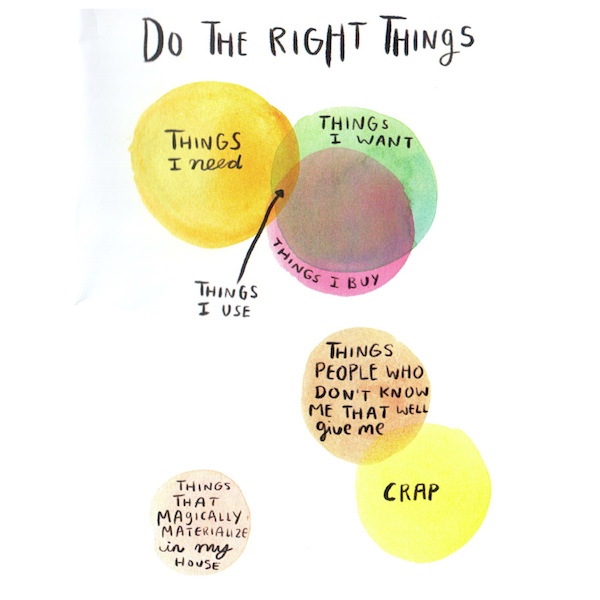
I will once again share this graphic by Sara Lazarovic [youre going to see this a lot from me].

(c) Sarah Lazarovic

The point is not to keep us from making any purchases, but rather to help us make intentional purchases. And, also, it doesn’t mean you can’t ever buy anything you want ever again. We still buy things that we technically want more than need, but we are intentional about it – which makes all the difference.

For example…

The Story of Our Bike Pump

We needed a new bike pump. Our kids are biking every day and I have two jogging strollers [a single and a double] that I use very frequently that needed the tires refilled. Our bike pump broke last summer. So, once we determined that we needed a new one and couldn’t buy one used, we agreed to buy one. However, instead of running to Walmart or Target that day to pick up the cheapest one we could find, we waited until a local bike shop in our town was open so that we could support a local, ethical business with the purchase.

The bike pump was technically a want, not a need, if you define “need” as something needed for survival. I mean we don’t have to go for bike rides or walks. But, let’s be real, this is a source of enjoyment and health and stress relief and quality time and immersion in nature that our entire family adores. We live on a bike path and use it every single day. And in order to continue, we “needed” a bike pump.

So was it a need or a want?

🤷‍♀️

We made the decision that it would be used a lot and could support a local business and would enhance our lives and so we bought one.

I’m sure your thinking [like my partner did], Geez, what’s the big deal about buying a bike pump? But this bike pump is one of many, many purchases that suddenly pops up. Each time, we try to make intentional purchases. In the case of the bike pump, we purchased a new one from a local business. But in many other cases, we choose to do without, or to wait, or find an alternative.

(c) Sarah Lazarovic

A few weeks back, I chopped my hair shorter than Brett’s and wanted headbands to make me look less like my little brother. I could have immediately ordered a set from Amazon, but instead I made some out of the old clothes that are too shabby to donate. When we needed to install a French drain in our yard, Brett could have gone to Home Depot straightaway to buy the necessary piping, but instead waited and – lo and behold! – found someone giving away enough tubing for the whole project. And when I wanted cute little bumblebee candies to put on my baby’s first birthday cake, I did some research and found a cute way to make them myself using almonds instead. There’s also the tea kettle that would be handy for heating water and the bathmat that I’m now making out of old towels and the new television because ours keeps shutting off on us randomly – but none of these purchases are necessary, so we haven’t bought them…yet.

Usually buying less just requires taking a pause before buying the first option that comes to mind. And in the end, if the choice is made to purchase new, then “where” and “what” become important questions to consider.

As Anna Lappé said, “Every time you spend money, you are casting a vote for the kind of world you want.” We have the choice to buy cheap and support big businesses who promote greed in our economy and ourselves. Or we can buy ethically and environmentally and support small businesses – the businesses of our neighbors and friends and our community – and find ourselves less concerned about the money and more concerned about things that truly matter.

So, without further adieu, here is our purchases for May.

What We Bought

Bike pump: $40 – I’ve already discussed this purchase at length above [you should have heard Brett and I discussing it for DAYS].

Mother’s Day Gifts: $184.10 – We sent gifts to both our moms, both of our living grandmothers, and my sweet Auntie Paula who is like a mother to me. Especially during this time of being separated from our loved ones, I thought it was important to send special gifts. However, even these were ethical and intentional. We sent two gifts through Etsy in order to support small businesses. We sent two gifts of Fair Trade coffee from Grounds for Change, which is a family-owned and operated business in Seattle that we frequently support because they are ethical and eco-friendly. And we sent a candle that supports one of our favorite charities, Charity:Water, the proceeds of which will help provide clean water to people around the world. So even in buying gifts, we try to make intentional and ethical purchases that support causes we care about from companies whose values align with our own, while at the same showing our family that we love them.

Diapers/Diaper Cream/Toiletries: $22.57 – I have to include this purchase, though it pains me. We did some traveling last month and so we bought disposable diapers and some disposable toiletry items. At home, we use exclusively cloth diapers and I use a menstrual cup and reusable menstrual pads, but when traveling to stay with family this becomes…uncomfortable. So we typically buy disposables for travels.

Brake parts for van: $96.88 – At least we didn’t have to pay the cost of labor to have the brakes changed because Brett has picked up this skill [among many other mechanic skills] and saved us lots of money over the years.

Bike: $10 – We bought a used bike for Evangeline because she outgrew the one she had been using. Now her old one is being used by Josephine.

Connectors for French drain: $5 – Oh, the joys of home ownership. But again, Brett is saving lots of money by digging the draining and doing all the work himself.

Tube for kids bike: $5 – One of the kids’ bike got a flat, so we had to replace the tube. I told you we ride A LOT!

Total spent: $363.55

Over budget: $134.10 [We weren’t over budget on the month as a whole, but we did technically overspend in the “gift” category – we just love the moms in our life so much!]

What We Are Going To Do With It

Everything we bought [with the exception of the disposable products] will receive lots of love – especially those new brakes for the van.

😜

What We Got Rid Of

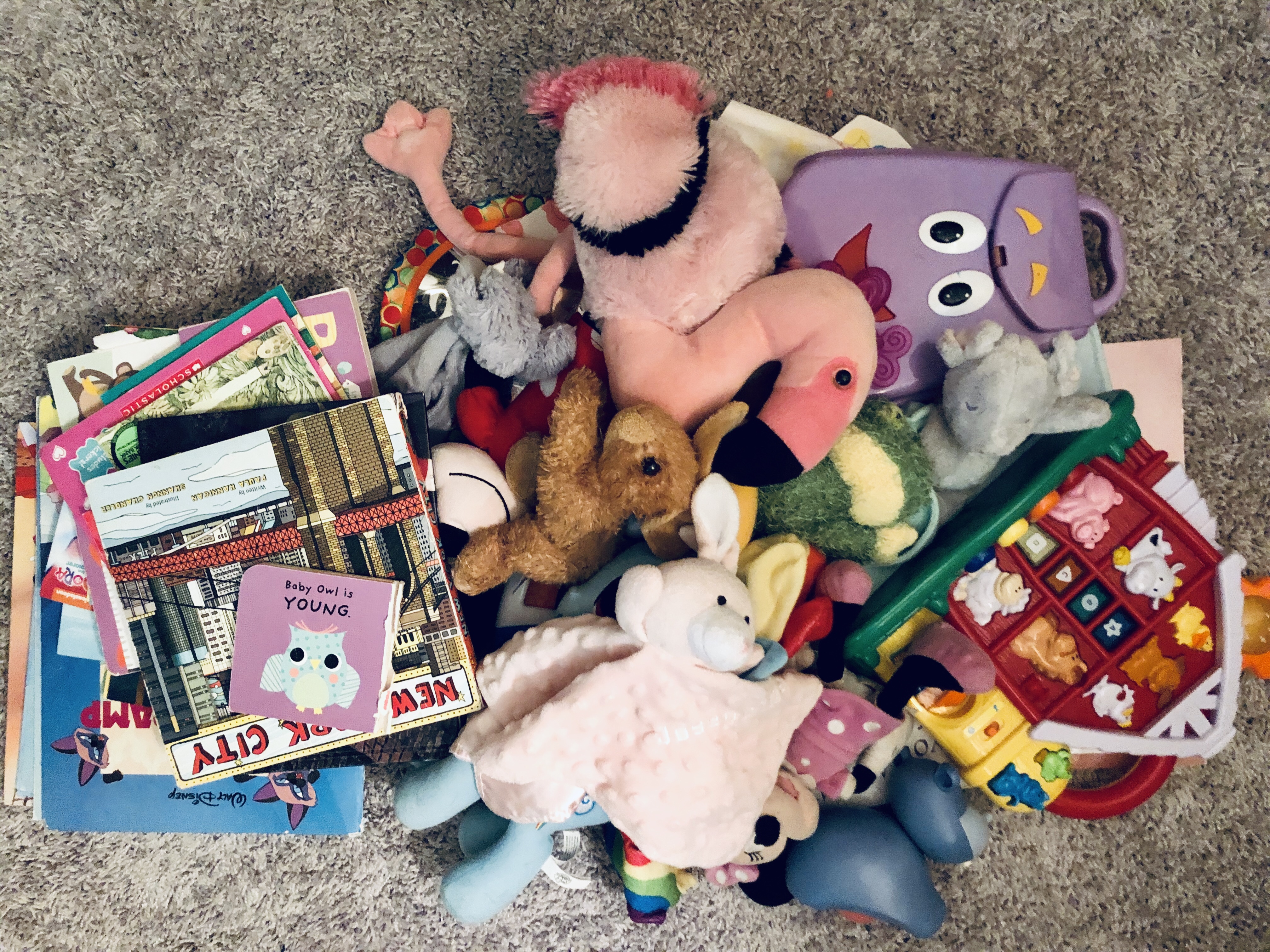
This month we went through the kids toys. I recently read Simplicity Parenting, which reminded me once again how important it is to keep the levels of toys from overwhelming me, and our house, and even the kids.

Thirty-five total books and toys have been temporarily removed to a safe place where they will wait to see if anyone misses anything [they won’t]. Then off to Salvation Army.

The kids’ room is once again under control.

[Speaking of Simplicity Parenting, over the next few weeks I am going to be posting about how we’ve been simplifying our mealtimes, schedules, possessions, and food choices to improve our time together and provide our kids with plenty of opportunities to just be kids.]

Even though we spent quite a bit, we also gave away a lot of money in May to important organizations such has No Kid Hungry, Save the Children, Charity: Water and our local food bank. We spent over $300 on ourselves, but we gave over $1500 away to help people impacted by this global crisis.

Brett and I are both still furloughed from our jobs, but this time has only made us more aware of how blessed we are and rather than stressing about money or worrying for ourselves, we have turned our attention to people less fortunate than ourselves and given what we are able.

This is a very stressful time for our country and our world, so I hope you all are doing okay, staying safe and healthy, and taking care of yourselves and your loved ones!

✌🏻 ✌🏻 ✌🏻

Karis

Lessons in Motherhood and Modeling Screen Time Limits

Lessons in Motherhood and Modeling Screen Time Limits

When I was a little kid, we had one HUGE desk top computer in our basement that we could power up to play a game if we had the patience and determination to actually get the machine on and the floppy disk running. But today, my kindergartner has spent the last three months doing her school work on an iPad – watching YouTube videos, playing math computer games, and reading digital kids books.

Times have definitely changed.

I know that opinions are very strong on both sides of the screen time debate, and so I have no intention of weighing in on how much screen time kids should or should not have. I’ll leave that to the experts. But I have realized that even more important than setting healthy boundaries for my kids is modeling healthy screen time usage for myself.

While reading Carla Naumburg’s book, How to Stop Losing Your Sh*t with Your Kids, it dawned on me that I am breaking many of the screen time rules that I would want my kids to follow. So I decided to set some boundaries for my own screen time.

I don’t have Facebook, but I still often get sucked into spending a lot of time staring at the screen. Sometimes I pick up my phone to check the weather and realize an hour later [after checking emails, responding to texts messages, practicing Spanish, and catching up on news] that I still don’t know the forecast.

But even still, I don’t believe that using my phone is bad [or that you shouldn’t use yours as much as you want]. I have just realized that if I expect my kids to have healthy boundaries for screens, I need to have healthy boundaries as well. While adults may not have the developmental issues associated with screen time that kids do, we still risk negative side effects such as trouble sleeping, weight gain, and a general loss of time.

My Screen Time Limits

I am not trying to say that everyone should follow these specific rules. Your usage will depend on how your phone serves you. [And it’s important to remember that the phone, tablet, computer or device is there to serve you, not the other way around.] For me personally, these changes over the past few months have provided me with more quality time with my family, less time wasted wandering aimlessly on my phone, and a better example of how I want my kids to manage their own screens when they are old enough.

1. No screens during mealtime. I’ve been working on table manners and dinner time routines with my kids. One of the new standards is no screens at the table. Right now my kids don’t have their own devices, so it’s really just a rule for my partner and I. Sometimes our phones are so attached to us that they come to the table with us, but this just causes a distraction from the focus of time together as a family during meals.

2. Absolutely no phones while driving. This rule is a no-brainer especially since it is now a law, but it is still a struggle. I have a habit of checking my phone at stop lights and using it for directions or even occasionally making calls. Could these things wait? Most definitely. Do I want my kids thinking that it is ok to use their phones while driving? Absolutely not.

3. No television when the kids are awake. Oh, man. This is tough. Television is such an easy and convenient distraction. A few years back, I would start reaching the end of my rope around dinner time while I was waiting for Brett to get home and trying to make dinner and the baby was screaming and my emergency response was to turn on the television. And I wasn’t even putting on kids shows. I would turn on The Great British Baking Show or American Ninja Warrior. I wasn’t trying to distract my kids. I was trying to distract myself. Talk about setting a bad example for my children!

Once I realized my unhealthy tendency, I decided to move the television to the basement and not turn it on [outside of family movie nights or agreed upon screen times] until the kids are in bed for the night.

It has been a game changer. And not just for me, but also for my kids. We watch WAAAAY less television and my kids are much less dependent on it for their own entertainment. We have all learned how to handle boredom or stress without the television.

4. Phone away when playing with the kids. I knew something had to change when I found myself playing with my kids while responding to text messages. How terrible is that? I don’t know how I managed to do it, but I’m sure my kids could tell that I was not 100% present. Sometimes the kids and I are in the middle of an epic story about Brown Puppy [my daughter’s favorite stuffed animal] rescuing Super Chase [my son’s favorite Paw Patrol character] from the hot lava on Daisy Island [that’s our dog]…and all of a sudden, I’m thinking about my to do list and that I need to call the doctor to reschedule the baby’s appointment and I need to text Brett to remind him to pick up extra peanuts because I need to make peanut butter for tomorrow’s lunches…

The next thing I know, I’m on my phone and telling my kids to just hang on for one second.

For me, this is a major parenting fail. I want to spend time with my kids. I want to play. I will only have the opportunity to make these memories and share these times with my kids for so long. But I am so easily distracted by everything that I have to do that my brain can’t stay focused for more than a few minutes at a time.

So, I don’t keep my phone within reach when I play with my kids. I set it far away – usually out of the room, sometimes even up stairs charging by my bed.

Not everyone has the ability to do this, since many people have to be available at all times, but I have found that even the conscious effort to set the phone down and focus on my kids has improved my ability to set my “adult stuff” aside and slow down my brain for a bit.

5. No screens in bed. The last rule I have set for myself is to not sit and stare at my phone [or any other device – though I don’t have any other devices] before I go to sleep at night. Screens have been proven to cause interrupted, restless sleep when used right before bed. Plus, it’s not a calming way to send myself off into sleep. I often read books on my phone, but for just before bed, I use a physical book. Or I just climb into bed and go to sleep, which is great because sometimes phones create this crazy time vortex where you lose three hours without even realizing it.

Anyway, these are just some of the things I’ve been personally working on in my own life as a mother – trying to do the best I can for my kids. It’s my job to protect them from things that will harm them, but it’s also my job to set the example.

Parenting is TOUGH! Am I right???

📱 📱 📱

Karis

April Shopping Audit [No Spend Month]

April Shopping Audit [No Spend Month]

April was a “No Spend Month” which I don’t think we have ever successfully done in the past – and I’ll let you know how successful we were this time after a brief COVID-19 Update…

***Carlson Family COVID-19 Update: We were under stay-at-home orders for the entire month of April.

Health: We are all healthy. In fact, no one in our extended family has been sick with the virus either, so we are very grateful. We have been faithfully respecting the stay-at-home orders to protect the vulnerable people in our communityeven missing Easter brunch which is my FAVORITE.

But we had a nice Easter at home.

Job: Brett worked from home until he was furloughed on the 24th. With no confirmation of when the baseball season will start (if at all), he may be furloughed for a while. My job is on indefinite hold, but I’m certain I can have my job back when the gym reopens. We are considering having one or both of us get another job for the interim.

School: Evangeline attended kindergarten virtually all month, and it was announced that Illinois schools will not reopen this year, so we will finish out the school year with this format. Monday-Thursday we receive a PowerPoint presentation from her teacher which contains the lessons for the day. It is labor intensive for me to ensure that she is doing everything, but not as bad as for some parents because at least Evangeline can read. I can point her toward the assignment and she can read the instructions herself. School usually takes two or three hours in the mornings. Every day she has a conference video call with the teacher to go over phonics and sight words. Friday is for catching up on anything we missed, but we get it all done so that Friday is like an extra weekend day to spend playing outside.

How adorable is this color wheel art project Evangeline did???

Family life: We spent lots of time outside and working in the yard. Brett and I have been doing lots of running. Our dog has taken more walks in the past month than in the entire last year combined!

We FINALLY decided to pick up one of the playground sets that are always being offered for free and Brett spent three whole days tearing it down and rebuilding it in our backyard. The kids LOVE it. I have imagined having one of these in the backyard since we bought this house – and now the dream is a reality! Thank you COVID-19.

With salons closed, I’ve started cutting Brett’s hair – and now he’s started cutting mine – which is nice because a trip to the beautician for me usually costs over $100.00!

The move: We are not certain that we will be moving to the city at all now. It depends on how this pandemic and subsequent recession impacts the housing market.

Ok, so there you have it. Now on to the April update.

What We Bought:

We did really well for the most part. Here are the only things we bought (outside of consumables like food and salt blocks):

Medication for baby: $4 – Eleanor needed a medicated cream for a rash. Didn’t see any way around this…

Tool for building playground: $11 – Brett needed a specific attachment for his drill to unscrew all the pieces of the play set (and put them back together).

Total spent: $15

Over budget: $15 (not perfect, but I still consider this a win)

What We Are Going To Do With It:

The medicated ointment will obviously be used and the tube throw into the trash. In some cases, waste is necessary. Medications is probably one of them.

The tool will be added to Brett’s collection and used again, I’m sure.

What We Got Rid Of:

This time has allowed us to go through even more stuff in the shed and get rid of excess. [Originally I was planning to get rid of most of our Halloween and Christmas stuff, but now that we may be here another year, I am going to keep some of it.]

Also, with the weather warming up, I traded out the kids clothes for the new season and am able to get rid of the baby’s clothes and my son’s clothes.

We even created a corner of the house to put all the things that will be given away as soon as the restrictions are lifted.

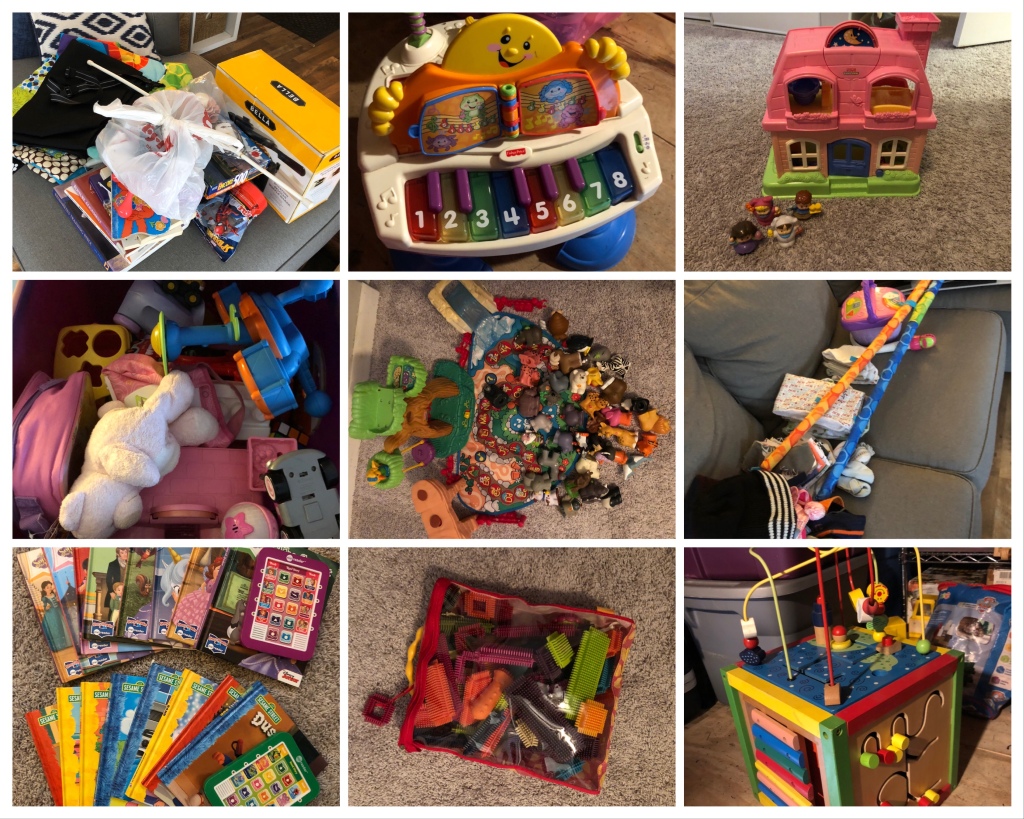
Donation bin

The contents of the bin total forty-four items.

Then there is what is on top and this overflow section.

Donation overflow pile

I think we are around 100 items leaving our home…as soon as we are able to leave our home, that is.

Now that we are both out of work for the time being, it is more important than ever to watch our spending. While we don’t plan to do a total no spend month again, we are cutting out unnecessary purchases – other than the bike pump we just bought yesterday…

😬😬😬

Karis

Simple Living and Social Distancing [Zero Waste and COVID-19]

Simple Living and Social Distancing [Zero Waste and COVID-19]

The last few days have been CRAZY. By now the coronavirus pandemic has affected everyone in some way or another, and my family is no different.

Earlier this month, I announced that my family is moving to downtown Chicago because my partner took a new job in the city, working with the Chicago Cubs. We already had a contract on the house, we were aggressively apartment hunting, and we were already packing boxes for the move. Now, however, the new job, the house sale, the moving plans, and my daughter’s schooling are all on hold until further notice. This is definitely an uncertain time for all of us.

[This feels like something out of a horror film, am I right???]

And yet, despite all the fear and panic surrounding this pandemic, despite all the unknowns about our house and our income and our future, I feel quite calm.

This whole situation is entirely out of my control, so I am doing the only thing I can do: staying home. Social distancing is extremely important right now, and we have committed to it fully. Other than necessary trips to the store, my family is staying home to help slow the spread of this thing [or “flatten the curve”] and I can only hope that everyone else is doing the same.

Of course, we could freak out, stare at our TVs all day, wring our hands, stock up on household essentials, and prepare for the end of the world as we know it. But it is much more productive [not to mention enjoyable] to spend time as a family, relax, spring clean, read books, cook from scratch, and spend time outside together.

I choose the latter.

Simple Living

So we have been enjoying the simple life, free from the pressure of work schedules, school activities, long commutes, social events, and even media overload. This has been a great time to unplug and unwind and hang out together AT HOME.

Spending Time Together

My cousin, Stacey, shared this GIANT list of at-home activities to keep kids busy:

At Home Activities for Kids

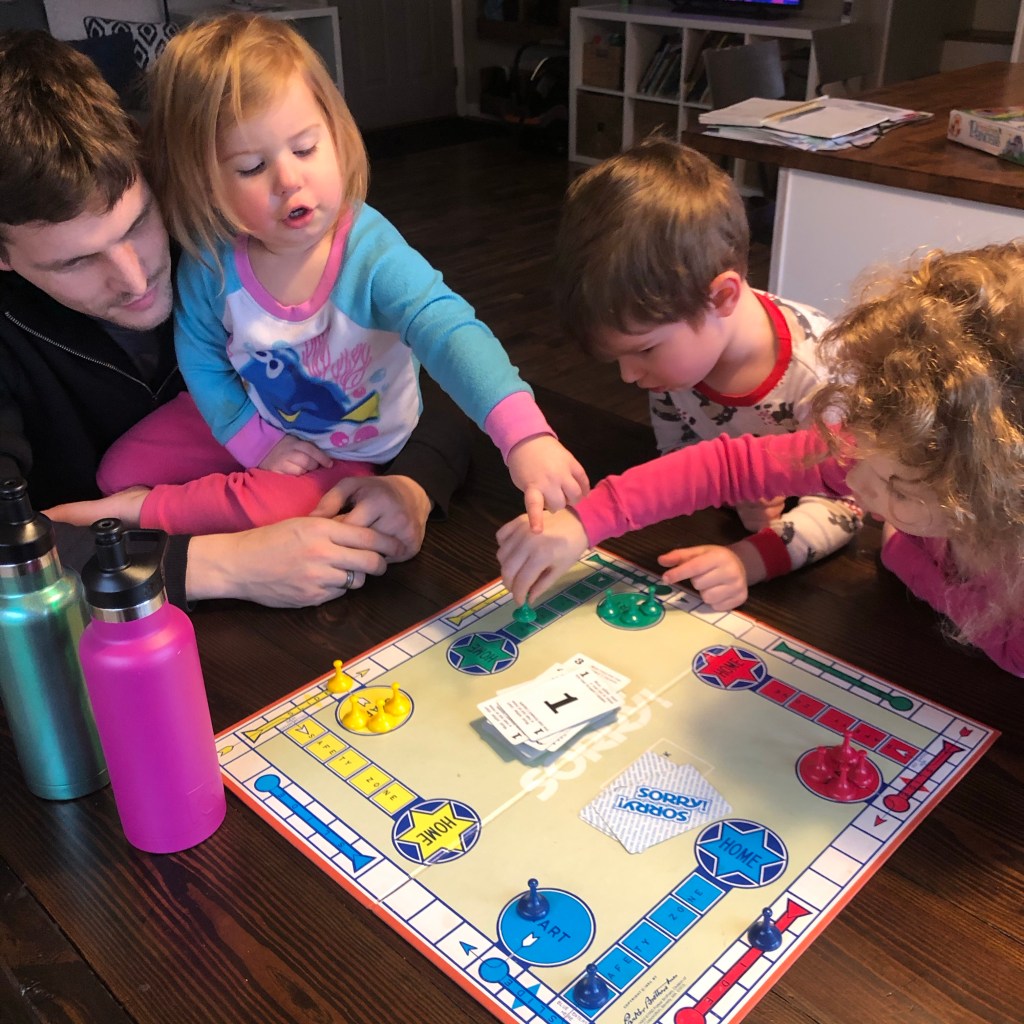
We’ve been choosing a few of these activities to do each day. One day we used all of our building blocks [including duplos, legos, k’nex, magnet blocks, and even wooden blocks] to make one huge tower. We’ve been playing a lot of board games. We painted pictures and then made up stories to tie all the pictures together.

We have NOT spent time watching tv [other than the news for a little bit each evening to stay up-to-date]. We haven’t been stressed out or frightening our kids about what’s happening. We have also not been glued to our phones [other than my daily Spanish lessons]. We have been present and attentive and enjoying each other.

Eating Real Food

This has been a great time to cook more from scratch. I usually cook a lot from scratch, but since I haven’t had much else to do, I’ve been spending more time in the kitchen.

Food from scratch is SO MUCH better than the convenient, pre-made boxed stuff. If you normally don’t have time to cook or bake from scratch, this is a great time to try it!

Exercising At [or near] Home

Exercise is a big part of my life and I am enjoying exercising outdoors now that the weather is warming up. I also have workouts that I can do at home through BeachBody On Demand. And yesterday, after my yoga workout, my kids did their own Cosmic Kids Yoga [you can check out these great yoga videos on YouTube].

Zero Waste

When I started on my low waste journey three years ago, I never expected to encounter this type of doomsday preparation where basic household “necessities” are being fought over in the grocery aisles. But here we are – and having already adjusted to [nearly] zero waste living is a huge advantage. Being out of toilet paper is no big deal in my home where we have a bidet and plenty of reusable “wee wipes” [which are usually reserved for the baby, but can be used by anyone when necessary]. The same goes for all the other disposables that have become household staples here in America. We never use them anyway, so we are not worried. We have plenty of reusable diapers for the baby, towels for the kitchen, a Brita for our water, and everything else we may need. The only thing we need to buy is our food, which doesn’t seem to be in short supply at this time.

Speaking of food, a [nearly] zero waste pantry is also a big advantage at times like these because I already know how to make a wide variety of meals from scratch using pantry staples like rice, quinoa, beans and flour. So, should groceries become scarce, we would be set for a long time with just the dry goods in my pantry.

For example, if pizza delivery services shut down, I already make my own pizza dough for homemade pizza each Friday and I can even make an Alfredo sauce from cashews if we experience a shortage of cheese. Once a week we have vegan burrito bowls, which I can easily turn into tacos or tostadas by making homemade tortillas which only require flour, oil, and salt. I can make my own almond milk and nut butters. With just potatoes and flour, I can make homemade gnocchi. Lasagna noodles are also a cinch. Vegan chili is made with quinoa, black beans and kidney beans. With a simple bag of flour and a jar of yeast the options are practically limitless.

You would be AMAZED the things you can make with dry goods you can keep in your pantry. And you don’t need to buy any of these items in packaging.

[In fact, I had already been planning to share my favorite SIMPLE plant-based zero-waste meals – which I will still do later this week.]

I’ll write more about this later this week, but the truth about my journey to baking/cooking is that I never even cared to learn until I was motivated by the low waste movement to try. Sometimes it just requires the right motivation. And now, I love to cook and bake and have improved my skills exponentially.

Maybe this world-wide catastrophe will provide more people with the motivation to reduce their waste, improve their health, cut back their reliance on disposable and packaged goods, and start making more earth-friendly choices.

That would be another silver lining of an otherwise terrible situation.

Stay safe [and stay home]!

🌎 🌍 🌏

Karis

February Shopping Audit [and selling our house]

February Shopping Audit [and selling our house]

February was a wild month. Theo had surgery [he’s made a full and fast recovery, by the way]. Brett accepted a new job in the city of Chicago and began commuting an hour and a half each way. We prepped and staged and listed our house for sale. Three days later we accepted an offer.

In order to get the house ready to sell, we made some unexpected purchases, but overall, we bought very little because we were so busy.

What We Bought:

[My audit only includes physical items and does NOT include consumables, such as groceries, pet food, and toilet paper.]

House maintenance supplies ($68) – We had to pick up some random things like paint brushes, outlet covers, and quarter round in order to get the house ready to sell. I actually consider this to be a real victory because it was tempting to spend a ton of money sprucing up the house and even adding accents or decorations to make it look better – but I stood my ground and committed to buying as little as possible.

Mason jars for Valentine’s craft ($20 gift card) – I was in charge of a craft at my daughter’s kindergarten class Valentine’s Day party. The timing could not have been worse, but I decided to make slime with the kids because I already had everything I needed, but I did need to buy something for the kids to make and take the slime in. So I bought 4 ounce mason jars with a gift card.

Medicine for Theo ($10) – After Theo’s surgery, he was on a regular schedule of pain medications for several days so we had to buy more. Poor kid.

Gift card for Brett’s Employee ($50) – I’m totally ok with the occasional obligatory gift for coworkers.

Backpack for Brett ($40) – I’m not so totally ok with this, but it was Brett’s Christmas money and he used this backpack every day…until his first day at the new job when they gave him a new one. This is a great reason to try waiting for something you need – you never know when the universe might decide to just give it to you!

Soaps and toiletries ($15) – Brett picked up three boxes of sustainable toiletries which include bar soaps, bar shampoos, and hair product because they were on clearance at his store and come package free. Man after my own heart.

Silicone muffin liners ($8 gift card) – I can’t safely bake in my muffin tin without liners anymore so when I ran out of paper liners I waited a month or so, but eventually caved and bought reusable silicone liners. Muffins and cupcakes, though not necessities, are definitely things that we would miss. Anyway, I had a gift card.

Total spent: $211

Over budget: $0

What We Are Going To Do With it:

The house maintenance supplies were either used up [paint] or will be reused [paint brushes]. The mason jars went home with the kindergarteners. The medicine and toiletries will be used obviously. Brett’s old backpack will become my new diaper bag. And I’ve already used the muffin liners at least five times since I bought them.

Nothing bound for the trash.

👍🏻

What We Got Rid Of:

While we brought in more stuff than I would have preferred, we got rid of WAAAAY more. In preparation for the big move coming up, I have been going through every drawer and every closet and even every bin in storage and eliminating all the excess.

Quite frankly, I thought we were already living pretty lean – but man, oh man! Turns out we still had plenty to remove. I even went through my clothing again and did an overhaul that now allows me to fit all of my clothes in three drawers in my closet.

We sold, gave to friends, donated tons of stuff. I’m actually sad that I didn’t track it or even take photos of everything to show the quantity, but I promise you that it was way more than the 30 items I committed to getting rid of every month.

Now that we have a closing date on our house, we have less than two months to find an apartment in the city and downsize enough to fit all of our stuff in it.

February was nuts, but I think March is going to get even crazier!

✌🏻

Karis

[Nearly] Zero Waste Valentine’s Day Coloring Bookmarks

[Nearly] Zero Waste Valentine’s Day Coloring Bookmarks

Last year was my first time dealing with a school Valentine’s Day exchange in probably twenty years. And let me tell you, A LOT has changed since I used to tear apart those cheap perforated cards with looney toons characters and obsess over which cute boys got the most romantic messages. Fast forward to today and the expectations for this holiday seems to have skyrocketed. [Well done, Hallmark]

As you might expect, cutting down on the wastefulness of the event is my main priority. Last year, Evangeline took these cuties to her class to give out.

This year, we went with a non-edible option: color your own bookmark.

I printed these bookmarks [free from Inspiration Made Simple – thank you!] and attached them to colored card stock then taped a crayon to the back.

This option was perfect for Evangeline because she LOVES reading and she actually uses bookmarks because she is already reading chapter books [WHAT?!?]. She also LOVES coloring. Of course, she wanted to color them in, so I let her color one for her teacher and attached it to a jar of chocolate we got from the bulk bins.

Besides avoiding waste, I also like to use what I have on hand. Since we already had an unused box of crayons and plenty of paper, this project didn’t require going out to buy anything.

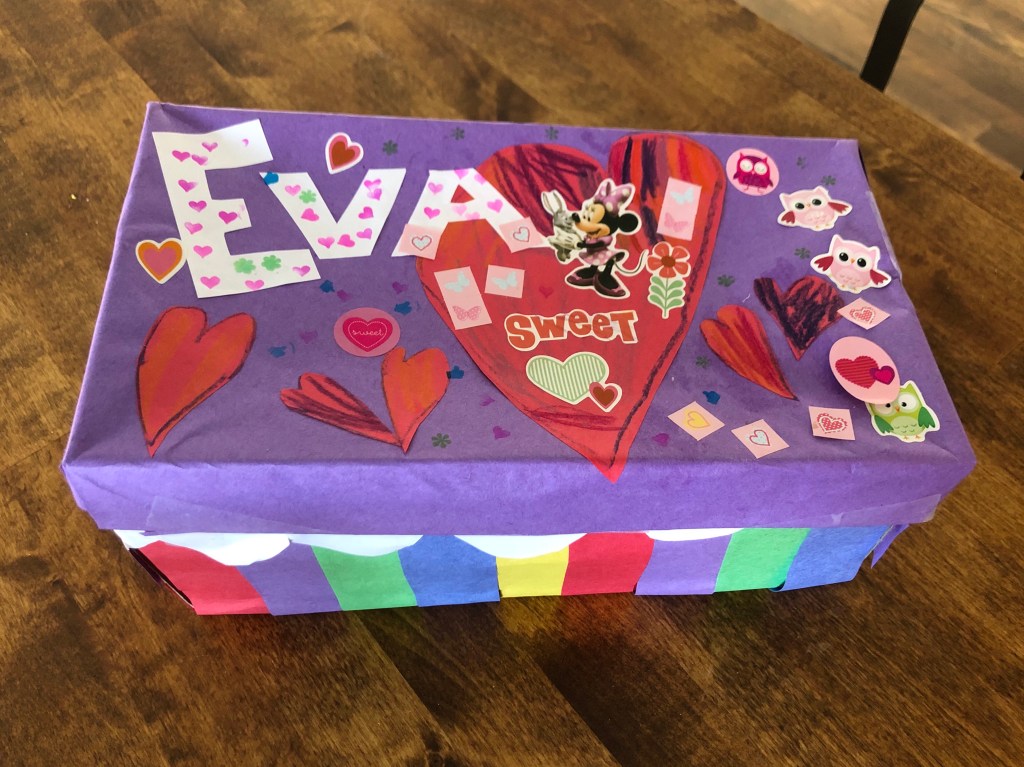
Though a lot has changed, kids still apparently decorate boxes for their valentines. I may have had a little too much fun helping Evangeline with hers.

It turned out cute – and distinctly Evangeline.

[I found more great ideas for zero waste Valentine’s gifts for the obligatory classroom exchange on Zeroish.org – read the list here!]

I hope everyone has a lovely [nearly] zero waste Valentine’s Day!

❤️ ❤️ ❤️

Karis

Lessons in Motherhood and Trusting the Doctors

Lessons in Motherhood and Trusting the Doctors

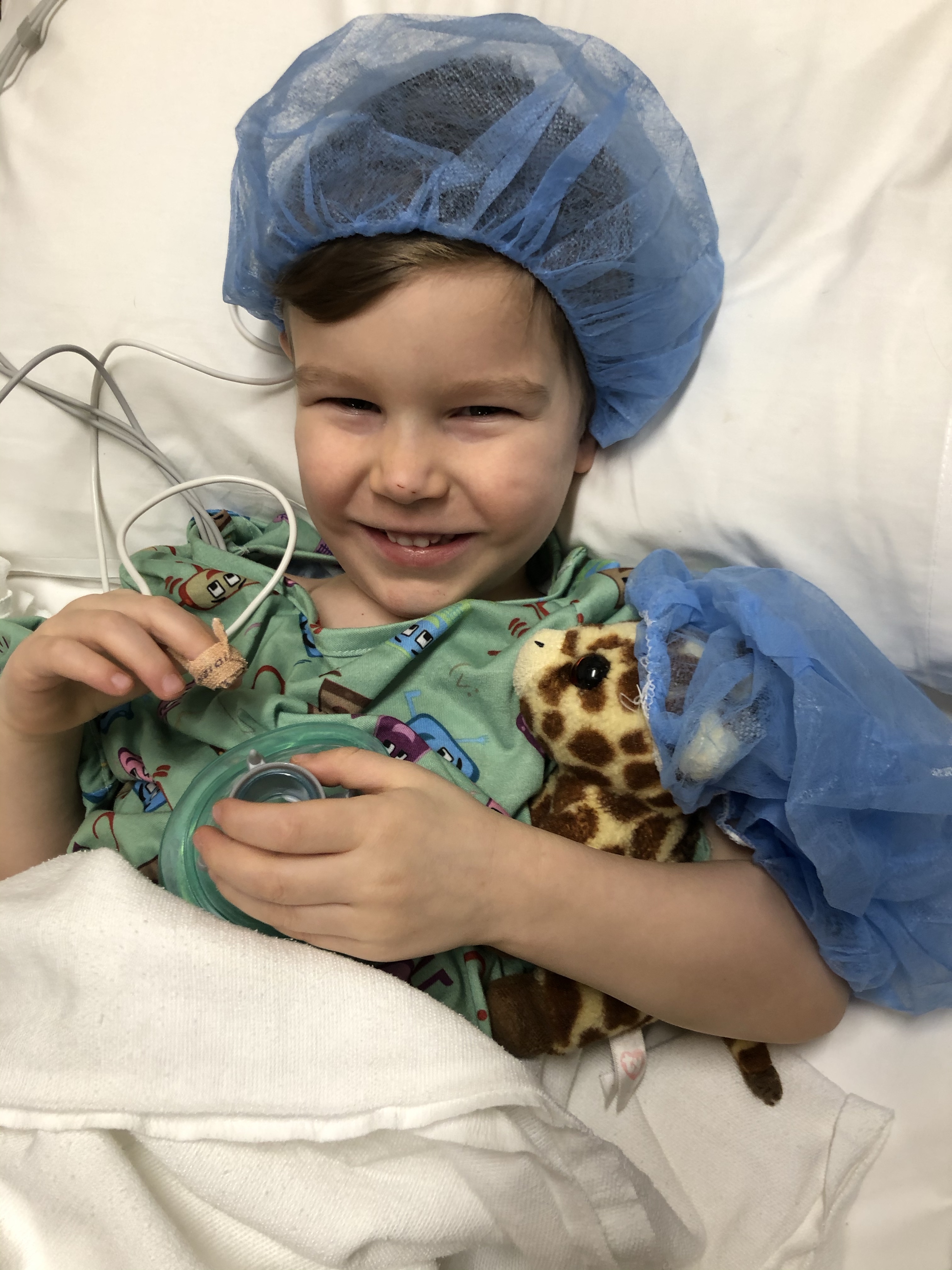
As I’m writing this, my son is in surgery. It’s a common surgery for kids [tonsillectomy and adenoidectomy] but still requires a general anesthetic, an OR that I’m not allowed to enter, a two week recovery time, and a fair amount of fear.

I could go into all the reasons we decided to have this done – but the truth is, we are trusting our doctors. Theo was hospitalized twice before he turned one and has always struggled with breathing issues and chronic ear infections and mouth breathing. So there are reasons. But we didn’t have to have the surgery. We could have continued to treat his issues as we have been. We could have waited to see if he grows out of it. We could have told the doctors that we don’t think he should have this done because he’s so young and there are risks.

But I can’t pretend that I know more than the doctors who have recommended this procedure. And I know that they are recommending it because they are trying to do what is best for my son.

In the end, I’m not a doctor and I don’t know anything about tonsils or adenoids. I take my kids to see a pediatrician I trust regularly because I am not knowledgeable enough about healthcare. I need a professional’s help.

Like the first time I took Theo for a routine well visit and told the doctor that he was fine. Two breathing treatments later we were headed for the ER where he was hospitalized for a week. Or the time I took him into the pediatrician because I was worried about his hearing and it turned out that he had a double ear infection that required two rounds of antibiotics.

I clearly need doctors for my kids.

In the western world today, it is common to question the doctor, to look for advice on the internet and from friends, and to think that we know better than the professionals. And while I think it is important to advocate for yourself and make the best choices you can for yourself and especially your kids [I gave birth to my babies at home, you may recall], there comes a time when you have to trust your doctors.

I’ve been thinking a lot about this recently – even before this surgery came up – because I saw a rant on Instagram about doctors hiding lots of vital, black label information from patients. As if the entire medical world is out to get us. Trying to trick us into doing all these things [vaccinations, flu shots, epidurals, etc] that are really going to hurt us instead of help us.

I don’t believe that the medical world is out to get us and I think it’s a sad perspective to have of a profession that is trying to make [and keep] people healthy.

I, of course, realize that the issue is more complex than I’m making it out to be in this short post, but the main point is that we all need doctors eventually and all we can do is find the best doctors available and then trust them.

Theo is fine, by the way. And hopefully on his way to fewer encounters with doctors in the future.

🩺 🩺 🩺

Karis