Do you know how badly I wish there were such a thing as truly zero waste shoes????
Like, really badly.
And I’m not even a shoe person. But when I committed to sourcing my clothes through ethical, sustainable means I just kinda assumed that it would be possible to find shoes the same way.
Turns out, I was mistaken.
Of course, this post is not ALL bad news. There ARE some sustainable shoe brands out there – Made Trade, Everlane, Rothy’s, Allbirds [among others]. But none are totally zero waste [that I have found]. And more importantly, none of them make performance running shoes – which is, of course, what I need.
Eco-Friendly Running Shoes
The issue with finding sustainable running shoes is that they have to be able to perform well. They need to have cushion and support or my running [and feet and knees and legs and hips] will suffer. They also need to be replaced every 300-500 miles because the soles wear down and then, once again, my running will suffer. This also means that I can’t buy them used.
My dream is to find a running shoe that is comfortable and lightweight and can handle 500 miles of pavement pounding AND is 100% biodegradable.
I’m telling you right now, that is a total pipe dream.
At best, I’m hoping for a brand to someday take back worn out running shoes to recycle into new shoes. That would be the second best option. If we could close the loop on the running shoes, I would consider that zero waste. But, unfortunately, no such shoe exists [at least not that I know of, but I have my eye on the new Adidas project called Futurecraft.Loop].
So, while I’m waiting for the perfect zero waste shoe, I had to find the best alternative.
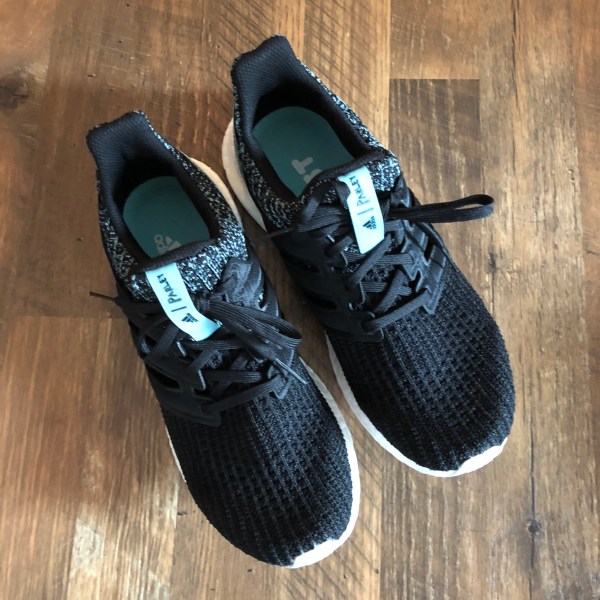
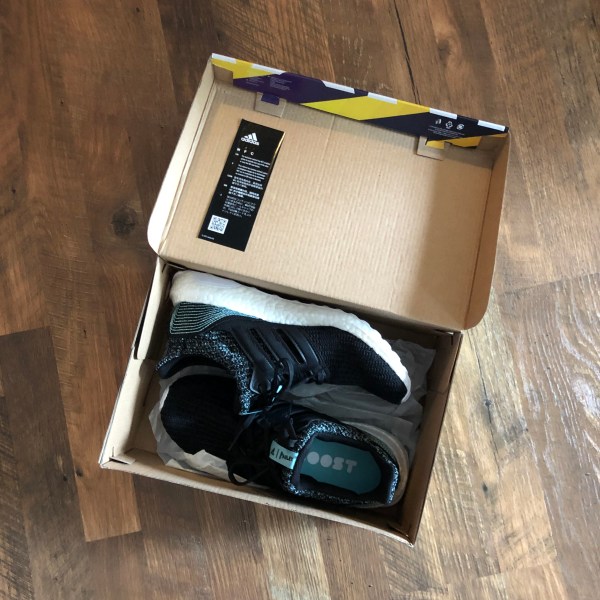
And this is where my new Adidas UltraBOOST Parley running shoes come in.
Meet My Adidas UltraBOOSTs
These are a collaboration between Adidas [the athletic shoe giant] and Parley for the Oceans [a nonprofit that is trying to save our oceans]. The top of the shoe is made [of some undefined percentage] of recycled plastic from the ocean.
Well that’s pretty cool.
And, honestly, the shoes are pretty cool with or without the ocean plastic. They aren’t kidding when they call them UltraBOOSTs…
Eco-Friendly Non-Running Running Shoes
While I was researching sustainable running shoes – and by the way, I did A TON of research – I came across these beautiful runners by Allbirds.
Meet my Allbirds Tree Runners
Unfortunately, despite being called runners, they are not actually for running. But they are so beautiful and from such a great eco-friendly company that I bought a pair for casual wear.
You can wear these without socks!!! THEY ARE SO COMFORTABLE!!! And they are machine washable [which is important because I went with white].
These are sparking some serious joy, folks…
Even the packaging they came in was totally waste free. 👍🏻
In Conclusion
So, basically shoes are still tough to find zero waste – especially athletic shoes – but it’s important to me to do my homework and make the most ethical and most sustainable choice I can.
All I can do is give my consumer dollars to the companies that are doing their best for people and planet and hope that others follow.
If you have sustainable shoe brands to share, let me know!
It took me almost 30 years to fully recognize and acknowledge that I was born into privilege – and for the past two years, I’ve struggled with what my responsibility to the world is as a result. The answer, in part, is minimalism.
But first, let me back up and explain…
I was born into a white, middle-class, American family. For most of my childhood, my father was a pastor of a large church in Flint, Michigan. My mother was a stay-at-home mom. I have four siblings. My parents loved us and provided a wonderful life – full of family time, vacations, extra-curricular activities, medical care, a beautiful home, all the food we could eat, gifts at Christmas and birthdays, private education, help with paying for college, even braces for all five of us. Basically, we had everything we could possibly need provided for us. There were also intangibles like all the words of affirmation, hugs and kisses, training in important life principles like money management, hard work, perseverance, and kindness.
I enjoyed one of the most privileged lives a human being can have in this world – filled with safety, security, health and love.
And man, did I take it for granted…
Despite how great my life was, I spent most of my growing up years saying that we “weren’t rich.” I have literally said that countless times. I guess I thought my parents weren’t wealthy because we didn’t drive expensive cars or wear name brands clothes or eat at expensive restaurants like some of my friends did.
Then as an adult, I had the same perspective – that I wasn’t wealthy despite living a life of total luxury where I wanted for nothing. Yeah, I still don’t drive expensive cars or book vacations at Disney World and we live on one income in a wealthy Chicago suburb – but I will never again be foolish enough to think I’m not wealthy.
Why is it that the American middle class is so set on denying their own wealth? Everyone is looking at the small percentage of people wealthier than themselves, rather than the 3 billion people less fortunate. When I switched my perspective to intentionally noticing all the needs in the world, I became more and more aware of my own wealth.
What is more, I had to acknowledge that I hadn’t done anything to deserve being born into the family that I did – any more than those born in difficult situations deserved their lot in life.
This caused me a lot of guilt.
But guilt that produced action. Because I no longer felt that it was acceptable for me to live only for myself and my family.
But I was also very conflicted. On the one hand, I want to enjoy a comfortable life and provide nice things for my kids – but on the other hand, how do I justify spending all of my resources taking care of myself and my family when people are literally dying from preventable causes around the world? And what exactly constitutes “taking care of my family”? Where is the line between “needs” and “wants” in this consumerist society?
I began to struggle to justify any purchases outside of legit needs like food and medical expenses for my family. I feel guilty buying another shirt when my closet is already full of shirts that I don’t even wear. I feel guilty buying a fancy appliance for my kitchen when some simple elbow grease will do the job. I feel guilty throwing out food because I “didn’t feel like eating it,” when people go hungry all the time in this world. How can I spend $50 on decorative throw pillows for my couch when I know that I could pay for two months of education, food and medical care for a child in Uganda at that price?
The natural result was minimalism.
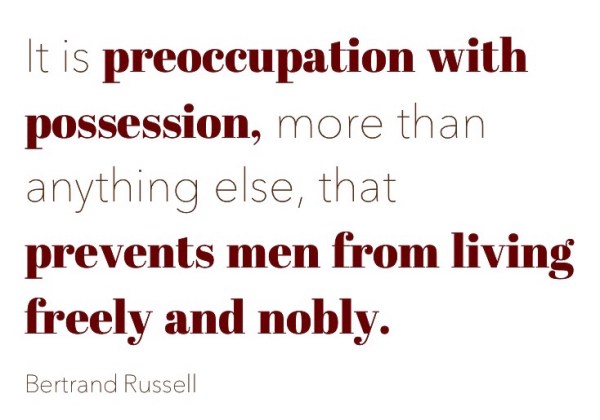
Minimalism, to me, means living with less, so I can give more.
Many people consider minimalism to be “extreme,” but it’s not. The materialism in America is extreme. The way we’ve all been brainwashed into thinking that we’re not rich is extreme. Minimalism is just the natural byproduct of recognizing our wealth and privilege in comparison to the rest of the world.
Minimalism has freed us from materialism and a love of money and has freed us to prioritize things that matter the most to us – family, travel, and most importantly, giving to causes and organizations that are working towards a better world for all of us.
For me, minimalism was my path to a more intentional, fulfilling life. But it may not be the answer for everyone.
The big question is not “are you a minimalist?” but “what are you doing to change the world?”
On May 28th, this blog turned 1 – on the same day that I turned 32. This past year has been the most transformative that I have experienced in my adult life. This blog has been a place for me to share how my family and I have changed our views, values, and lifestyle in favor of simplicity and authenticity.
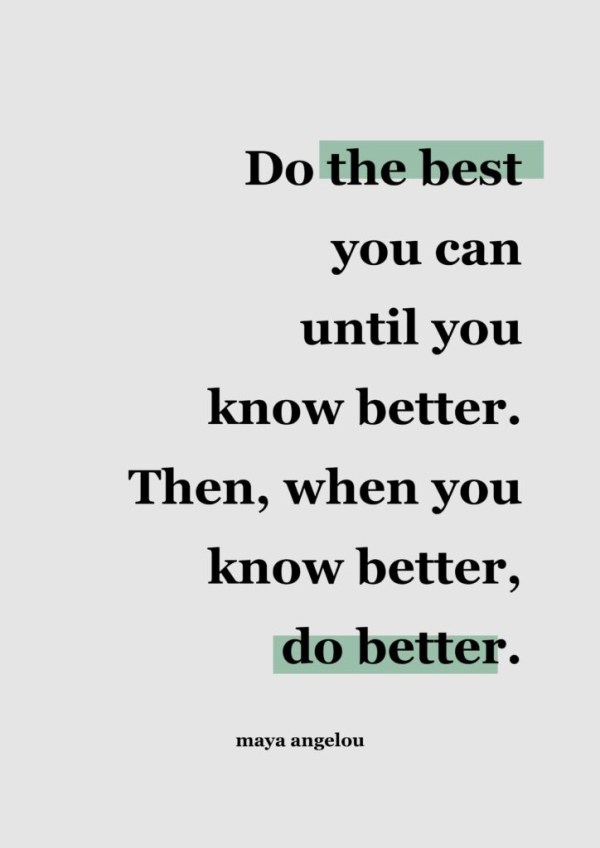
Maya Angelou once said, “Do the best you can until you know better. Then when you know better, do better.”
This has become my life’s motto. And this past year has been all about learning more so I know better, so I can do better.
So, in honor of the blog’s first birthday, I wanted to recap all the changes [to our lifestyle and also our perspective] that my family and I have been working on over the past year.
Minimalism
The changes we have made started with an interest in minimalism. I had grown tired of chasing the “American dream” of wealth and success, which seemed to equate to bigger homes and fancier cars and more stuff, while meaningful relationships, time with family, concern for the less fortunate and other social/environmental causes are ignored. I was anxious for a simpler, more intentional life. I was wanting our life to be about a greater purpose than satisfying our own desires for more.
So, minimalism taught us to purge what we own down to things that are essential or truly appreciated AND to refuse all the excess that society is constantly telling us we “need.” We played the 30-day minimalism game and between Brett and I, removed 930 items from our home.
Mindful Consumerism
My interest in minimalism lead me to Cait Flanders’ book, The Year of Less, which was so impactful that after reading it, I started this blog to document all the ways I intended to end my own mindless consumption.
I began asking myself whether I really needed something before buying it. I continued to purge our stuff without replacing any of it. I committed to first do without, then use what I have, then buy used – and only when all else failed, to buy new.
Slow Fashion
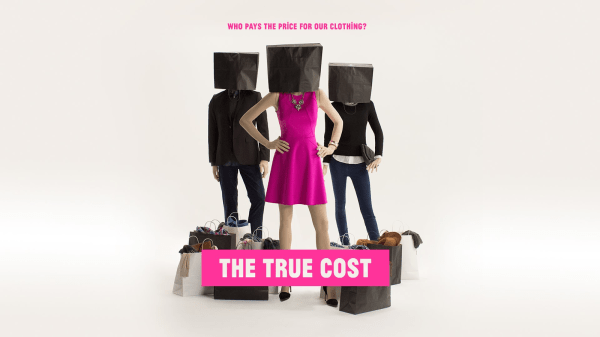
Around this time, I watched the documentary, The True Cost, which describes the fast fashion industry and how the American demand for cheaper and faster clothing is wreaking havoc around the world. I couldn’t believe that I had never considered the wastefulness of my own clothing habits before or how harmful my “take and toss” mentality truly was to the environment and to people around the world.
As a working middle class American, I had always prioritized buying cheap clothing as a way to “manage my money wisely” and thought of myself as some sort of martyr for never buying expensive brands and always shopping the clearance rack in the service of frugality.
Wow, I was so wrong. I am happy to say that I have finally learned to appreciate my belongings enough to spend what they are worth – and I now care enough about my fellow humans, no matter how far away they live, to pay whatever it costs to protect their rights.
Zero Waste
From there, I stumbled upon the zero waste movement, which I had never heard of previously. On a whim I picked up the book, Zero Waste, by Shia Su from the library. I had no idea how significantly this book would change my life.
This book gave me confidence to reduce my waste [it really is so easy!] and opened my eyes to yet another sad side affect of our constant consumption: waste.
Seriously, the waste problem in America is huge. I don’t know why more people aren’t concerned.
So I started trying to reduce my family’s waste. We began recycling, composting, and bulk shopping. This became a passion [bordering on obsession] for me that led to so many other important changes for my family like eliminating processed foods, making most of our food from scratch, and purchasing our first CSA share. It has been a process, and we still are not storing our trash in a mason jar [that is not a realistic goal for us anyway], but we have made HUGE improvements. We only take out one 4 gallon trash bag per week and we have even reduced the amount that we recycle significantly, needing trash and recycling pick up only monthly [or even possibly quarterly] now.
Ethical Shopping
Next, I committed to ethical shopping by supporting brands that are concerned about sustainability and fair, ethical treatment of all members within the supply chain[animals included].
This one is tougher because it is hard to know whether a company is ethical or not and requires researchwhich requires time, but it’s not so bad because we don’t buy very many things, so purchases can be thoughtfully and intentionally made with our values in mind.
Yes, I am boycotting Wendy’s. Yes, I pay more for Fair Trade coffee and chocolate and bananas. Yes, I adore Patagonia.
Simple Living
Then I began to focus on eliminating some of the distractions that caused me to always feel like I never had enough time. We moved our only television into the lower level. I started using the “screen time”feature on my iPhone to limit my time on certain apps. I turned off all notifications on my phone. ALL of them. If you call me and I don’t physically have my phone in my hand, I won’t know it until I actually open my phone app…which I do every couple days. I’m harder to reach, but by responding to texts and calls and emails on my own time, I am no longer a slave to my phone.
The kids and I began spending more time outside after I read the inspiring book, There’s No Such Thing as Bad Weather, by Linda Åkeson McGurk.
We started having a Monday movie night with the kids as their only screen time for the week. I simplified my cleaning routine to improve efficiency so I don’t have to spend a lot of time cleaning. We purged A TON of toys [with the kids’ help], which cut back on the chaos of living with three toddlers.
I also read Slow by Brooke McAlarywhich was full of inspiration for living a more intentional and less frantic life.
Giving Back to the World
Last, but most importantly, we rearranged our finances to prioritize giving to charities that we believe are doing good around the world. I wish I could be the one doing the good myself, but at this stage in my life, I am chasing toddlers all day and working part-time, so I am prioritizing what I can do, which is give money to those who will use it to help people. I look forward to volunteering regularly and giving back in other ways in the future, as I believe that this is one of our most important purposes on this earth – not to merely look out for our own interests and our family’s well-being, but to care for the less fortunate and fight for a better world.
But, more on that another day.
I am looking forward to improving in all of these areas and more over the next year.
Over the past year, due to my clothing ban and my journey to zero waste and minimalism, I have TOTALLY changed my perspective on buying stuff. Not just clothes, either. Everything. I now take weeks and sometimes months to decide whether a purchase is necessary and where to make the purchase and if there is any possible way to thrift or swap or borrow or rent or make the item. [Usually I just end up doing without because it’s so exhausting trying to find the most ethical, responsible way to purchase many items.]
But this, I feel, is the type of conscious consumerism we all should be practicing.
First – Consume Less
You may have seen this “Buyerarchy of Needs” illustration created by Sarah Lazarovic.
This is exactly how we should approach purchasing new products. If possible, we use what we have. If that’s not possible, then the next best thing is to buy used or repurpose or borrow or rent or DIY. But if all that fails, then and only then, we buy a product new.
Second – Practice Mindful Consumption
If you make it to the top of the pyramid and decide to buy new, it is SO important that you make a conscious effort to do right by people and planet. Support companies and brands who are taking care of the people in their supply chains – not just their CEOs – and who are striving to reduce their impact on our ecosystems and who give back to their communities and charitable organizations.
In other words, good companies.
As the consumers, we hold the power. It is our money that funds businesses. And we have the ability to choose who we give that money to. We should not take this decision lightly.
Third – Support These Ethical Clothing Brands
Since I’ve been pondering this for a year – and have not made any clothing purchases – I have been researching where I would choose to buy clothes in the event that I make it to the top of the pyramid myself.
Here are some of the clothing brands I am excited to support in the future:
Patagonia
(for casuals, outerwear, activewear and even kids clothes)
I ADORE Patagonia. What I once considered to be just another overpriced American outdoorsy brand has turned into my ABSOLUTE FAVORITE. I love everything about this company. They are committed to sustainability and protecting the environment. They are also involved in grassroots activism in communities throughout the country. They encourage all of their employees to make a positive difference in the world by joining local movements and taking real, legitimate action towards change. They also have a closed loop system, where they take back your used Patagonia clothing and repair it to resell under their “Worn Wear” label or recycle it if it’s beyond repair.
I hope everyone appreciates how TOTALLY RADICAL this philosophy is in our current society. Patagonia is literally stating that they want to cut down on consumerism. That has to be the craziest thing I have ever heard a clothing company say. AND I LOVE IT!
Plus, they carry t-shirts with eco-friendly slogans, like this one that I love so much and want so badly:
Buy it here. Or better yet, buy it for me! Just kidding…[I’m really not kidding. I wear a size small 😁]
I love this shirt because not only does purchasing it support a company I consider to be doing right by people and the planet, it also has an awesome message that I can spread just by wearing it. They have a whole line of graphic Ts with sustainability messages.
Now, you may be thinking, $35 for a t-shirt?!?!, but YES. That’s the whole point. Pay a price worthy of a product made in a responsible and ethical way. Then treat the product with care throughout its life. Then dispose of it responsibly – in this case, SO EASILY – by returning it to Patagonia for repair or recycle!
Naja
(for intimates, activewear, and swimwear)
Naja is an environmentally conscious brand that sells beautiful, luxurious underwear that is eco-friendly, ethically made and fair trade.
But that’s not all.
Naja also empowers women – rather than objectify them – by getting rid of the overly sexualized posing AND by improving the lives of garment workers in their supply chain.
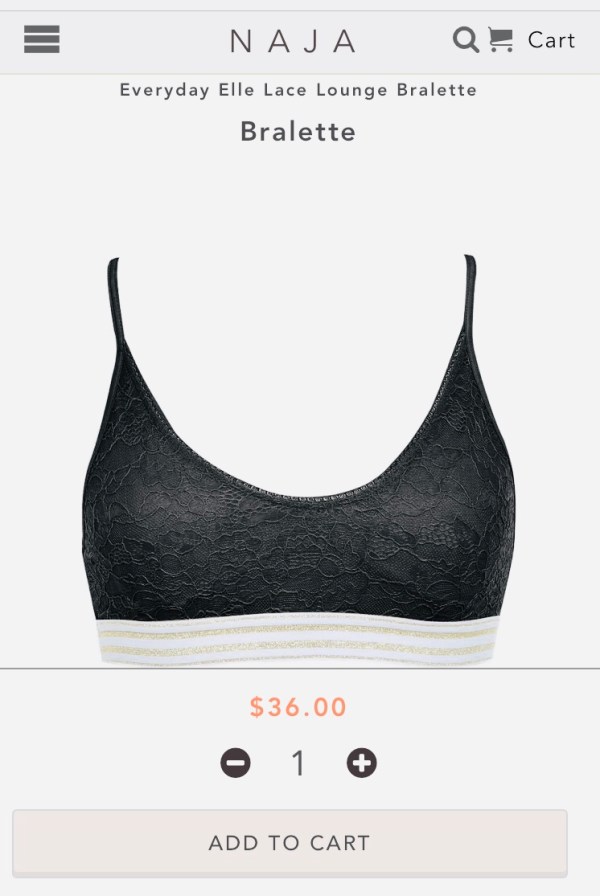
They also carry a zero waste line of undergarments made of recycled fabric…
…like this bralette.
Buy it here. Or shop the whole zero waste collection here.
Everlane
(for everything)
Everlane is an ethical American company with two brick and mortar stores – one in New York City and one in San Francisco – and an online store that sells women’s and men’s apparel, shoes and accessories. They focus on classic styles because, as they state on their website, they want you to be able to wear their products for “years, even decades.”
What makes this company so great is their commitment to “Radical Transparency” [their words] regarding their ethical factories, product materials, and production costs.
Their website contains tons of information about the individual factories around the world where products are being produced – including the materials being used, the story of their partnership, and photos. That is definitely radical.
This is the kind of accountability we should be demanding from all companies. We should always be asking where, and how, and who is making our clothing? And we should expect to receive an answer that includes fair wages, safe working conditions, and all the other benefits that we ourselves would demand from our employers.
On the website, you also have the option to view the “true cost” of the product before the retail markup.
Of course, this is also a great way to tell customers that they are cheaper than the competitor – but again, the price is not the issue here. It’s about supporting an ethical company – which we should expect to be more expensive than the company that cuts corners.
[But don’t worry – they sell t-shirts for $18 and aren’t really overpriced compared to a typical American clothing brand.]
Pact
(for everything)
Pact is an American company that uses 100% organic cotton and fair trade factories. They are also committed to keeping prices down, stating “It shouldn’t cost more to do the right thing.”
Reasonably priced and carrying everything from workout clothes, to undergarments, to kids and babies, to bedding – Pact is a one stop shop.
Thank you, Pact, for restoring my faith in the clothing industry!
If you’ve ever wondered how to find ethical brands, look no further than google. Information is everywhere about this now. It’s not difficult to find ethical, sustainable brands.
But I warn you, these next swaps will start to make you look like a real deal zero waster, and chances are, you will start to enjoy your new zero waste supplies so much, you might actually consider attempting to store your trash in a mason jar…
[Please know that it is not necessary to run out and buy a bunch of fancy stuff in order to be “zero waste.” In fact, it’s best to make do with what you have and see if you actually need to buy an alternative. I waited on many of these swaps til I had used up my current supplies or until I found it absolutely necessary.]
This list is not exhaustive. It is just my personal favorites because they are easy to swap and [relatively] inexpensive. So, here we go.
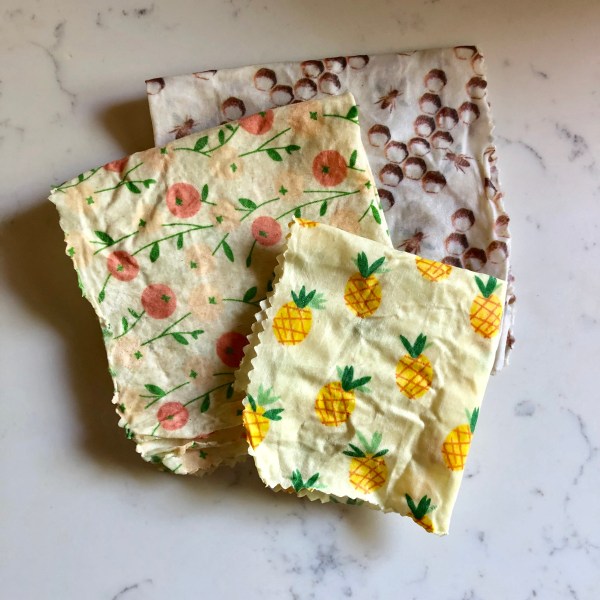
1. Beeswax wraps instead of plastic wrap.
I ADORE my beeswax wraps. I actually still have a partial roll of plastic wrap in my cupboard that I have absolutely no use for now. I use the beeswax wraps for wrapping everything from half a cantaloupe to my kids’ snacks to bowls and plates. [I wrote more about the beeswax wraps in this post: Zero Waste: Beeswax Wraps.]
2. Cloth napkins instead of paper napkins.
Technically you don’t need to buy cloth napkins if you are handy with a sewing machine – which I am not. There are plenty of tutorials online that tell you how to make your own. I chose to buy a set. This was one of the very first swaps I made, and while I would probably do things differently now, I love my napkins.
3. Handkerchiefs instead of tissues. I remember my grandpa using a “hankie” when I was little. My father used to play a game with us kids called “hide the hankie” – which is pretty gross now that I think about it… but handkerchiefs in general don’t have to be disgusting. Just because we are used to the convenience of paper tissues doesn’t mean that we can’t go back to the handkerchief. I haven’t actually made this swap yet, but I have asked a sewing-savvy girlfriend if I could pay her to make me some. And usually, when my kids get colds, I use our cloth baby wipes instead of tissues because they are softer on their noses. But I’m anxious to have a set of hankies for the family.
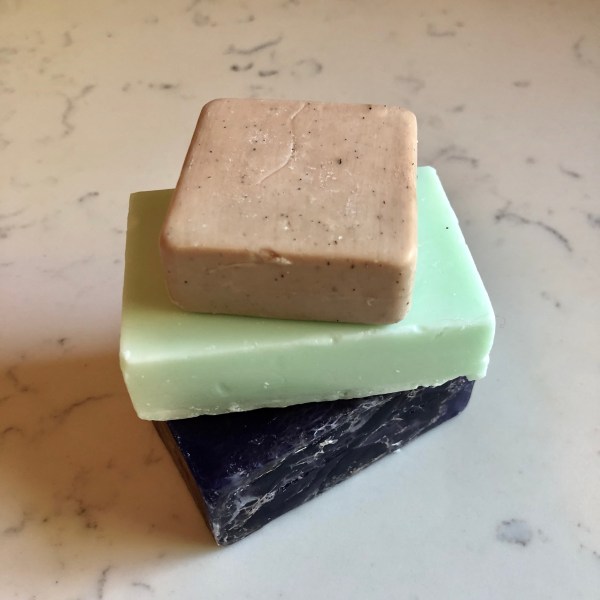
4. Bar Soap, Shampoo, & Conditioner instead of liquids.
I wrote about our switch to bar shampoo and conditioner recently [Zero Waste: Shampoo Bars], which is maybe slightly more expensive than buying traditional shampoo and conditioner in the plastic bottles. But while you’re at it, you might as well ditch all the plastic bottles and buy all bar soap. We’ve switched to bar soap for all of our washing needs. I even make my own dishwashing soap using grated bar soap. It is easy to find bar soap without packaging nowadays at nearly any grocery store. Bar soaps are often cheaper than the little plastic pump bottles and last much longer. As always, go for the palm-oil free variety, such as Kirk’s Castile Soap Bars.
5. Wool dryer balls instead of dryer sheets and fabric softener.
I was lucky to receive these as a gift early on in my zero waste journey. I gave up fabric softener and dryer sheets years ago when I first had kids, and dryer balls are the perfect alternative that I never knew existed. In addition, there are plenty of zero waste ways to make your clothes smell good too – I use essential oils on a damp wash cloth and throw it into the dryer.
6. Reusable straws instead of disposable straws.
By now, we’ve all heard how terrible plastic straws are for the environment – BUT we need to remember that the straws are very important for those with disabilities. As I see it, if you don’t need to use one, find an alternative. Some people actually have a real need for flexible straws and so the rest of us should cut back on our convenience habit so that millions of them don’t wind up in the ecosystem. So, get reusable straws [or simply do without]. I have a set of stainless steel straws that I use for the kids when we are out – but I try to always have their reusable water bottles with us.
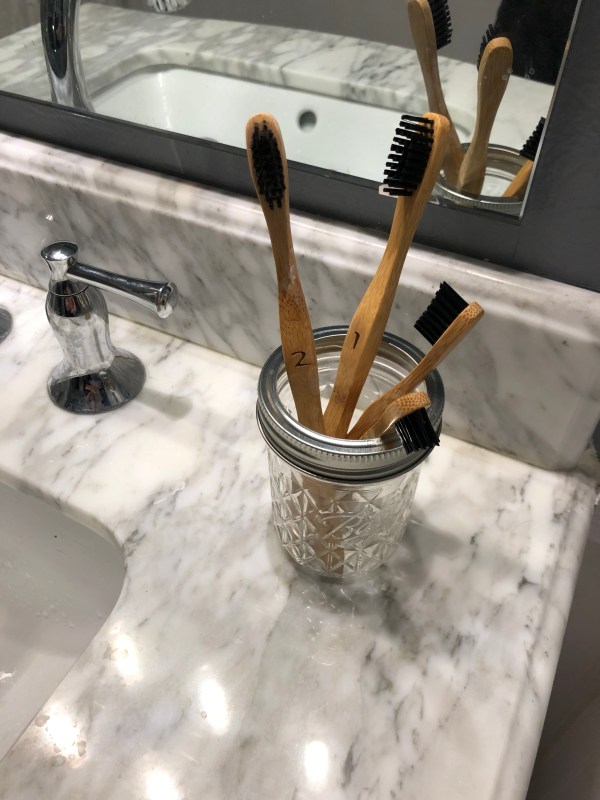
7. Bamboo toothbrushes instead of plastic.
The hardest thing about this swap, for me, is turning down the free toothbrushes that the dentist always gives you after your visit. This one costs money because before I paid nothing for toothbrushes. However, considering every plastic toothbrush I have ever used in my life is still out there somewhere – I think a biodegradable alternative is worth the money.
BONUS for the ladies:
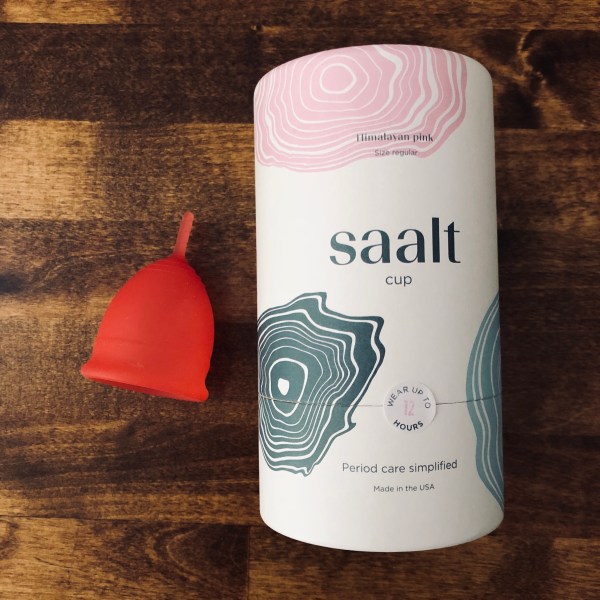
8. Menstrual cup instead of tampons.
I made this swap last year, shortly before I became pregnant again and since I’ve been pregnant for the last eight months now, it hasn’t gotten much use – BUT a menstrual cup was just a no-brained for me. They don’t need to be changed as frequently, they are comfortable, and they last for years. That being said, they aren’t exactly cheap. So, do your research, get the right size, and be patient [they take some practice]. In the long run, though, they will be a savings – for you and the planet.
I know there are a lot more inexpensive swaps, but these have been most helpful for me.
Clothing items purchased: 0 (bought no clothes at all – not for me or my kids. My husband did buy some clothes for work and bought me one of the above mentioned gifts)
[The shopping ban officially ends at the end of May on my 32nd birthday, but I’ll talk more about that then.]
The conclusion of this challenge [or experiment or whatever you want to call it] has come at the perfect time – right before I give birth to my fourth and final baby. So, on one hand, I am still holding on to some larger sizes that I will be able to permanently get rid of as soon as I shrink out of them AND a wealth of maternity clothes that I am anxious to find a good home for – possibly with a local pregnancy center. But, on the other hand, it has allowed me to clear out my wardrobe before the newborn craziness begins and my priorities switch once again to meeting the constant needs of the baby. Couldn’t have timed it better if I tried, quite honestly.
Soon I’ll be sharing my favorite ethical clothing brands that I plan to support in he future – in the absence of used clothing options.
It’s been exactly one year since I read my first zero waste book, Zero Waste: Simple Life Hacks to Drastically Reduce Your Trash by Shia Su, which was my first introduction to the world of bulk bins and muslin bags and stainless steel straws and bamboo cutlery. And my life has been forever changed.
Thanks, Shia! [I LOVE HER!]
This book made me believe that reducing my waste is totally achievable – not extreme or inconvenient, as it is commonly perceived – and gave BRILLIANT tips and hacks and photos to convince me that, YES, I can do it!
Since then, I’ve made a lot of changes to reduce my household’s waste.
Then, a few days ago, I picked up this new book: 101 Ways to Go Zero Waste by Kathryn Kellogg, which is another super practical guide for reducing your waste.
This book is so fabulous that I read the entire thing in two days – which basically means a few hours.
As someone who is outspokenly “low waste,” this book was part slap on the back [“yeah, look at you go! No more paper towels in your home!”] and part slap on the wrist [“don’t call yourself zero waste when you still accept disposable straws at the drive-thru!”].
I’ve clearly got some more work to do.
Out of the 101 ways in the book, 20 are not applicable to me [I don’t use hairspray] or are impractical [I can’t walk, bike, or take public transportation because of where I live and the fact that I always have three toddlers in tow]. Out of the 81 that are left, I’ve already been doing 47! [Go me!] But that still leaves 34 ways to go zero waste that I have not gotten a handle on yet.
Yes, one of them is the straw issue…
So, since my clothing ban officially ends next month, I’m going to use the next twelve months to focus on these remaining 34 areas.
Here they are:
Say “No” to straws
Go to the farmers market
Go to the butcher
Specialty stores and restaurants
Compostable dish scrubs*
Swapping out toxic items
Toothpaste*
Toothbrush
Toilet paper
Tissues
Razor*
Lotion*
Deodorant*
All-Purpose cleaner*
Deodorizing spray*
Room deodorizer*
Carpet deodorizer*
Tub and toilet cleaner*
Floor cleaners*
Dishwasher detergent
Air drying
Shipping packaging
Fountain pen*
Recycled and double sided paper*
Office-wide initiatives
Take out
Out to eat
Zero waste travel kit
Buying carbon offsets
Zero waste vacations
Zero waste pets
Find community
Work locally
Get involved with local government
[*I haven’t been buying these for the past year and I am still trying to use up what I have so that I can switch to a sustainable or DIY alternative.]
Geez, that is a long list. Luckily, many of these things can be combined. Also, many of these won’t be accomplished in a year because I’m still working through using up my bajillion bottles of lotion and my fifteen packages of disposable razors [don’t ask].
And now, I will leave you with my favorite quote from the book:
“In today’s world, one of the most radical things you can do is find contentment.” – Kathryn Kellogg, 101 Ways to Go Zero Waste
Doesn’t sound related to zero waste, but that is at the heart of the zero waste movement – to stop the constant consumption and need for more that drives our linear economy. Finding contentment with what we have is the first step to counteracting our wastefulness.
There was a time [not too long ago] when I wouldn’t have thought twice about throwing away the ends of the bread loaf or the bag of wilted spinach, and I have most definitely been guilty of tossing leftovers that I willfully ignored until they were no longer edible. But now, every time I throw away food – even into the compost bin – it is a reminder of my life of excess which provides me with so much food that I’m letting it go bad and throwing it away, and even more importantly, it is a reprimand for not being a responsible consumer of one of life’s most essential resources. Needless to say, I don’t throw food away without feeling badly about it anymore.
As a family, we began actively trying to reduce our waste [in general] at the start of 2018. To be honest, food waste wasn’t a primary focus until a few months ago when I read statistics about food waste in America being as high as 40% [read it for yourself here].
I am APPALLED at that number – especially when I think of the 49 million Americans who struggle to put food on the table , not to mention the millions around the world who will go to bed hungry tonight. And here I am, throwing out grapes because they are a little squishy…
Part of the solution to this problem is recognizing that I am a contributor to the food waste problem in the world and accepting that it is my responsibility to reduce my waste as much as I am capable.
So, in our home, we’ve been taking extra measures to reduce our food waste. I’m going to share them below, but before I do, here are the statistics that I hope you will find as shocking as I did and will motivate you to join the cause.
Food Waste Statistics
The waste is HUGE.
An estimated 40% of food in America is wasted. (Source: NRDC.org, read it here.)
On average, 197 pounds of perfectly good food goes to landfills EVERY DAY. (Source: FeedingAmerica.org)
The problem is serious, and seriously EXPENSIVE.
Approximately $161 billion worth of food is wasted each year in the US. (Source: USDA, read it here.)
Food waste is costly to our environment as well – using 21% of fresh water, 18% of crop land, and taking up 21% of our landfills. (Source: ReFED)
We are paying $218 billion annually to produce and ship and dispose of food.
“American consumers, businesses, and farms spends $218 billion a year, or 1.3% of GDP, growing, processing, transporting, and disposing food that is never eaten.That’s 52 million tons of food sent to landfill annually, plus another 10 million tons that is discarded or left unharvested on farms. Meanwhile, one in seven Americans is food insecure.”– ReFED.com
The biggest problem is in American homes – not grocery stores and restaurants.
43% of wasted food is happening at the consumer level.
The chart above, from FeedingAmerica.org, shows the breakdown of where the food waste is happening.
What you can do about it
1. Buy only what you need. Only buy enough fresh food to last you a week or two, depending on the item’s shelf life. Then EAT IT.Don’t stock up on foods with expiration dates unless you are certain you will eat them.
2. Eat leftovers – including leftovers from restaurants. Store them in clear containers so you know what you have available in your fridge. Set up a “first in, first out” rule, eating oldest leftovers first.
3. Store food properly. Prolong the life of your fresh foods by storing them properly.
4. Freeze or preserve excess. When foods are nearing their expiration, eat or freeze or preserve them. Don’t just let them rot and then toss them in the trash.
5. Take inventory regularly. Make it a habit to frequently take inventory of the contents in your fridge and freezer and pantry – noting expiration dates – so that you know what you have, what needs to be eaten soon, and what you need to purchase.
6. Compost your food scraps. Composting is not as intimidating as it sounds and while it is easier to do if you own land, there are a growing number of urban composting resources to help you compost in your apartment or townhome or penthouse with a view. [Read this article by The Washington Post about how to get started.]
7. Donate to organizations that are rescuing food like Feeding America and ReFED. Look for organizations in your area and donate or volunteer.
8. Spread the word. We all have a sphere of influence and are capable of multiplying our impact by encouraging our social circles to join us in ending food waste.
Food is one of life’s most vital resources. Let’s not waste it.
My son, Theo, turned three a few days ago. In keeping with our new sustainability and zero waste principles, we made a big deal of our time together [at Chuck E Cheese for the afternoon] and downplayed the gift portion of the celebration. We actually never even mentioned a gift and he never asked for one.
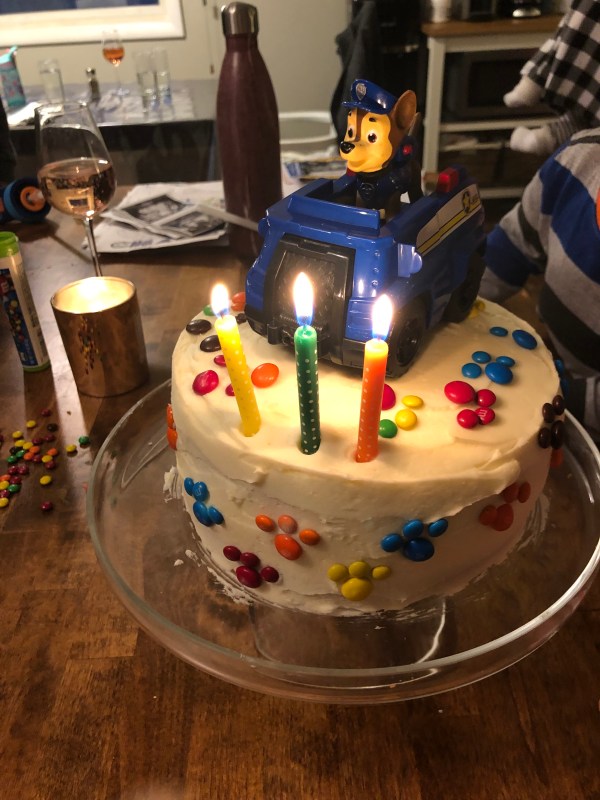
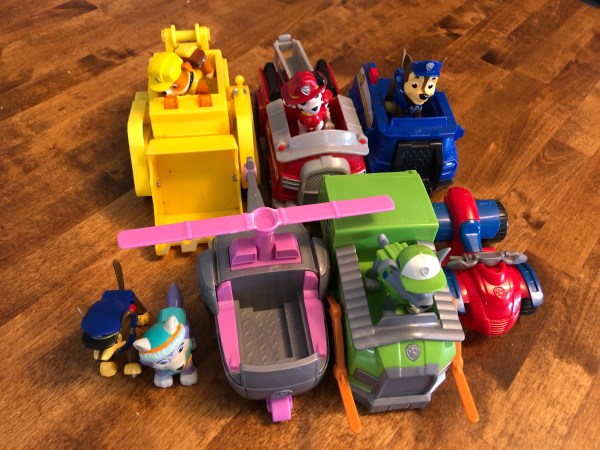
But, of course, we did give him a gift – a set of used Paw Patrol characters and their vehicles [one of which I used to decorate his “Paw Patrol” birthday cake that all the kids helped decorate.]
A few weeks ago we began looking for someone selling a used set of these Paw Patrol trucks because we knew how much Theo would love them. Living in the Chicagoland area meant that they were easy to find. We ended up buying a set of six vehicles and eight characters for $15. At Target, these Paw Patrol vehicle/character sets sells for $15 each.
We’ve already lost a few characters…
But the point here is that it’s actually not about the money at all. Yes, there was a savings, but it’s not like we couldn’t afford to buy it all brand-new.
Why buy used?
The motivation for buying used is to give a second [or third or fourth] life to something bound for the garbage bin. Rather feeding the machine that is constantly making new toys [especially plastic toys] we should be intentionally prolonging the life of the current toy population. I basically rescued these trucks from a landfill. I am essentially a super hero. And they are perfectly fine toys. In fact, my son ADORES them and couldn’t care less whether they were purchased new.
Why not buy used?
So it got me thinking about why I would still never show up at another kid’s birthday party with a gift purchased second-hand. It’s one thing to buy a used gift for my own kid, but a completely different story if I’m going to give a gift to someone else.
There is some unwritten social code that says it’s unacceptable to give gifts that are second-hand.
We even frown [although slightly less so] on “re-gifting” and most people would agree that the appropriate way to re-gift an item is if the recipient doesn’t know it’s re-gifted.
Isn’t that strange? Why should it matter?
Gift giving today is about the represented dollar value, not how much it will be appreciated.
I think that what has happened to our society is that gift giving has become more about the ritual [i.e. gifts are required at certain holidays and events] and the dollar value [i.e. gifts need to be within a certain price range] than it is about the recipient’s enjoyment of the gift.
At my first baby shower, a cousin of mine gave me a gift for the baby – purchased new, obviously. After I opened it, she handed me a pair of baby girl Sperrys that she had found used and thought were so cute she had to get them for my baby, but she gave them to me separately because she wanted to explain that they were second-hand.
I LOVE those pink cheetah-print baby Sperrys! It didn’t matter if they were new or not. Both of my baby girls have worn them – and I’m sure this third baby girl will as well.
I find it perplexing and rather sad that we don’t feel free to give gifts just for the sake of their enjoyment value.
Similarly, when I started dating my husband, he and his siblings had a Christmas tradition of trading names for a gift exchange. They had set a value of $75 and then provided a detailed list of things they wanted. I went shopping with Brett that year and watched him cross items off the list and tally up the total dollar amount for his sister-in-law.
I couldn’t even believe it. Is this what gift-giving has become? I felt, even back then, that this was the total antithesis of what giving a gift should be.
Have you been out shopping for a gift and had some sort of mental idea of how much you needed to spend? Somewhere between being “too cheap” and being “too flashy”? And have you been invited to a party or shower or event and known without any overt statement that a gift is a requirement – or at least you would be viewed as a party crasher if you showed-up empty-handed? Have you tried to make sure that each of your kids gets the same general value of gifts or the same number of packages on Christmas morning?
Can we go back?
Can we go back to giving a gift purely because we want to, rather than because it’s required? Can we go back to giving a gift just because we know someone will love it and not care about how much it cost or where it came from?
I’m hoping that by continuing to exchange used gifts [whenever possible] in my immediate family that I will teach my children that gifts are for the purpose of making people feel loved and appreciated by giving something that they will love – not out of obligation or to follow social customs or to show that we have the means to buy new, expensive things.
Buying used isn’t being cheap, it’s being responsible.
Theo was so excited about those Paw Patrol toys that he didn’t even want to eat cake. Everyone else ate cake while Theo played with the trucks. All the other kids came to the table for cake eventually, but Theo only wanted to play.
These toys were the perfect gift – because they were used and because no one cared that they were used. They represented our commitment to sustainability and our belief that the value of a gift doesn’t come from how much is spent or where it is purchased, but from whether it is given out of love.
Theo’s Birthday Video
As is my new tradition for the kids, here is a short video highlighting Theo’s third year.
Three notable things happened this month regarding my clothing ban:
1. We sold our bedroom set and moved all of our clothing into our closets.
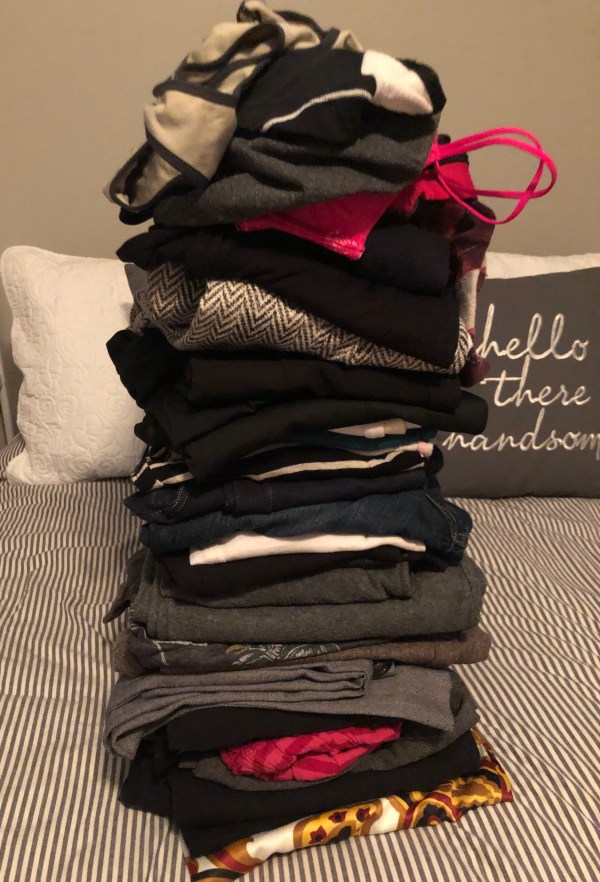
I have these six drawers [still hanging around from my college days] which contain all the clothes that currently fit [all seasons] and a top shelf that holds all of the clothes that I can’t fit into while pregnant but that I will [hopefully] fit into again someday. I also have some hanging dresses/skirts/cardigans [maternity and regular].
This feels like a big accomplishment – and also makes our bedroom feel MUCH larger in the absence of the huge sleigh bed with storage, two full dressers, and two excessively large nightstands, which of course we thought we needed when we got married.
My, how we’ve changed. Now, our bed is on the floor, two plastic storage bins serve as nightstands, and we have a laundry basket against the wall. That’s it.
[Well, we also currently have a huge collection of items headed to charity along one wall.]
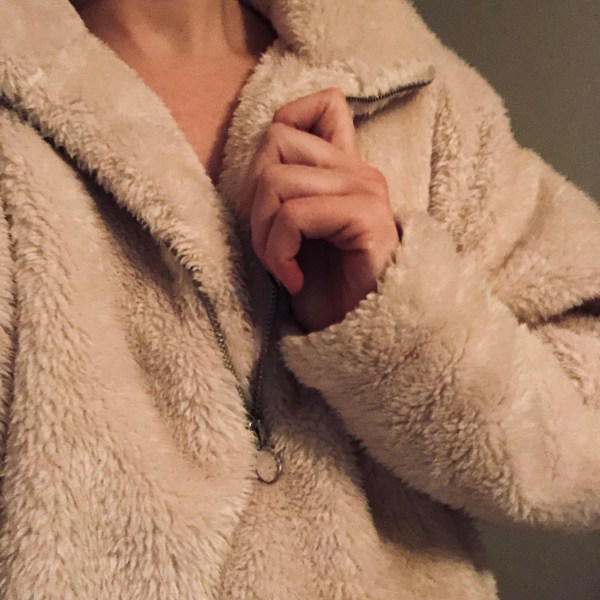
2. Brett bought me a sweater.
I mean, look at this thing! It is basically a Snuggie that I can wear out of the house without ridicule! Would you say no to this level of comfort???
This is the first new piece of clothing I have bought [indirectly] since last May. I’ve received a new work uniform, two race shirts for the Chicago Marathon, and a dress that was a Christmas present, but this is the first piece of clothing to come from our money.
I kinda feel badly about it. [But only kinda.] It was new and it was from Express. Neither would be my preference. But it’s so soft and so comfy and I have worn it literally every day since I got it.
And I technically didn’t buy it…
As penance, I’m giving away an extra ten items from my wardrobe this month for a total of 36.
Hey, I never said I was perfect.
3. I mended some clothes instead of tossing them.
By “mended” I mean I used a travel sewing kit to [very poorly and by hand] stitch a few holes and tears in a couple of clothing pieces that I would like to wear again. A year ago, I would have tossed these and just bought a replacement. [I wouldn’t have even recycled them! Egad!]
Now I’m wondering whether I should try to fix my socks with holes…
[googling “how to darn socks”]
Additional thoughts…
We are in the middle of the “polar vortex” here in Chicagoland with temperatures in the -20s, which has me thinking of all the less fortunate people in my community without warm clothes, without winter coats and hats, and everyone living on the streets who hopefully found somewhere warm to stay today.
It made me think, Why should everyone in my family have multiple coats, hats, and pairs of gloves when there are people in my own community who have none?
So, I am going to give all of our extra winter gear to local shelters who are providing safety and warmth for the less fortunate in my town. We only need one winter coat. And the extra coat that just sits in the closet most of the time might make a big difference to someone this winter.
If you are as privileged as I am to always have a warm place to sleep and lots of warm clothes and several warm coats, I hope you’ll consider doing the same.


 It took me almost 30 years to fully recognize and acknowledge that I was born into privilege – and for the past two years, I’ve struggled with what my responsibility to the world is as a result. The answer, in part, is minimalism.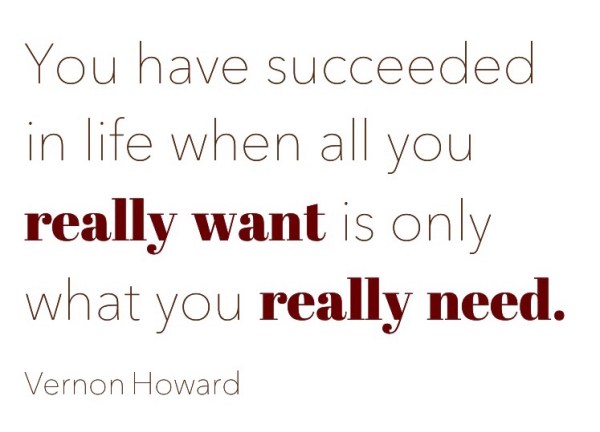















 No Makeup Mama