My 34 Ways to Go Zero Waste

My 34 Ways to Go Zero Waste

It’s been exactly one year since I read my first zero waste book, Zero Waste: Simple Life Hacks to Drastically Reduce Your Trash by Shia Su, which was my first introduction to the world of bulk bins and muslin bags and stainless steel straws and bamboo cutlery. And my life has been forever changed.

Thanks, Shia! [I LOVE HER!]

This book made me believe that reducing my waste is totally achievable – not extreme or inconvenient, as it is commonly perceived – and gave BRILLIANT tips and hacks and photos to convince me that, YES, I can do it!

Since then, I’ve made a lot of changes to reduce my household’s waste.

Then, a few days ago, I picked up this new book: 101 Ways to Go Zero Waste by Kathryn Kellogg, which is another super practical guide for reducing your waste.

This book is so fabulous that I read the entire thing in two days – which basically means a few hours.

As someone who is outspokenly “low waste,” this book was part slap on the back [“yeah, look at you go! No more paper towels in your home!”] and part slap on the wrist [“don’t call yourself zero waste when you still accept disposable straws at the drive-thru!”].

I’ve clearly got some more work to do.

Out of the 101 ways in the book, 20 are not applicable to me [I don’t use hairspray] or are impractical [I can’t walk, bike, or take public transportation because of where I live and the fact that I always have three toddlers in tow]. Out of the 81 that are left, I’ve already been doing 47! [Go me!] But that still leaves 34 ways to go zero waste that I have not gotten a handle on yet.

Yes, one of them is the straw issue…

So, since my clothing ban officially ends next month, I’m going to use the next twelve months to focus on these remaining 34 areas.

Here they are:

  1. Say “No” to straws
  2. Go to the farmers market
  3. Go to the butcher
  4. Specialty stores and restaurants
  5. Compostable dish scrubs*
  6. Swapping out toxic items
  7. Toothpaste*
  8. Toothbrush
  9. Toilet paper
  10. Tissues
  11. Razor*
  12. Lotion*
  13. Deodorant*
  14. All-Purpose cleaner*
  15. Deodorizing spray*
  16. Room deodorizer*
  17. Carpet deodorizer*
  18. Tub and toilet cleaner*
  19. Floor cleaners*
  20. Dishwasher detergent
  21. Air drying
  22. Shipping packaging
  23. Fountain pen*
  24. Recycled and double sided paper*
  25. Office-wide initiatives
  26. Take out
  27. Out to eat
  28. Zero waste travel kit
  29. Buying carbon offsets
  30. Zero waste vacations
  31. Zero waste pets
  32. Find community
  33. Work locally
  34. Get involved with local government
  • [*I haven’t been buying these for the past year and I am still trying to use up what I have so that I can switch to a sustainable or DIY alternative.]
  • Geez, that is a long list. Luckily, many of these things can be combined. Also, many of these won’t be accomplished in a year because I’m still working through using up my bajillion bottles of lotion and my fifteen packages of disposable razors [don’t ask].
  • And now, I will leave you with my favorite quote from the book:

    “In today’s world, one of the most radical things you can do is find contentment.” – Kathryn Kellogg, 101 Ways to Go Zero Waste

    Doesn’t sound related to zero waste, but that is at the heart of the zero waste movement – to stop the constant consumption and need for more that drives our linear economy. Finding contentment with what we have is the first step to counteracting our wastefulness.

    Karis

    Lessons in Motherhood and Giving Used Gifts

    Lessons in Motherhood and Giving Used Gifts

    My son, Theo, turned three a few days ago. In keeping with our new sustainability and zero waste principles, we made a big deal of our time together [at Chuck E Cheese for the afternoon] and downplayed the gift portion of the celebration. We actually never even mentioned a gift and he never asked for one.

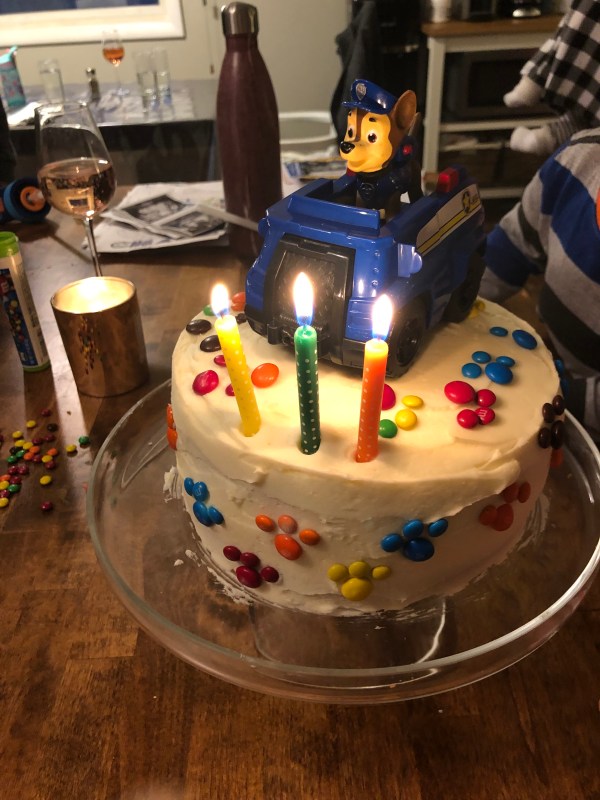
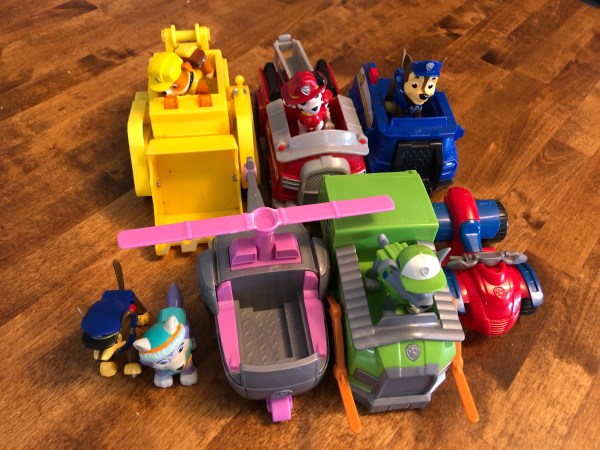
    But, of course, we did give him a gift – a set of used Paw Patrol characters and their vehicles [one of which I used to decorate his “Paw Patrol” birthday cake that all the kids helped decorate.]

    A few weeks ago we began looking for someone selling a used set of these Paw Patrol trucks because we knew how much Theo would love them. Living in the Chicagoland area meant that they were easy to find. We ended up buying a set of six vehicles and eight characters for $15. At Target, these Paw Patrol vehicle/character sets sells for $15 each.

    We’ve already lost a few characters…

    But the point here is that it’s actually not about the money at all. Yes, there was a savings, but it’s not like we couldn’t afford to buy it all brand-new.

    Why buy used?

    The motivation for buying used is to give a second [or third or fourth] life to something bound for the garbage bin. Rather feeding the machine that is constantly making new toys [especially plastic toys] we should be intentionally prolonging the life of the current toy population. I basically rescued these trucks from a landfill. I am essentially a super hero. And they are perfectly fine toys. In fact, my son ADORES them and couldn’t care less whether they were purchased new.

    Why not buy used?

    So it got me thinking about why I would still never show up at another kid’s birthday party with a gift purchased second-hand. It’s one thing to buy a used gift for my own kid, but a completely different story if I’m going to give a gift to someone else.

    There is some unwritten social code that says it’s unacceptable to give gifts that are second-hand.

    We even frown [although slightly less so] on “re-gifting” and most people would agree that the appropriate way to re-gift an item is if the recipient doesn’t know it’s re-gifted.

    Isn’t that strange? Why should it matter?

    Gift giving today is about the represented dollar value, not how much it will be appreciated.

    I think that what has happened to our society is that gift giving has become more about the ritual [i.e. gifts are required at certain holidays and events] and the dollar value [i.e. gifts need to be within a certain price range] than it is about the recipient’s enjoyment of the gift.

    At my first baby shower, a cousin of mine gave me a gift for the baby – purchased new, obviously. After I opened it, she handed me a pair of baby girl Sperrys that she had found used and thought were so cute she had to get them for my baby, but she gave them to me separately because she wanted to explain that they were second-hand.

    I LOVE those pink cheetah-print baby Sperrys! It didn’t matter if they were new or not. Both of my baby girls have worn them – and I’m sure this third baby girl will as well.

    I find it perplexing and rather sad that we don’t feel free to give gifts just for the sake of their enjoyment value.

    Similarly, when I started dating my husband, he and his siblings had a Christmas tradition of trading names for a gift exchange. They had set a value of $75 and then provided a detailed list of things they wanted. I went shopping with Brett that year and watched him cross items off the list and tally up the total dollar amount for his sister-in-law.

    I couldn’t even believe it. Is this what gift-giving has become? I felt, even back then, that this was the total antithesis of what giving a gift should be.

    Have you been out shopping for a gift and had some sort of mental idea of how much you needed to spend? Somewhere between being “too cheap” and being “too flashy”? And have you been invited to a party or shower or event and known without any overt statement that a gift is a requirement – or at least you would be viewed as a party crasher if you showed-up empty-handed? Have you tried to make sure that each of your kids gets the same general value of gifts or the same number of packages on Christmas morning?

    Can we go back?

    Can we go back to giving a gift purely because we want to, rather than because it’s required? Can we go back to giving a gift just because we know someone will love it and not care about how much it cost or where it came from?

    I’m hoping that by continuing to exchange used gifts [whenever possible] in my immediate family that I will teach my children that gifts are for the purpose of making people feel loved and appreciated by giving something that they will love – not out of obligation or to follow social customs or to show that we have the means to buy new, expensive things.

    Buying used isn’t being cheap, it’s being responsible.

    Theo was so excited about those Paw Patrol toys that he didn’t even want to eat cake. Everyone else ate cake while Theo played with the trucks. All the other kids came to the table for cake eventually, but Theo only wanted to play.

    These toys were the perfect gift – because they were used and because no one cared that they were used. They represented our commitment to sustainability and our belief that the value of a gift doesn’t come from how much is spent or where it is purchased, but from whether it is given out of love.

    Theo’s Birthday Video

    As is my new tradition for the kids, here is a short video highlighting Theo’s third year.

    Happy Birthday to my sweet, handsome boy!

    ❤️ ❤️ ❤️

    Karis

    Environmentalism isn’t just for Liberal Tree-Huggers

    Environmentalism isn’t just for Liberal Tree-Huggers

    Why is it that taking care of the planet, protecting wildlife, and preserving our natural resources appears to only concern liberals and environmentalists? These are issues that affect all of us, so why aren’t we all on board?

    If you watch the news, the “green” initiatives seem to be constantly touted by liberals while the conservatives are always on the other side of the screen shaking their heads, insisting “it’s no big deal.”

    Since this is the impression I have always had of the two sides of the debate, I was pleasantly surprised to find in Jen Hatmaker’s book, 7: An Experimental Mutiny Against Excess, that there are conservative Christians [even Republicans!] with the same concerns for our shared environment. Of course, Jen is the only one I have ever heard of – and she only cared for a month – but still. This is progress.

    She writes with compelling sarcasm that a belief in God as creator of planet earth is a great reason to start taking care of said planet.

    I wish I could quote her entire chapter on reducing waste here, but you should really just go get a copy of the book. In the meantime, though, here’s a snippet:

    “I’m a Christian author, so my deal is to write Bible stuff, and the hippies can worry with creation.

    Wait a minute.

    Does ‘creation’ have anything to do with God whom I call ‘Creator’? Oh, pish posh. Surely God isn’t worried about how we handle His creation that He created. His main concern is making His followers happy and prosperous, yes? And if we need to consume the rest of His creation to make us happy, then I’m sure God doesn’t mind. I bet ‘creation’ mainly refers to us humans, and the soil and rivers and animals and forests and oceans and wildflowers and air and vegetation and resources and lakes and mountains and streams are purely secondary, if not inconsequential.

    If I’m taking my cues from many mainstream evangelicals, then only Democrats and loosely-goose liberals care about the earth. It’s a giant conspiracy to distract us from the abortion and gay issues, which evidently are the only subjects worth worrying about. Ecology is for alarmists who want to ruin our lives and obsess about acid rain.

    I’m beginning to wonder if the unprecedented consumption of the earth’s resources and the cavalier destruction of its natural assets is a spiritual issue as much as environmental…

    This month the Hatmakers are doing their part, setting aside apathy and respecting the earth God made and loves.”

    Thank you, Jen! I wish more Christians were drinking your kool-aid.

    Truthfully, I don’t really care what your reasoning is for choosing to take better care of our beautiful planet – I just want you to do it. I want everyone to do it.

    The American Waste Problem

    America has a definite waste problem. It’s not like we are without resources to do something about it, and we can no longer claim to be ignorant about it. So, why aren’t we doing more? We know it’s possible. We’ve seen the impact of a country committed to sustainability. Sweden not only sends a mere 1% of household waste to landfills, but they are actually making money off of other countries’ waste by using it to fuel their incinerators [source article].

    Then there is America…

    According to the EPA, we send 52.8% of our waste to landfills each year [source article]. Don’t even get me started on all the reasons this is terrible [but you can read about it for yourself in this article].

    The Solution

    If both sides of the debate [virtually ALL OF AMERICA] could join hands and work together towards the goal of a greener future, then we could really get shit done.

    And there is hope. If everyone identifying themselves as Christians would “go green” for the good of their religious beliefs, then a whopping 75% of Americans would be changing their wasteful ways. [2017 Gallup poll of religions in the US can be found here.]

    Can we even hope for such a transformation? I don’t know, but I did get a little glimmer of hope from Jen’s book.

    Ok, I’m almost done…

    No matter your religion or political preference, everyone should be behind a more sustainable future for our world. I’m singling out Christians here because they make up the majority of people in this country with the greatest power to change the current consumer mentality that is doomed to fail in the long run.

    Written by a Christian pastor’s wife, 7 is a great book that confronts our American culture through the lens of the Bible. For that reason, if you believe in the Bible, I highly recommend it. And I hope that reading it produces a wave of authentic Christianity like our country has never seen – one that encourages, rather than criticizes, recycling, composting, AND tree-hugging.

    🌳 🌳 🌳

    Karis

    Recycling [or Repurposing] Candle Jars

    Recycling [or Repurposing] Candle Jars

    Does anyone recycle their used candle jars? I’m not judging – I’m just seriously wondering because I don’t think I’ve ever actually burned through an entire candle until just recently [thanks to my recent hygge kick, you may recall]. I feel like candles are things that every person has a million of and most of them are never [or rarely] used.

    Maybe that’s just me.

    I don’t remember ever finishing a candle, but I am certain that if I ever did, the jar ended up in the trash because, well, everything I disposed of ended up in the trash in those days. [I’m new to this recycling thing, don’t forget.]

    So, now that I have several candles that have been fully burned, I had to figure out what to do with the remaining jars.

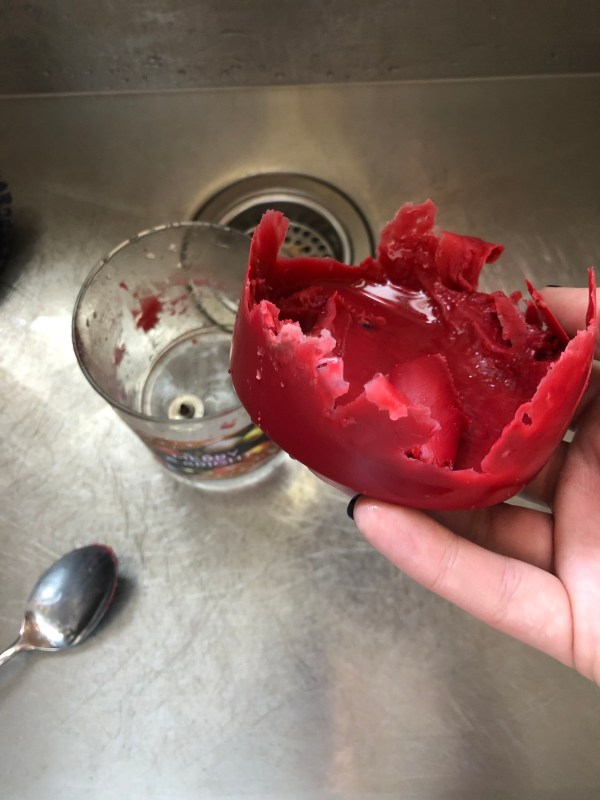
    First I had to clean them out, which I accomplished by filling with hot water and scraping out the remaining wax with a spoon. Only one candle cooperated.

    Folks, this is apparently not the best way to clean your candle jars. I was just trying to use my brain when I should have been asking Google. Apparently, all you need to do is stick the candle in the freezer and the wax will magically separate from the container. [Whaaa?] I cannot verify this, of course, but it sounds much easier than my scraping method.

    So now, what?

    I have seen a million ways to repurpose candle jars on Pinterest. They can hold cotton swabs, makeup brushes, plants, tea lights, herbs, buttons, candy, rubber bands, and on and on. Basically they can hold anything that will fit [duh]. The problem is, I don’t need another glass jar lying around holding more of the little stuff I don’t want in my house anyway!

    So I figured I would just recycle the glass jars. Off to the recycling bin and that is that. After all, we burn a lot of candles these days and if I kept every jar, we would eventually be overrun with empty jars.

    That’s when it hit me. The best way to reuse the old jars is to refill with wax and make new candles. After all, WE BURN A LOT OF CANDLES! [This should not have been such a revelation. I am admittedly slow sometimes.] Pinterest was actually a little low on recommendations for refilling candle jars with [wait for it…] new candles! But maybe that is just too obvious for anyone else to even burden the interwebs with.

    All I will need is the wax [some of which I can reuse from the bottom of old jars] and I won’t need to buy candles any longer. This provides me with the opportunity to switch over to 100% beeswax candles AND reduce waste AND cut down the cost of our candle habit.

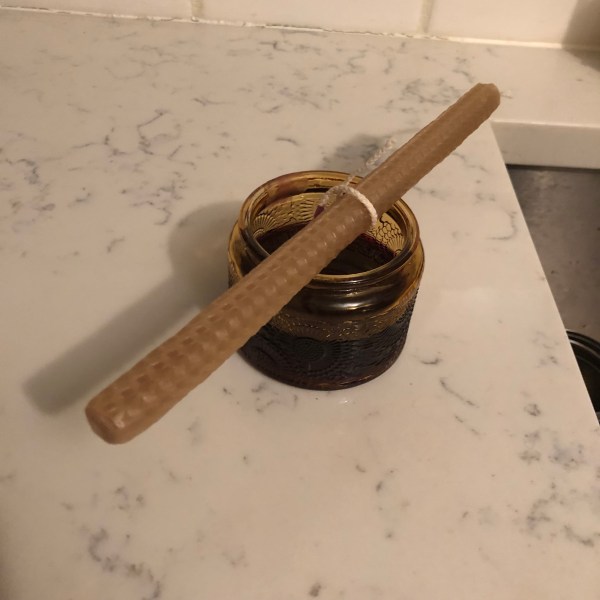
    I immediately rescued the empty jars from the recycling bin outside and refilled the little one that I like the best with leftover wax melts we have had in our basement for ages. [Now I finally understand why providence never let me get rid of those…]

    Voila! New candle cooling down as we speak. [Yeah, I used a beeswax candle to hold the wick – it’s what I had handy.]

    I should also mention that I found conflicting info regarding whether candle jars can be recycled curbside due to some of the containers being made to withstand high heat and therefore not your basic run o’ the mill glass. If you are certain that are glass, then go for it, but if they might be made of borosilicate [I have not the foggiest idea how one is supposed to tell the difference…], it can’t be recycled curbside and you’ll have to scour the Internet for a local recycling center.

    This is a fabulous argument for just reusing. If you have a need for a cutesy q-tip holder – then go for it. Otherwise, refill with some beeswax [don’t forget a wick], and you’re all set for clear-conscience candle consumption!

    [Well, unless we start talking about indoor air pollution…oy vey!]

    🕯 🕯 🕯

    Karis

    Trash Update: One step forward, two steps back

    Trash Update: One step forward, two steps back

    At the start of the new year, we finally used the last tall kitchen trash bag from the box of 55 that we had bought at the beginning of 2018. I had been waiting for this day and, since we’ve been using one bag per week, it was a long wait.

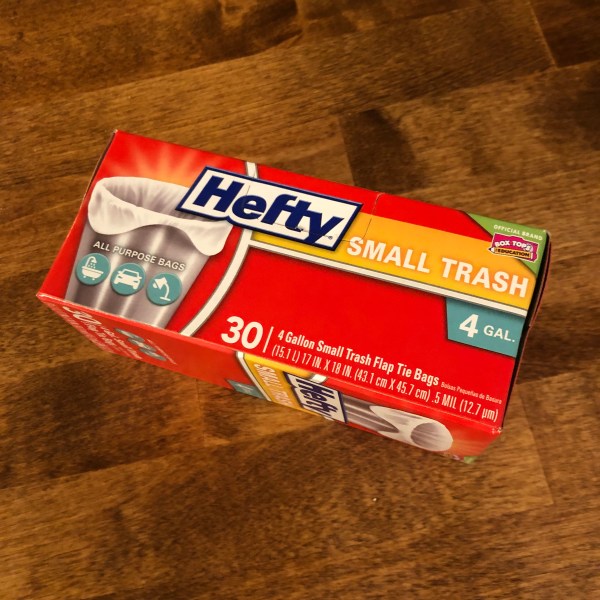
    The time finally came, so we bought a box of small 4 gallon trash bags that actually fit the minuscule trash can we use in our kitchen.

    If we continue at our current rate, this box should last us over half of the year. After these run out, I plan to have so little garbage that I can start making these handy paper trash can liners I read about in the book Zero Waste by Shia Su:

    Or at least, that’s what I was hoping.

    Unfortunately, there have already been two weeks when we emptied the can twice.

    Yesterday, we had some family members over who brought with them a Starbucks coffee [excuse me, “dirty Chai latte”] and a large styrofoam Chic-fil-a cup. The trash can was full from these two items alone. And then we had cake to celebrate a family birthday and a well-meaning family member bought a package of paper plates [oh the horror! 😱]. The trash bag had to be emptied before I could even squeeze the last plate into the bag.

    It had only been two days since I emptied the can last…

    But the realization that I am not always in control of the trash that comes into my home AND that I cannot do anything about other people’s perspectives on disposables AND that it is worthless to try to bend everyone to my way of thinking on matters of environmental conservancy [or to offend anyone in the attempt] reminded me to let go of perfection.

    I can only control what I can control.

    So, maybe this box of bags will last us through April. 🤷‍♀️

    Karis

    [Nearly] Zero Waste at Aldi

    [Nearly] Zero Waste at Aldi

    A few months ago, I stopped shopping at Aldi – partly because every other grocery store in my area has better sales each week and partly because [nearly] all of Aldi’s produce is wrapped in plastic.

    BUT, today was one of those days when a killer avocado sale happened to coincide with my desperate need to restock toilet paper and the promise of being in and out in ten minutes sealed the deal.

    [I also appreciate that I can seat both of my toddlers next to each other in the front of the cart. AND I don’t get a bunch of weird looks when I bring my own bags.]

    For being the first big grocery chain I have ever heard of to not offer bags, I’m surprised that they aren’t a little more eco friendly in the produce aisle…but I don’t know a thing about the grocery business. I’m sure there is a reason that a 2lb plastic bag of honeycrisp apples costs $2 and two pounds of loose honeycrisp apples costs $4.

    Anyway, I did what I could and here is what I got:

    Gallon of milk – plastic carton will be recycled. I am still unable to convince my husband to trade milk for a non-dairy variety. And I still haven’t convinced myself to buy milk in glass containers – but that day is coming. I would really like to find a refillable situation from a local farm, but haven’t found one yet. Does that even exist anymore?

    Cartons of eggs – cardboard containers will be recycled or composted. I plan to buy my eggs as part of my farm share this summer and just refill my carton each week, but in the meantime, we buy only cardboard cartons.

    Box of pasta – I didn’t have to buy this, but I wanted it to make lemon butter shrimp pasta later this week with shrimp we were given…and the box will be recycled. I don’t have the tools necessary to make any pasta noodles besides lasagna at this point.

    Toilet paper – plastic wrapping will be recycled via store drop off and the tubes will be recycled or composted. I am still working on bringing my husband around to the bidet idea…

    Loose produce – bananas, pineapples, avocados, cucumber – all loose and at decent prices. In general, I have found Aldi’s produce prices [even on sale] to be pretty terrible compared to local produce sale prices. Every part of these foods that aren’t eaten will be composted. The stickers are the only waste.

    Romaine lettuce – I couldn’t find a single type of lettuce that wasn’t packaged in plastic, so I got this bag of romaine which seemed to have the greatest lettuce to plastic ratio. The plastic bag will be recycled via store drop off – but it still makes me kind of sad.

    Sauce, pesto, syrup – all in glass bottles. Aldi offers cheaper pasta sauce and syrup in plastic bottles, which I passed on. Glass is a great material than can be continually reused and recycled.

    As I was shopping, I passed all the usual stuff that I used to buy every week – pretzels, applesauce, salad dressing, yogurt, cottage cheese, bread, buns – but I make all that stuff myself now.

    The stuff I can’t make, I buy. The stuff I buy, I try to find without packaging. The stuff that I can’t find package-free, I try to find in sustainable packaging like glass or cardboard.

    That’s my [nearly] zero waste game plan. It has some weaknesses and I’m not perfect [still super far from storing my annual waste in a jar] but these small attempts at mindfulness when I’m shopping go a long way over the course of time.

    Happy shopping!

    🛒 🛒 🛒

    Karis

    Zero Waste Toothbrushes / DIY Bathroom Remodel

    Zero Waste Toothbrushes / DIY Bathroom Remodel

    About a month ago, Brett and I [but mostly Brett] finished remodeling our upstairs bathroom.

    Before reno:

    After demo:

    All done [hallelujah!]:

    Since then, I’ve been anxious to replace the final eyesore – our toothbrushes.

    I’ve been slowly replacing other bathroom items with zero waste, sustainable alternatives. I swapped our plastic shower curtain liner for a cloth one that can be washed and reused. [Since plastic shower curtain liners can’t be recycled, we are “upcycling” it as a tarp over our firewood. Other great ideas for old plastic liners can be found here.]

    I’ve also traded the typical containers for cotton balls and q-tips for glass jars that I already had around the house.

    I still have some plastic stuff waiting to be used up or worn out before being replaced – brush, comb, lotion and detangler bottles…

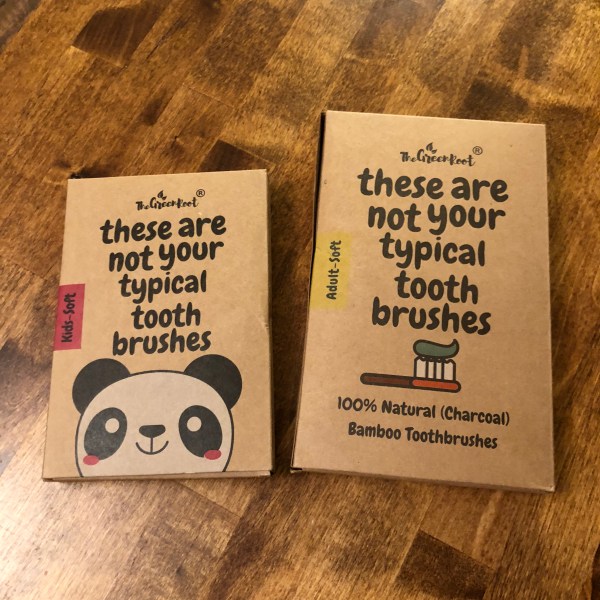
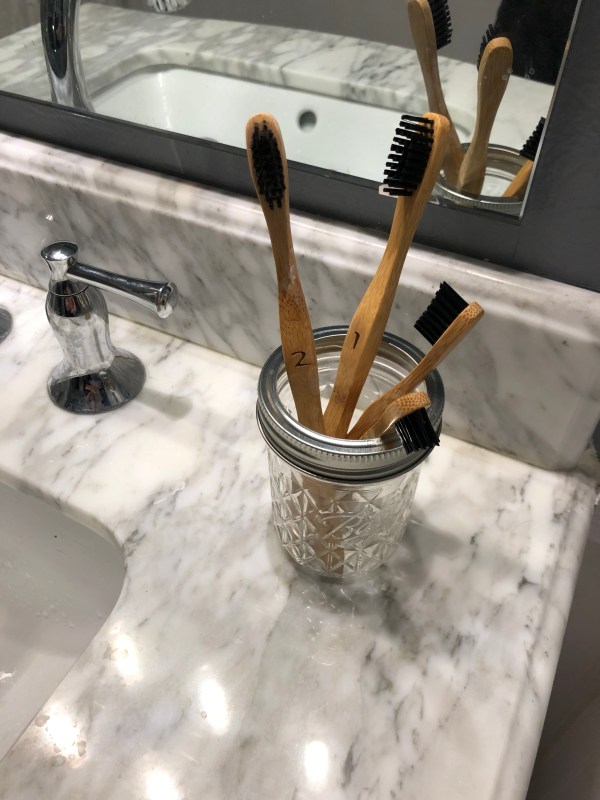
    But the toothbrushes really bothered me. I finally got to replace them with compostable bamboo brushes. The bristles are nylon and though the biodegradability of some types of nylon are being debated, these bristles can be pulled and recycled.

    I chose this company because it is based in the US and [from everything I can tell] committed to ethical and sustainable practices. Also they come in 100% cardboard packaging [double boxed]. It is hard to find toothbrushes that don’t have ANY PLASTIC in the packaging.

    And it doesn’t hurt that making the bathroom more eco-friendly also makes it look better.

    There are lots of great sustainable toothbrush options available now. Just search for bamboo toothbrushes. Also Preserve is a company that partners with Whole Foods to gather and recycle plastics into new toothbrushes which is the best choice if you want stick with plastic. They make it super easy to recycle the brushes when your done by selling you the brush in a prepaid return pouch!

    As for your old plastic toothbrushes, read more about recycling them in this article by Recycle Nation [spoiler alert: it ain’t easy].

    And more about sustainable toothbrush options in this post by My Plastic Free Life.

    AND order your own sustainable toothbrushes from The Green Root here.

    Happy Brushing!

    Karis

    [Nearly] Zero Waste at the Chicago Marathon

    [Nearly] Zero Waste at the Chicago Marathon

    If you’ve ever participated in a race, you probably already know that these events are [typically] very wasteful. Aid stations hand out water and Gatorade in paper or [egad!] plastic cups which get used for all of five seconds before being thrown onto the ground to be trampled by the rest of the runners. Then there are all the energy packets [gels, chews, beans, honey sticks, etc] all in individual wrappers which are also thrown on the ground mid-run. And don’t get me started on all the post-race foods like bananas, apples, protein bars, and water bottles that all create some sort of waste. All of this stuff ends up piled high in tons of trash cans throughout the race course and at the finish line.

    I have been participating in running and multi-sport events of all different sizes – from small town 5Ks to the Chicago Marathon this past weekend – for the past seven years and, honestly, I never even considered the waste until this summer. So, I was very excited to find that the Chicago Marathon had so many awesome green initiatives.

    “The 2018 Bank of America Chicago Marathon has been named an Evergreen Inspire event by the Council for Responsible Sport…”

    -Participant Guide

    Some of my favorite sustainability initiatives were:

    1. The race shirt was made of 100% recycled polyester which has fewer environmental impacts.

    2. Most aid stations collected organic waste [paper cups and banana peels] to be composted and the soil donated to the Chicago Park District.

    3. Recycled Heatsheets will be made into benches which will be donated to the Chicago Park District.

    4. Designated Green team volunteers helped to direct waste into separate containers for compost, recycle or landfill at several Zero Waste Stations.

    5. The race participant guide encouraged runners to bring their own reusable water bottles and provided refilling stations.

    And everyone already knows how much I love the #SheddtheStraw initiative by Shedd Aquarium. I love seeing Chicago work together to become a more sustainable city.

    Of course, a lot of these initiatives are only effective if the runners and spectators actually utilize them and changing [or re-training] an entire race culture will not happen overnight.

    BUT, I can make a difference. I made sure to sort my waste appropriately at the designated Zero Waste Stations. I recycled my Heatsheet. I stayed on the designated paths to preserve the foliage in Grant Park. I recycled my gear check bag appropriately when I got home [store drop-off].

    I realized that I can do more, though – starting with requesting green initiatives at all my races and encouraging fellow runners to support a more sustainable racing environment.

    One of the things I love most about running is how simple it is. It doesn’t require any fancy equipment or gym or dress code or anything other than a pair of legs and a stretch of earth. Running also connects us to nature by getting us outside to enjoy fresh air and appreciate the beauty around us. We don’t want to ruin that, right?

    So if and when you happen to participate in a racing event – it never hurts to encourage race directors to provide sustainable options…and at the very least, look for the recycle bin. 👍🏻

    Happy [Zero Waste] Running!

    Karis

    Josephine’s [Nearly] Zero Waste 1st Birthday Party

    Josephine’s [Nearly] Zero Waste 1st Birthday Party

    My sweet baby girl turned one this month so yesterday we threw a small [nearly] zero waste dinner party to celebrate.

    For my older two kids, I threw big themed parties for their first birthdays. For Evangeline’s ice cream themed party, I made a ton of paper decorations including huge ice cream cones that hung from the ceiling and a “Sweet Shoppe” banner. I also catered the food from a grocery store. For Theo’s Cubs baseball party, I hung a huge stadium backdrop and ordered a photo booth prop package. For both of those parties I served everything in disposable dishes with disposable cutlery and disposable napkins.

    Still, I wanted Josephine to have a party that was just as special – but without all the waste. I tried to marry our new “simple living” philosophy with our goal to reduce our waste and what we ended up with was a beautiful party that was inexpensive and elegant.

    Here’s how it went:

    The Food

    I made three roasted vegetable lasagnas, Brett baked two batches of rosemary focaccia [his specialty], and we also served a yellow watermelon we got from the farm share [or CSA, if you’re just now joining us].

    Since I made the lasagnas myself, including the noodles, tomato sauce, and ricotta cheese, there was very little waste. The only waste was the plastic bags from the mozzarella and parmesan, which we will recycle. Brett made the focaccia from scratch using the yeast and flour I bought at Walmart a while back [more about that zero waste trip here] and the rosemary from our herb garden on our deck.
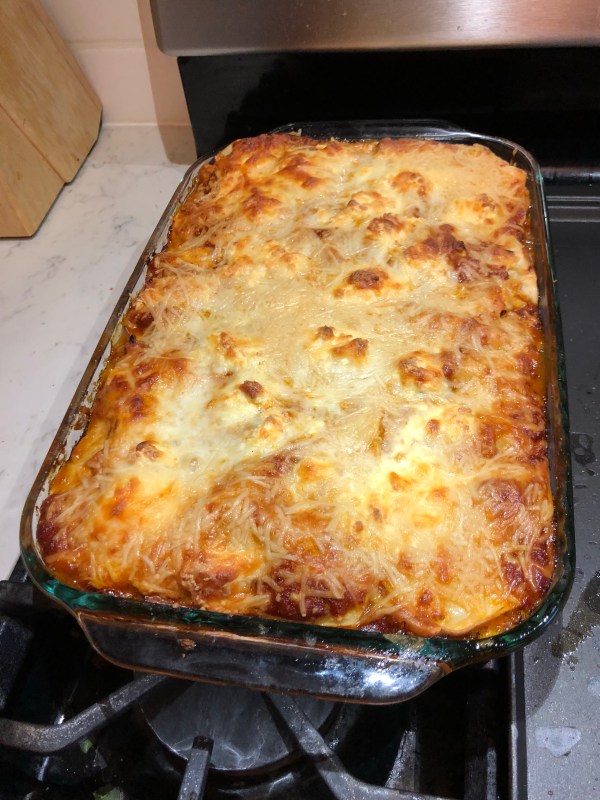
    Waste: cheese bags [recycled]

    The Cakes

    I also made all the cakes and frosting from scratch – a total of four different kinds of cake with three different types of buttercream. [Before you go thinking I’m absolutely insane, I had to make a special vegan cake for the birthday girl and my cousin who is on a special diet for health reasons. Then I wanted to make two small special cakes for two other family members who also have birthdays in the same week. And then a big cake for everyone else.]

    The butter wrappers cannot be recycled so they ended up in the trash before I found this amazing article about all the brilliant ways to use the butter wrappers [spoiler alert, they still end up in the trash] BUT I probably need to just make my own going forward. The most waste was actually from the piping bags, which were not necessary but made the cakes so pretty. Next time I am going to invest in a reusable option since I am out of disposable piping bags now anyway.
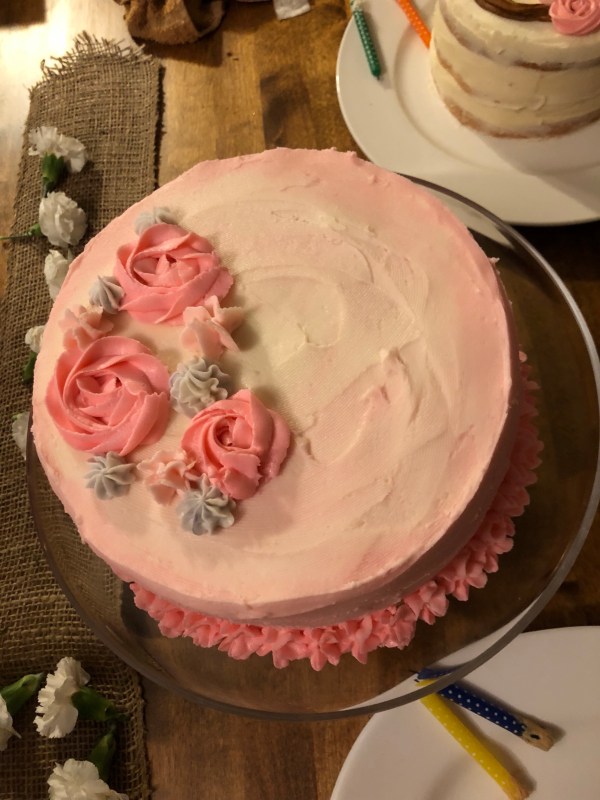
    Waste: butter wrappers and piping bags [trash], butter carton and whipping cream carton [recycled]

    The Tableware

    We used all of our regular tableware. With a guest count of twelve adults and eight kids, we had enough dinner plates to feed everyone, but we didn’t have enough dessert plates for the cake so some people ate their cake out of bowls. But, really, cake is cake no matter what it’s served on, right?

    We served the drinks [cucumber lemon water and sweet tea lemonade] from big glass beverage dispensers [one of which we borrowed] and everyone used cloth napkins [well, I don’t know how many people actually used them…why are people so afraid of cloth napkins???].

    After dinner, my sweet auntie rinsed the dishes and loaded the dishwasher and we gathered all the dirty napkins and put them in the laundry room.

    We even fed the scraps to the dog who was in heaven – but there were very few scraps. Oh, and the watermelon seeds and rinds were composted.

    Waste: None!

    The Decorations

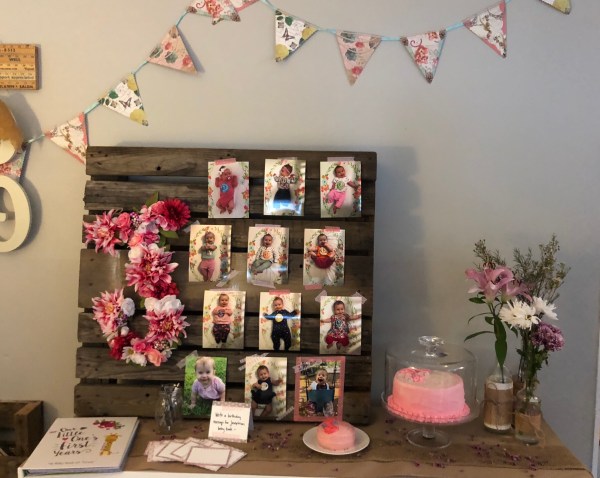
    I decorated with a pallet from my backyard [don’t judge me from having pallets randomly lying around my back yard] and signs from Josephine’s nursery [the flowery “J” and the painted sign with her name that I made for her before she was born and the floral bunting that hangs in her room].

    I printed the photos for the typical monthly timeline, but I needed these photos for her baby book anyway, so they will not be wasted. I up-cycled old wine bottles and used mason jars as vases for flowers. I even used some of the small buds that had fallen off the flowers and carnations as “confetti” on the table.

    The biggest waste [which I had not even thought about] was the plastic wrapping from the flowers [along with the rubber bands and the flower food packets]. I’m not sure how to get flowers without the plastic besides cutting them from your own garden. At least the film can be recycled by dropping it off at the store, so not a total waste.

    Everything else I used to decorate [like the paper and burlap runners] are compostable or recycleable or reusable AND everything was already in my home and therefore technically already wasted.

    Waste: plastic sleeves for flowers and paper decorations [recycled]

    The Gifts

    I asked for no gifts, but I knew that the chances of not receiving any gifts was slim. And I was right. But it was SIGNIFICANTLY reduced compared to what it would ordinarily be. [Also, I have noticed that when I request no gifts, which I always do, people tend to give us practical, useful gifts]. Josephine got two baby board books, a helium birthday balloon, and an elephant bath towel and homemade soap.

    Waste: gift bag and tissue paper [which I will reuse] and balloon [which will end up in the trash but will entertain my kids for the next week, so I’m not upset about it at all].

    All in all, it was a good party – not because of the small amount of waste, but because we spent time with family celebrating our sweet baby girl being so grown up!

    Of course, the lack of waste makes me happy. We didn’t even have to empty our little trash can under the sink. Come to think of it, I don’t think a single thing was thrown away the entire party. [It helps to hide the trash can – and the paper towels.]

    That’s a success in my book!

    Karis

    [Nearly] Zero Waste at Walmart

    [Nearly] Zero Waste at Walmart

    To be honest, this shopping trip was pretty far from “zero waste.” I’m admittedly using “nearly” very loosely here. The good news is that all of the waste, with the exception of the produce stickers, can be recycled or composted.

    I don’t typically shop at Walmart, but when the closest bulk store is 30 minutes away and I have all three kids with me and we just spent the morning at the doctor and we really need some basics for baking and produce for snacks…well, sometimes I end up going to Walmart.

    [This is actually the first time such a thing has happened because I try my best to always plan ahead and therefore avoid this problem.]

    I don’t even have the time or energy to sort through my varied and complex feelings about Walmart in general. So, I had to do what I could, and I’m happy to report that, at the very least, I didn’t bring very much waste home.

    Here’s a breakdown of what I got:

    Flour and Sugar

    I usually buy these from the bulk bins at Whole Foods or [recently] Fresh Thyme, but I just couldn’t get all the way to one of those stores. But, the good news is that these bags are compostable and I bought the largest bags I have space to store. My biggest bummer is actually that I’m not certain that the sugar is fair trade.

    Extra virgin olive oil

    We usually buy it at Walmart because it is a good price for a big jug [even though the jug is unfortunately plastic], BUT I will be buying my EVOO from Fresh Thyme from now on since they have it in bulk and I can bring my own container.

    Toilet paper

    I haven’t found a source of unpackaged toilet paper yet, so I buy the rolls in large packages and recycle the plastic wrap [grocery store drop off] and all of the cardboard rolls [curbside pickup].

    I wish we were to the point of not using any toilet paper, but my husband is not a fan of the make-shift bidet [aka diaper sprayer].

    Yeast

    I buy my yeast in glass jars because I use a lot of yeast and glass is a sustainable material and good for reusing [like storing homemade baby food or making homemade candles] or recycling.

    Milk

    Ah, milk – the bane of my zero waste existence. I see why it is so much easier to be truly “zero waste” as a vegan. But my husband cannot live without milk. We could buy it in glass bottles, but I just can’t bring myself to do it yet. So, the downside is three plastic jugs to be recycled. BUT, on the upside, one gallon is for making homemade yogurt, and the other is for making homemade ricotta…so I’m saving the waste I would have if I bought those things.

    [I’m trying to convince my family to switch over to the cashew milk I make and think is delicious – but change takes time…]

    Produce

    I picked up loose produce and put it in my own bags. The only regret is that the bananas are not fair trade – but I don’t even know where to find fair trade bananas. [Suggestions, anyone?]

    Ironically, the produce is the only place where I brought home something actually bound for the trash can – the stickers.

    But, I guess if this is all that goes to the landfill, that’s not too bad after all.

    Karis