Zero Waste: Cloth Diapers

Zero Waste: Cloth Diapers

Originally, I planned to write about my experience with cloth diapers as a part of my “Simplifying Parenting” series; however, I realized that cloth diapers are not exactly simple. That’s not to say you shouldn’t choose them. Even after seven years of using cloth diapers non-stop for my four kids, I have nothing but good things to say about them. They are zero waste, wallet friendly, helpful for potty-training, more efficient, gentler on baby’s bum, and absolutely adorable.

But I’m definitely no expert, as you will see. I’m just a mom who wanted to save [at the outset] thousands of dollars and [by the end] the planet – one reusable diaper at a time. So rather than try to give you all the answers, explain the cloth diaper lingo, discuss the laundering process in detail, give my opinions on the preferred inserts, diaper rash cream, and cover brands – I’m just going to tell you my story: how I came to cloth diapers, how I made it work for my family, and what I learned along the way.

But first, let’s get the biggest obstacle out of the way.

First, the truth about parenting and poop

I know a lot of people who considered using cloth diapers but, in the end, decided against it because “it’s gross.” So, I just want to say this now: If you think that disposable diapers will save you from having to deal with poop, I have some bad news. Parenting involves poop. And lots of it. For at least five years of your kid’s life, you’ll be dealing with poop. From the day you bring a baby home, you will be tracking poop, examining the color of poop, maybe even weighing poop. As the baby gets older, you’ll be cleaning poop out of car seats, high chairs, strollers, cribs, and – yes – even off of your hands and clothes. Your baby will have explosive poops that shoot up their backs or down their legs and get everywhere. Then when your baby starts eating real food, you’ll have to wipe poopy butts daily until potty training – and these poops smell awful. Like, so awful you can’t believe your sweet angel produced them. And even if you potty train early like I did [all my kids potty trained at or before 2-years-old], you’ll still have to wipe butts until your kid is old enough to wipe it himself. And there will be accidents. There will be poop in underwear, in beds, and in car seats that has to be cleaned.

Fun fact: I never once had a blowout in a cloth diaper – but the moment I put a disposable diaper on one of my kids, shit would shoot up their back. Cloth diapers = fewer blowouts.

Of course, if you’re a working parent, you may encounter less poop, but there will still be a lot of poop. So, just brace yourself.

If all this talk of poop is making you reconsider having kids, then good. Because there are worse things than poop – like vomit. Last month, my daughter threw up three times on the drive home from vacation. THREE TIMES.

Give me a poopy diaper over vomit any day.

Ok, so now that we’re all on the same page about poop, let’s move on to a few other obstacles…

Other obstacles to cloth diapers

Big expense at the outset. I spent about $250 initially for my cloth diapers, which is less than what most sources told me I would have to spend, but even that was more than necessary. If you don’t have funds available to buy everything you need, just buy what you can and add as you are able.

Important Reminder: Cloth diapers are NOT all-or-nothing.

No way to wash them. I have read that some laundromats won’t allow cloth diapers, which is why people without washing machines often choose not to cloth diaper. Of course, it’s hardly fair that those who would benefit most from the cost savings of cloth diapers are limited in this way. As the world continues to encourage more sustainable living, we will need to pressure businesses to make a way for these services. However, there are laundering services for diapers. This depends on where you live, but it is worth looking into for anyone who can’t [or doesn’t want to] wash the diapers themselves.

Childcare won’t use them. This is becoming less and less of a problem as cloth diapers become more common, but the only way things change is by encouraging them to change. If your childcare facility is refusing to use cloth diapers, it’s probably because no one has tried to change this policy. In the end, if a childcare facility won’t support your choice of diaper, you should find a childcare option that does. No reason to pay soaring childcare prices and for thousands of disposable diapers. You could also consider diapering in cloth when you are with your child and using disposable for childcare [and other unwilling sitters/situations].

Important Reminder: Cloth diapers are NOT all-or-nothing.

Now, let’s talk about why to choose cloth diapers…besides that they are so cute.

Why Cloth Diapers [and why your motivation matters]

Cloth diapers are popular because they save money. Lots of money. For example, I have spent no more than $350 [not including the laundry detergent and diaper creams] on my cloth diapers [inserts and covers] and diapering supplies [like diaper sprayer, diaper pail, diaper pail liners and wet bags] to diapers all four of my babies. So, if the average family spends $587 per year per child on diapers [totaling $4,696 for four kids potty-trained at 2-years-old], I saved $4,346 by using cloth diapers.

BUT, I did occasionally buy disposable diapers for certain occasions [which I’ll explain later]. Still, my savings is definitely in the thousands. And looking back on it, it has not been a huge inconvenience – even when I was working up to 32 hours a week.

I have loved using cloth diapers – but not because of the money.

When my second born was one year old, and I was pregnant with my third, I began to take the environmental crisis seriously for the first time in my life. That’s when I really fell in love with cloth diapers.

I’ve known many people to chose cloth diapers because of the money, only to quit later when the going gets rough [and it does get rough at times]. Because, in the end, most people with the means won’t find the savings a strong enough motivation.

However, when my motivation revolves around the “greater good” of lower waste and protecting the planet then it’s much more likely that I will make it work – and not even complain about it.

So what I’m saying, basically, is that why you chose to use cloth diapers is really important for your success. And at the very least, think about the big picture benefits before throwing in the towel.

My Cloth Diapering Experience

So, this is basically how I did it…

Things I bought:

  • Cloth diapers – I bought them on Amazon in sets with covers and inserts and a variety of brands
  • Diaper pail – I just bought a basic tall trash can with a lid
  • Reusable diaper pail liners – I bought two reusable liners from Amazon, which I still use after 7 years [though the elastic is entire shot on both of them at this point]
  • Wet bags – These are basically waterproof bags to carry dirty diapers in when out and about – I bought three, but two would have been enough
  • Reusable wipes – If I had been smarter, I would have just cut up some old cotton t-shirts for this job, but I wasn’t thinking that way back then.
  • Natural diaper rash cream – two brands that I used for my kids: Earth Mama [previously called Earth Mama Angel Baby] and Grandma El’s.
  • Diaper sprayer – I read somewhere that I wouldn’t need a sprayer because healthy poop is solid and falls out of the diaper. Folks, let me tell you, that is a total lie. Hard poop is not healthy poop. You will definitely want a diaper sprayer.

The only thing on this list I had to rebuy was the diaper rash cream. Everything else, I’m still using for my last baby [who is already potty training – yay!].

Using Diapers:

– My babies were 100% breastfed, so all diapers just went straight into the bin and then it was washed [liner and all] every three or four days.

– After six months, poopy diapers had to be sprayed before going in the bin [don’t procrastinate about this task – trust me], but frequency of changes went down so I could wash every five or six days.

– When going out, I brought a change of diaper, a wet bag, and a few cloth wipes.

– I use inserts, but I never actually put them into the pocket of the cover. I just lay one [for infants] or two [for older kids] inserts on top of the cover and wrap up the baby’s bum.
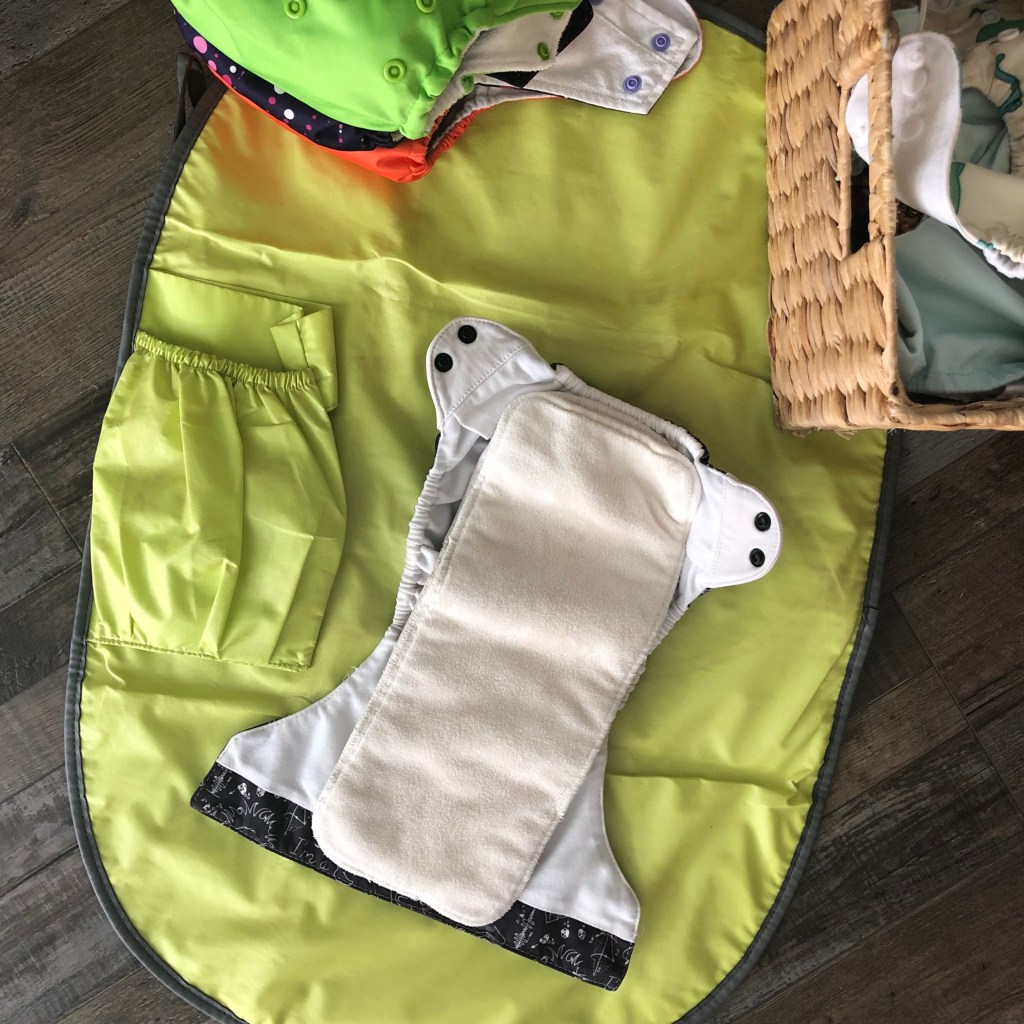
– On long trips [such as week-long vacations], we would buy disposable diapers because of the convenience while traveling. Also, when visiting certain family members who were less than enthusiastic about cloth diapers we would switch to disposable for the trip.

– On a few occasions we switched to reusable diapers for a rash that needed some more powerful diaper cream while I sorted out the wash issue that was causing the rash.

Washing diapers:

Ok, this is by far the hardest part of cloth diapering and the biggest reason people give up. There is so much [often contradictory] information out there about how to wash cloth diapers. And, in the course of seven years, I’ve done it many different ways.

My advice: keep it simple.

First of all, detergent. I originally bought a special detergent for diapers until I read [and can confirm] that a special detergent is unnecessary. Now I just use the regular family detergent [always free of perfumes and dyes] with no problems.

My wash routine is simple. I do a preliminary wash with little [or no] detergent and cold water, then a heavy duty wash with hot water and a little extra detergent. That’s it.

Note, though, that your washing machine and the hardness of your water make a difference. At my last house, which was on a well with very hard water [and an all-house water softener], I had to add a water softener into the washer with my detergent in order to get the diapers clean. How did I figure that out? With lots and lots of trial and error and reading a gazillion articles online. But if the diapers aren’t washed properly, they will cause diaper rashes. If they don’t smell clean, they aren’t clean and you need to re-examine your wash routine.

In seven years, I only stripped my diapers once [because of the aforementioned hard water incident] and bleached them once [basically because I thought they needed it].

My other piece of advice: Don’t give up.

Drying diapers:

Hang to dry whenever possible. I always always hang dry my covers to preserve the elastic. I usually dry my inserts in the dryer, but that is only because I have always lived in a wooded environment where hanging outside means lots of bugs and bird poop [kind of defeating the purpose].

I have hung my diapers to dry in many places around my house: the basement bar [my partner loved that], the heating vent on the ceiling of the laundry room, and nowadays, the dining room chairs…
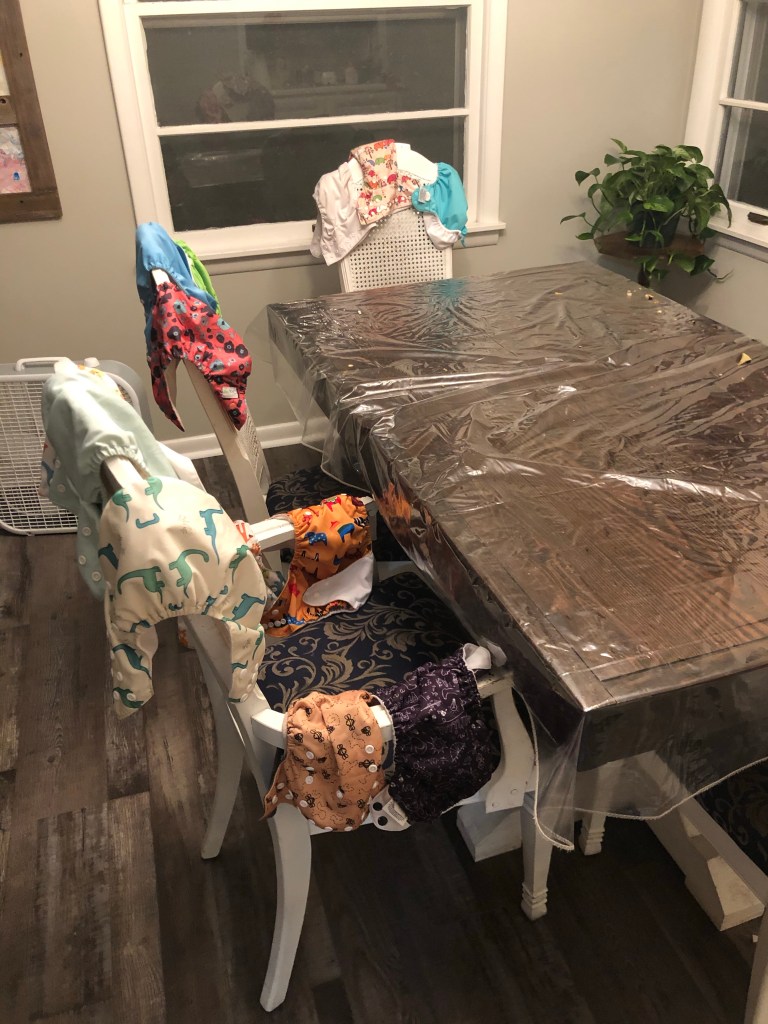
I hang them up before going to bed and they are dry in the morning.

The wash and dry cycles for cloth diapers really aren’t anything to be intimidated by. When it comes to cloth diapers, you’ll want to remember the old saying: “Where there’s a will, there’s a way.” You may want to hang that up in the laundry room somewhere as a reminder.

😜

[If you really want to get into all the nitty-gritty of washing and drying diapers, then I recommend reading Erin Tova’s post How to Wash Cloth Diapers or Fluff Love University’s guides for washing diapers.]

What You Should Know about Cloth Diapers

When I was pregnant with my first baby, I was SO overwhelmed – by everything, but especially about cloth diapers. What kind do I buy? What is a good price? New or used? What brand? How do I use them? How do I wash them? Etc. There is so much information out there that it’s easy to feel overwhelmed.

So, let me just say this: cloth diapering is a “learn-as-you-go” sort of endeavor. Everyone has a different experience, prefers different brands, washes in different ways. That’s ok! Don’t sweat it. Take the plunge. Course correct as needed. And that’s it!

Oh, and always remember that the whole point of cloth diapers is to cover your baby’s bum and catch all the excrement so that it doesn’t get everywhere and make a huge mess. So you could wrap your baby’s butt in a towel, or a t-shirt, or a bandana, or anything that gets the job done. So don’t overthink things.

I’ve had really great experiences with cloth diapers, and I hope that every parent who chooses this route does too. So, if you have any questions, feel free to comment below or send me a message. I’d love to empower more people to choose this zero waste option for their kids.

Happy diapering!

👶🏼 👶🏼 👶🏼

Karis

My Vegan [and Zero Waste] Birthday Celebration

My Vegan [and Zero Waste] Birthday Celebration

This year marks the first birthday that I celebrated as a vegan. After 33 years of enjoying butter cream, milk chocolate, and ice cream on my birthday, this year looked different – but, truthfully, only a little.

Vegan Meal

From all appearances, the meal and dessert were stereotypical American birthday fare. But what you can’t see is the ingredient list, which contained no meat, dairy, or animal products. I wanted to indulge a little bit. [C’mon, it’s my birthday!] But I also didn’t want to overdo it, or compromise my standards for eating healthy, sustainable, and ethical foods. So we had burgers [vegan burgers, of course] and hot dogs for the kids [vegan hot dogs] with home baked buns and a side of salad and French fries.

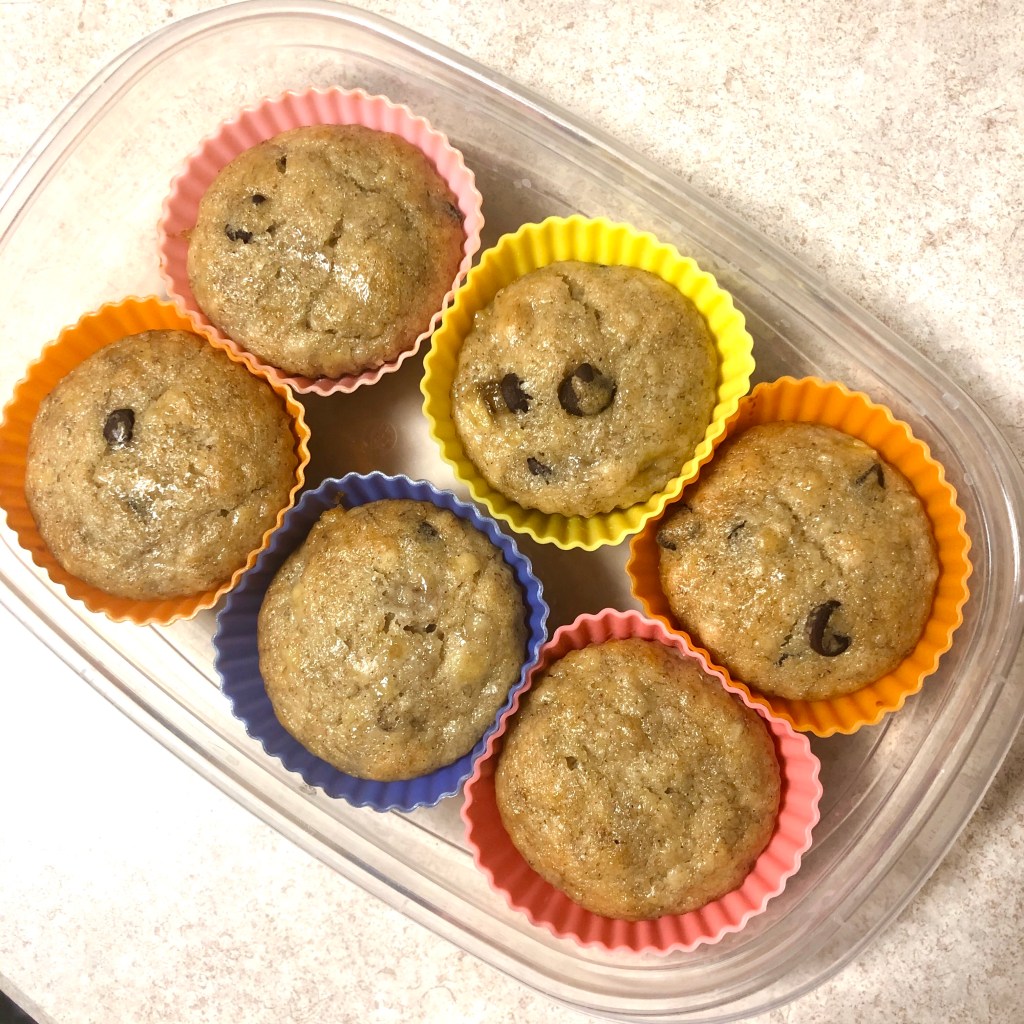
My birthday dessert was still cake [vegan chocolate chip banana cake] with frosting [vegan cream cheese frosting], which I baked myself because really who would want to bake a birthday cake for me knowing all of my complicated ingredients requirements like organic, fair trade, ethical and sustainable, not to mention vegan [which in itself would be enough to scare away the average person]? Anyway, I love baking, so I wanted to make my own. And this was the first vegan cake I’ve ever made.

I thought it was really yummy.

Zero Waste Gifts

Now that I have been [nearly] zero waste for several years, everyone knows to give me sustainable gifts, which is awesome.

This year, my partner gave me a safety razor which I have been wanting for so long, but was waiting until we used up our stash of disposable razors [don’t even ask why I have such a large stash of disposable razors…]. Now I can donate the rest of my plastic razors to our local compassion center in town and switch over to a more sustainable razor. Even my children and in-laws gave me thoughtful, meaningful, and sustainable gifts like bar shampoo, crochet hooks and yarn to make my own washcloth, a reclaimed puzzle, and wireless earbuds.

My sweet Auntie sent me these beautiful flowers.

And probably my favorite gift this year was from my six-year-old daughter, Evangeline, who asked me to teach her to braid so she could make me this very special bracelet which I love so so much.

And my last bit of personal news: for the first time in exactly one year, two weeks, and four days, I was able to put my hair in a ponytail!

The pony is so small you can’t even see it! 🤣

Anyway, today is also the 3rd birthday of this blog! 🥳 It’s been a great adventure so far, and I’m grateful to all of you for joining me!!

To many more!

🥂

Karis

Simplifying Parenting [Part 2: The Baby Registry]

Simplifying Parenting [Part 2: The Baby Registry]

Ah, the blessing and curse of the baby shower, which would be a fun party, reminiscent of a wedding shower, if it weren’t for the fact that you can’t drink and your feet are swollen and you don’t get any sexy lingerie. [Also, it is not fun pretending to be excited about baby bibs and bottle scrubbers – especially when you haven’t had a good night sleep in three months…and you can’t have a drink.]

Well, I guess if you are the father you get to enjoy it. [Men don’t know how good they have it.]

Worst part of all, the gifts sit in an empty bedroom until after the delivery and most don’t even get used for the first month – at which point it is too late to realize that you don’t actually need three different types of pacifiers [“ya know, just in case”], five hundred adorable outfits [that are so impractical your baby will never wear them], or a mechanical baby swing that promises to rock your baby into sound slumber [it’s lying to you].

Ok, ok. I’m mostly kidding. I had four babies and three baby showers [which is more than most people get] and I am incredibly grateful for each of them. I remember really enjoying myself during all three – yes, even without the booze.

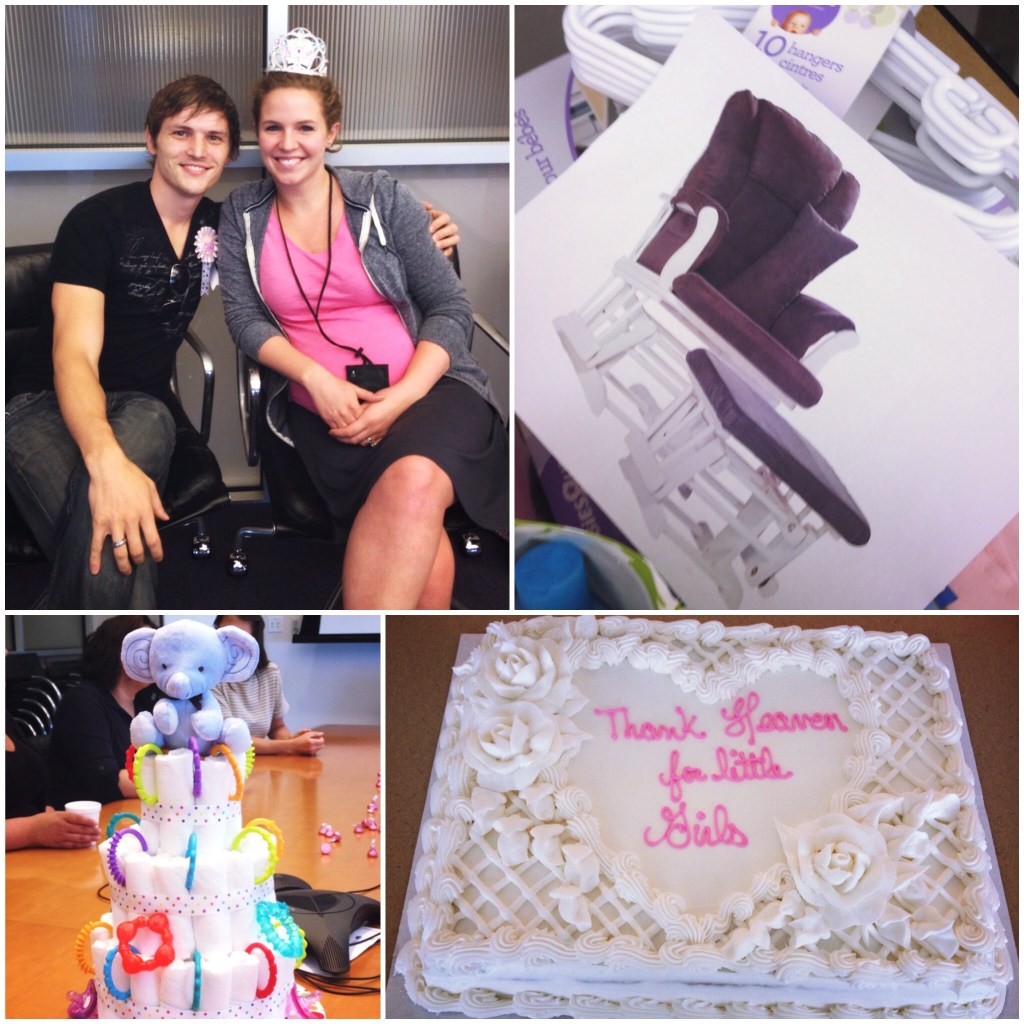
[My co-workers threw me a surprise baby shower for my first baby and it was truly special. They gave me my glider, which I still have and now use to rock my fourth baby.]

Still, I ended up with shit load of stuff I didn’t need. Of course, I wouldn’t fully realize that until my fourth baby. Also, at the time of my baby showers, I wasn’t a minimalist. I was a maximalist. So maximize I did. I was an expert maximizer. I waltzed through three different baby stores with that handy little scanner and put everything that I might even possibly need or want on my registry – plus anything that looked cute, interesting or convenient. And being the privileged person that I am, I got the majority of it at my baby showers.

Unfortunately, looking back, it was all very wasteful. Many things I never used. A lot of it was just extra stuff that cluttered our house and the baby room for years. A big portion of it was stuff that I wanted so I could appear like all the other moms – cute diaper bag, fancy baby wrap, adorable decor for baby nursery, matching lined baskets to hold diapers, the all-important “stroller hook” to hang my many shopping bags on my many shopping trips with the baby, that I guess I thought I would be taking.

🤷‍♀️

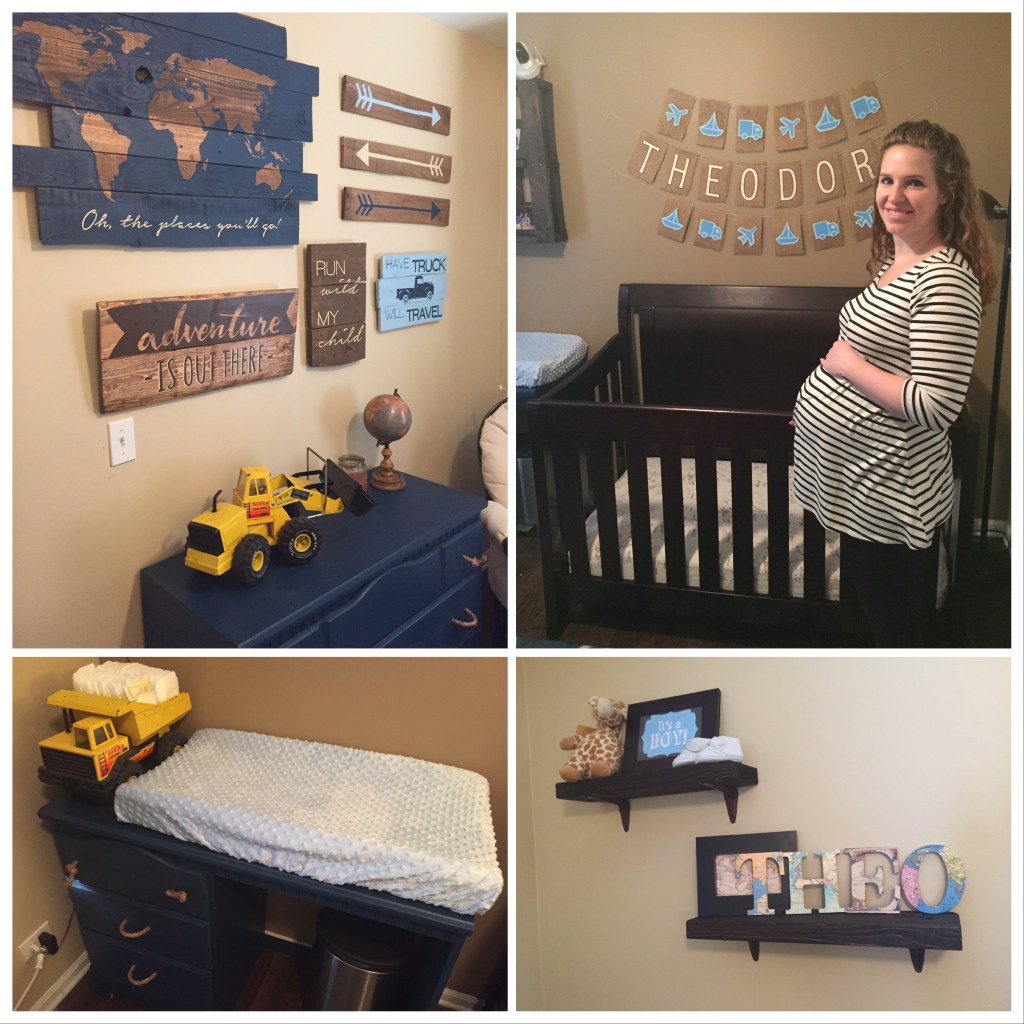
[Theo’s “Have Truck Will Travel” Nursery Decor – cute, but ridiculously over the top for a child who only cares about sleeping and eating for the first year of life.]

I realize now that a lot of what I wanted “for the baby” was really just a disguise for what I wanted to make myself look like the perfect parent OR to make my job as easy as possible.

But I’ll tell you this secret right now: there isn’t a single product that you can buy in a store that will make parenting easy. It just ain’t going to happen. And, quite frankly, no parent is perfect, no matter how good they appear. So feel free to acquire only the baby items that will serve you.

The Minimalist Baby Registry

The registry is a great idea that helps people know what to buy the new mom; the trouble is that the new mom has no idea what she needs. And, if you walk through one of those baby stores, it’s whole purpose is to make you believe that you need EVERYTHING.

Well, let me be the first to tell you that you don’t need everything. Not even close. In fact, you need very little.

As a minimalist and low waste momma, I recommend sticking with the basics and necessities and adding additional things as you find you need them. Because, honestly, you will discover that you don’t need most things.

A baby’s early life involves only four things: eating, clothing, diapering and sleeping. So, at the very least, you’ll need:

A set of boobs [and a whole lot of patience] and definitely a burp cloth or two [or twenty].

Onesies and maybe a few other staple clothing pieces. Think baby capsule wardrobe – and think comfortable. Don’t get more than need. Two outfits per day between washes is plenty. I do laundry once a week, so I would only need 14 comfy onesies and maybe a sweater and a few warm leggings for cold weather. Baby clothing [and children’s clothing in general] is so wasteful. In the first year, babies will grow out of clothes every few months [excluding maybe some rare cases], so don’t stock up on it! Also, buy it used! If a baby has previously worn clothes, it was probably only a handful of times because everyone always overbuys baby clothes. Look, I know it’s so frickin cute, but don’t get caught in this expensive and wasteful trap.

Diapers [cloth or disposable are the current choices and I’ll talk about these options at length in my next post, but for now, if you can, go cloth], and wipes [preferably reusable]. Unnecessary items in this category include: changing table, changing pad, changing pad covers, wipe warmer, wipe holder, baby powder, diaper bag. I’m not saying these things aren’t useful, they just aren’t necessary. You can change a baby literally anywhere [trust me, I’ve done it] and you can carry diapers and wipes in any bag.

A safe sleep setup of your choosing. This will look different for everyone. Some will go the traditional crib, crib mattress, crib sheet route. Others, maybe a pack-n-play. Maybe others will do the bedside crib or a bassinet. Still others will co-sleep [safely]. Choose what works best for you.

• Another items you’ll most likely need are: car seat, stroller and thermometer [preferably the forehead scan variety].

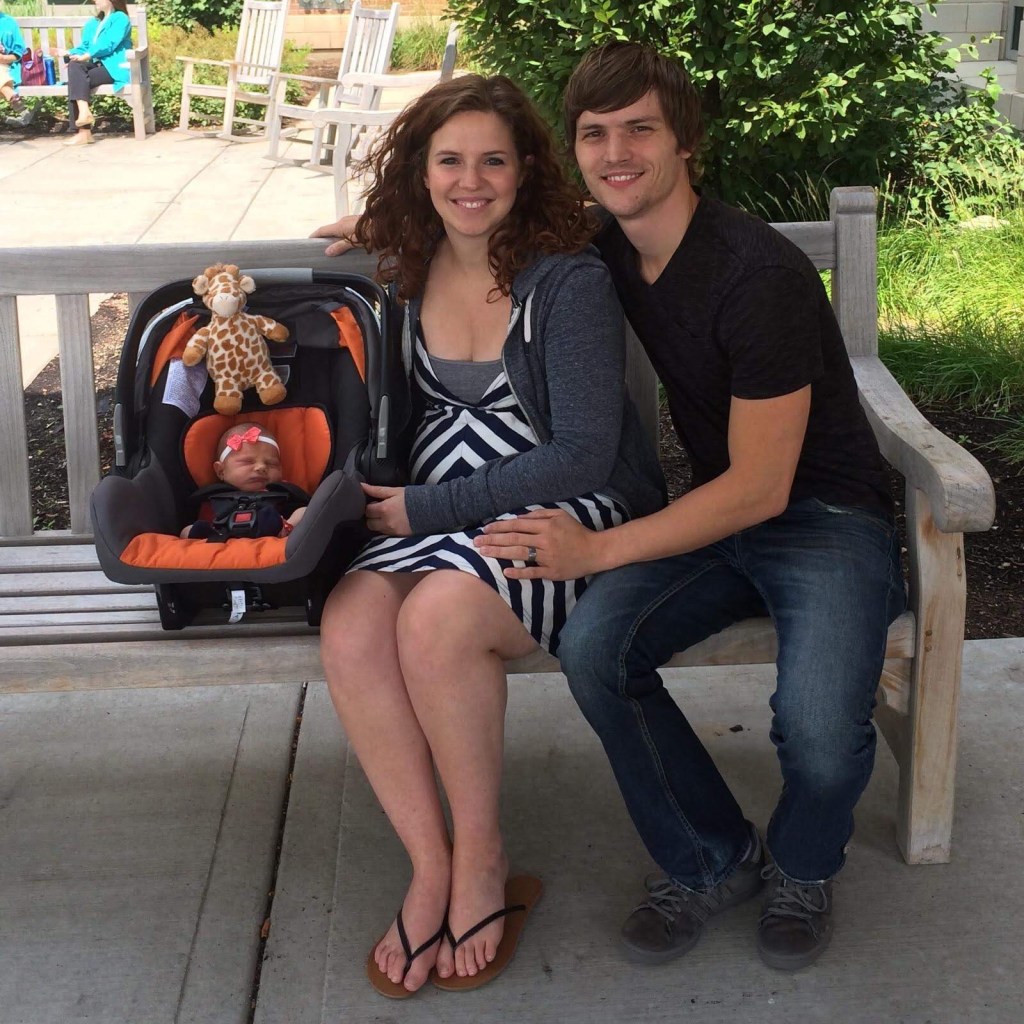
[If you give birth in a hospital a car seat is 100% required to bring your baby home. This is Brett and I at the hospital with our firstborn.]

Beyond those necessities, here are some things that I used often and that were helpful for me, but again, not necessary:

• Noise machine [still use it for all four kids]

• Nose Frida [still use it when one of the kids gets sick]

• Baby Nail clippers [still use them on all my kids]

Of course, there are lots of optional extras. If you are going to be a baby-wearing momma, then you’ll want a wrap [probably the mobi wrap]. If you are going to a running momma, you’ll want a jogging stroller. If you are going to be a working momma, you’ll want a breast pump [and thanks to the Affordable Care Act, you can get one free through your health insurance] and bottles. If you’re going to be a rock-the-baby-to-sleep-and-sneak-out-of-the-room momma, you’re going to want a super comfy and super quiet rocking chair. It’s all about finding what works for you. No one else can tell you what you’ll need.

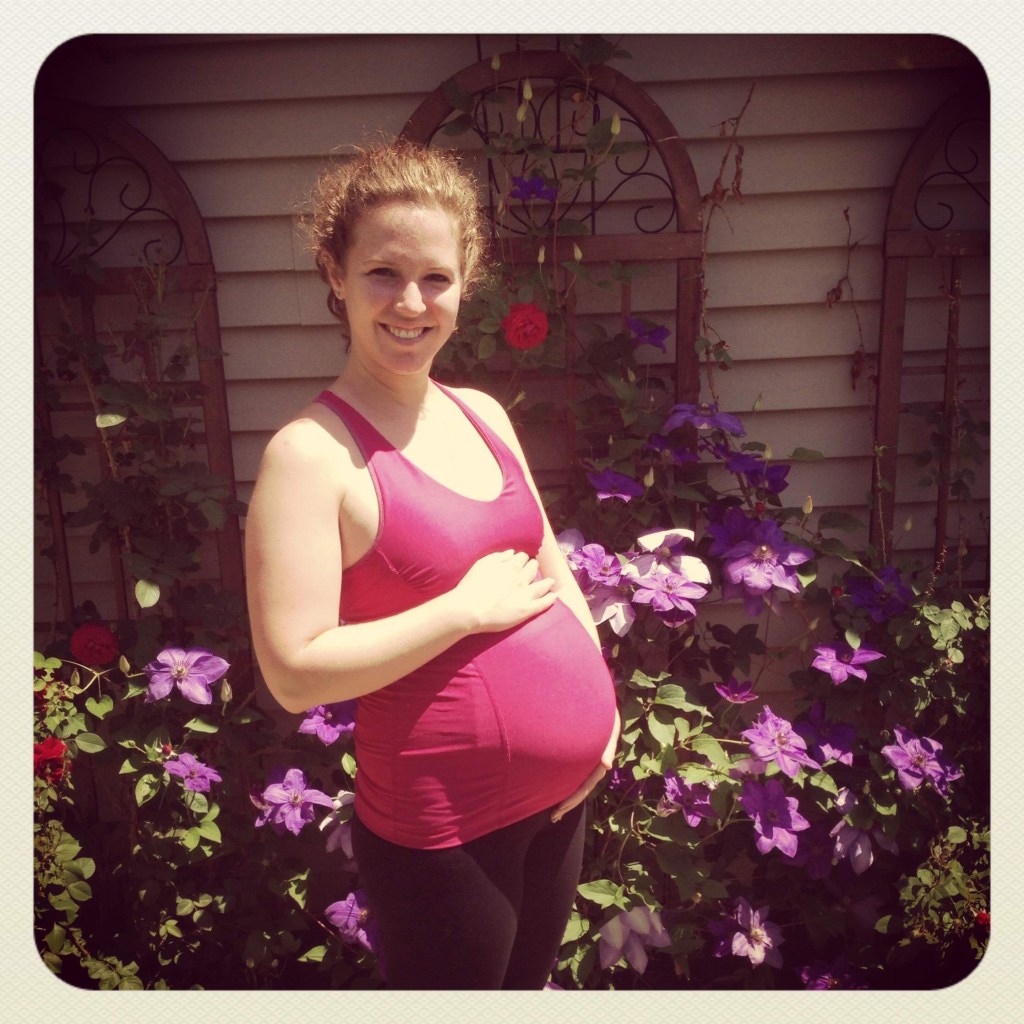
[I am a running momma. This is me after a run 32 weeks pregnant with my first baby. So a jogging stroller was on my list of “must haves” and to this day it is one of my most prized possessions.]

Basically what I’m saying is make an intentional registry.

An Intentional Registry

There is so much extra stuff that you don’t need. You don’t need a bumbo or a bouncer. You don’t need a play mat or Sofie the Giraffe. You don’t need teething toys. You don’t need pacifier clips. Does that mean you shouldn’t get these things? No. It just means you shouldn’t get them just because everyone else does. There are plenty of simple, practical alternatives to these products that don’t involve going to Buy Buy Baby [I mean, seriously…listen to the name of that store!].

I beg of you, don’t make the same mistakes I did and just scan everything just because…because other parents use it, because you mother says it’s an “absolute lifesaver,” because your best friend recommends it, because of clever marketing, because it’s cute, because it’s there…

Simplifying parenting is about intentional parenting and that begins with what we bring into our home. So, don’t get caught up in all the gadgets and gizmos that the world says are “must haves.” Instead, judge for yourself what would serve you best. What kind of mother do you want to be. What products will get used and what are just for show.

In the end, you need a lot less than you think to take care of a baby: lots of cuddling, lots of patience, lots of time, lots of caffeine, and of course lots of love.

❤️ ❤️ ❤️

Karis

Simplifying Parenting [Part 1: Childbirth]

Simplifying Parenting [Part 1: Childbirth]

Hi there! 👋 It’s been a while!

I just got back from a relaxing [and also safe and socially distanced] vacation with my family at the beach.

[Nora’s first time at the beach.]
[The sunrise on one of my daily 6am runs.]

Before our trip, Brett and I got our Covid vaccines [on the day they became available for our age group].

But now we’re back home and it’s back to the reality of homeschooling [only a few weeks left!] and being at home with my four kiddos.

For that reason, I’m going to be writing a few posts about simple-living, low-wasting and minimalist parenting. This is an area that is extremely underrepresented in the zero waste and minimalist communities, probably because having children complicates both of these goals tremendously – but that doesn’t mean we throw the whole thing out.

I became a [nearly] zero-wasting minimalist after I already had three children, but I noticed immediately that the people at the forefront of these movements didn’t have children. [I’ve never seen a mother who is able to fit a years worth of trash into a jar.]

When it comes to kids, the aim should be simple and intentional living and – as is true in all areas of life – that goal will in turn reduce waste and clutter and excess. It will also give kids a childhood full of curiosity, discovery, imagination, creativity, and exploration. As a parent, it’s my job to protect my kids from all the “extras” that threaten to monopolize their attention, rather than the common view of parenthood which says we need to constantly provide toys, gadgets, activities and structured time for our children.

But, anyway, I’ll get to that later on. Right now, I want to start at the very beginning.

Simplifying Childbirth

“Remember this, for it is as true as true gets: Your body is not a lemon. You are not a machine. The Creator is not a careless mechanic. Human female bodies have the same potential to give birth well as aardvarks, lions, rhinoceri, elephants, moose, and water buffalo. Even if it has not been your habit throughout your life so far, I recommend that you learn to think positively about your body.”

Ina May Gaskin, Ina May’s Guide to Childbirth

If there is one thing I wish I could tell every woman, it’s this: You don’t have to fear childbirth.

From the time we were old enough to absorb society’s subliminal messaging, we’ve been condition to believe that childbirth is a) terrifying, b) excruciating, c) dangerous, and d) a process that we cannot handle without medical intervention.

None of this is true. Or at least, it doesn’t have to be, if women could regain faith in their own ability to give birth.

[And I’m not only talking to women here, because fathers need to be active participants in childbirth as well and can encourage and strengthen women’s belief in themselves, if only they would also believe that childbirth is natural and that women are capable. Childbirth is NOT something that women need to be saved from.]

Contrary to popular media portrayals, childbirth is like a marathon – really hard work [yes], very painful at times [for sure], but totally achievable with proper training, determination, and a belief in our body’s natural processes – not to mention a totally powerful and praiseworthy achievement that women should get the credit for – not a medical team.

And, let me tell you, the reward at the end is totally worth all of it.

Giving birth to my four babies were the most empowering moments of my life. [I’ve run two marathons, which are also empowering, but they don’t even come close to giving birth.] It breaks my heart that so many women view their birth experiences as scarring or traumatizing or, at the very least, experiences they would rather forget. [When I was pregnant many, MANY women shared their horror stories with me – which FYI, is not a nice thing to do to pregnant women.]

Listen, childbirth does NOT have to be a bad experience!

We need to simplify childbirth by getting back to the basics, by believing in ourselves and trusting our instincts, and by birthing our way.

In our society we discredit pretty much every aspect of womanhood, including a woman’s ability to know what is best for her and her baby at childbirth. The fact that we have handed over control of childbirth to men [who were initially the only doctors when birth moved from the home to the hospital] is just another consequence of our patriarchal society which tells us that men know best…even about a process which is uniquely woman’s. [Forgive my feminist soapbox here, but we really can’t talk about childbirth without talking about feminism.]

It’s time to take back control of childbirth.

I chose to give birth my way, but, I assure you, it was not easy. I had to fight [and fight really frickin hard] to be able to give birth in the way that I wanted, rather than in the way that is most convenient for the medical staff, hospital, and obstetrician. It took me an entire nine months of scouring the suburbs of Chicago during my first pregnancy to find a practice that would allow me to have an unhindered, natural birth in a hospital – and I had to travel an hour and pay out of pocket for it. And truthfully, I still had to advocate for myself pretty much the whole time. [“No, thank you. I won’t wear the frumpy hospital gown that someone might have died in yesterday.” Also, why the hell do they call it a gown??? More like a sheet with arm holes.]

So, my next three births were at home, where I could give birth in peace and quiet, surrounded only by loved ones whom I trust. It’s the only way to have a baby without the uncomfortable addition of strangers staring at your vagina, sterile beds with stirrups, fluorescent lights, beeping machines, and a long list of nonsensical rules about what I can’t eat, whether I can take pictures, and who can be present.

And because I chose home birth, I have a wealth of wonderful, positive memories about my birth experiences. And what is more, I also have a sense of my own ability to do hard things – even things that the rest of society tells me is too hard for me to achieve.

Imagine what the women of the world could accomplish if we all had that sense of empowerment.

Books about Childbirth

During my pregnancies, I read countless books about birth as part of my preparation for labor. Ladies, childbirth is a HUGE deal that will forever alter our bodies, our social standing, our relationships, and our careers – so the least we can do is study up on it! That’s what I did, anyway. I wanted to know everything about it. I read everything I could get my hands on. I asked every woman I knew what her birth experiences were like. [And, Fellas, you don’t have to be a bystander. You can learn about childbirth and play an active role in the birth of your children.]

Through books, I learned so much and I gained the confidence I needed to do what was best for me and my babies. These books are my favorites:

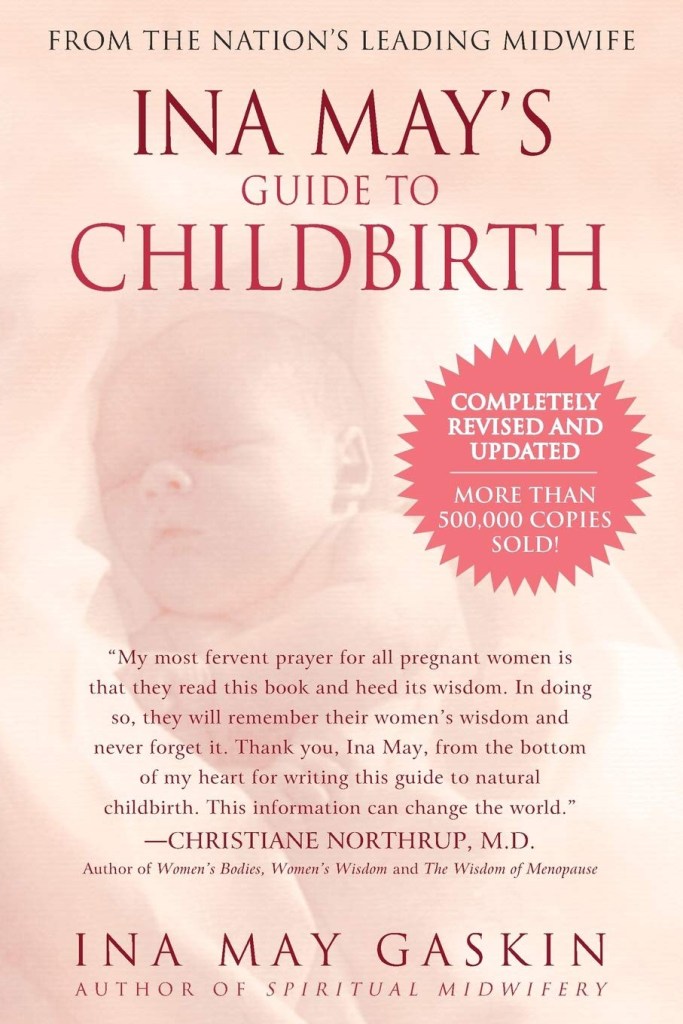
Ina May’s Guide to Childbirth by Ina May Gaskin: I read this book during each of my pregnancies as a reminder that my body is capable of birthing my baby.

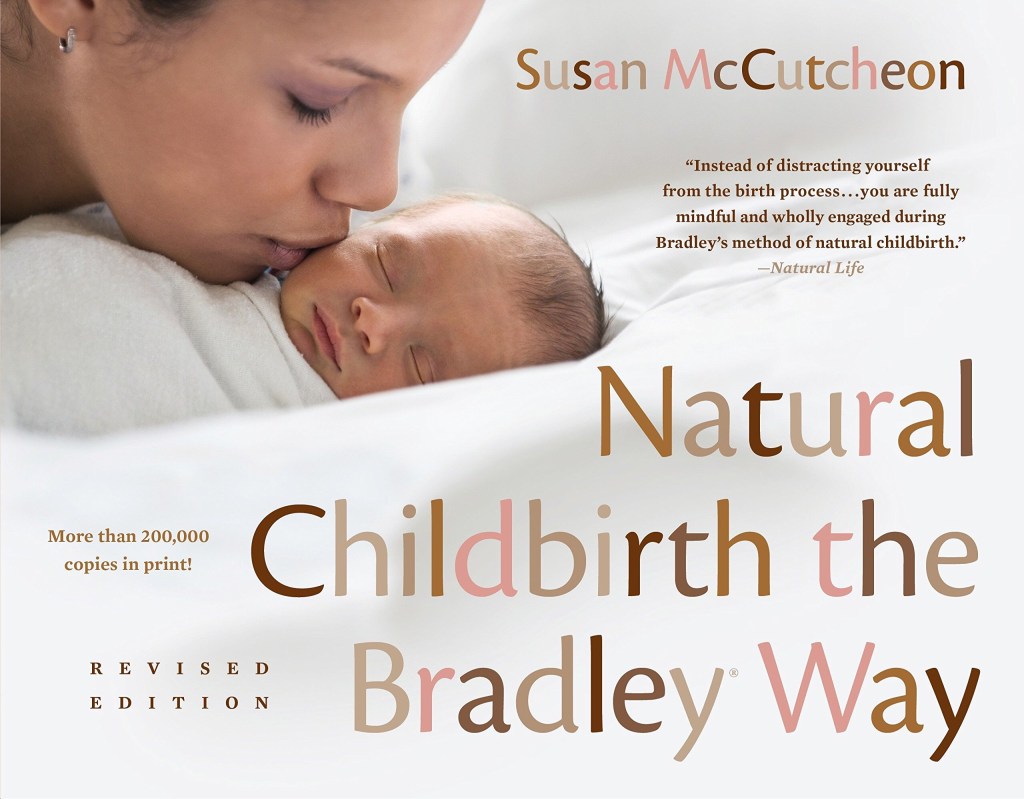
Natural Childbirth the Bradley Way by Susan McCutcheon: Before reading this book, I literally didn’t know a thing about the details of childbirth. This book taught me everything I needed to know and made me believe that I could have a natural birth.

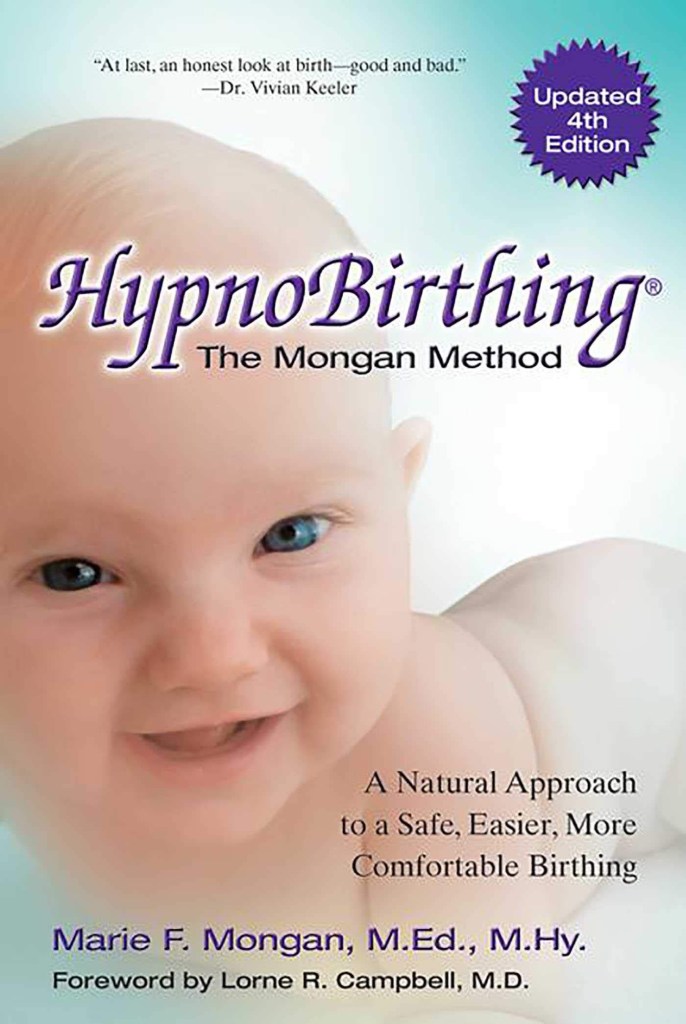
Hypnobirthing by Marie F. Mongan: This books is not as strange as it sounds and is the method of preparing and laboring that was most helpful to me.

Natural Hospital Birth by Cynthia Gabriel: This book was a lifesaver as I tried to find a compromise between natural birth and hospital birth.

Also, I highly recommend the documentary, The Business of Being Born, which is available on YouTube.

Even if you’re not wanting a natural birth, you deserve to see real birth, not the overly dramatized version that television offers. And you deserve to know what to expect [in a hospital or in a birth center or in your home] when the time comes.

One Last Thing…

I am NOT trying to say that everyone should have natural births [though statistically, fewer women would die if everyone gave birth naturally] or that all women should give birth at home [because home birth is not a safe or realistic option for all women] but what I am saying is that every woman should be free to choose where and how she gives birth to her babies. This should not be a decision that laws or doctors or insurance companies or family members or society chooses for a woman.

And, if you are a women, you should not let the fear of childbirth [which is inaccurately and unfairly portrayed in media and society] prevent you from approaching birth with confidence and power like the badass that you are. [Other than having a trained professional present in case of a complication] You need very little else to give birth to your baby.

Good luck! [But you don’t need it – you got this!]

🤰🤰🤰

Karis

Super Simple Vegan Banana Muffins [and a rant about breakfast cereal]

Super Simple Vegan Banana Muffins [and a rant about breakfast cereal]

A few days ago, I showed off the silicone cupcake liners that I use every Friday when I bake vegan banana muffins.

Read all about it here.

I’m going to share my super simple, go-to recipe for these muffins in just a minute, but first, I feel like I have some explaining to do.

Baking muffins every weekend might make you think I have some strange banana muffin obsession, or maybe I have a banana tree in my backyard. But the truth is simply that I refuse to give my kids cereal for breakfast. [Just bear with me, I’ll explain.]

[If you don’t want to hear my rant about breakfast cereal, by all means, skip down to the recipe below.]

My Rant about Breakfast Cereal

I have a sort of hatred for breakfast cereal.

Of course, I grew up eating cereal [like every other American I know], but when I decided to start eating healthy foods, cereal was the first thing to go. In the past ten years, I have had cereal maybe three times, and each time it made me feel like crap and almost immediately hungry again. So I don’t like giving it to my kids. I also used to preach against it to my personal training clients.

Cereal might not be so bad if we didn’t eat waaaaay too much of it. A serving size for most sugary cereals is 2/3 to one cup. A typical bowl of cereal probably has three or more cups in it! [You can find some great YouTube videos on this topic to see for yourself – or actually do the unthinkable and measure your cereal!] And don’t even get me started on the highly processed, super refined carbohydrates and sugars that make up pretty much the entirety of boxed cereal. Any food that has to make dubious health claims like “may reduce your chances of heart disease” is probably not worth eating – take it from me…and Michael Pollan.

Now, I know what you’re thinking, banana muffins aren’t exactly a healthy breakfast either, vegan or not. And you are correct. But I’ve made the following “deal” with my children because…well, I want them to love me…or at the very least, not hate me.

On weekdays, we all eat oatmeal with fresh fruit and brown sugar. And as a concession [and so I won’t be accused of a being a terribly cruel mother], I make special breakfasts on the weekends: banana muffins on Saturday and pancakes on Sunday. [I still eat oatmeal.] Both special meals usually contain chocolate chips. [No, I am not afraid to use chocolate chips as bribery.]

On the weekends I could give them cereal. But like I said, I hate cereal. Plus, cereal is a slippery slope. It is just too dang easy and convenient.

So, now, on to the recipe.

My Vegan Banana Muffin Recipe

You’ll have to forgive me, but I don’t typically do recipes on this blog, so I don’t even know how to make a “recipe card” thingy.

🤷‍♀️

But here we go anyway….

This recipe is based off “Vegan Banana Chocolate Chip Muffins (Healthy)” recipe from The Simple Veganista which you can read here. I’ve taken this base recipe and modified it to make it simpler [I do this every weekend, ya’ll] and how my kids like it [aka I’ve taken out the word “healthy”].

Ingredients:

  • 3 or 4 ripe bananas
  • 2/3 – 1 cup sugar
  • 2 – 3 tbsp brown sugar
  • 1/4 cup coconut oil (melted)
  • 1 3/4 cup of AP flour
  • 2 tsp baking powder
  • 1/2 tsp baking soda
  • 1/4 tsp salt
  • 1 tsp cinnamon
  • Optional: chocolate chips (as many as you want)

Instructions:

  1. Preheat oven to 350°
  2. Mash bananas in a mixing bowl.
  3. Mix in sugars and coconut oil.
  4. Add the rest of the ingredients to the bowl and mix until just combined.
  5. Scoop into muffin tin [or muffin liners] until 3/4 full.
  6. Bake for 20-25 minutes. [Mine are always done at exactly 22 minutes.]

And that’s it!

I love this recipe because it doesn’t require any funky vegan stuff like flax eggs or vegan butter or even non-dairy milk. Of course, I usually have all these things on hand anyway, but this is a totally accessible recipe for everyone and [dare I say it] it’s even better than any traditional banana muffin recipe I have ever made. Even Brett said so!

Give it a try and let me know if you agree!

Happy Baking!

👩‍🍳 👩‍🍳 👩‍🍳

Karis

Lessons in Motherhood and Appreciating the Flatlands

Lessons in Motherhood and Appreciating the Flatlands

Yesterday, while on my daily jog, the Peloton trainer in my ear was talking about enjoying the flatlands.

“We judge so much of life by the highs and the lows,” she said. “But there is good in the flatlands too.”

In that moment, I realized I have been going through the flatlands in my own life, and instead of focusing on the good, I’ve been focusing on my own restlessness and boredom, which was making me unhappy.

Before we moved to a new town, I had a job that kept me busy, I had a social life that gave me things to look forward to, and I had a sense of purpose and fulfillment.

My life now can only be described as very boring. Without any friends here or a job to connect me to this town and with COVID making everything more complicated…I’ve been feeling pretty down.

But then Jess Sims [the peloton coach] comes to the rescue with words of wisdom. There is good in the flatlands, I just have to appreciate it.

So here’s some of the “good” I’ve been experiencing in this new phase of life.

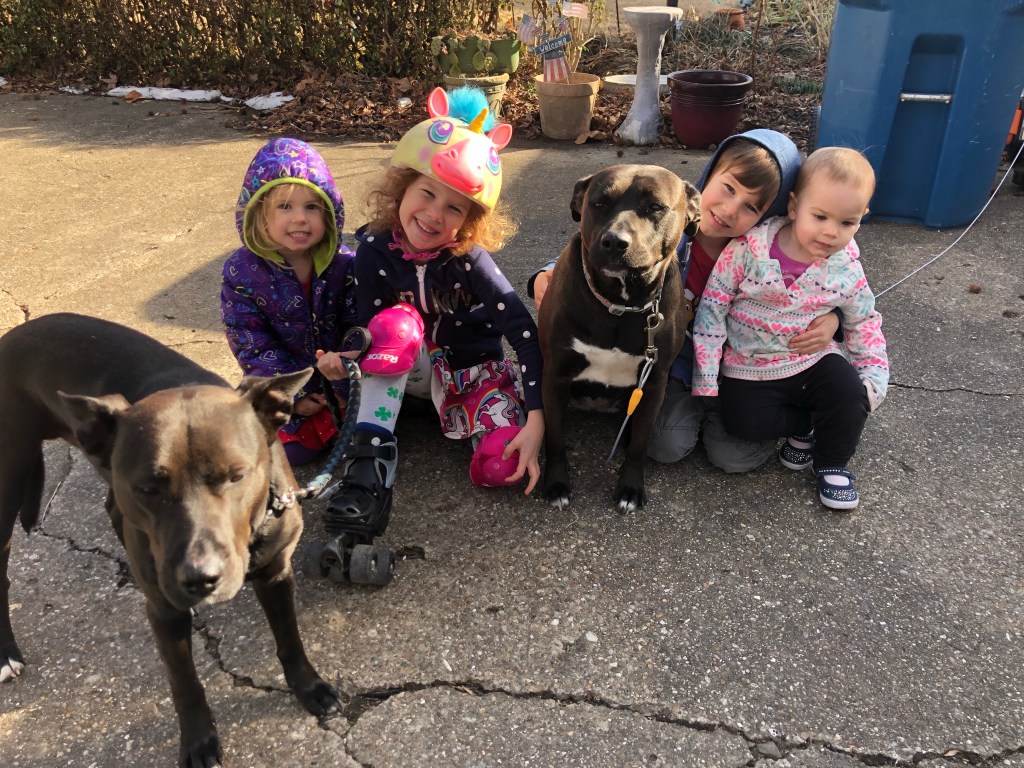
One-on-one breakfast dates with my three oldest kids.

Plenty of time to spend outdoors.

Lots of quality family time thanks to Brett having three days off a week.

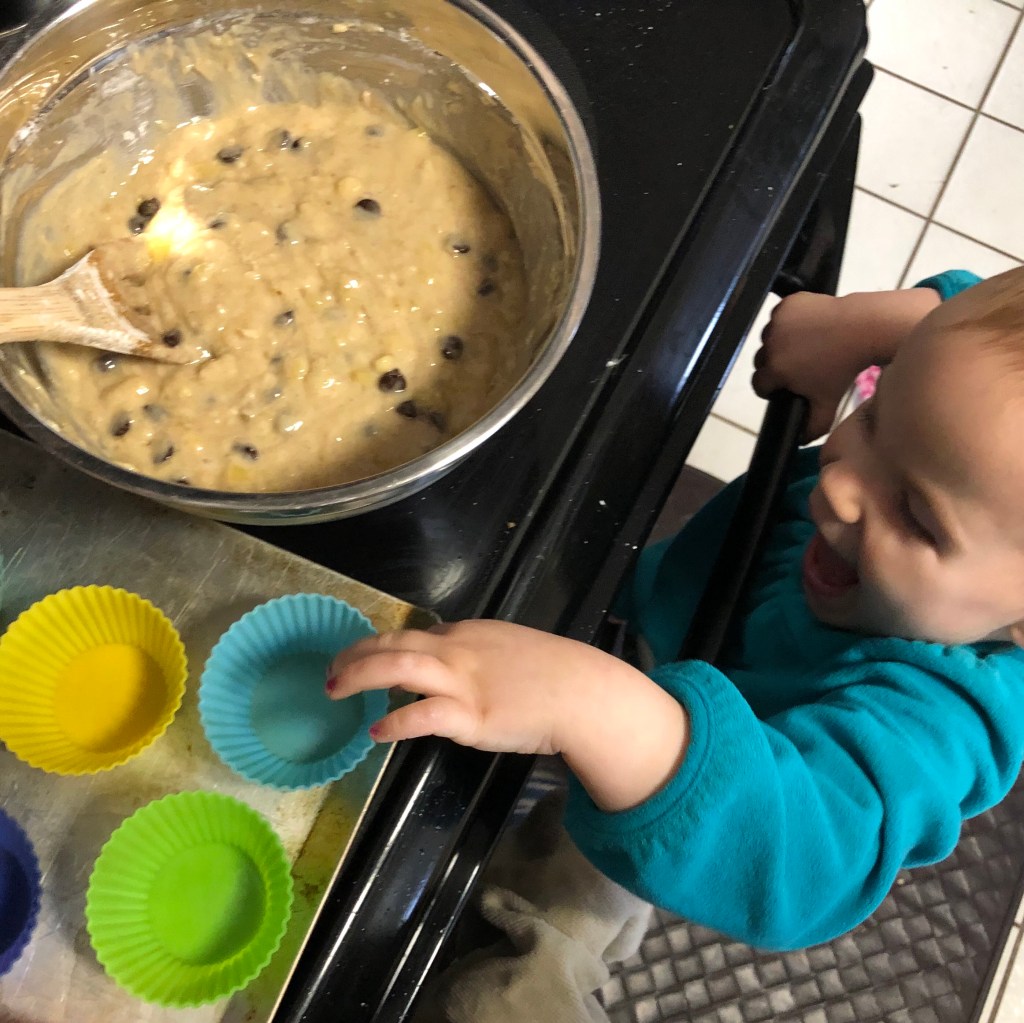
More time to bake and experiment in the kitchen.

Sourdough bread
Veggie fried rice
Vegan cashew ice cream
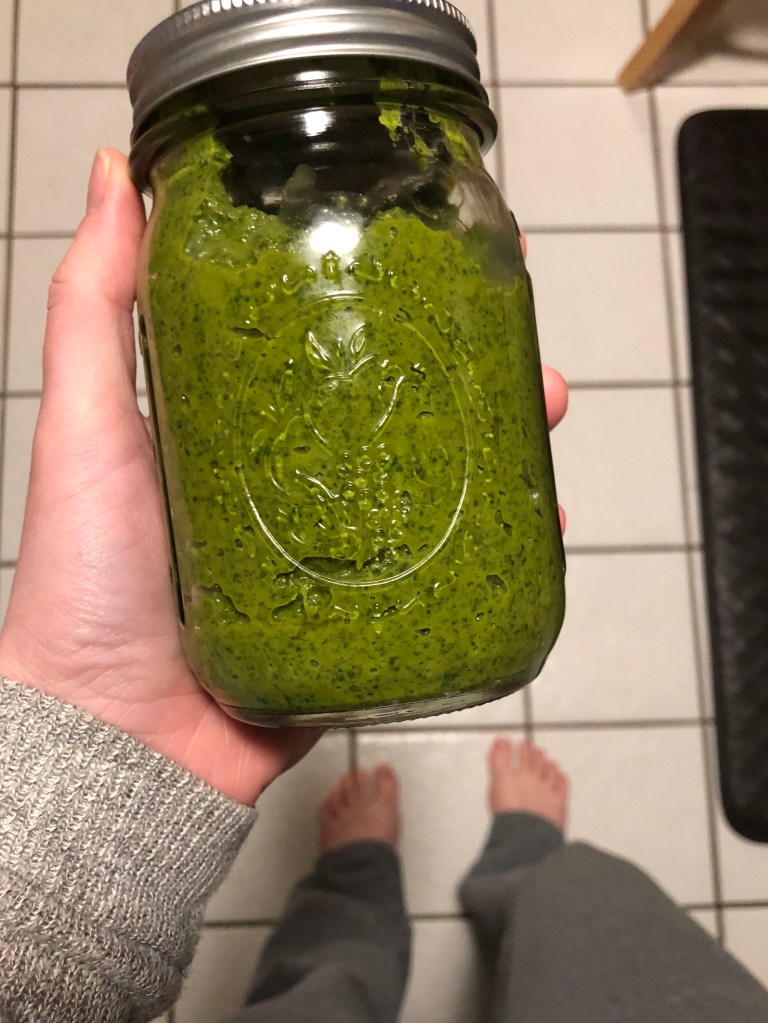
Vegan kale and carrot top pesto
Vegetable broth
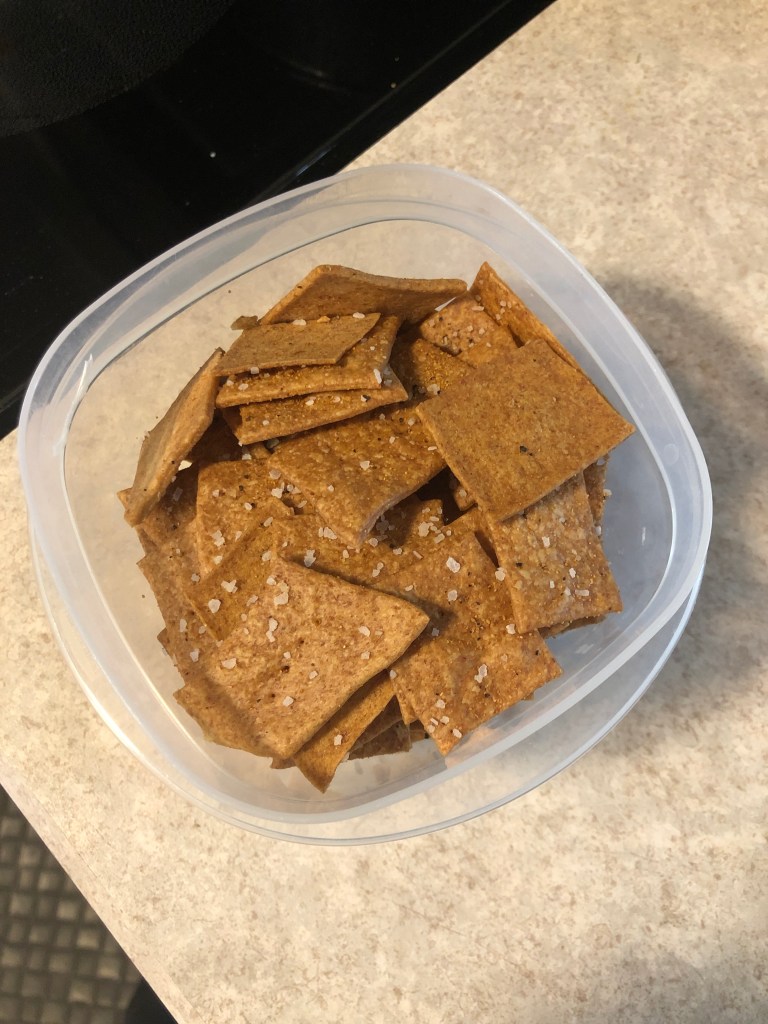
Sourdough discard crackers

Just looking through my photos and seeing how good I have it makes me feel really silly for ever complaining. I have so much to be thankful for and yet I sometimes am discontented anyway. I’m trying to work on appreciating these flatlands and remembering that I am among the most privileged people on this earth.

Perspective changes everything.

❤️ ❤️ ❤️

Karis

When Life Gives You Snow…[make vegan snow cream!]

When Life Gives You Snow…[make vegan snow cream!]

Many of us have experienced an uncharacteristic snowfall this week, so I thought I’d send out a friendly reminder to turn some of that cold, white powdery stuff into ice cream!

Since moving to southern Illinois last November, I have been bragging about the weather down here, [I mean, it was in the 30s and 40s for most of January!] but I was eating my words when we got hit with an ice storm and then one day later a blizzard and now we have somewhere around ten inches of snow on top of a thick layer of ice.

Fantastic.

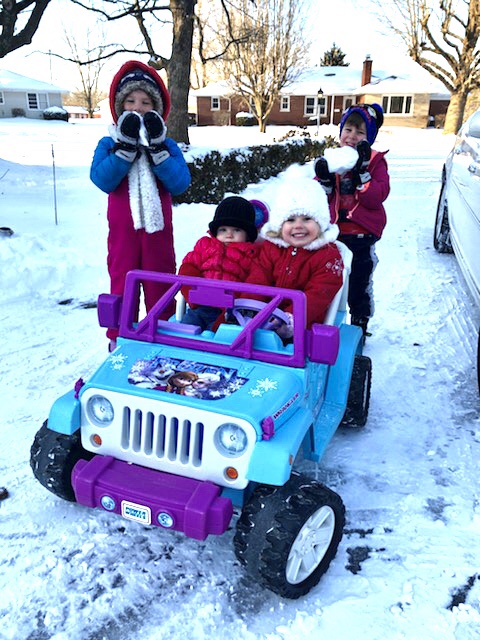
On the up side, my kids are LOVING IT. In fact, I just gave up on school work for the past two days because my daughter wanted to be outside all day. [“Snow day” to a homeschooling family is when we skip school work to go play in the snow.]

So this morning [after finishing school work], we made snow ice cream.

I’ve made snow cream many times since my first experience in Mrs. Winters fourth grade class when she marched us all out into the snow and made ice cream for us right there on the playground. [Mrs. Winters was the BEST.] But, I’ve never made vegan snow ice cream before, and I wasn’t certain how it would turn out.

The kids gathered a big bowl of snow [they had very strict instructions not to get yellow or dirty snow], and we mixed in some homemade oat milk, pure maple syrup, cocoa powder, and a pinch of salt.

[This was also my first time attempting chocolate snow cream. I thought it might help the ice cream taste less like oatmeal.]

And it worked!

This is my favorite activities to do with my kids when it snows [mostly because it involves minimal time actually outside].

I think they enjoyed it too. [After all, there’s nothing like ice cream after breakfast.]

Stay warm out there!

❄️❄️❄️

Karis

Lessons in Motherhood and Veganism [Do I feed my kids meat?]

Lessons in Motherhood and Veganism [Do I feed my kids meat?]

Now that I’m a vegan, I have to face my own inconsistencies about how I feed my kids.

The Conundrum

For years I was a moderate vegan or “vegan before six,” and I never changed my kids diet. We have always eaten a lot of vegetables, fruits, nuts and legumes anyway. But my kids also got yogurt, cottage cheese, eggs, chicken nuggets, burgers, ice cream and even the occasional macaroni and cheese. It didn’t seem so bad.

Now, however, I’m fully vegan because of my own personal convictions about the healthful, ethical and environmental necessity of a fully plant-based diet – so how can I, with a clear conscience, feed my kids animal products?

[Side note to clarify my statement above: I believe it is unhealthy to eat meat in the large quantities that we do in America, and I believe that it is unethical because our demand for large quantities of cheap meat has caused significant suffering for the animals we consume, and I believe that meat and animal products are the leading cause of damage to our planet. I am not saying that any meat at any time ever is wrong or unhealthy, but rather that in this current time with our current systems in place and our current ecosystems at stake, it is best – even necessary – to be vegan. I wrote in more depth about my reasons for becoming vegan in my post Why I’m Going Vegan [and why you should too]]

I obviously want my kids to be healthy. In fact, I care even more about their health than my own [hence why I hide the junk food for after they are in bed…and maybe partly so I don’t have to share…], so if I believe that Veganism is the healthiest and most ethical way of eating, am I wrong for feeding my kids the traditional American diet of Mac and cheese, chicken nuggets, and go-gurt?

But on the other hand, is it right of me to force them into a vegan lifestyle [purely by omission of all animal products]? Will they feel like they are “missing out”? Will they resent me?

But then again, is it right to raise them to be carnivores? Will they later ask me why I forced them to eat poor butchered animals? Will they resent me?

Do you see my dilemma?!?

Reflecting on this made me think about my own upbringing. I was raised in an omnivorous [mostly carnivorous] family and no one bothered to ask me whether I wanted to eat animals or drink their fluid secretions or not. I was given cows milk from the moment I stopped nursing until…well, milk was a big staple in my childhood home. We consumed at least a gallon per week. Meat was the main component of every meal and ice cream was the dessert of choice after every meal.

So basically, we ate like typical Americans.

And I’m not mad at my parents in the least for feeding me animals. They fed me and I am immensely grateful. But now that I have a choice, I choose not to eat animals, which is different than my family, my partner’s family, and, quite frankly, every other human being I know on the planet […except one coworker once].

Maybe that’s what’s so tough about choosing veganism for my family – it is different, and different is a little scary. Honestly, I don’t mind making choices for myself that go against the grain [I rather enjoy it, in fact], but it’s harder to make those choices for my kids, knowing that my choices will greatly influence their worldviews and their lifelong habits. Even if I believe it’s the best thing to do, I know that it won’t always be received well. [So help me, if I had a dollar for every time someone asked me how I get enough protein…] I know that my kids will eventually realize that they are different and I don’t want to force them to be outsiders.

The Crux

As parents, we make a lot of choices for our kids. I, personally, make a lot of controversial and unpopular choices for my kids [at least in my circles]. So maybe choosing to feed them only plant-based foods will not be any different than my decision to, say, not take them to church or not hit [aka “spank”] them or not circumcise my son or any of the other ways that we choose to do things differently than other families.

What is most important to me is that the choices I make for my kids are intentional, not merely the result of “going with the flow,” not just doing it because everyone else does or because that’s how it’s always been done, and not eating without considering why and where and how and how much and to what end.

I’ve come to discover that eating, like everything else in life, is a moral choice. And what I feed my kids is an even greater moral responsibility.

The Conclusion

So, I am going to switch my family to a vegan diet when we are at home. I am not going to be the meat nazi at restaurants or the rude guests at dinner parties, I promise.

I am going to model healthy eating habits, including not binging on junk food, not snacking late at night, not starving myself, and not eating animal products. I am not going to force my kids to become vegans nor discourage them from eating a wide variety of foods.

I am going to make vegan food delicious and exciting by trying all the recipes and being creative. I am not going to be heartbroken if my kids don’t love being vegan and choose a carnivorous lifestyle for themselves.

I am going to be flexible and course-correct if this plan doesn’t serve my family best and I am not going to be upset about it.

Anyone else rethinking how they feed their kids????

🌱 🌱 🌱

Karis

Only Drink Water for a Year [and other 2021 resolutions]

Only Drink Water for a Year [and other 2021 resolutions]

As we all know, 2020 was a crazy year due to Covid-19, so two of my top goals couldn’t happen [travel out of the country and run a marathon], but I’m choosing to focus on all the things I DID accomplish as a result of my resolutions last year…

I have been studying Spanish every day for 353 days on Duolingo, I switched to buying milk in glass bottles, I swapped my plastic dish brushes for sustainable [and beautiful] bamboo, I got a mealtime routine down for the family, I signed up [and was approved] for kidney donation, I volunteered 24+ hours at my local food bank, and I donated $20k to organizations that are helping vulnerable children all over the world, and I began sponsoring a third child through Plan International.

So resolution-wise, it was a pretty good year.

Since it doesn’t appear that Covid is going away anytime soon, I have decided to really scale back my resolution list this year. In 2021, I want to focus on my family, my health and my efforts to end the water crisis.

That’s it. Just three things.

Of course, I have sub points within each of those things…and maybe some bullet points under each sub point. [What can I say? I’m goal-oriented!]

My Family

First, Brett and I have decided to start spending intentional one-on-one time with each of our kids. Since we have four kids and they are all close in age, it’s easy to always group them altogether, or allow some siblings to receive more attention. All of that is totally normal, but I want each of my kids [especially want my middle kids who are quieter and more emotive] to have my undivided attention at times.

The plan is to take turns enjoying special one-on-one time with one kid a week. That’s as far as I’ve planned at the moment.

Second, I am going to dedicate more time to walking my dog. Our new yard is not fenced in so she doesn’t have the space or freedom she used to enjoy, so she really needs regular exercise – and I need to get out of the house every day, for my sanity’s sake.

Third, I want to improve the health of my family by switching to mostly vegan but 100% vegetarian meals in our home. I don’t eat animal products in part because I am thoroughly convinced that they are not good for us [at least not in the quantities we eat them] and because I believe that the morality of our current meat industry is sketchy at the very best. And I’ve come to realize that if I won’t eat meat because of health and ethical issues, then I certainly can’t feel good about feeding them to my kids.

Now don’t go off on me just yet. I will write about this internal [and external] struggle I’ve been dealing with in a post later on to fully explain myself.

[As a side note, I – with the help of Darin Olien’s book SuperLife – have convinced Brett to eat vegetarian/vegan. This is a HUGE win and required quite a bit of coaxing and maybe some bribing but really allows me to change the eating habits of our entire family now that he is on board.]

My Health

As a health and fitness fanatic, healthy goals are always on the list – usually things like improve flexibility and run a marathon. This year, I want to tackle healthy eating. I am generally a very healthy eater, and now I’m also a relatively new vegan; however, I still tend to be an emotional eater and a late night snacker [even tho I’m snacking on healthy foods, it’s still a bad habit]. These two things have to stop. So my first order of business is to get a handle on these bad eating habits.

Second, I’m going to do more research on healthy eating. I want to read several books on nutrition that have been on my list for a while and research controversial health topics like organic produce and current trending diets [keto anyone?]. I’m also going to be studying the ethics of what we eat. I spent the last few years realizing that what I spend my money on is a moral issue, and what clothing I wear is a moral issue, and what I put in the trash is a moral issue, and now I realize that what I eat also has moral and ethical implications.

Third, I’m not going to drink anything but water for one year. Truthfully, I don’t usually drink a whole lot of other beverages – just a few cups of coffee every morning and mimosas on holiday mornings and a glass of wine on the weekends and sparkling waters when visiting friends and an occasional cocktail on dates with Brett – so this should be a breeze.

😬

But I’m excited to see what it does to my health. After only a few days I can already tell that I am much more hydrated.

My reason for this water only year is not just for my health…which brings me to my last resolution for the year.

Ending the Water Crisis

One of the most impactful quotes I read last year was from Peter Singer’s book, The Life You Can Save, which says:

“If you are paying for something to drink when safe drinking water comes out of the tap, you have money to spend on things you don’t really need.”

I wonder how many times in my life I said I couldn’t afford to give money to a cause, while freely spending money on beverages that I don’t need [and are bad for my health to boot!].

So, this year, I’m only drinking water. Not only that, I’m only drinking free water. This water bottle is basically my new best friend. And all the money I save will go to help fund water projects around the world for the 700+ million people who don’t have access to clean water [through Charity:Water].

I’m also going to be researching water waste and trying to waste less water in my home by changing some of my habits [cutting back the shower time, running the washers less, catching rainwater for watering plants, etc].

Assuming we don’t have a repeat of 2020, this list seems totally doable [I’m going to go knock on wood].

I hope you all set goals for the year or at least are putting last year behind you and looking ahead with positivity! [Just don’t watch the news…]

I’m a week late, but Happy New Year!

🥳🥳🥳

Karis

November Shopping Audit [and settling into our new home]

November Shopping Audit [and settling into our new home]

Well, due to a sudden change in Brett’s training schedule, we moved early!

Brett flew home from training in Florida on a Thursday and by Friday night we had packed everything we needed [or at least everything we needed that would fit into our two vehicles] and moved our family of six [plus Daisy the dog and Patty the python] to our new house six hours south. AND that same evening, we put our house back on the market and left it ready for showings to start Saturday morning.

What We Bought

Moving without all our belongings has been …challenging, but we haven’t bought anything to replace what we left behind other than a diaper sprayer [$30.00]. We have, though, borrowed quite a bit for the kitchen from my in-laws. I am so grateful that they are close by and so generous to us!

We did, however, have to set ourselves up with a new composter and I bought a countertop container as well [$110.00] – I’ll be introducing everyone to these zero waste beauties at a later date.

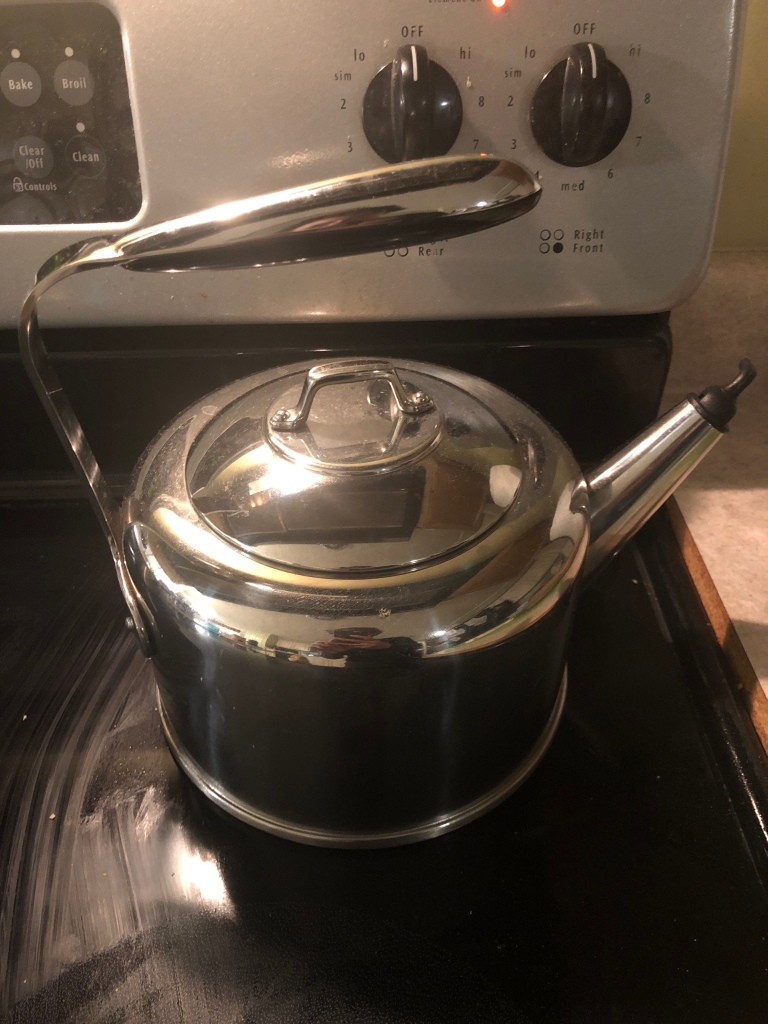
The rest of our expenditures for the month were mostly eco-friendly necessities like bamboo scrub brushes [$51.81], bar shampoo [$15.99], a cloth shower curtain liner [$10.99], a used stainless steel tea kettle [$50.00], and reusable cloth gift bags and utensil wraps a friend made.

Then there were the not-necessarily-eco-friendly necessities: ink cartridges for the printer [$16.70] and furnace filters [$33.00].

And, finally, the stuff we feel is necessary because we live in a wealthy, privileged society: headbands for Brett [$12.90], headphones for Brett [$42.99], and water bottle with alkaline filters – a surprise from Brett [$50.00].

[I blame a lot of our spending on Brett, which is not without warrant and he’s a perfect scapegoat because he doesn’t read my blog; however, I fully admit that my $50.00 tea kettle was a total splurge on my part, used one not.]

Ain’t she a beaut tho?!

Happy December!

Now that we will have reliable income for the first full month since March, we are getting back to the budget [I know I’ve been saying that for months, but for real this time!]. Of course, December is the hardest time to stick to a budget. Does anyone stick to their budget in December???

As with every year, I am trying to focus my family on all the joys that money cant buy, so we are once again doing our “25 Days of Christmas Activities” which have already begun with making our countdown-to-Christmas paper chains and coloring Christmas pictures to send in our Christmas cards.

Beyond that, we are just slowly adapting to small town life and this new house, which is not at all what we would have chosen, but is what the universe has provided and we are grateful.

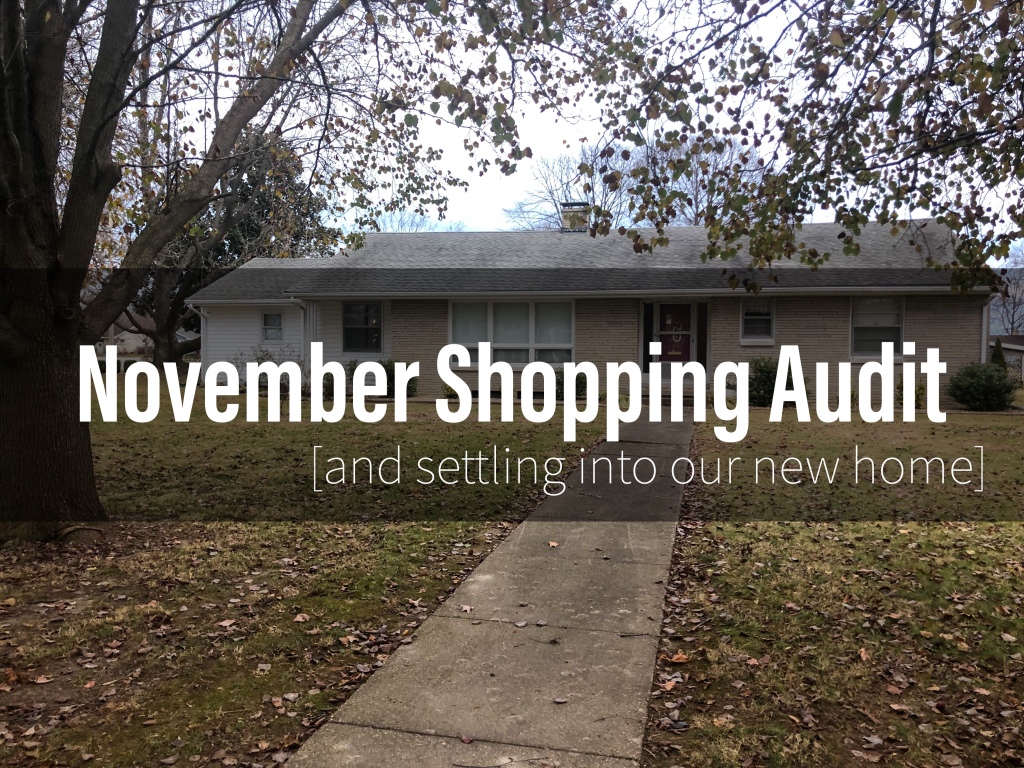
Mi casa nueva

Home sweet home.

🏡 🏡 🏡

Karis