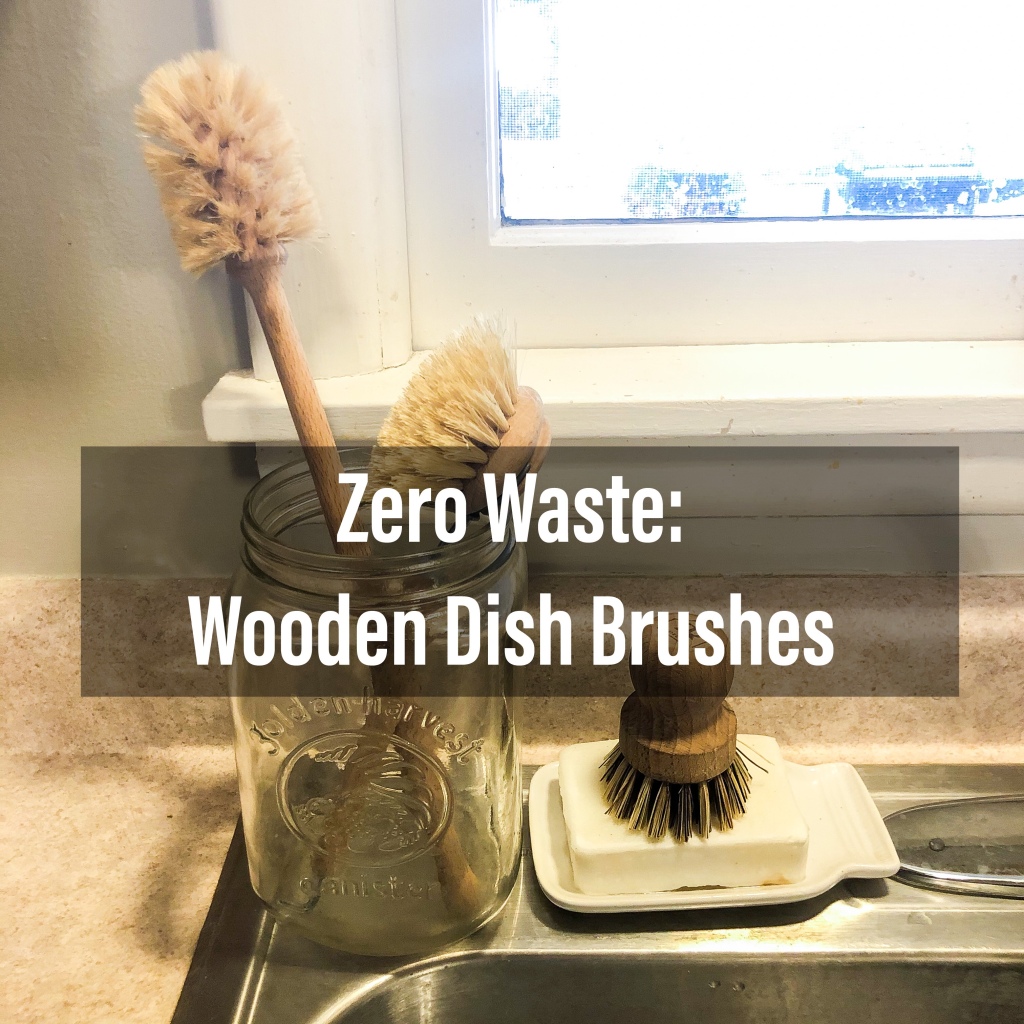
Zero Waste: Wooden Dish Brushes

Zero Waste: Wooden Dish Brushes

Since I first went zero waste [four years ago now – wow!], I have wanted to trade every plastic thing I own for the beautiful wooden equivalent. In addition to being biodegradable and better for the planet, these products are just so darn pretty! I dreamed of having one of those zero waste Insta-worthy homes where everything is natural and simple and minimal…however, in reality, making a full switch is in itself wasteful. So, I have been making due with what I have until what I have breaks down or gets lost or ruined or whatever. Then I replace it with the beautiful alternative.

Well, the time finally came for the dish brushes to be replaced. For years I have been using the $.97 plastic variety from IKEA [I am hanging my head in shame], but now that I know better, I upgraded to a set of brushes that are beautiful and functional and won’t still be in existence at the end of time [which may be coming sooner than we think with the current state of things].

Anyway…I digress.

Here is the low-down on these brushes. I ordered them from Wild Minimalist, whose newsletters I have been receiving for…I dunno…four years and never ordered from because [as aforementioned] I wasn’t replacing anything until it became absolutely necessary. But I was excited to give the company a try because I like supporting small businesses who are trying to do the right thing. Other than it taking a looong time to receive them, I have no complaints about my transaction with Wild Minimalist and will likely order from them again in the future.

Let’s talk about the price

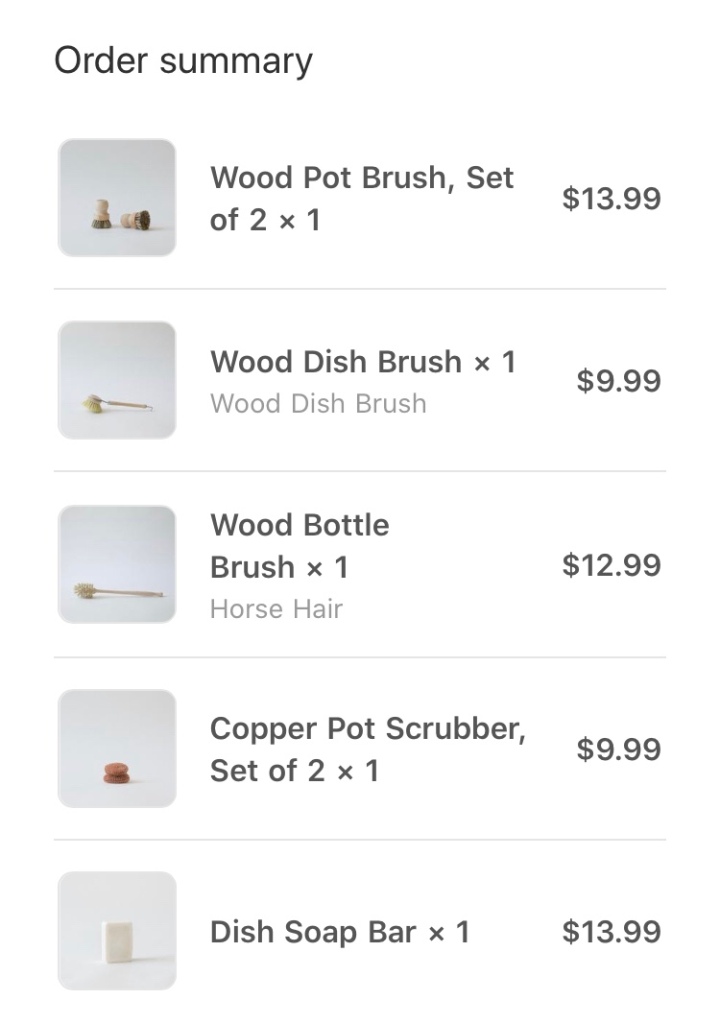
Here’s the breakdown of my order.

So, let me just point out the obvious here. These things ain’t cheap. Did you see where I said I was previously using plastic dish brushes from IKEA that cost me $.97? Well, this is the thing. It costs money to do things right. You can [almost always] count on this: if the price is too good to be true, that’s the only thing that’s good about it. A cheap price gets you a cheap product and a guilty conscience. In the case of my $.97 dish brushes, my conscience will suffer because they will rot in a landfill FOREVER.

So, this time around I’m paying more money for something that won’t last as long.

I know, I know. I sound like a crazy person. But this is the change that has to happen. We have to care more about what happens to our stuff and a whole heck of a lot less about how much it costs.

Trust me, I’m not a fan of spending money needlessly – or overpaying for products. But it’s not overpaying for a product when it was made ethically, fairly, and sustainably. That is not overpriced, that is just the price of doing things right.

Let’s talk about the product…

Ok, so now that we’ve got the price tag issue out of the way, let me tell you – I freaking LOVE these guys! They are so much more aesthetically pleasing to have on my kitchen counter. And they work great. Of course, it doesn’t take much for a brush to function as a brush…but, still, I’m happy with the work they are doing for me. As you can see, I went all-in and got three varieties of brushes: the pot scrubber, the bottle brush, and the dish brush. I love and use them all, but truthfully, I could have done with just the pot scrubber and bottle brush. The great thing about the dish brush, though, is that you can order replacement heads for when they wear out – which they will do because [like I said before] they are supposed to wear out! That’s literally why I bought them!!

The handles are made of beechwood and you can choose horsehair or tampico bristles. My bottles brush and dish brush have the horsehair bristles which are nice and soft. The pot scrubbers have tampico bristles which are much sturdier and better for scrubbing the crusty stuff.

Tampico fiber: a natural fiber made from the Mexican agave plant.

👍

For maintenance, keep them dry [which is why I store mine upright in a jar] and oil the handle occasionally. [I haven’t bought the oil yet, but I intend to because it extends the life of all wooden utensils, cutting boards, bowls, etc.]

For disposal, when they are completely worn out, compost the entire thing [remove the bristles and compost with the brush], except the metal part of the dish brush [which should be recycled].
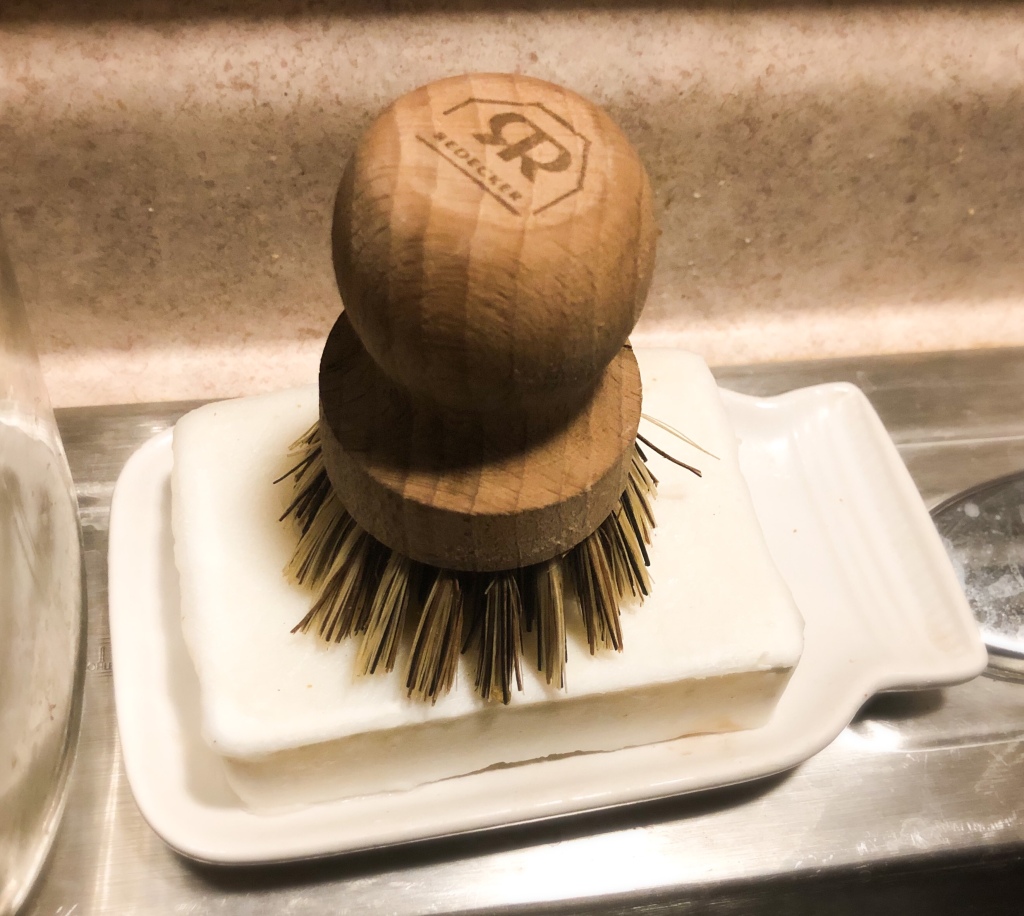
I also got the dish soap block. I am all-in on the bar soap bandwagon. Talk about reducing waste! Since I switched to bar soaps and shampoos and conditioners and body bars and deodorant and dish soap I have saved…like A TON of plastic bottles from going into the rubbish bin [well, my rubbish bin at least]. So, get this awesome soap block and put it like I do, right next to your sink. Then rub the cute little brush on it, and wash away. It’s fabulous. No unsightly plastic Dawn bottles on my countertop, no siree bob.

So, there you have it. Another zero waste swap in the books!

I hope that when [and ONLY WHEN] it’s time for you to replace your dish brushes, you’ll join me in the wooden dish brush club. [That’s not a real thing. I just made that up, but that would be fun!]

Let’s quit this plastic crap for good!

Happy Dish Washing!

🧼🧼🧼

Karis

Lessons in Motherhood and Veganism [Do I feed my kids meat?]

Lessons in Motherhood and Veganism [Do I feed my kids meat?]

Now that I’m a vegan, I have to face my own inconsistencies about how I feed my kids.

The Conundrum

For years I was a moderate vegan or “vegan before six,” and I never changed my kids diet. We have always eaten a lot of vegetables, fruits, nuts and legumes anyway. But my kids also got yogurt, cottage cheese, eggs, chicken nuggets, burgers, ice cream and even the occasional macaroni and cheese. It didn’t seem so bad.

Now, however, I’m fully vegan because of my own personal convictions about the healthful, ethical and environmental necessity of a fully plant-based diet – so how can I, with a clear conscience, feed my kids animal products?

[Side note to clarify my statement above: I believe it is unhealthy to eat meat in the large quantities that we do in America, and I believe that it is unethical because our demand for large quantities of cheap meat has caused significant suffering for the animals we consume, and I believe that meat and animal products are the leading cause of damage to our planet. I am not saying that any meat at any time ever is wrong or unhealthy, but rather that in this current time with our current systems in place and our current ecosystems at stake, it is best – even necessary – to be vegan. I wrote in more depth about my reasons for becoming vegan in my post Why I’m Going Vegan [and why you should too]]

I obviously want my kids to be healthy. In fact, I care even more about their health than my own [hence why I hide the junk food for after they are in bed…and maybe partly so I don’t have to share…], so if I believe that Veganism is the healthiest and most ethical way of eating, am I wrong for feeding my kids the traditional American diet of Mac and cheese, chicken nuggets, and go-gurt?

But on the other hand, is it right of me to force them into a vegan lifestyle [purely by omission of all animal products]? Will they feel like they are “missing out”? Will they resent me?

But then again, is it right to raise them to be carnivores? Will they later ask me why I forced them to eat poor butchered animals? Will they resent me?

Do you see my dilemma?!?

Reflecting on this made me think about my own upbringing. I was raised in an omnivorous [mostly carnivorous] family and no one bothered to ask me whether I wanted to eat animals or drink their fluid secretions or not. I was given cows milk from the moment I stopped nursing until…well, milk was a big staple in my childhood home. We consumed at least a gallon per week. Meat was the main component of every meal and ice cream was the dessert of choice after every meal.

So basically, we ate like typical Americans.

And I’m not mad at my parents in the least for feeding me animals. They fed me and I am immensely grateful. But now that I have a choice, I choose not to eat animals, which is different than my family, my partner’s family, and, quite frankly, every other human being I know on the planet […except one coworker once].

Maybe that’s what’s so tough about choosing veganism for my family – it is different, and different is a little scary. Honestly, I don’t mind making choices for myself that go against the grain [I rather enjoy it, in fact], but it’s harder to make those choices for my kids, knowing that my choices will greatly influence their worldviews and their lifelong habits. Even if I believe it’s the best thing to do, I know that it won’t always be received well. [So help me, if I had a dollar for every time someone asked me how I get enough protein…] I know that my kids will eventually realize that they are different and I don’t want to force them to be outsiders.

The Crux

As parents, we make a lot of choices for our kids. I, personally, make a lot of controversial and unpopular choices for my kids [at least in my circles]. So maybe choosing to feed them only plant-based foods will not be any different than my decision to, say, not take them to church or not hit [aka “spank”] them or not circumcise my son or any of the other ways that we choose to do things differently than other families.

What is most important to me is that the choices I make for my kids are intentional, not merely the result of “going with the flow,” not just doing it because everyone else does or because that’s how it’s always been done, and not eating without considering why and where and how and how much and to what end.

I’ve come to discover that eating, like everything else in life, is a moral choice. And what I feed my kids is an even greater moral responsibility.

The Conclusion

So, I am going to switch my family to a vegan diet when we are at home. I am not going to be the meat nazi at restaurants or the rude guests at dinner parties, I promise.

I am going to model healthy eating habits, including not binging on junk food, not snacking late at night, not starving myself, and not eating animal products. I am not going to force my kids to become vegans nor discourage them from eating a wide variety of foods.

I am going to make vegan food delicious and exciting by trying all the recipes and being creative. I am not going to be heartbroken if my kids don’t love being vegan and choose a carnivorous lifestyle for themselves.

I am going to be flexible and course-correct if this plan doesn’t serve my family best and I am not going to be upset about it.

Anyone else rethinking how they feed their kids????

🌱 🌱 🌱

Karis

Veganism and Dining Out [or ordering in]

Veganism and Dining Out [or ordering in]

As promised in my last post [Simplifying Veganism], I’m back to talk about how I eat at restaurants as a vegan. There are already plenty of good resources out there that provide vegan restaurant lists and menu modifications for popular restaurants [like this list of Vegan Restaurant Options by PETA] so I won’t rehash specifics. [BUT, did you know that Olive Garden breadsticks are VEGAN?!? That’s not real butter, folks!!!! See? Being vegan ain’t that bad!]

Instead of specific lists or menu options, I just want to share how I go about figuring out what to eat at restaurants – something that might be considered a stressful experience for many people.

In order to eat vegan at restaurants, I follow a three-step plan, which goes as follows:

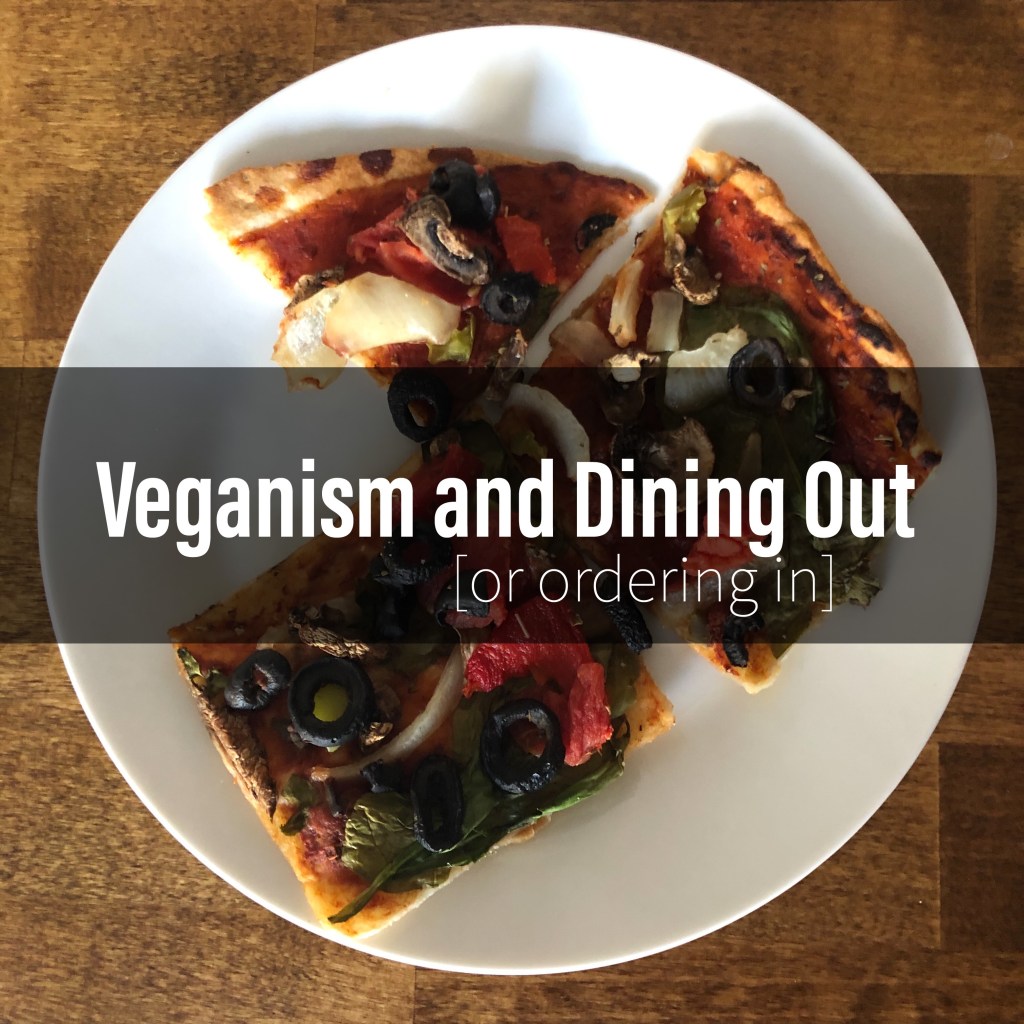
1. Plan ahead. This is rule number one for eating healthy in general, so I’ve been practicing this for years. Before I go to a restaurant, I look up the menu and make a choice before getting seated and seeing all the pictures of spinach and artichoke dips and bacon avocado burgers. If there aren’t any vegan menu items, I begin to look for ways I can alter meals to make them vegan. For instance, pizza usually becomes vegan by opting for no cheese, which may not sound like pizza, but is a super satisfying way to partake in family pizza night – and get your fill of vegetables. [My kids like my vegan pizza as well!]

Thin crust pizza with no cheese and all the veggies from Papa Johns.

[Side note: we LOVE making homemade pizzas and a while back we started making a salad pizza, which is basically just salad on top of baked pizza crust and it is DELICIOUS! Though I suspect it should technically be classified as a flatbread, it is a great way to feel like you are eating pizza, even when you’re not.]

2. Try to find a vegan-friendly restaurant. These little up-and-coming gems need our support, so if it’s in your power to choose the restaurant, go for the cute vegan shop on the corner. If you, like me, have nothing but Pizza Hut, Dairy Queen, and McDonalds at your disposal, then just move on to step number three.

3. Get Creative. One night my husband and I had a rare opportunity to go out without the kids [!!!!] and we wound up at Applebee’s. Turns out the only things that are vegan at Applebee’s are the French fries and the wedge salad [without the dressing, of course, which pretty much just makes it a wedge of lettuce]. So, I ate French fries.

Let’s clarify a common misconception while we’re on the topic. Being vegan does not equal healthy. Yes, it does avoid a lot of unhealthy foods, but there are still plenty of unhealthy foods available for vegans. For instance, sugar is vegan, margarine is vegan, skittles and starburst are vegan, French fries are vegan, Haagen Daz dairy-free ice cream is vegan and absolutely AMAZING, but also most definitely not healthy in the least. And did I mention, Olive Garden breadsticks are vegan?!? So clearly, vegan and healthful are not synonymous.

Now, back to the Applebee’s French fries…

That night, I learned a valuable lesson about the importance of steps one and two. However, I also learned that you can always find something vegan or ask for something to be made vegan.

Here are some of the ways I find vegan options at restaurants [organized by cuisine type]:

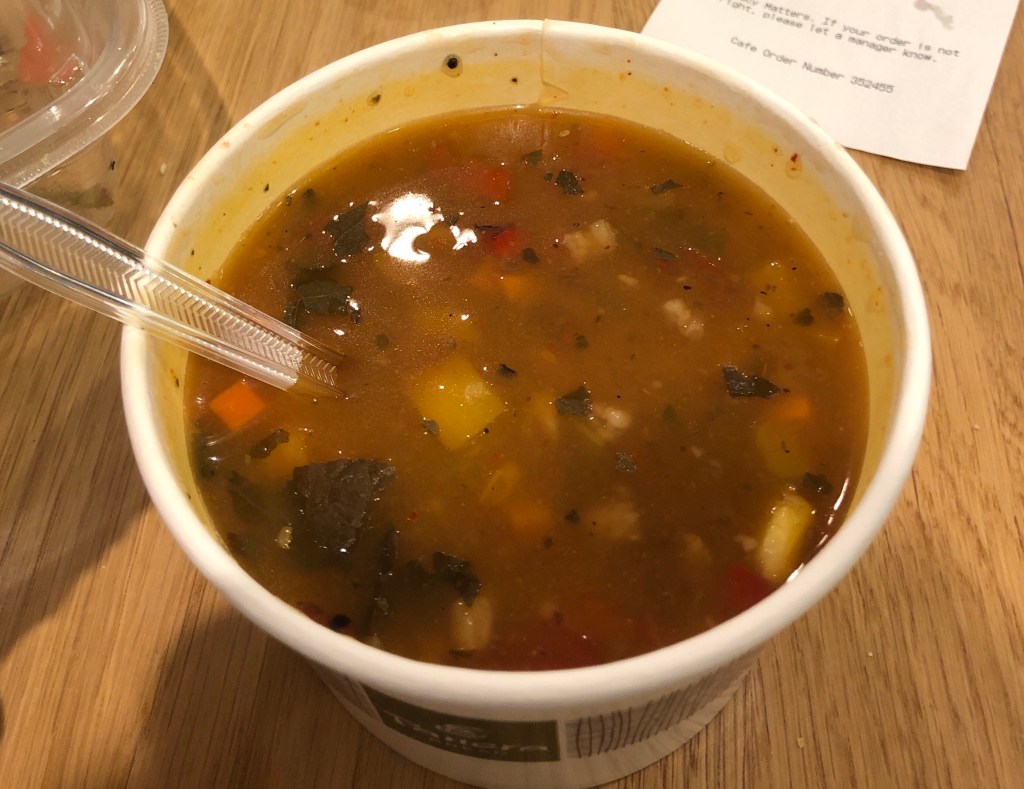
Soup and sandwich shops like Subway and Panera and Jimmy Johns are great for vegans. Pretty much every sandwich shop nowadays has a vegetarian option and usually all you have to do is ask for no cheese and you’ve got a vegan sandwich. Vegetable or bean soups are also usually vegan.

I’m currently in LOVE with Panera’s vegetable soup! [And the Greek salad without the feta cheese.]

Mexican restaurants are really good choices because Mexican foods are easily made vegan by swapping beans for the meat and holding the cheese. I LOVE Mexican food and I am SO GLAD that I can go to pretty much any Mexican restaurant and order a vegan taco loaded with beans and vegetables and spicy salsa and guacamole mmmmm yum! And the chips are usually vegan too. [Always check, of course.]

Sushi and poke bowl restaurants like Poke Bros and Wok ‘n Fire have vegan California rolls or create your own options that can be easily made vegan.

Pretty much any pizza place as I’ve already mentioned can easily make a vegan pizza by holding the cheese. Most pizza places have vegan crusts and marinara.

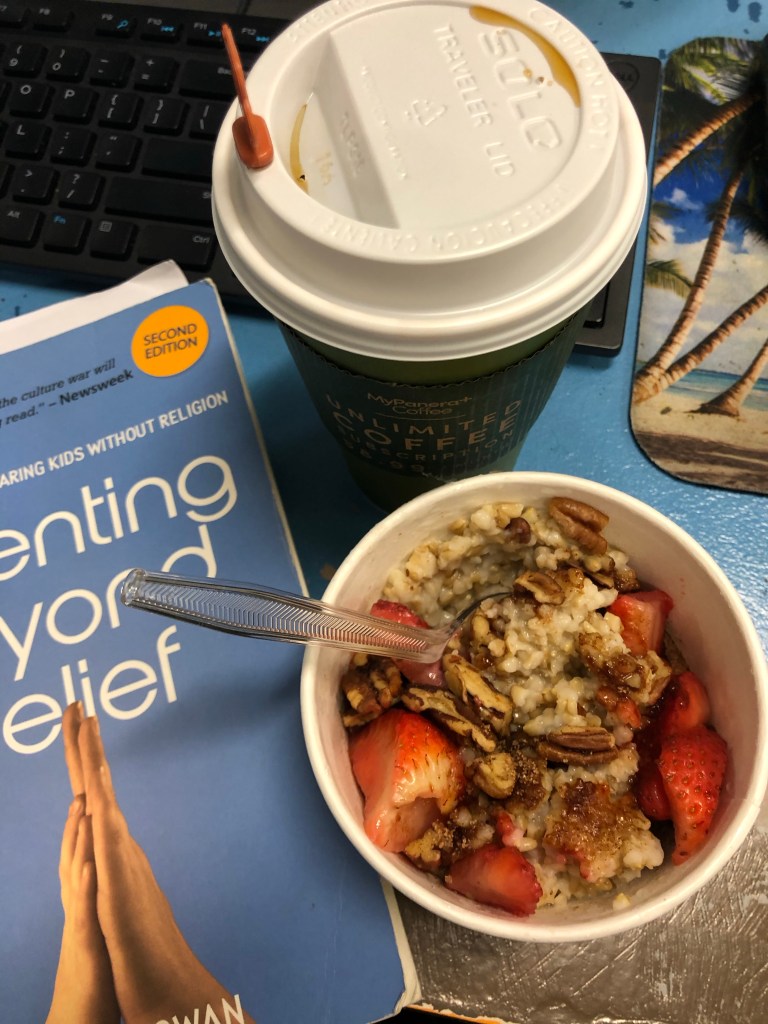
Breakfast and brunch restaurants usually have oatmeal as a menu option and bagels are also usually vegan [pass on the cream cheese obviously].

Breakfast from Panera

[Another side note: pancakes and muffins and quick breads can very easily be made vegan and while my kids and partner are not vegan, it doesn’t hurt them to eat that way so I have switched all my baking over to vegan recipes – and, you may be surprised to hear that Brett has given glowing reviews of my vegan banana muffins calling them the best I’ve ever made! I’ve also switched my kids to almond or oat milk for cereal in the mornings – which they only get on weekends – because they can’t even tell a difference!]

American restaurants often have a veggie burger available, but if not, salads sans cheese and meat and with a vegan dressing is a good option. Also, there are typically vegetable sides that are vegan – plate of steamed broccoli, anyone?

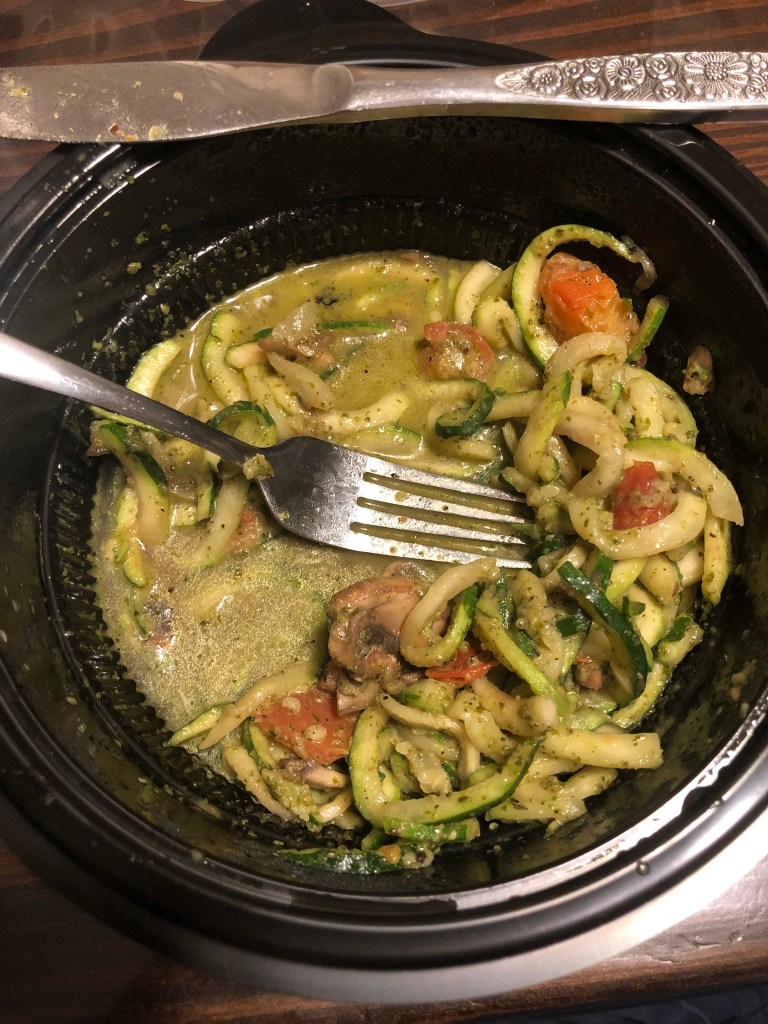
Pasta and Italian restaurants are easy to eat at because noodles and marinara are typically vegan. Pass on the cheese and the meatballs, but enjoy a filling plate of spaghetti. Of course, I wouldn’t constitute that as a very healthy meal, but it is vegan. I love that Noodles and Company has started offering zoodles [spiralized zucchini noodles] in place of traditional spaghetti for the more health-conscious people like myself. I would much prefer a bowl of zucchini over a bowl of refined carbohydrates.

Pesto zoodles from Noodles and Company. Warning: zoodles get juicy

So, that’s my simple plan for eating vegan out [or, thanks to covid, ordering in].

Stay tuned for a post about what I eat at this years Thanksgiving gathering with my carnivorous in-laws.

#savetheturkeys

Gonna need some vegan wine!!!

🍷 🍷 🍷

Karis

Zero Waste: Cloth Napkins

Zero Waste: Cloth Napkins

Of all the zero waste swaps we’ve made over the past few years, the switch to cloth napkins has been my absolute favorite. They are so much more beautiful than the quilted, flower-printed, paper kind. Just by setting the table with cloth napkins, our family dinners are instantly elevated to restaurant class – even if nothing else about the meal is fancy. And they are so practical because I have little kids and the number of flimsy paper napkins that we would need at each meal is enormous.

How to use them…

Originally, I was afraid to make the switch because I worried that guests would be afraid to use them and that my children would destroy them and that the added laundry would be a hassle. Turns out, however, that the napkins are the least hassle of all the swaps. I have even used them for big dinner parties [well, “big” being 15-20 people which is all my house can hold]. When we are done, they just go straight into the washer to be cleaned with the next load.

They definitely get messy, but they come clean in the wash and in our experience, each person only needs one no matter how messy the meal is.

Where to get them…

I bought mine from World Market years ago when we were first making the switch, but now I wish I had just made some myself. You can also buy them at home goods stores such as Kohl’s and Bed Bath and Beyond, and don’t forget Amazon! But, as you know, I’m not a big proponent of buying things, so don’t buy them if you can make them! Or check out Etsy. Or pay a friend who sews to make some for you.

I love having a variety of patterns and the ones that I bought are really beautiful. I have also been gifted a few packages of cloth napkins. [One of the great things about identifying as a low waster is that you will often receive AWESOME, practical and beautiful gifts! I have received so many wonderful zero waste tools as gifts and I am so grateful for my understanding and thoughtful family and friends!]

Why to have them…

The better question is why would I want to continually buy paper napkins bound for the trash when I can use beautiful, reusable cloth napkins instead? It has been four years since I have bought any paper napkins, and I have no intention to ever going back.

Of course, there is an environmental cost to both paper napkins and cloth napkins. Reusable cloth napkins require water and energy to produce and to wash; and though paper napkins require much less water and energy to produce, they are only used once before being thrown into the trash where they will continue to have a negative affect on the environment in a landfill.

Over the lifetime of a cloth napkin [which should be as long as a persons lifetime – if not longer], reusable napkins are much more environmentally friendly.

And they will save money.

And they will make your mealtime fancy.

Here are some of our beautiful cloth napkins.

Do you use cloth napkins? Why or why not???

🍽

Karis

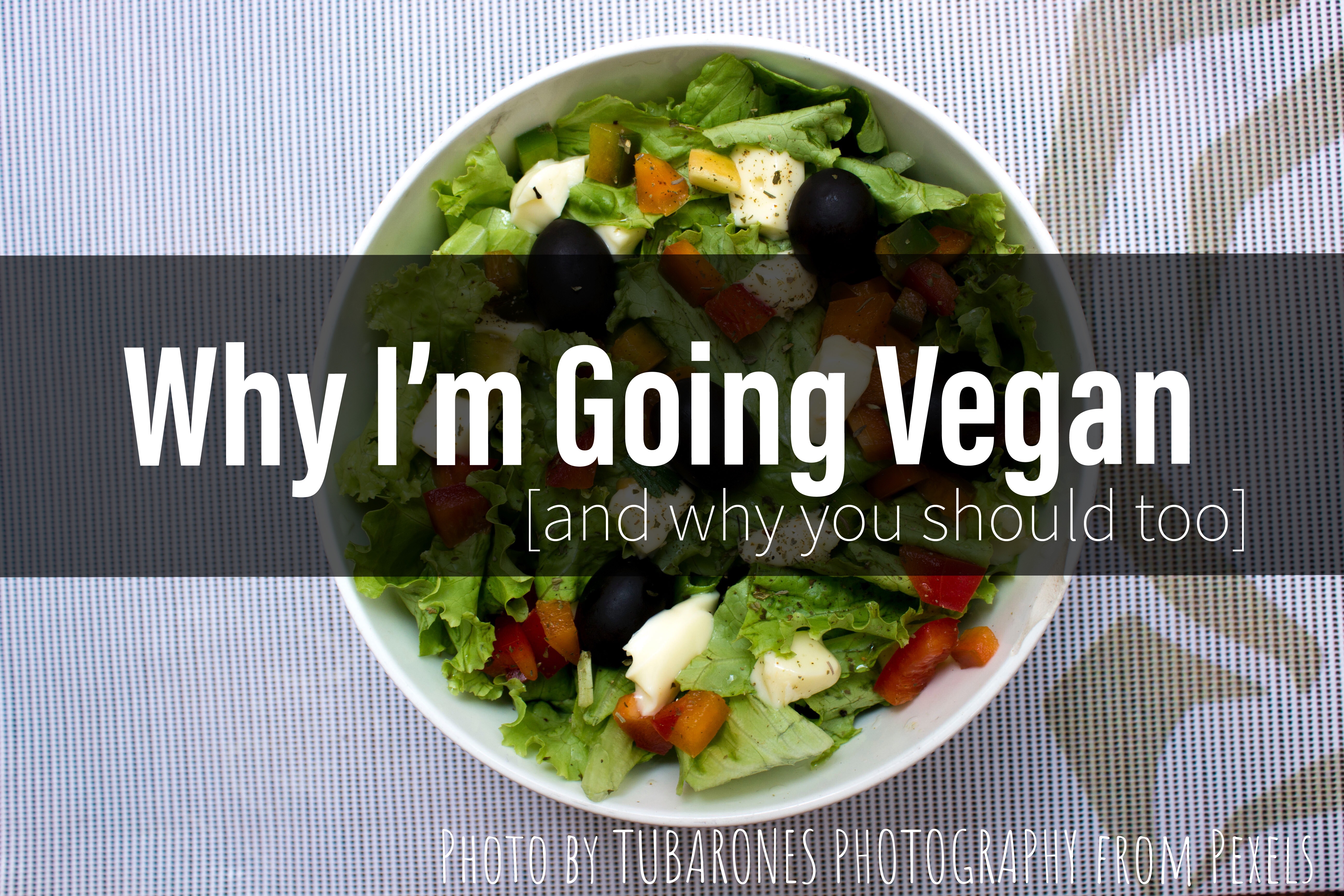
Why I’m Going Vegan [and why you should too]

Why I’m Going Vegan [and why you should too]

For three years now, I’ve been a moderate vegan, or a “vegan before 6,” as I like to say, but I recently committed myself to the official, full-fledged vegan diet – for three reasons:

1. For the planet. The other day, I watched David Attenborough’s new documentary, A Life on Our Planet, and was reminded again of how urgent it is that we stop our short-sighted use of earth’s resources. The easiest way for individuals take action is to stop eating meat and dairy, which are HUGE contributors to our man-made environmental crisis.

Quick Facts:

  • One pound of meat requires 2,400 gallons of water, while one pound of tofu requires on 244 gallons. [source]
  • While meat only provides 18% of calories, it’s production uses 83% of farmland and produces 60% of agricultural greenhouse gas emissions. [source]
  • Human meat consumption is one of the leading causes of the current mass extinction of earth’s wildlife [source] and is the greatest driver of deforestation worldwide. [source]

A plant-based diet aldi makes zero waste living much easier because you never have to buy, handle, or store raw meat or dairy. There are ways to be omnivorous and reduce your waste, but it’s definitely a lot easier to just eat plant-based foods that can be readily found without packaging.

No matter how you look at it, eating plants is better for the planet. In fact, David Attenborough himself says at the end of the film that one of the easiest and simplest ways to reduce humanity’s negative effect on our ecosystems is to eat a plant-based diet. And luckily, being a vegan has another important benefit.

2. For my health. A plant-based diet is not only better for the planet, it is also better for the human body. Despite all the confusion around healthy eating and all the contradictory information, it is clear to me that too much meat is ruining our health.

[Full disclosure – there are plenty of sources representing opposing views regarding the risks of meat consumption, so do your own research and make your own informed decision.]

“Recent evidence from large prospective US and European cohort studies and from meta-analyses of epidemiological studies indicates that the long-term consumption of increasing amounts of red meat and particularly of processed meat is associated with an increased risk of total mortality, cardiovascular disease, colorectal cancer and type 2 diabetes, in both men and women….It is concluded that recommendations for the consumption of unprocessed red meat and particularly of processed red meat should be more restrictive than existing recommendations.” [emphasis is mine]

Battaglia Richi E, Baumer B, Conrad B, Darioli R, Schmid A, Keller U. Health Risks Associated with Meat Consumption: A Review of Epidemiological Studies. Int J Vitam Nutr Res. 2015;85(1-2):70-8. doi: 10.1024/0300-9831/a000224. PMID: 26780279.

If you don’t want to read all that, I’ll summarize. Red meat increases your chances of heart disease, diabetes, cancer, and death and we should be recommending that people eat less meat.

Currently, we’ve got two problems: people are already eating more than the recommended amount AND the amount of meat that individuals are consuming is going up, not down.

The USDA, who makes the dietary recommendations for the United States, recommends that the average adult eat between five and six ounces of meat per day. [source] But it turns out that the typical American is eating double that amount [source] and meat consumption continues to be on the rise. [source]

So, while there are those who disagree with my assertion that eating meat is bad for our health, I have one more bit of subjective evidence to share: a plant-based diet makes me feel better.

3. For my well-being. A plant-based diet is better for the planet and my health, but it also makes me feel better – and I’m not just referring to the internal feeling of happiness I get when I make the humane and ethical and environmentally-conscious decision to avoid meat. I mean, I literally feel better physically. Of course, I have no sources to site about this, no proof to offer, no cold, hard evidence, but I can assure you that I feel much, much better on a vegan diet than any other diet.

As someone who is obsessed with health – especially healthy eating – I have tried many, many “diets,” different dietary fads, and ways of eating. I’ve done juice cleanses, fasting, no carb, low carb, calorie restriction, no processed foods, no added sugar, high protein, vegetable only – to name a few. But when I went strictly vegan three years ago in a desperate attempt to ease my nursing baby’s reflux issues, I had never felt better.

How exactly did I feel better? I had more energy and no longer experienced that midday fatigue. I stopped getting sick as frequently, which I attribute to my increased intake of nutrient dense foods like fruit and vegetables and legumes. My skin cleared up, and that is no small thing because I’ve had oily skin and acne issues since puberty. But the moment I cut out meat – and especially dairy – my skin cleared up so well that I stopped wearing makeup altogether. My performance at the gym improved. I could exercise longer and recover faster.

And, in general, I felt better internally. No more gut issues. No more bloat. No more gas cramps. No more exhaustion – unless, of course, I wasn’t getting my six hours of sleep.

For me, this was enough of a reason to go vegan, which is why I’ve been a moderate vegan ever since that first experience three years ago.

Bonus reason: For my finances. In addition to the benefits I’ve listed above, being vegan is also much cheaper than eating a traditional American diet heavy in meat and dairy. Though it’s not a motivator for my choice, it may encourage other people to consider being vegan when they realize how much money can be saved. Meat and dairy are the most expensive food groups, besides oils and fats. Even on sale, I can’t find chicken for less than $2 per pound and beef is twice that expensive and fish is four times the cost. However, I buy fruits and vegetables for less than $1 per pound.

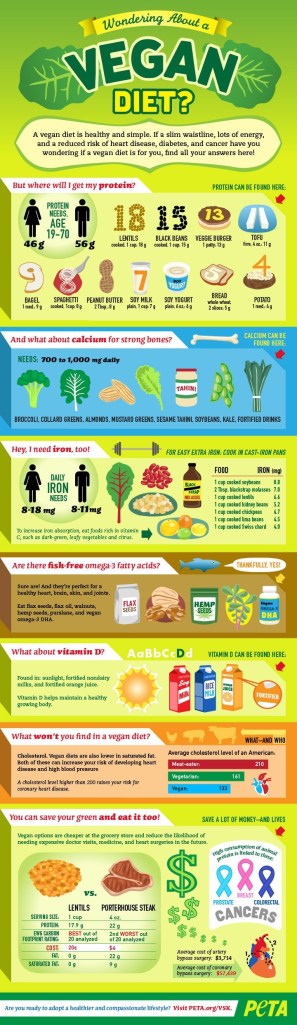
The info graphic below by Peta answers more questions about veganism.

As great as it is, being vegan is not without its challenges. Eating out, for instance, can be tough. My partner and I went out last night and there were a grand total of two menu items that were vegan – the French fries and the house salad.

So I ate the fries.

🤷‍♀️

🌱 🌱 🌱

Karis

September Shopping Audit [and my birthday party fail]

September Shopping Audit [and my birthday party fail]

September was supposed to be the month that we revised the budget to reflect our new income; however, our income continues to fluctuate, as does our spending. Despite a lack of strict regulation, we still aren’t spending very much because we have effectively made ourselves into “savers” rather than spenders. In fact, over the course of September, the combined total of money we saved, invested, and gave away was significantly greater than what we spent – even including our bills.

On a reduced income, I’d say that’s pretty good!

Also in September, I participated in Charity: Water’s September Campaign [raising money to get clean water to 20k people in Mali] and raised over $1,000 in addition to the $200 that I donated toward the cause. I am planning a larger campaign of my own to raise money for Charity:Water starting in January.

That, my friends, is where the good news ends. We had car trouble [tire trouble, more specifically] which cost us $575.24!!! We bought two books for my father-in-law’s birthday for $37.48 and I bought several books for my kids about religions and mythology that I couldn’t find at the library for $77.97 [these books were obviously SUPER important to me because I haven’t bought a book – other than as a gift – in over three years]. I bought a pair of used black pants for work from Goodwill for $7.00, which have turned out to be my favorite pair of pants EVER [now, that’s $7 well spent!].

But the real trouble started when it was time to get a gift for my daughter’s third birthday. Per our gift policy, Brett and I found a beautiful Mickey Mouse racetrack used for $30, and I planned to take my older two kids to Goodwill to pick out their own gifts for their sister. The night before her birthday we waited for Josephine to go to bed and then snuck out of the house to go shopping. Unfortunately, Goodwill has shorter hours than I realized [thanks, COVID!], so it – and all the other resale shops – were closed for the night.

Out of desperation, I took the kids to Walgreens [because it was in the Goodwill parking lot] and they each picked out a gift for their sister.

🤷‍♀️

Sometimes I have to bend my own rules.

The incredibly cheap [and basically worthless] walkie-talkies that Theo picked out and the plastic tea set that Evangeline chose were the first brand-new toys that we have purchased in three years. I was very nearly depressed about it – especially seeing all that plastic upon plastic wrapped in plastic entering my home – but the next morning, Josephine was so excited to see her racetrack and open her gifts from her siblings.

It made the whole thing [almost] worth it.

Josephine painting with the new paint sticks she received from her Aunt Amber [and cousins] for her birthday.

🎁 🎁 🎁

Karis

August Shopping Audit [and my new work boots, round 2]

August Shopping Audit [and my new work boots, round 2]

Well, the saga continues….

Last month I wrote about my new job that required work boots, which I found used on OfferUp [yay!]. But two weeks after starting, I was offered a position in management which comes with a dress code that includes [but is not limited to] a collared shirt and the covering of my tattoos [two of which are on my forearms].

Well, despite the positives of the new position [higher pay, immediate health benefits, and more tuition assistance], the dress code was a real bummer. Partially because I love my tattoos, gosh darn it! And I work in a warehouse that’s been 90° even at 4am which makes wearing long sleeves totally unbearable! But it’s a bummer mostly because, other than the purchase of three pairs of panties with a Christmas gift card last year, I haven’t bought a single item of clothing in over three years.

All that changed this month. I bought a total of three polos and five button-down dress shirts [all used from local people] and two pairs of sleeves to cover my tattoos [brand new because who really has these things lying around???]. Oh, and another pair of boots because my husband, the fashion guru, said it was not acceptable to wear my current beat-up orange-laced work boots with dress shirts.

So I bought this nice pair of black Timberlands from a very nice woman who lives near me and only wore them once! I had just been reading about Timberland’s commitment to sustainability in Elizabeth L. Cline’s book, The Conscious Closet [which I highly recommend], so I was excited to find a pair for only $35 on OfferUp!

On a positive note, I have resisted buying any new pants for the job. I currently own two pairs of jeans which I rotate and I borrowed some pants that didn’t fit my sister-in-law. I also am still refusing to buy any new socks, underwear or undershirts, despite all of mine [save my three new pairs of panties] being full of holes and basically threadbare. I kid you not. If they weren’t my intimates, I would share pictures. Instead of buying, and thanks to Ms. Cline’s influence in the aforementioned book, I’m taking up mending and darning.

I’ll let you know how that goes…

Besides the things I bought for my job, we also purchased some used LEGO sets for the kids, a used tool box for Brett and a new cast iron Dutch oven [and by “we” I mean Brett because I wouldn’t have bought any of it, but I’ve been too busy working and homeschooling to even pay attention]. I, however, did buy $50 worth of school supplies [500 sheets of construction paper, a set of acrylic paints, a wooden tangram puzzle set and a bag of math manipulatives] but I had a gift card so I only spent $3 after tax — so does it really count???

Next month, the plan is to rebuild the budget since this Covid situation [and our new financial status] appears to be sticking around for the long-haul. We’ve kind of been flying by the seat of our pants since it all began in March, but now that our income is stabilizing [fingers crossed], it’s time to revisit the budget and review our financial goals and priorities and recommit ourselves to intentional spending, giving, and saving.

So that’s hopefully what I’ll be sharing about next month. But, really, who even knows??? It feels totally pointless to even make a plan at this point – which is why my posting is so sporadic. Well, that and because I’m operating on very little sleep and basically zero alone time these days.

Ah, life. What an adventure!

😜

Karis

July Shopping Audit [and my new work boots]

July Shopping Audit [and my new work boots]

July was a crazy month. I started my two new jobs and felt like I was working ALL THE TIME. I’ve also been preparing homeschool curriculum and gathering resources, books and materials. And I volunteered 12 hours to the food bank in June, packing meals and working at a pop-up drive through food pantry one Saturday morning.

Now that we don’t have Brett’s full-time income [and my part-time income is measly in comparison], I have been thinking about money more than usual. Unfortunately, it turns out that homeschool curriculum is not cheap and that getting a new job means buying appropriate work boots. So, we spent some money.

However, a small mercy came in the form of a bag of clothes diapers that a girlfriend offered me literally a day after I told Brett that I need new ones because I cannot seem to solve the diaper rash problem we are now experiencing with our fourth baby. The same friend also gave us a bigger bike for our son who has completely outgrown the little twelve inch bike he currently uses, which my sister-in-law found for him at Savers for $2.

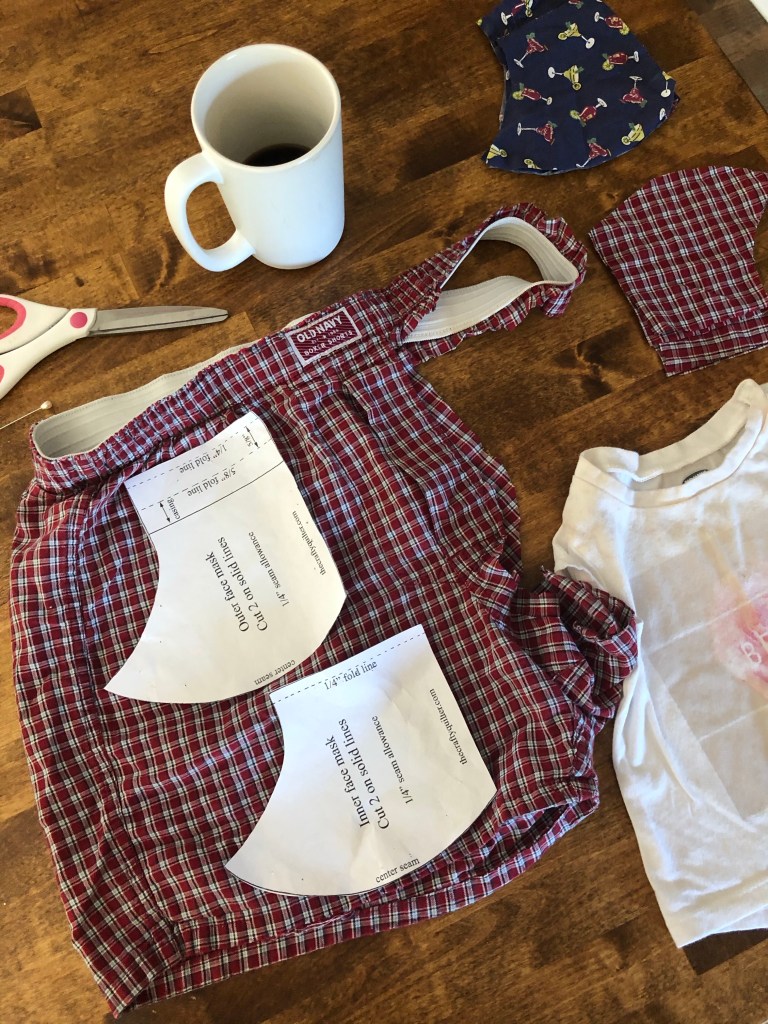
I already mentioned in my previous update post about making masks for the family which kept me from having to buy any.

Yes, I made them out of old boxer shorts. 🤫

I have also inherited a new sewing machine which is perfect timing because [though I’ve grown quite fond of my little $20 machine] there is more I would like to make and I needed a bigger machine.

This machine also serves as a reminder of our Nana who passed away last week.

This month was Evangeline’s sixth birthday [!!!] and she told us that she really wanted roller skates. We stumbled upon a pair of adjustable roller skates at Goodwill [while looking for work boots]. And we picked up a pair of used knee and elbow pads for her [that also came with a bike helmet that is perfect for my younger daughter] from a neighbor [I love OfferUp!].

I was really stressed about finding work boots because I had to have them in less than a week for my start date and I didn’t want to spend $200 on a new pair. But with just one day left, I was able to find a used pair of steel-toe work boots for $20 that fit perfectly. In my previous life I would have run out immediately to the closest shoe store and bought whichever pair was my favorite. But these days, our new values [which include: intentional living, minimalism, and waste reduction] keep me from making impulsive buys. And I am so glad. Now, even facing a job loss, we are not worrying about money.

So, it may seem that we’ve hit a rough patch financially, but, as always, the universe takes care of us.

What we bought

Roller skates for Eva’s birthday ($5): I’ve written several times already about how and why we give used gifts to our kids. Evangeline didn’t care at all that these were used and they are adjustable so she can wear them for years.

Shoes for Brett ($6): Brett didn’t need shoes urgently [especially since he’s out of work], but while he was in Goodwill looking for work boots for me, he also found himself a pair of brown dress shoes to replace his worn out pair. These shoes are in perfect condition and are apparently very expensive new. Maybe will start shopping at Goodwill more often!

Bell and streamers for Eva’s bike ($19.33): We couldn’t find these used so we bought them from a locally owned bike shop in town.

Knee and elbow pads for Eva ($10): I was so glad to be able to find someone selling these used pads for Evangeline to use with her roller skates [a tough skill to master, turns out].

Work boots ($20): Took a while to find them, but they’ve been working great since I started my job three weeks ago.

Shampoo and conditioner bars ($27): I usually buy Lush bar products, but this time we went back to Ethique, whose bars are cheaper per ounce. It may seem pricey, but our last shampoo bar lasted four months and the conditioner bar is just now almost gone and it’s been nine months. Ethique’s website states that one shampoo bar replaces eight bottles of shampoo.

School curriculum for Eva – minus math ($113.05): I went with a digital download curriculum to cut down on the cost. The program doesn’t include math, however, so I had to buy a separate math program.

Math curriculum ($92): I bought just the teachers edition and student workbooks [no manipulative or resources] and it was still almost $100! I know their are cheaper options out there, but I really need more direction than professional homeschool moms.

Our new budget is to spend as little money as possible – so I guess we went over budget this month. But, overall, we did pretty well. We still spent money, but we bought mostly used and did our homework to find the most ethical purchasing option available.

What We Gave Away

Nothing.

🤦‍♀️

We have set aside a collection of maybe twelve kids utensils that we no longer need, but we haven’t even had the chance to donate them.

Maybe next month…

Hope everyone is doing well and staying healthy!

Karis

Happy 2nd Birthday to my Blog 🥳

Happy 2nd Birthday to my Blog 🥳

Today I turn thirty-three years old and my blog turns two. It’s kind of fun sharing a birthday with my blog. She has become a close friend of mine – the sort of friend who listens without judging or offering advice and never hates me despite how weird I seem to the rest of the world.

My birthday is not a special affair – not because my partner doesn’t try to make it a huge deal [he tries throwing me a party every frickin year], but because I don’t like a lot of fuss about my birthday. I prefer quiet time at home with my family instead of a big celebration, and this year that’s exactly what I’m getting [thanks, Coronavirus!].

My plans include a movie with chocolate and champagne. Sounds absolutely perfect.

In honor of my blog’s birthday, I’m doing some reflection on the past two years.

As someone who gets bored very quickly and has started [and stopped] multiple “blogging” endeavors in the past, I am quite surprised that I’ve managed to keep this thing going for two years.

I’m grateful to everyone who has stuck with me through my motherhood adventures, my dabbling in veganism, my purging of our belongings, and my attempt a [nearly] zero waste living. It’s been an eventful two years.

Looking back over my posts, I realize that this blog is very scatter-brained [which I suppose is only natural since I’m very scatter-brained]. In the past two years, I’ve written about minimalism, simplicity, zero waste, DIY, healthy living and motherhood. I’ve posted about clothing purges, my farm share, time outdoors with my kids, craft projects, grocery shopping, books I’ve read, my home birth, and even my trash can has made several appearances. It’s been weird, I know.

But, believe it or not, in the midst of all this randomness, I have been pursuing one main goal – which is the goal of this blog.

To live a simple and intentional life

Doesn’t sound too tough, but turns out this is a very counter-cultural way of life – at least, counter to my American culture which is focused on convenience and consumerism and accumulating wealth and working yourself to death in pursuit of it. American culture also has a tendency to glorify busyness, as if the people who are going the fastest, filling their schedules the fullest, collapsing into bed at night the most exhausted are the ones winning at life.

When I talk about my kids playing outside all day instead of watching television, or taking my own mason jars to the grocery store, or using bar shampoo, or [god forbid] not buying paper towels, I mostly get eye-rolls.

Living simply and intentionally has not only been challenging – it has also been lonely.

This blog has served as my personal sounding board and safe space for reflection [made all the safer by the small number of people who read it] and also a means of finding connections with other like-minded bloggers.

This blog is not about giving people advice or tips or how-tos. This has been my own personal exploration of how I want to live my best life.

Simple Living

Yvon Chouinard is a rock climber, environmentalist, and the founder of my favorite ethical clothing brand, Patagonia.

Thus far, I’ve focused mostly on the simple side of things. I’ve been working on reducing clutter [physical and otherwise] and stopping the constant influx of new stuff. I’ve been avoiding further damage to the planet through reducing our waste and recycling what we can and repurposing what we can’t. I’ve been spending more time with my kids outdoors enjoying nature, creating works of art at the kitchen table, and engaging in their world of make believe. We’ve been doing more reading and baking and building.

Intentional Living

Joshua Becker is the author of several books on minimalism and simple living.

We’ve gone back to the basics. Back to a simpler way of life. But something has been missing [from the blog, at least] — the intention.

So this year I am going to spend more time focusing on the intention behind these outward manifestations. I will be sharing more about our charitable contributions, humanitarian efforts and the reasons that go deeper than simply living with less clutter and screen time. Though I haven’t written about it [other than once about a year ago in this post], all of my lifestyle changes have been motivated by a desire to live an intentional life.

This blog is not just about simplicity – it’s about living a life of meaning and purpose.

Simple living and minimalism and zero waste save a lot of money, but for what purpose? Just to hoard my abundant resources until I die? To increase my already luxurious existence? To ensure that I can live out the end of my days without a care in the world? Is that what life is really all about?

These are the ideas that I have been exploring personally and that are going to show up more regularly in my writing.

Also, this blog is in dire need of a redesign which I will hopefully get done soon.

Stay tuned!

🥳🥳🥳

Karis

[Nearly] Zero Waste Groceries In a Pandemic

[Nearly] Zero Waste Groceries In a Pandemic

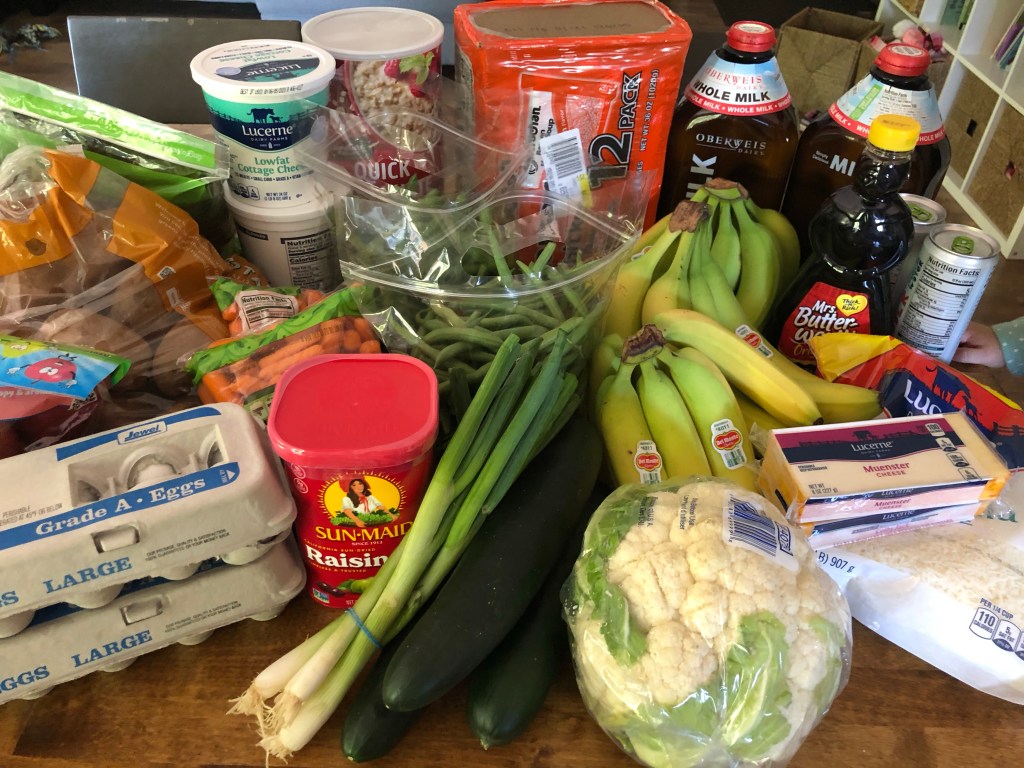
In the past, I’ve written about my experiences with [nearly] zero waste grocery shopping at Aldi, Walmart, and Fresh Thyme — now here is how my family is shopping [nearly] zero waste during a pandemic.

Don’t judge me by the ramen noodle purchase–that was my husband’s choice… 😆

My husband [who has done all our shopping since the shelter-at-home order began] went to Jewel-Osco [our local grocery chain here in Chicagoland] on Wednesday for groceries. As you can see from the photo above, he brought home a lot of plastic. And that’s totally ok. This is one of the side-effects of the pandemic, but it does not in any way change my obligation to reduce my waste.

Before COVID-19, I always bought the following foods from bulk bins:

  • Oats
  • Raisins
  • Flour
  • Pasta
  • Rice
  • Beans/Lentils/Split Peas
  • Nuts
  • Peanut butter
  • Maple Syrup
  • Vinegar
  • Honey
  • Candy/Chocolates

Now, we buy all of these items in packaging.

But all is not lost! This doesn’t mean we have to throw in the towel on reducing our waste. Here is how we are continuing to reduce our waste in the grocery department:

1. Buy the biggest package available. When this all started, Brett bought the biggest bag of rice at the store. It will probably last us the rest of the year – but that is better than buying a bunch of plastic bags. [And, trust me, we have very little storage space, but we made room the big bag in our laundry room storage area.] Whenever applicable – and for shelf-stable items only – buying a bigger package cuts down on the waste.

2. Buy only what we need. This may sound contrary to my previous point, but I’m not talking about buying big packages of shelf-stable foods that you will definitely use. I’m talking about buying the store out of everything that you may possibly, potentially have an urge for in the next century. If you don’t eat it, don’t buy it. This is common sense. And especially don’t stock up on fresh foods. Despite good intentions, this always leads to food waste. We buy enough fresh produce for the week and that’s it. We never buy frozen food [apart from the occasional carton of ice cream] because the packaging isn’t recycle able, but we have bought some canned items because you can easily recycle the cans.

[P.S.A. This is partly to reduce food waste, but also to just be a kind and considerate person during this time of panic. If everyone only bought what they actually needed we wouldn’t be running out of stuff like toilet paper and disinfectants and BREAD FLOUR!!! The problem becomes more compounded when people want something and can’t find it. The next time they see the product they buy more than they need out of fear it won’t be available again. I BEG OF YOU: RESIST THIS URGE. Just buy what you need.]

3. Choose glass over plastic. If you have to buy food in packaging, it is best to always choose the most easily recycled type of packaging. Glass is best as it can be continually recycled without losing quality or purity. So we choose to buy our milk in glass bottles instead of milk. We buy pasta sauce in glass over plastic jars. We buy jams and syrup and honey in glass even though cheaper alternatives are available in plastic [the price difference is really minor.] When glass isn’t available, we choose the next best thing. For instance, we buy our pasta in cardboard instead of plastic bags. We buy our vegetables in aluminum cans over frozen plastic bags [when fresh isn’t available] because plastic bags in the freezer section can’t be recycled.

4. Choose loose over bagged. When it comes to produce, we choose loose over wrapped in plastic. This may seem unsanitary at a time like this, but we wash our produce before eating and sometimes loose produce is actually more sanitary because produce that is wrapped in plastic often leads people to believe that it doesn’t need to be washed before consuming – but it does. Some types of produce can only be found in plastic at the grocery store [such as berries, green beans, grapes, and cauliflower]. In those cases, we buy them less frequently and always recycle the plastic containers and bags [through store drop-off recycling programs].

5. Recycle everything possible. So, yes, we are bringing home more packaging because it is unavoidable. We are even bringing our food home in plastic grocery bags [oh the horror!], but that doesn’t mean we give up. It just means we are more diligent about what we can do, which is recycle. It’s true that recycling is just a bandaid, but it’s still important to do our best to keep stuff out of the landfills. We rinse every jug and jar and carton and container and put it out for recycling. It may be a hassle, but it is important.

6. Reuse or recycle plastic bags. We previously shopped with reusable bags, but now that we are bringing plastic bags home we use them as doggy poop bags [since Daisy is getting lots of walks these days] and trash bags. We haven’t bought trash bags in over a year and since we only produce less than one grocery bag of trash per week, this actually is pretty convenient. While I wish we didn’t produce any trash at all, it isn’t realistic for our family of meat eaters and little kids, BUT we have been actively pursuing [nearly] zero waste so that we reduce our negative impact on the environment as much as we can. These bags are recyclable through store drop-off programs though, so if you don’t have a way to use them, recycle them!

Our lovely collection of plastic grocery bags from one grocery trip.

Since the pandemic began, I’ve been saying [so frequently that your probably sick of it] that this doesn’t change our obligation to take care of our planet. The way we go about it has changed and will continue to change, I am sure. But what is the point of surviving this pandemic just to get back to a world of pollution and waste?

[And as a side note, I know a lot of people “don’t believe in global warming” and whatever. But environmentalism isn’t just about doomsday, it’s about simple stewardship. It’s about sustainability. It’s about being responsible and kind to the planet so that all of god’s creatures can survive and thrive here – us humans included.]

I hope these ideas encourage people to make small changes that can have a big impact if we all start adopting them.

So happy grocery shopping! [Don’t forget your face mask and social distancing!]

🛒🛒🛒

Karis