Super Simple Vegan Banana Muffins [and a rant about breakfast cereal]

Super Simple Vegan Banana Muffins [and a rant about breakfast cereal]

A few days ago, I showed off the silicone cupcake liners that I use every Friday when I bake vegan banana muffins.

Read all about it here.

I’m going to share my super simple, go-to recipe for these muffins in just a minute, but first, I feel like I have some explaining to do.

Baking muffins every weekend might make you think I have some strange banana muffin obsession, or maybe I have a banana tree in my backyard. But the truth is simply that I refuse to give my kids cereal for breakfast. [Just bear with me, I’ll explain.]

[If you don’t want to hear my rant about breakfast cereal, by all means, skip down to the recipe below.]

My Rant about Breakfast Cereal

I have a sort of hatred for breakfast cereal.

Of course, I grew up eating cereal [like every other American I know], but when I decided to start eating healthy foods, cereal was the first thing to go. In the past ten years, I have had cereal maybe three times, and each time it made me feel like crap and almost immediately hungry again. So I don’t like giving it to my kids. I also used to preach against it to my personal training clients.

Cereal might not be so bad if we didn’t eat waaaaay too much of it. A serving size for most sugary cereals is 2/3 to one cup. A typical bowl of cereal probably has three or more cups in it! [You can find some great YouTube videos on this topic to see for yourself – or actually do the unthinkable and measure your cereal!] And don’t even get me started on the highly processed, super refined carbohydrates and sugars that make up pretty much the entirety of boxed cereal. Any food that has to make dubious health claims like “may reduce your chances of heart disease” is probably not worth eating – take it from me…and Michael Pollan.

Now, I know what you’re thinking, banana muffins aren’t exactly a healthy breakfast either, vegan or not. And you are correct. But I’ve made the following “deal” with my children because…well, I want them to love me…or at the very least, not hate me.

On weekdays, we all eat oatmeal with fresh fruit and brown sugar. And as a concession [and so I won’t be accused of a being a terribly cruel mother], I make special breakfasts on the weekends: banana muffins on Saturday and pancakes on Sunday. [I still eat oatmeal.] Both special meals usually contain chocolate chips. [No, I am not afraid to use chocolate chips as bribery.]

On the weekends I could give them cereal. But like I said, I hate cereal. Plus, cereal is a slippery slope. It is just too dang easy and convenient.

So, now, on to the recipe.

My Vegan Banana Muffin Recipe
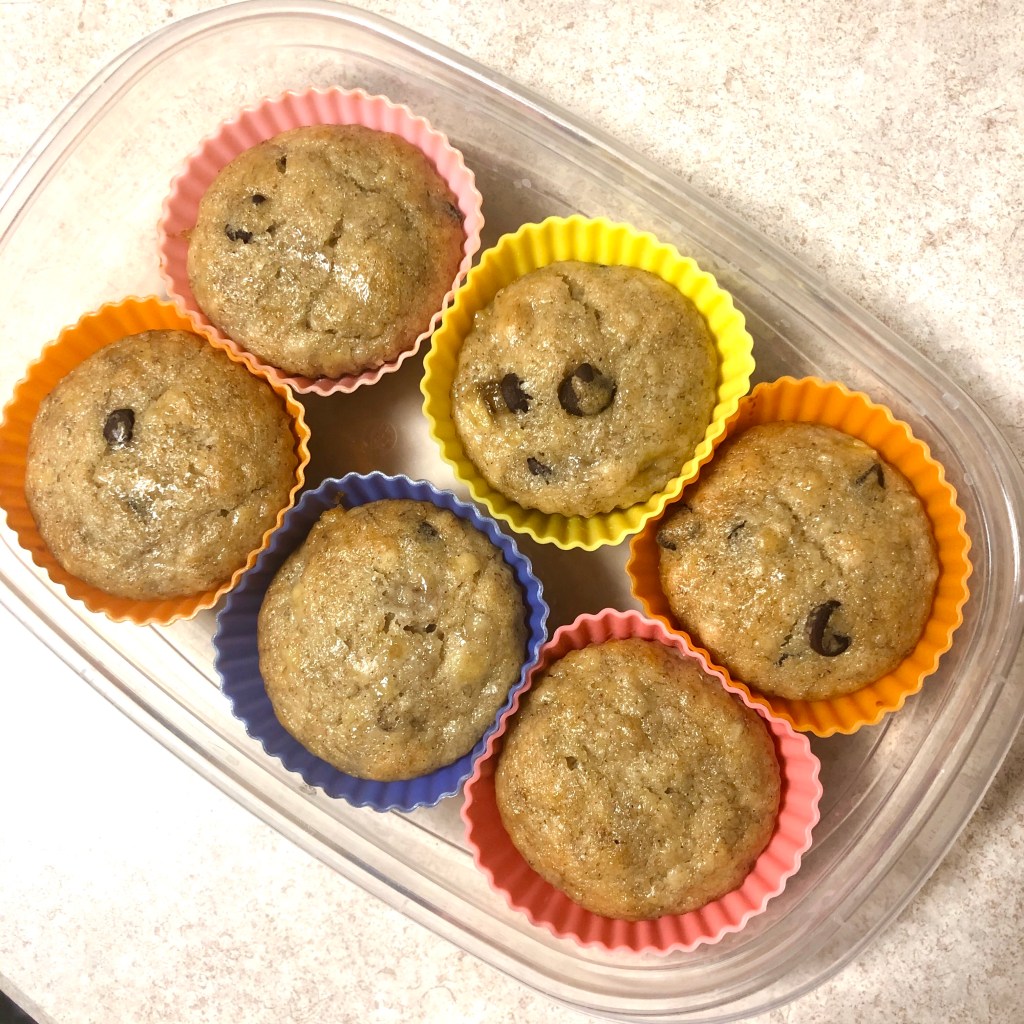
You’ll have to forgive me, but I don’t typically do recipes on this blog, so I don’t even know how to make a “recipe card” thingy.

🤷‍♀️

But here we go anyway….

This recipe is based off “Vegan Banana Chocolate Chip Muffins (Healthy)” recipe from The Simple Veganista which you can read here. I’ve taken this base recipe and modified it to make it simpler [I do this every weekend, ya’ll] and how my kids like it [aka I’ve taken out the word “healthy”].

Ingredients:

  • 3 or 4 ripe bananas
  • 2/3 – 1 cup sugar
  • 2 – 3 tbsp brown sugar
  • 1/4 cup coconut oil (melted)
  • 1 3/4 cup of AP flour
  • 2 tsp baking powder
  • 1/2 tsp baking soda
  • 1/4 tsp salt
  • 1 tsp cinnamon
  • Optional: chocolate chips (as many as you want)

Instructions:

  1. Preheat oven to 350°
  2. Mash bananas in a mixing bowl.
  3. Mix in sugars and coconut oil.
  4. Add the rest of the ingredients to the bowl and mix until just combined.
  5. Scoop into muffin tin [or muffin liners] until 3/4 full.
  6. Bake for 20-25 minutes. [Mine are always done at exactly 22 minutes.]
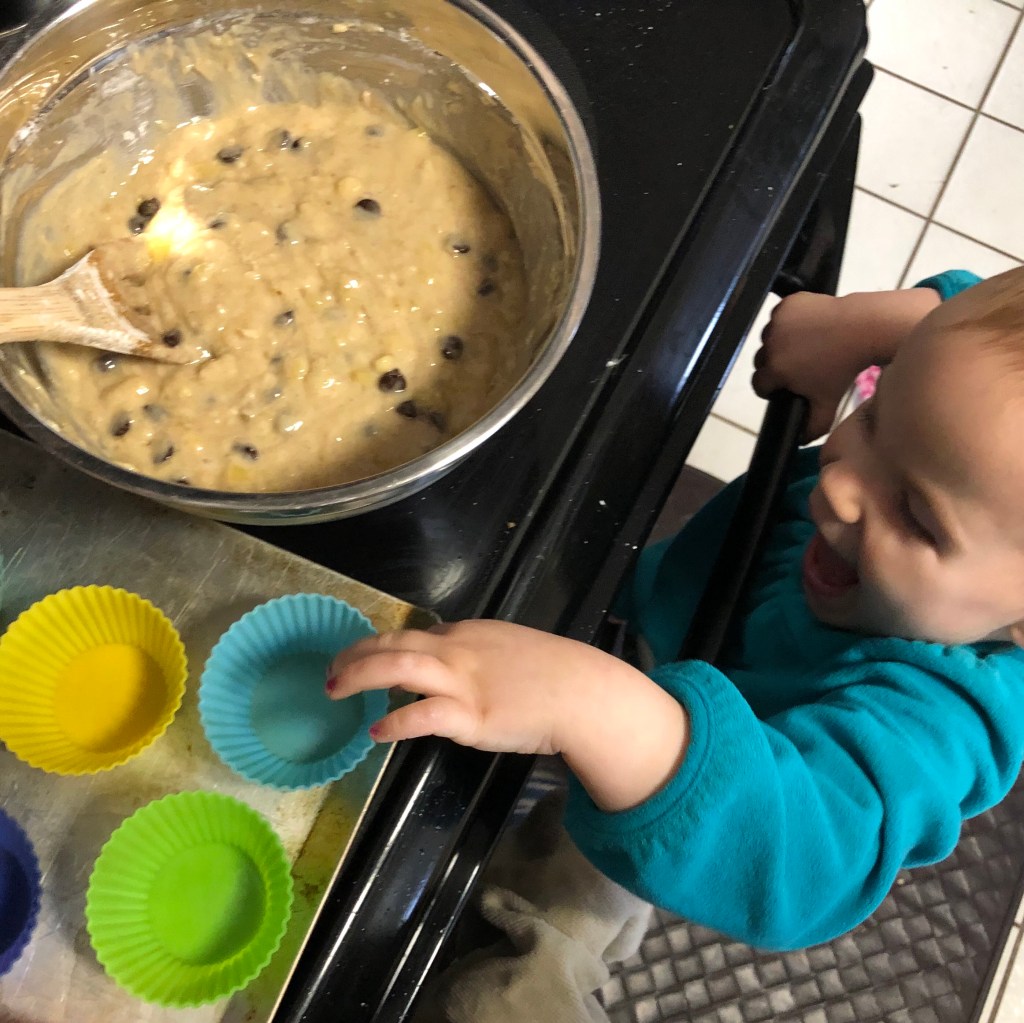
And that’s it!

I love this recipe because it doesn’t require any funky vegan stuff like flax eggs or vegan butter or even non-dairy milk. Of course, I usually have all these things on hand anyway, but this is a totally accessible recipe for everyone and [dare I say it] it’s even better than any traditional banana muffin recipe I have ever made. Even Brett said so!

Give it a try and let me know if you agree!

Happy Baking!

👩‍🍳 👩‍🍳 👩‍🍳

Karis

[Nearly] Zero Waste Kitchen: Three Ways to Use Vegetable Scraps

[Nearly] Zero Waste Kitchen: Three Ways to Use Vegetable Scraps

Composting is fundamental to a zero waste lifestyle, but my goal is to use as much of the vegetable as possible before tossing what’s left into the compost bin.

So, today I’m sharing three ways I like to use vegetable “scraps” that usually get tossed.

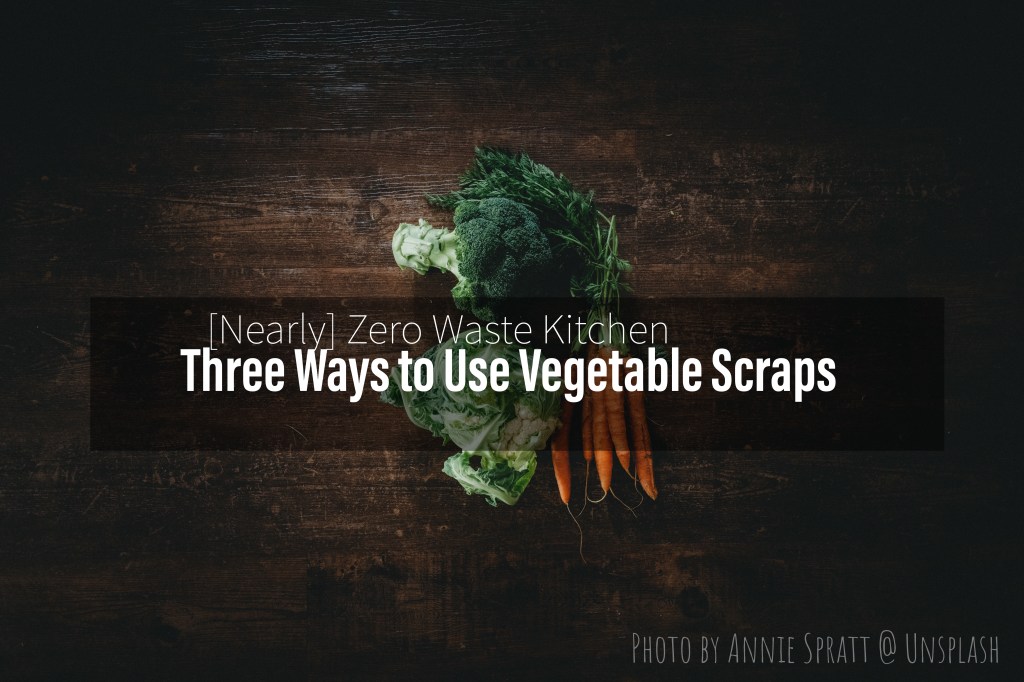
Pictured above is a recent Misfits Market produce delivery that I received. In order to create as little waste as possible, I used the broccoli stems for a salad, carrot tops for pesto, and the rest of the scraps for vegetable broth.

Broccoli Stem Salad

Poor broccoli stems. People like them even less than they like the rest of the vegetable.

☹️

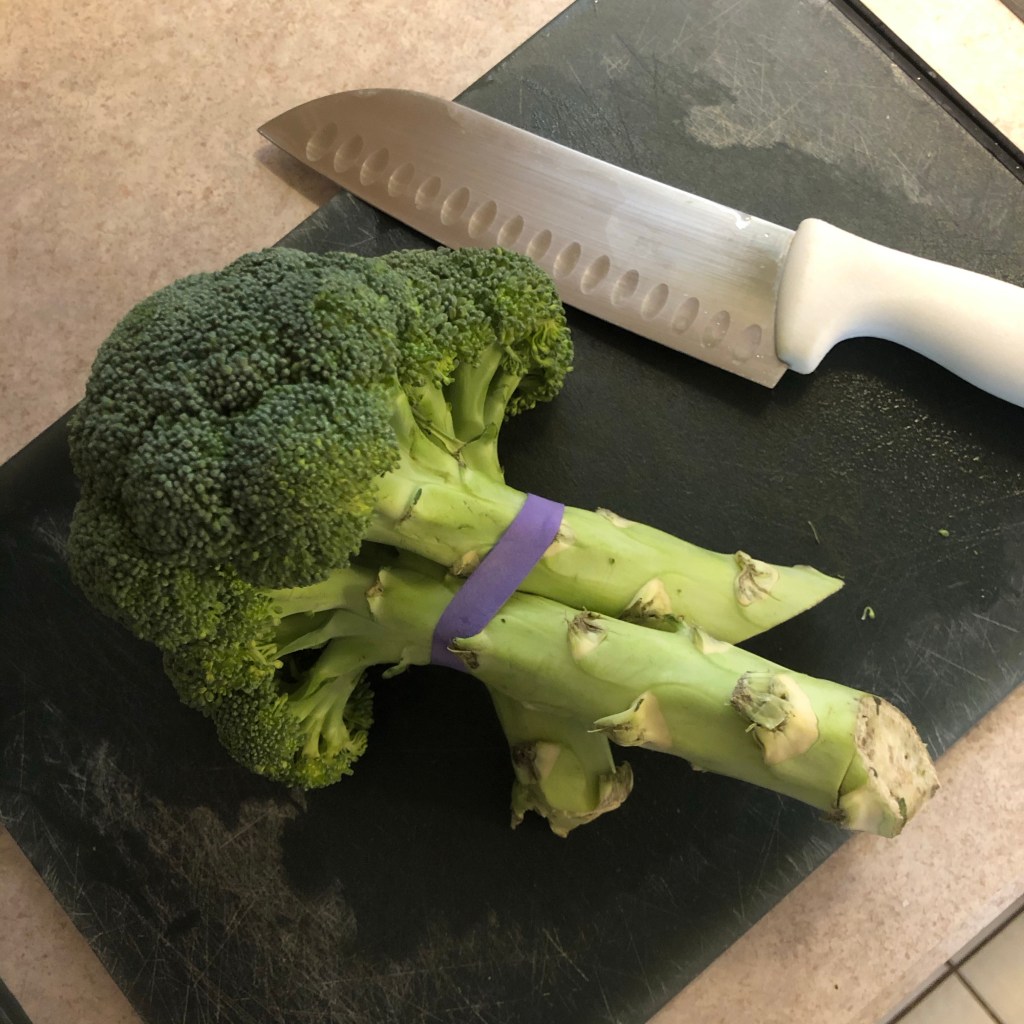
Broccoli stems are perfectly edible, but they often get thrown out because they are woody and not as appetizing. Nowadays I will steam them with the rest of the broccoli, but [don’t tell anyone] I used to compost them because I don’t like them as much as the florets.

Then a girlfriend of mine told me about spiralizing the stem and using it in a salad! What a great idea!

All you need is a spiralizer to add broccoli [a superfood, by the way] to your salad. I have a small handheld spiralizer that I use frequently for small veggies [pictured below].

And a countertop spiralizer, which I don’t use as often, but it perfect for spiralizing big things like heads of cabbage, sweet potatoes, etc.

Carrot Top Pesto

I love making my own pesto! Besides being delicious and a great sauce or dip, pesto can be infinitely customized. I make mine vegan and throw in whatever greens I have. A traditional pesto uses basil; however, [nearly] any green will work.

Vegan kale and carrot top pesto

When I have carrots, I throw the green tops into pesto along with whatever other greens I’m using, usually basil, kale, spinach, or a mixture of them.

[Side note: if you buy your carrots without the tops, likely someone else is throwing them into the garbage, so try to buy carrots in their full form.]

Vegetable Broth

My produce order produced a lot of scraps – the ends of the zucchini and green beans, the leaves of the cauliflower, carrot peels, Brussels sprout stubs, etc. I take all of these loose ends and save them in a reusable bag in my freezer.

When the bag is full, I pour it all in my stock pot and simmer for…as long as I can. Then strain, pour in jars, and save in the fridge.

This is a no-brainer, but it still took me until recently to get into the habit of saving my scraps for vegetable broth. Now, I always have either some jars of broth in the fridge or a stash of scraps in my freezer.

👍

Anyway, hopefully these are some ideas to help you reduce waste! Any one else have creative ways to use vegetable scraps??

🥕 🥕 🥕

Karis
Another Reason to Be Vegan [and possibly the most compelling yet]

Another Reason to Be Vegan [and possibly the most compelling yet]

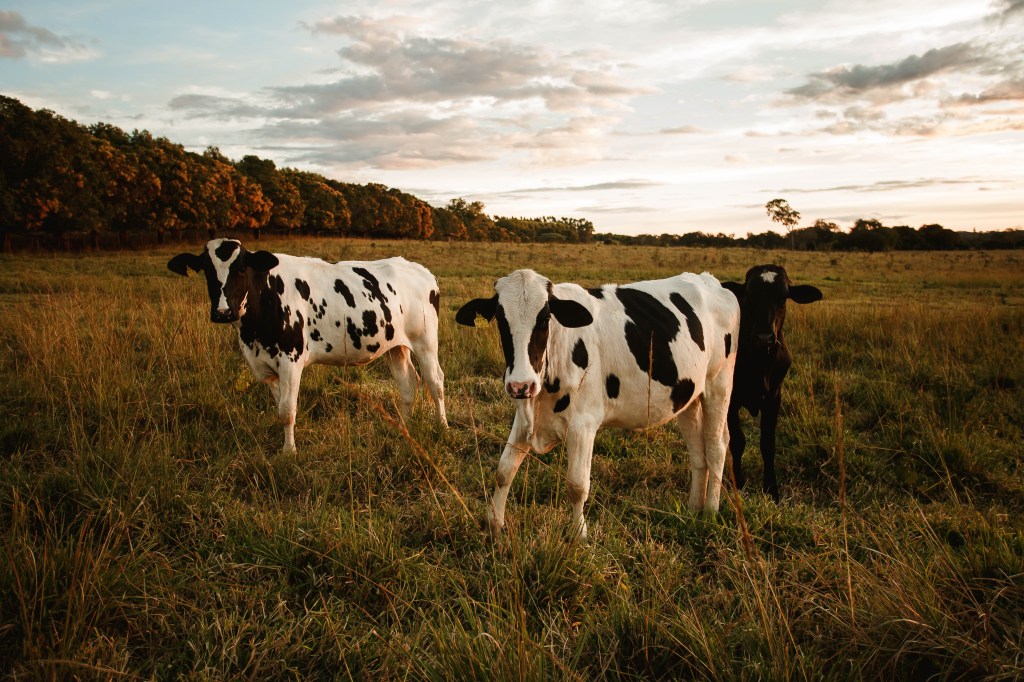
If you’ve been imagining that the cow you are having for dinner lived something like the cows pictured above – you are wrong. While there are an extremely lucky 1% of animals who get to graze freely on beautiful fields, that is not even close to the story for 99% of animals that feed the human population, which are found on factory farms [according to USDA data released in 2019].

I’m sure many people choose veganism because they don’t want to eat animals, but until now, I was not one of them. I became a vegan last year because of the damage the meat industry is doing to the planet, and for health reasons, and because I feel like crap when I eat animal products. [You can read more about why I went vegan here.]

Don’t get me wrong – I struggle with all the usual ethical questions where animals are concerned: Should we keep elephants in zoo enclosures? Should we euthanize dogs with cancer? Should we flush the goldfish down the toilet? I am an animal lover. But since I didn’t believe that it was morally wrong to eat animals, I never bothered to ask what the moral implications are of eating meat, least of all when I was in the grocery store perusing shelf after shelf of it – all pink and processed and neatly wrapped and not at all resembling the actual animal it came from.

All that changed last month when I read Jonathan Safran Foer’s book, Eating Animals, and was enlightened about what animal agriculture in America looks like today. As it turns out, eating animals is an extremely moral issue, not because it is wrong to eat animals, but because of the way in which animals are treated in the process.

Spoiler alert: It. Is. Horrifying.

Anyone with half a heart would be appalled at the circumstances in which 99% of the meat and dairy in this country are conceived, raised [if you can even call it that], and slaughtered.

Seriously, I had no idea [or maybe I had an idea, but chose not to think about it]. And I’m assuming since I was in the dark [or willfully ignorant], that other people are too.

Since finishing the book, I have been doing even more research about the meat industry and, let me tell you, it is all bad. I learned about the lies surrounding the “free-range” and “organic” meat and egg labels, the standard process of killing baby pigs by bashing them against the concrete floor and sending unwanted chicks into a grinding machine [macerator] while fully conscious, how we’ve genetically modified animals to grow so big they can barely walk and some can’t even reproduce naturally anymore, about abuse in the form of violent beatings, death during transport, inhumane living conditions, and even how this type of high yield farming produces pandemics like the one we have been experiencing for the past year.

As a consumer, I share in the responsibility for how animals are treated in order to serve the world’s ever-increasing demand for cheap meat. It’s true that animals are not humans, but it is without a doubt morally wrong to treat animals the way factory farming does. Animals should not be brought into this world only to suffer miserably while they are alive and then experience grotesque, painful and premature deaths.

Is eating meat worth that?

I personally don’t want any part in that system of abuse. Of course, I had already decided to be vegan, but now I feel even more compelled to educate people about meat production in America – or at the very least, to beg people to ask the hard question: Where did my meat come from?

If you bought meat or eggs or dairy from anywhere other than a farmer that you personally know, with animals you can actually see and pet and smell for god’s sake, then you have most likely paid for an animal’s suffering.

But don’t take my word for it. A quick internet search will tell you a lot about how meat is produced in America. Or pick up Eating Animals by Jonathan Safron Foer, or watch the documentary by the same title that is based on his book. Or watch the twelve minute documentary Meet Your Meat on Youtube. If you make it through that video, I also recommend the 2018 documentary, Dominion, a full-length film clearly showing the ways humans abuse their power over the animal kingdom [warning: it is graphic]. If we eat meat and support the meat industry with our dollars [aka votes], we should know the reality of the system we are supporting.

[There are a lot of workers and companies represented in these films, and while they may bear some of the blame for our modern farming system, it is us as consumers who have demanded more and more meat at lower and lower prices while turning a blind eye to how that is accomplished – essentially forcing the hands of the industry that is trying to feed the world. So we all share that blame.]

Good rule of thumb for eating animals: visit the farm you are purchasing from and make sure that the animals look as well cared for as the ones in these photos. If you can’t do that, then you are more than likely eating morally compromising meat.

We used to go to a local farm to pick up eggs and produce and we could pet the goats and see the chickens wandering all around the farm and the hogs dosing happily in the sunshine. This is where I would buy my meat – of course, I’m vegan, so I’m not buying meat anyway. But ethical meat does exist. We just have to look harder for it, drive further for it, and pay more for it.

But it’s worth it.

Every time you eat you are casting a vote for the type of world you want, and we need more votes for the animals.

🐄 🐖 🐓

Karis
When Life Gives You Snow…[make vegan snow cream!]

When Life Gives You Snow…[make vegan snow cream!]

Many of us have experienced an uncharacteristic snowfall this week, so I thought I’d send out a friendly reminder to turn some of that cold, white powdery stuff into ice cream!

Since moving to southern Illinois last November, I have been bragging about the weather down here, [I mean, it was in the 30s and 40s for most of January!] but I was eating my words when we got hit with an ice storm and then one day later a blizzard and now we have somewhere around ten inches of snow on top of a thick layer of ice.

Fantastic.

On the up side, my kids are LOVING IT. In fact, I just gave up on school work for the past two days because my daughter wanted to be outside all day. [“Snow day” to a homeschooling family is when we skip school work to go play in the snow.]

So this morning [after finishing school work], we made snow ice cream.

I’ve made snow cream many times since my first experience in Mrs. Winters fourth grade class when she marched us all out into the snow and made ice cream for us right there on the playground. [Mrs. Winters was the BEST.] But, I’ve never made vegan snow ice cream before, and I wasn’t certain how it would turn out.

The kids gathered a big bowl of snow [they had very strict instructions not to get yellow or dirty snow], and we mixed in some homemade oat milk, pure maple syrup, cocoa powder, and a pinch of salt.

[This was also my first time attempting chocolate snow cream. I thought it might help the ice cream taste less like oatmeal.]

And it worked!

This is my favorite activities to do with my kids when it snows [mostly because it involves minimal time actually outside].

I think they enjoyed it too. [After all, there’s nothing like ice cream after breakfast.]

Stay warm out there!

❄️❄️❄️

Karis
[Nearly] Zero Waste Kitchen: Sourdough Discard Crackers

[Nearly] Zero Waste Kitchen: Sourdough Discard Crackers

Now that I’ve been on the sourdough bandwagon for a while, I’ve been anxious to find creative uses for the extra sourdough starter I accumulate from feeding it daily [usually called “discard”]. There are lots of ideas out there, but they never interested me much until I stumbled upon the easiest, simplest sourdough cracker recipe EVER. And so, of course, I want to share it with you, on this most special Super Bowl Sunday, because it is a great snack for a game day, for a party day…or for any day really.

Now, I know what you may be thinking, I’ve seen millions of these sourdough cracker recipes! And I totally agree with you. They are all over the interwebs right now – but, I promise you, this is the simplest recipe. I know because after I found this recipe, I lost it and it took me forever to find it again. Every other recipe I looked at had other ingredients like butter, rye flour,sesame seeds, etc. I couldn’t find a single other recipe that just had four ingredients: flour [any kind], sourdough starter, oil, and salt.

So, if you’re going to a party [which you SHOULDN’T BE – ahem, Covid!] or if you’re throwing a party [don’t even THINK about it!], or you’re doing like us, and pretending it’s a special occasion while sitting in your own living room watching the game by yourself, these crackers make a great snack.

If you don’t currently have a sourdough starter, get yourself one! It took me a long time to find one [without ordering one online], but I realize now that I have lots of friends who have them and all I had to do was ask! Sourdough bread is so delicious and simple to make [albeit time consuming] and only requires a few simple ingredients and is quite impressive to serve at your next family get together [after COVID, of course!].

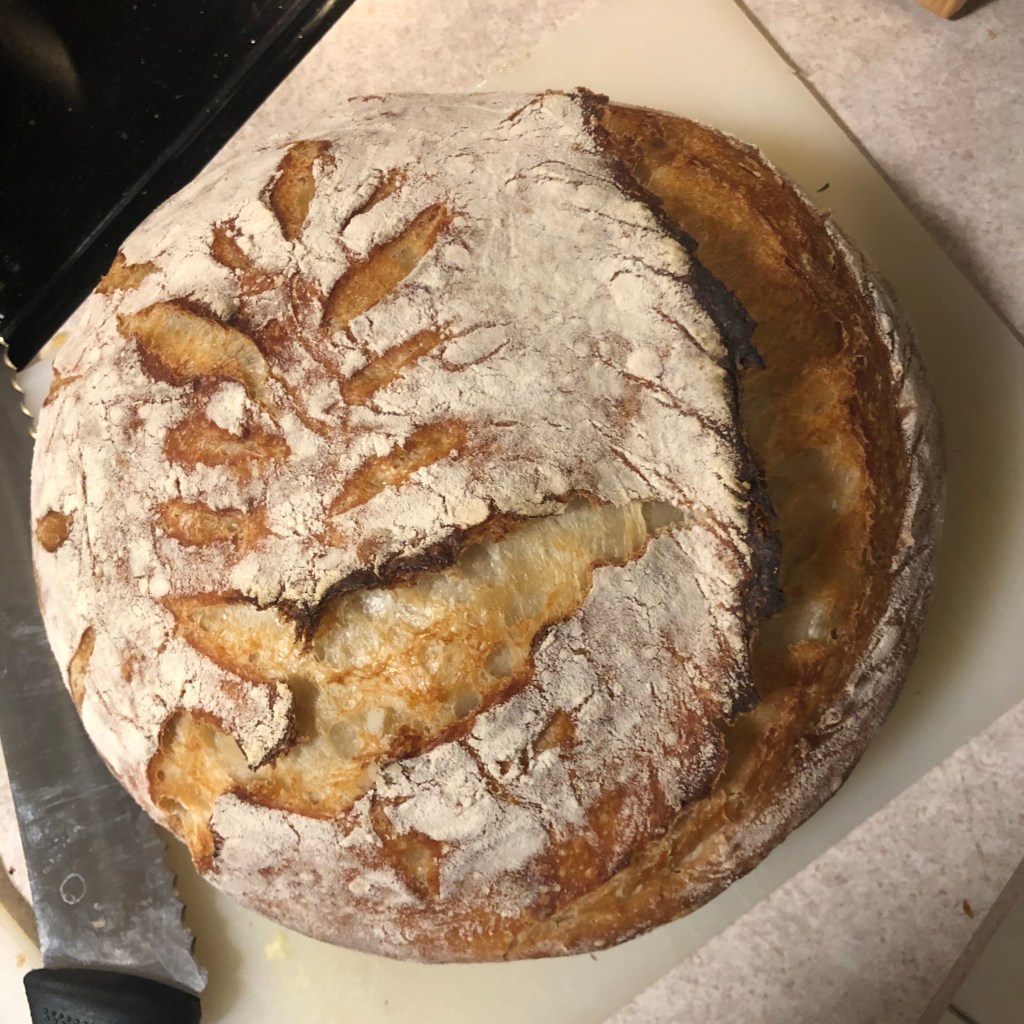
I mean, who doesn’t want to say that they baked a sourdough boule [which is just a fancy French word for “ball”]?

I’ve even started attempting fancy scoring patterns. My latest attempt:

Eh, needs some work….

Anyway, on to the crackers.

The sourdough discard cracker recipe [which seems too simple to even qualify as a “recipe”] comes from Bon Appetit [You can find the original here.]. But I will summarize and add my own tips and modifications for you.

First, combine 1 cup flour [any kind] with 1 cup sourdough starter [ripe or not], 1/4 cup olive oil, and 1/4 tsp salt [or more]. I have used all purpose flour, whole wheat flour and a mix of the two – all with the same delicious results.

Next, mix until the dough comes together and isn’t sticky to the touch. After a few seconds of mixing, the dough becomes smooth and elastic. It isn’t dry, but you can touch it with your finger and it’s comes away clean. This far, every time I’ve made these crackers I have had to add a little bit more flour [just a sprinkle] to get the right consistency.

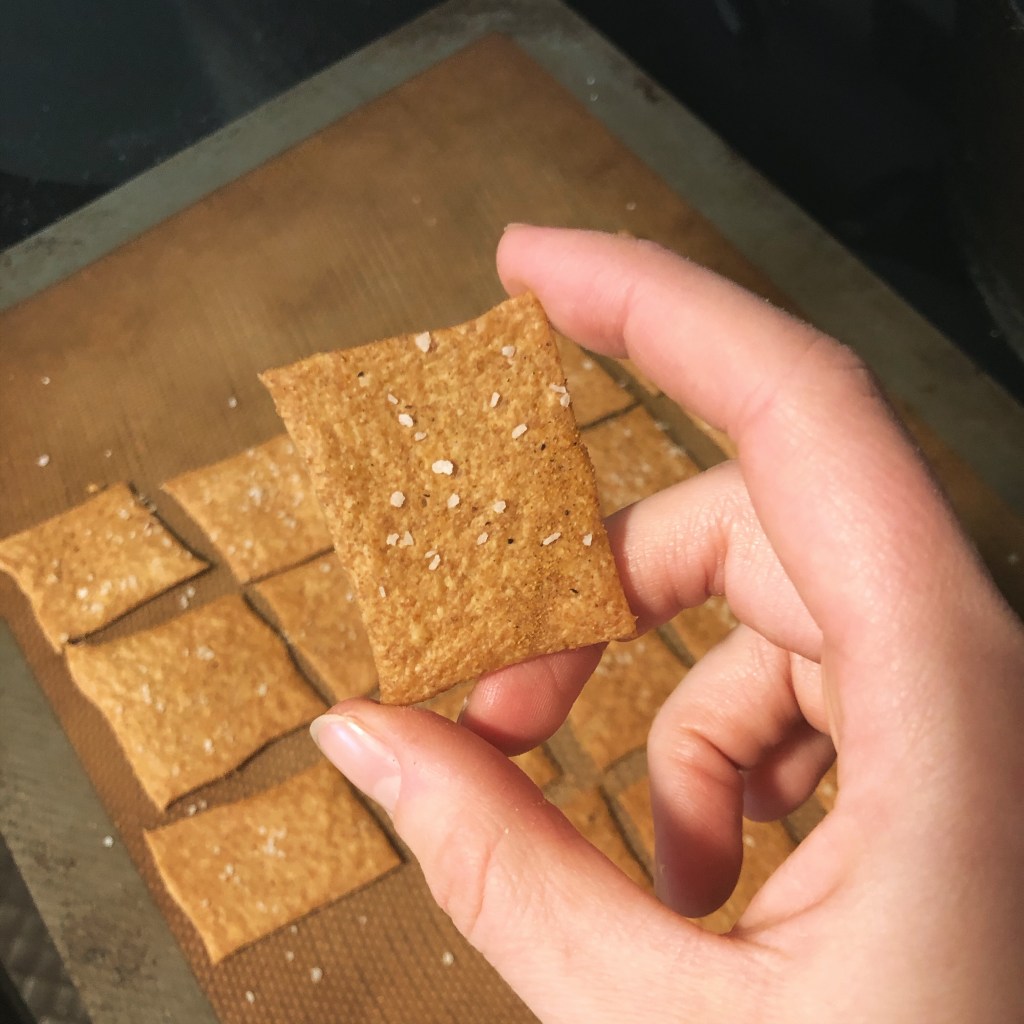
Then, take a portion [I usually pull about a fifth] and roll it out on a silicone baking mat [or parchment paper if you don’t have a reusable baking mat – but then go buy one!]. No flour needed. The dough should not be sticky [thanks to the oil]. I don’t even flour my rolling pin. The key: roll it thin. I roll mine so thin that I can almost see through them. This is important if you want a crispy cracker [and, I mean, who really wants a chewy cracker???].

Next, cut into crackers shapes with a pizza roller, prick each cracker with a fork, and top with salt and/or seasonings. I use a flaky salt or garlic salt.

Finally, pop in a 350° oven for roughly 15 minutes. I put mine in for exactly 16 minutes, but every oven is different, so some experimentation may be necessary. You’ll know when they are done because they will all turn a uniform [and lovely] golden brown.

[Obviously, repeat the last three steps until you’ve used up all the dough.]

👍

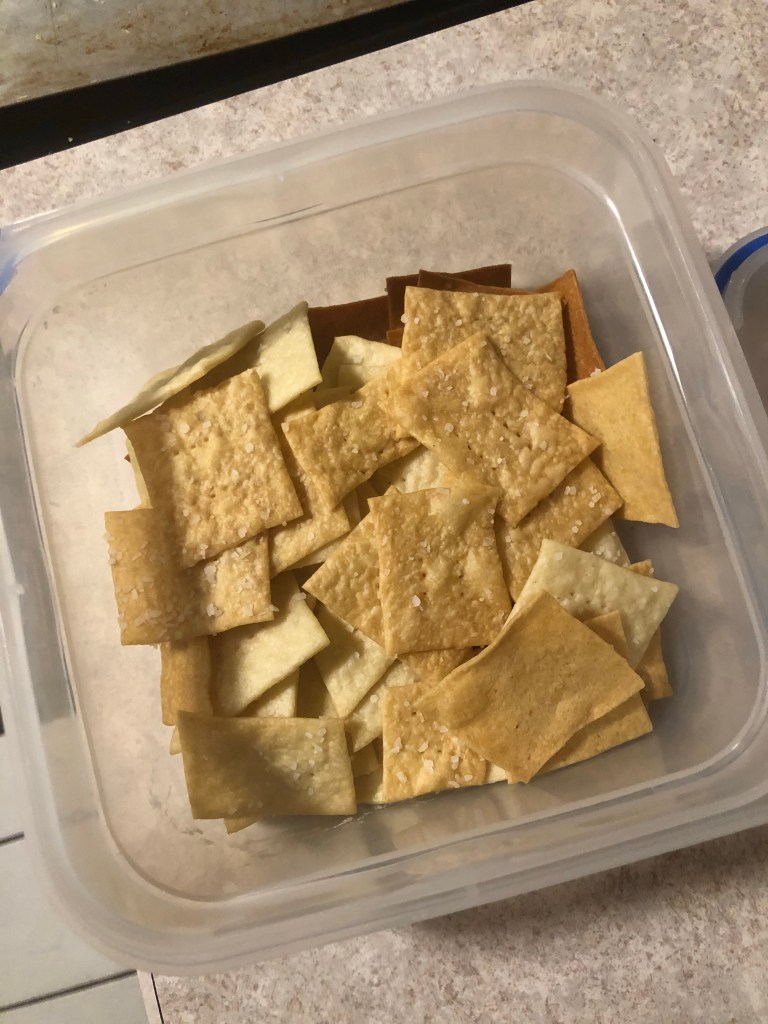
This recipe yields at least five dozen crackers when I make it [usually closer to 100], but I’m not much of a perfectionist, so the sizes are all different and sometimes wonky…so, I don’t promise a certain amount of crackers. BUT I do promise that they will be yummy!

Different colors indicating different baking times, as I experimented with getting the perfect crispy cracker.

Great dips include hummus, guacamole, salsa, peanut butter – or just eat plain, by the handful!

Anyway, I hope you give it a try!

Happy snacking!

😋😋😋

Karis

A Month of Misfits Market [saving the planet by saving produce]

A Month of Misfits Market [saving the planet by saving produce]

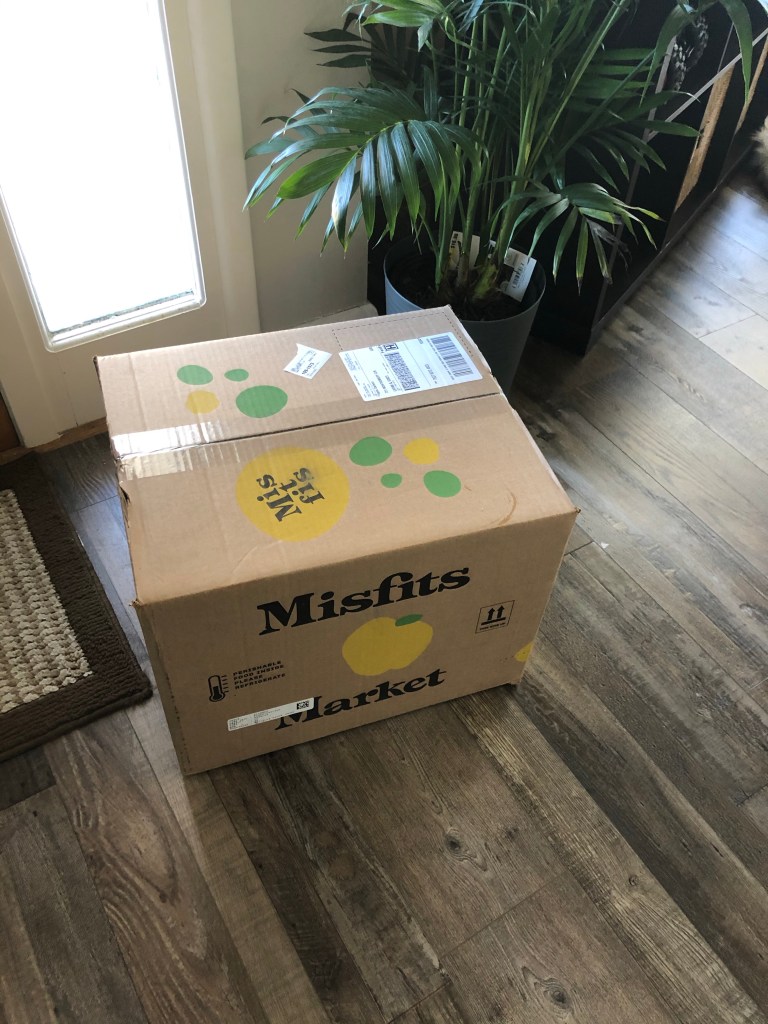
Shortly after moving to our small town in southern Illinois last November, I signed up for Misfits Market, a weekly produce delivery service. Here are my thoughts for those considering using this service.
What is Misfits Market?

Misfits Market rescues organic produce that isn’t fit for grocery stores and ships them at a discounted box rate to customers around the country.

“Every box of Misfits produce you order benefits farmers, helps prevent food waste, and ultimately helps save our environment.”

Misfitsmarket.com

Sounded really good to me, almost too good to be true, so I was a little skeptical. I have heard negative reviews of other similar programs promising to “rescue” produce, but now that I’ve received several orders, I believe that a lot of this produce is, in fact, rescued. I’ve found banana-shaped cucumbers, oranges the size of my head, perfectly round sweet potatoes, plenty of bruised [but perfectly edible] apples, and extra large lemons like this one here:

Of course, a lot of the produce seems to be perfectly normal and fit for any grocery retailer, but then again, I’m not even close to a professional in this area.

They also ship the produce in eco-friendly packaging, which you can read more about here.

[This is one of those businesses that I would like to visit so I can really see with my own eyes what’s happening and, more importantly, how it’s happening. Because if this company is really doing what it says it is, then it’s fantastic and everyone should get onboard!]

Why Misfits Market?

Our town has two grocery stores: a Walmart Supercenter and a local grocer which is mostly salvaged and overstocked goods. Neither option is great for produce on a normal day, but I’m used to our CSA produce from our local farm, so I really wanted to find something comparable down here. Shouldn’t be hard, since this is a farming community…or so I thought. I began searching for local farmers markets or CSAs in the area, but couldn’t find anything open or running during the winter season. I did, however, discover Misfits Market.

As with everything, there are pros and cons. I prefer not to have anything shipped if I can pick it up myself and I have advocated repeatedly for eating local produce, so…I am definitely compromising a little bit. However, eating fresh, organic produce from sources I can trust is my number one priority. And I am committed to shop local for all of our other needs, like pantry items, dry goods, etc.

How does Misfits Market work?

Currently on Misfits Market, there were two sizes of weekly boxes. I chose the larger [called “Madness”] for $35 per week. The box comes with fourteen types of produce, 2-4 portions each. [The smaller box is called “Mischief” and has 12 types of produce, 1-2 portions of each for $22.] The price doesn’t include taxes and shipping and I have the option of adding additional items for extra cost from the “market,” which I have always done because I LOVE Brussels sprouts. So with my add-ons, I have spent $45-50 per week on the box.

Each week, I have a window of two days to make selections based on what is currently being rescued from farms around the country. The items are available on a first come, first served basis. I literally have an alarm set on my phone. I make my selections on Saturday and my box is delivered on the following Friday [I could choose my delivery day from a list of three or four options].

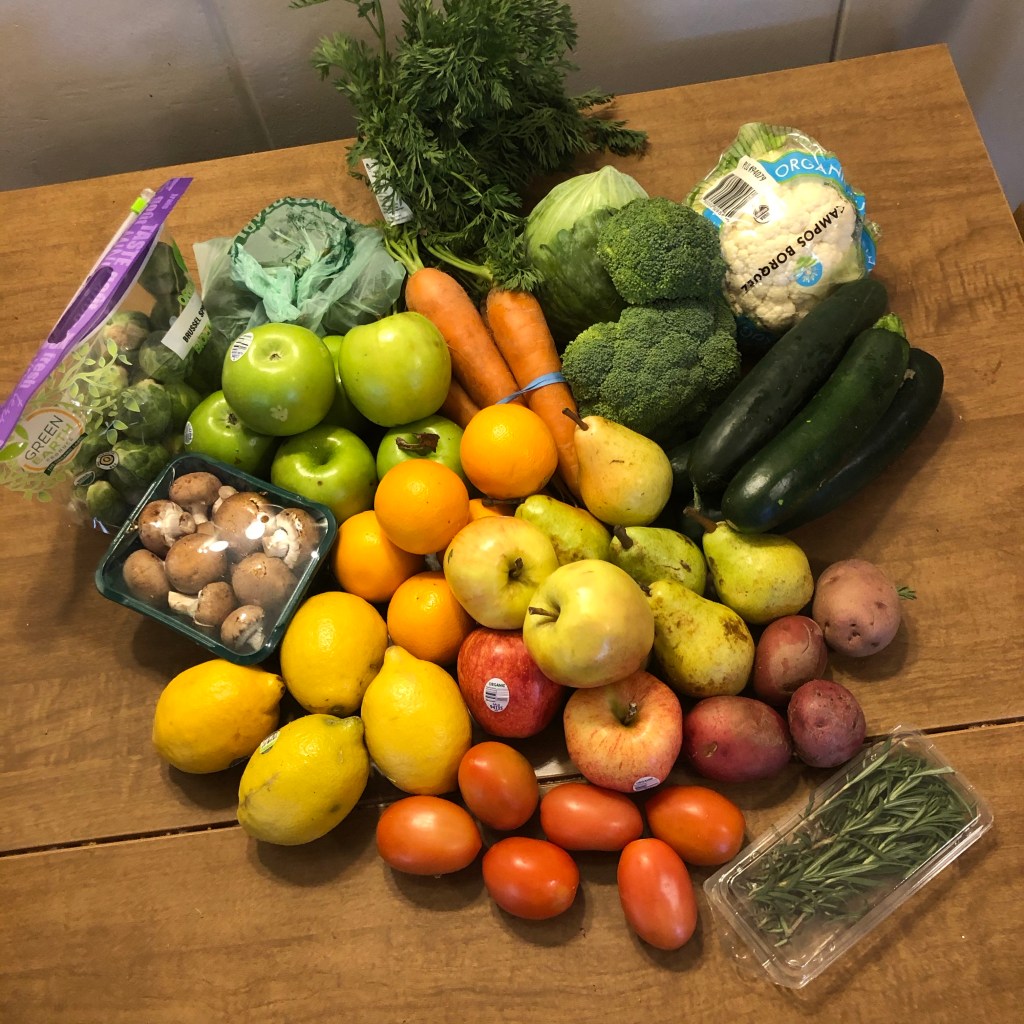
Today was my delivery day, and here is what my box contained.

Looks a lot like my CSA box, doesn’t it? [Except for those pesky stickers on all the fruit and several things still wrapped in plastic.]

What I Like

Overall, I am really happy with the service. My box always arrives on time, it is priced really well, I get to choose the items I want, the food is in season, the produce is all organic, and it comes straight to my door [which is super convenient – I’m a mom of four, don’t forget!]. I can also skip a week, pause my shipments, or opt for bi-weekly delivery any time I want. And my experience with customer service has been terrific [more on that below].

As I said before, I would prefer to find local produce, so when the summer comes I will likely pause my deliveries and return to my absolute favorite store: the farmers market! But, in this case, shipped produce is better than my alternatives.

What I Don’t Like

I’ve had a few problems with things missing from my box. But it is very easy to contact them about a missing item [quick form online] and I was issued a credit within twenty-four hours [no hassle and no fuss].

I’m not complaining or trying to discourage anyone from using this service, but be warned – the quantities can be a little strange. One week I ordered Brussels sprouts and I found six tiny sprouts at the bottom of my box. Another time I ordered spaghetti squash and received four ginormous squashes. Sometimes I get two oranges, and other times I get six. When I ordered lettuce, I got TONS of lettuce. You never know. It’s not really a problem, it’s just unexpected. [Part of the fun, I guess?]

Sometimes the produce is not in great shape. I avoid ordering leafy greens [especially delicate ones like butter lettuce] because they have often arrived soggy and brown. Of course, this is part of the issue with shipping produce, and it is to be expected. Not a big enough problem for me to stop using the service.

Overall, I am really happy with Misfits Market. I recommend it, but I also recommend hitting up local farmers markets, looking for CSAs in your area, and making the decision that is best for you. If you don’t have a local option available to you, then this is a good way to get organic produce for your family AND help cut down on food waste [which is a major problem here in America].

So, it’s a win-win! Eat produce and save the planet!

🥦🍐🥬

Karis

Lessons in Motherhood and Veganism [Do I feed my kids meat?]

Lessons in Motherhood and Veganism [Do I feed my kids meat?]

Now that I’m a vegan, I have to face my own inconsistencies about how I feed my kids.

The Conundrum

For years I was a moderate vegan or “vegan before six,” and I never changed my kids diet. We have always eaten a lot of vegetables, fruits, nuts and legumes anyway. But my kids also got yogurt, cottage cheese, eggs, chicken nuggets, burgers, ice cream and even the occasional macaroni and cheese. It didn’t seem so bad.

Now, however, I’m fully vegan because of my own personal convictions about the healthful, ethical and environmental necessity of a fully plant-based diet – so how can I, with a clear conscience, feed my kids animal products?

[Side note to clarify my statement above: I believe it is unhealthy to eat meat in the large quantities that we do in America, and I believe that it is unethical because our demand for large quantities of cheap meat has caused significant suffering for the animals we consume, and I believe that meat and animal products are the leading cause of damage to our planet. I am not saying that any meat at any time ever is wrong or unhealthy, but rather that in this current time with our current systems in place and our current ecosystems at stake, it is best – even necessary – to be vegan. I wrote in more depth about my reasons for becoming vegan in my post Why I’m Going Vegan [and why you should too]]

I obviously want my kids to be healthy. In fact, I care even more about their health than my own [hence why I hide the junk food for after they are in bed…and maybe partly so I don’t have to share…], so if I believe that Veganism is the healthiest and most ethical way of eating, am I wrong for feeding my kids the traditional American diet of Mac and cheese, chicken nuggets, and go-gurt?

But on the other hand, is it right of me to force them into a vegan lifestyle [purely by omission of all animal products]? Will they feel like they are “missing out”? Will they resent me?

But then again, is it right to raise them to be carnivores? Will they later ask me why I forced them to eat poor butchered animals? Will they resent me?

Do you see my dilemma?!?

Reflecting on this made me think about my own upbringing. I was raised in an omnivorous [mostly carnivorous] family and no one bothered to ask me whether I wanted to eat animals or drink their fluid secretions or not. I was given cows milk from the moment I stopped nursing until…well, milk was a big staple in my childhood home. We consumed at least a gallon per week. Meat was the main component of every meal and ice cream was the dessert of choice after every meal.

So basically, we ate like typical Americans.

And I’m not mad at my parents in the least for feeding me animals. They fed me and I am immensely grateful. But now that I have a choice, I choose not to eat animals, which is different than my family, my partner’s family, and, quite frankly, every other human being I know on the planet […except one coworker once].

Maybe that’s what’s so tough about choosing veganism for my family – it is different, and different is a little scary. Honestly, I don’t mind making choices for myself that go against the grain [I rather enjoy it, in fact], but it’s harder to make those choices for my kids, knowing that my choices will greatly influence their worldviews and their lifelong habits. Even if I believe it’s the best thing to do, I know that it won’t always be received well. [So help me, if I had a dollar for every time someone asked me how I get enough protein…] I know that my kids will eventually realize that they are different and I don’t want to force them to be outsiders.

The Crux

As parents, we make a lot of choices for our kids. I, personally, make a lot of controversial and unpopular choices for my kids [at least in my circles]. So maybe choosing to feed them only plant-based foods will not be any different than my decision to, say, not take them to church or not hit [aka “spank”] them or not circumcise my son or any of the other ways that we choose to do things differently than other families.

What is most important to me is that the choices I make for my kids are intentional, not merely the result of “going with the flow,” not just doing it because everyone else does or because that’s how it’s always been done, and not eating without considering why and where and how and how much and to what end.

I’ve come to discover that eating, like everything else in life, is a moral choice. And what I feed my kids is an even greater moral responsibility.

The Conclusion

So, I am going to switch my family to a vegan diet when we are at home. I am not going to be the meat nazi at restaurants or the rude guests at dinner parties, I promise.

I am going to model healthy eating habits, including not binging on junk food, not snacking late at night, not starving myself, and not eating animal products. I am not going to force my kids to become vegans nor discourage them from eating a wide variety of foods.

I am going to make vegan food delicious and exciting by trying all the recipes and being creative. I am not going to be heartbroken if my kids don’t love being vegan and choose a carnivorous lifestyle for themselves.

I am going to be flexible and course-correct if this plan doesn’t serve my family best and I am not going to be upset about it.

Anyone else rethinking how they feed their kids????

🌱 🌱 🌱

Karis

Only Drink Water for a Year [and other 2021 resolutions]

Only Drink Water for a Year [and other 2021 resolutions]

As we all know, 2020 was a crazy year due to Covid-19, so two of my top goals couldn’t happen [travel out of the country and run a marathon], but I’m choosing to focus on all the things I DID accomplish as a result of my resolutions last year…

I have been studying Spanish every day for 353 days on Duolingo, I switched to buying milk in glass bottles, I swapped my plastic dish brushes for sustainable [and beautiful] bamboo, I got a mealtime routine down for the family, I signed up [and was approved] for kidney donation, I volunteered 24+ hours at my local food bank, and I donated $20k to organizations that are helping vulnerable children all over the world, and I began sponsoring a third child through Plan International.

So resolution-wise, it was a pretty good year.

Since it doesn’t appear that Covid is going away anytime soon, I have decided to really scale back my resolution list this year. In 2021, I want to focus on my family, my health and my efforts to end the water crisis.

That’s it. Just three things.

Of course, I have sub points within each of those things…and maybe some bullet points under each sub point. [What can I say? I’m goal-oriented!]

My Family

First, Brett and I have decided to start spending intentional one-on-one time with each of our kids. Since we have four kids and they are all close in age, it’s easy to always group them altogether, or allow some siblings to receive more attention. All of that is totally normal, but I want each of my kids [especially want my middle kids who are quieter and more emotive] to have my undivided attention at times.

The plan is to take turns enjoying special one-on-one time with one kid a week. That’s as far as I’ve planned at the moment.

Second, I am going to dedicate more time to walking my dog. Our new yard is not fenced in so she doesn’t have the space or freedom she used to enjoy, so she really needs regular exercise – and I need to get out of the house every day, for my sanity’s sake.

Third, I want to improve the health of my family by switching to mostly vegan but 100% vegetarian meals in our home. I don’t eat animal products in part because I am thoroughly convinced that they are not good for us [at least not in the quantities we eat them] and because I believe that the morality of our current meat industry is sketchy at the very best. And I’ve come to realize that if I won’t eat meat because of health and ethical issues, then I certainly can’t feel good about feeding them to my kids.

Now don’t go off on me just yet. I will write about this internal [and external] struggle I’ve been dealing with in a post later on to fully explain myself.

[As a side note, I – with the help of Darin Olien’s book SuperLife – have convinced Brett to eat vegetarian/vegan. This is a HUGE win and required quite a bit of coaxing and maybe some bribing but really allows me to change the eating habits of our entire family now that he is on board.]

My Health

As a health and fitness fanatic, healthy goals are always on the list – usually things like improve flexibility and run a marathon. This year, I want to tackle healthy eating. I am generally a very healthy eater, and now I’m also a relatively new vegan; however, I still tend to be an emotional eater and a late night snacker [even tho I’m snacking on healthy foods, it’s still a bad habit]. These two things have to stop. So my first order of business is to get a handle on these bad eating habits.

Second, I’m going to do more research on healthy eating. I want to read several books on nutrition that have been on my list for a while and research controversial health topics like organic produce and current trending diets [keto anyone?]. I’m also going to be studying the ethics of what we eat. I spent the last few years realizing that what I spend my money on is a moral issue, and what clothing I wear is a moral issue, and what I put in the trash is a moral issue, and now I realize that what I eat also has moral and ethical implications.

Third, I’m not going to drink anything but water for one year. Truthfully, I don’t usually drink a whole lot of other beverages – just a few cups of coffee every morning and mimosas on holiday mornings and a glass of wine on the weekends and sparkling waters when visiting friends and an occasional cocktail on dates with Brett – so this should be a breeze.

😬

But I’m excited to see what it does to my health. After only a few days I can already tell that I am much more hydrated.

My reason for this water only year is not just for my health…which brings me to my last resolution for the year.

Ending the Water Crisis

One of the most impactful quotes I read last year was from Peter Singer’s book, The Life You Can Save, which says:

“If you are paying for something to drink when safe drinking water comes out of the tap, you have money to spend on things you don’t really need.”

I wonder how many times in my life I said I couldn’t afford to give money to a cause, while freely spending money on beverages that I don’t need [and are bad for my health to boot!].

So, this year, I’m only drinking water. Not only that, I’m only drinking free water. This water bottle is basically my new best friend. And all the money I save will go to help fund water projects around the world for the 700+ million people who don’t have access to clean water [through Charity:Water].

I’m also going to be researching water waste and trying to waste less water in my home by changing some of my habits [cutting back the shower time, running the washers less, catching rainwater for watering plants, etc].

Assuming we don’t have a repeat of 2020, this list seems totally doable [I’m going to go knock on wood].

I hope you all set goals for the year or at least are putting last year behind you and looking ahead with positivity! [Just don’t watch the news…]

I’m a week late, but Happy New Year!

🥳🥳🥳

Karis

Veganism and Dining Out [or ordering in]

Veganism and Dining Out [or ordering in]

As promised in my last post [Simplifying Veganism], I’m back to talk about how I eat at restaurants as a vegan. There are already plenty of good resources out there that provide vegan restaurant lists and menu modifications for popular restaurants [like this list of Vegan Restaurant Options by PETA] so I won’t rehash specifics. [BUT, did you know that Olive Garden breadsticks are VEGAN?!? That’s not real butter, folks!!!! See? Being vegan ain’t that bad!]

Instead of specific lists or menu options, I just want to share how I go about figuring out what to eat at restaurants – something that might be considered a stressful experience for many people.

In order to eat vegan at restaurants, I follow a three-step plan, which goes as follows:

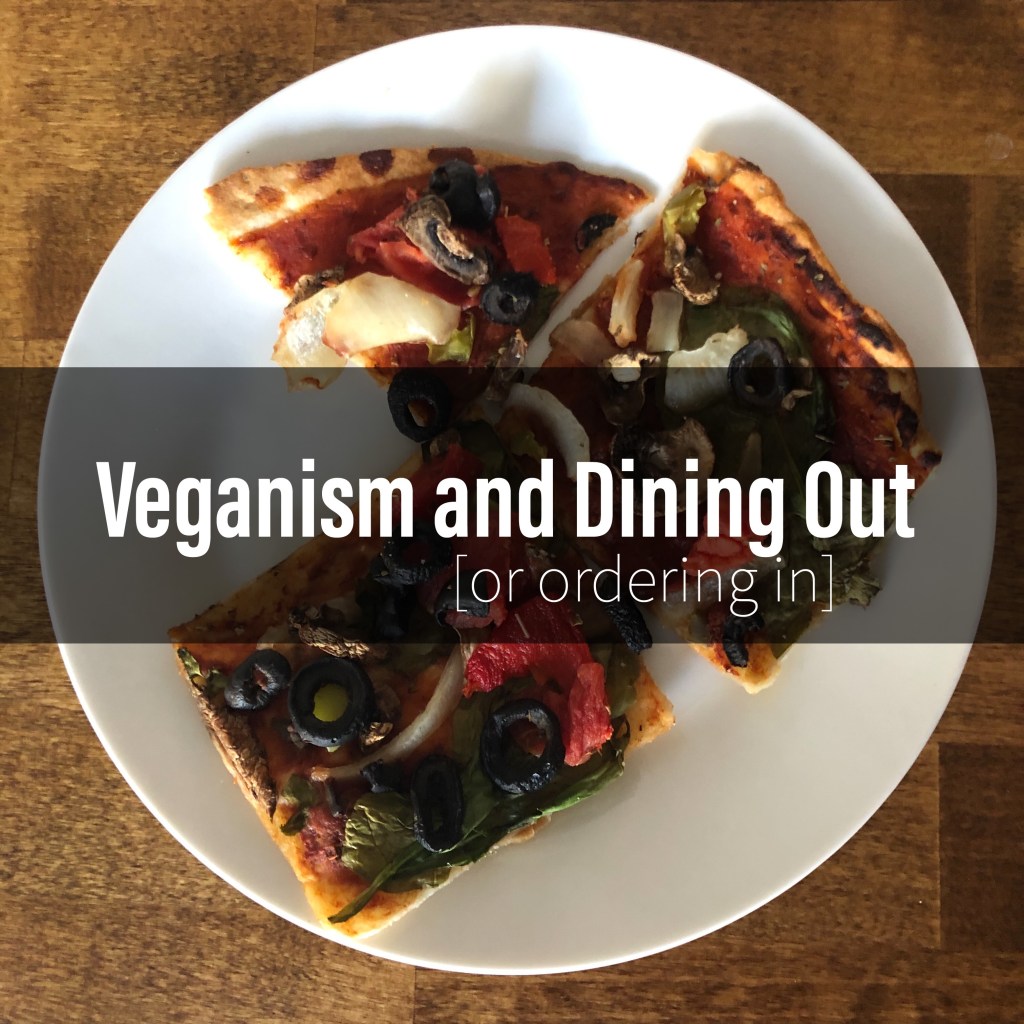
1. Plan ahead. This is rule number one for eating healthy in general, so I’ve been practicing this for years. Before I go to a restaurant, I look up the menu and make a choice before getting seated and seeing all the pictures of spinach and artichoke dips and bacon avocado burgers. If there aren’t any vegan menu items, I begin to look for ways I can alter meals to make them vegan. For instance, pizza usually becomes vegan by opting for no cheese, which may not sound like pizza, but is a super satisfying way to partake in family pizza night – and get your fill of vegetables. [My kids like my vegan pizza as well!]

Thin crust pizza with no cheese and all the veggies from Papa Johns.

[Side note: we LOVE making homemade pizzas and a while back we started making a salad pizza, which is basically just salad on top of baked pizza crust and it is DELICIOUS! Though I suspect it should technically be classified as a flatbread, it is a great way to feel like you are eating pizza, even when you’re not.]

2. Try to find a vegan-friendly restaurant. These little up-and-coming gems need our support, so if it’s in your power to choose the restaurant, go for the cute vegan shop on the corner. If you, like me, have nothing but Pizza Hut, Dairy Queen, and McDonalds at your disposal, then just move on to step number three.

3. Get Creative. One night my husband and I had a rare opportunity to go out without the kids [!!!!] and we wound up at Applebee’s. Turns out the only things that are vegan at Applebee’s are the French fries and the wedge salad [without the dressing, of course, which pretty much just makes it a wedge of lettuce]. So, I ate French fries.

Let’s clarify a common misconception while we’re on the topic. Being vegan does not equal healthy. Yes, it does avoid a lot of unhealthy foods, but there are still plenty of unhealthy foods available for vegans. For instance, sugar is vegan, margarine is vegan, skittles and starburst are vegan, French fries are vegan, Haagen Daz dairy-free ice cream is vegan and absolutely AMAZING, but also most definitely not healthy in the least. And did I mention, Olive Garden breadsticks are vegan?!? So clearly, vegan and healthful are not synonymous.

Now, back to the Applebee’s French fries…

That night, I learned a valuable lesson about the importance of steps one and two. However, I also learned that you can always find something vegan or ask for something to be made vegan.

Here are some of the ways I find vegan options at restaurants [organized by cuisine type]:

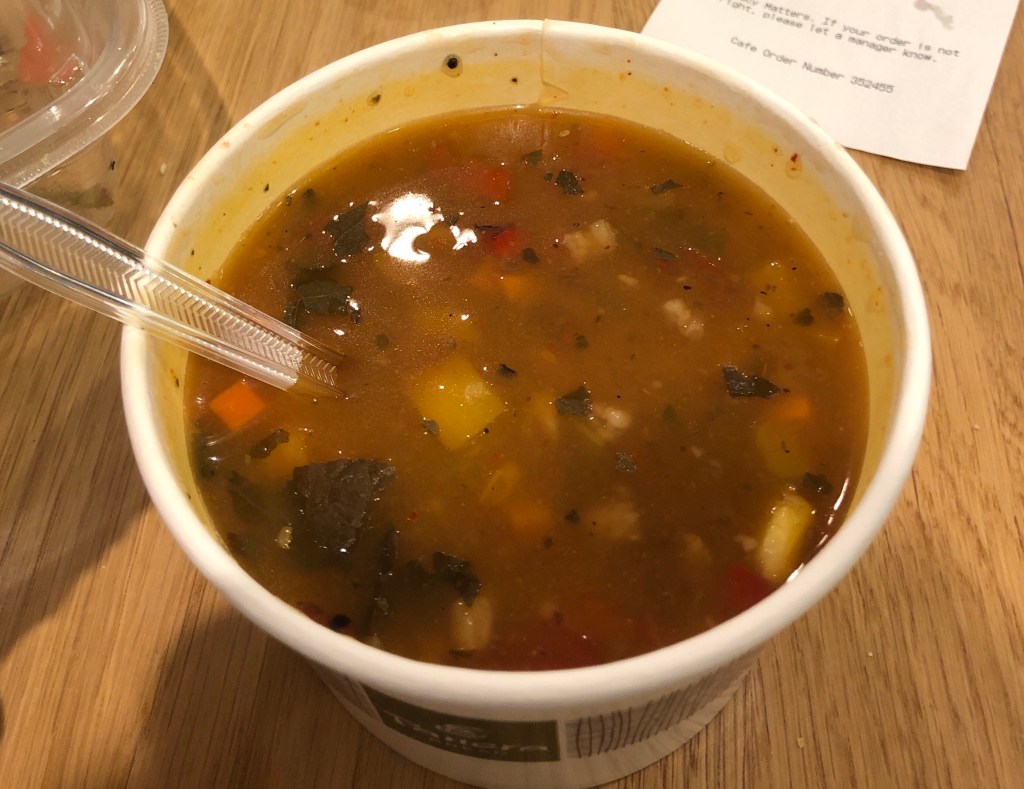
Soup and sandwich shops like Subway and Panera and Jimmy Johns are great for vegans. Pretty much every sandwich shop nowadays has a vegetarian option and usually all you have to do is ask for no cheese and you’ve got a vegan sandwich. Vegetable or bean soups are also usually vegan.

I’m currently in LOVE with Panera’s vegetable soup! [And the Greek salad without the feta cheese.]

Mexican restaurants are really good choices because Mexican foods are easily made vegan by swapping beans for the meat and holding the cheese. I LOVE Mexican food and I am SO GLAD that I can go to pretty much any Mexican restaurant and order a vegan taco loaded with beans and vegetables and spicy salsa and guacamole mmmmm yum! And the chips are usually vegan too. [Always check, of course.]

Sushi and poke bowl restaurants like Poke Bros and Wok ‘n Fire have vegan California rolls or create your own options that can be easily made vegan.

Pretty much any pizza place as I’ve already mentioned can easily make a vegan pizza by holding the cheese. Most pizza places have vegan crusts and marinara.

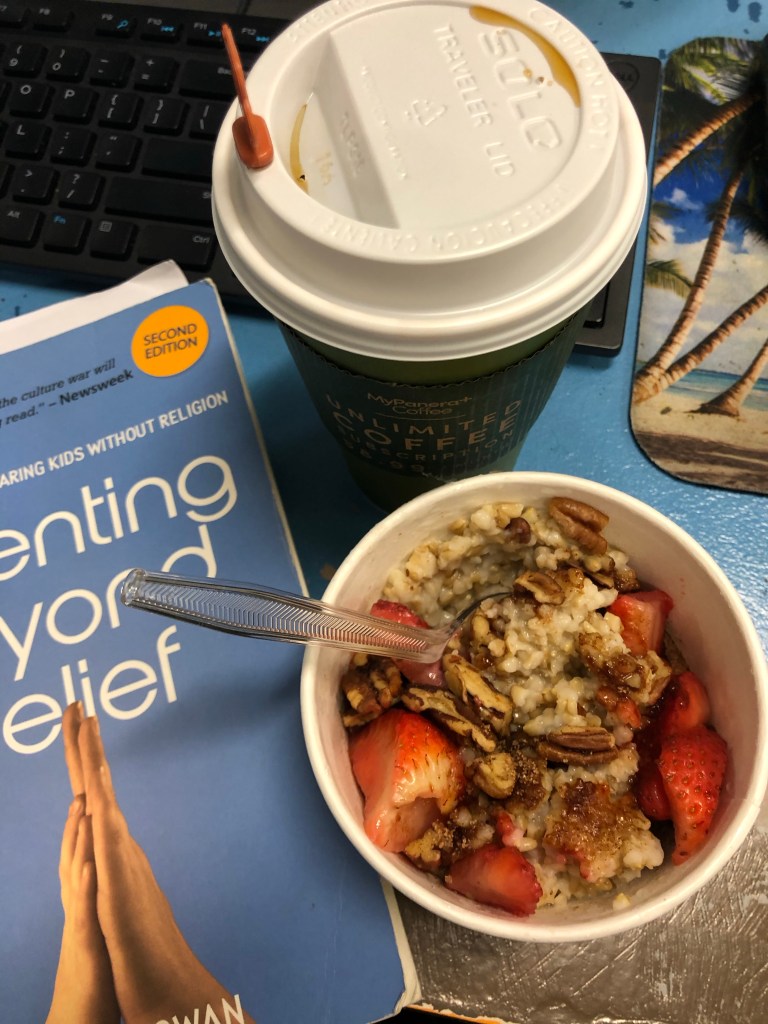
Breakfast and brunch restaurants usually have oatmeal as a menu option and bagels are also usually vegan [pass on the cream cheese obviously].

Breakfast from Panera

[Another side note: pancakes and muffins and quick breads can very easily be made vegan and while my kids and partner are not vegan, it doesn’t hurt them to eat that way so I have switched all my baking over to vegan recipes – and, you may be surprised to hear that Brett has given glowing reviews of my vegan banana muffins calling them the best I’ve ever made! I’ve also switched my kids to almond or oat milk for cereal in the mornings – which they only get on weekends – because they can’t even tell a difference!]

American restaurants often have a veggie burger available, but if not, salads sans cheese and meat and with a vegan dressing is a good option. Also, there are typically vegetable sides that are vegan – plate of steamed broccoli, anyone?

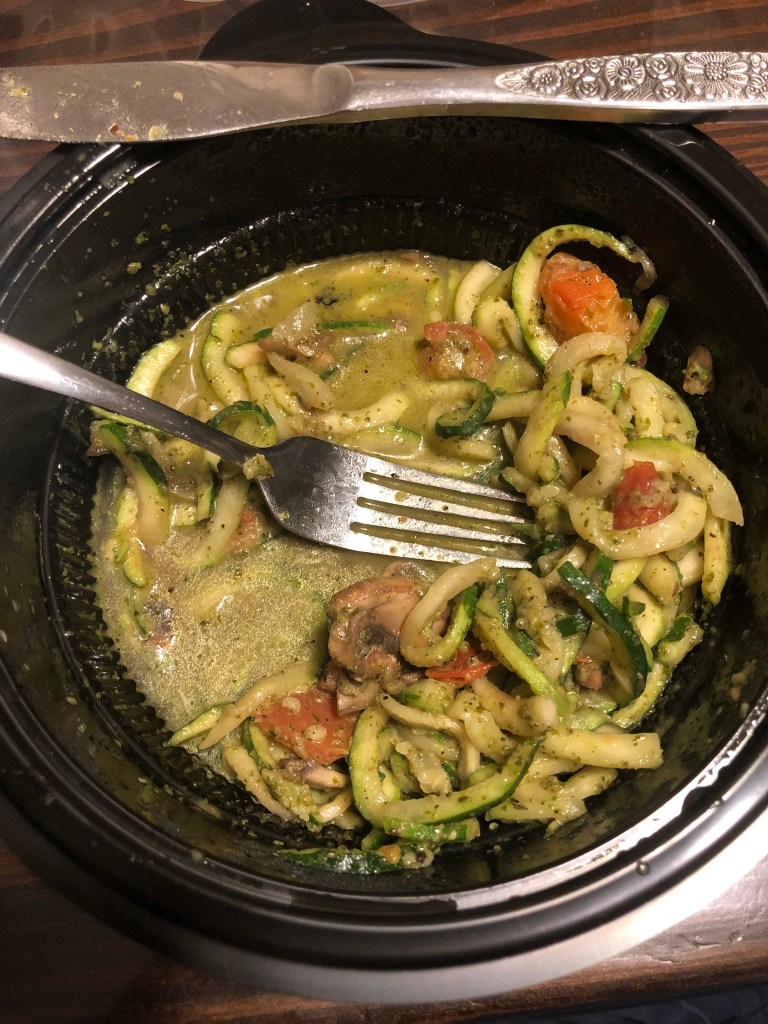
Pasta and Italian restaurants are easy to eat at because noodles and marinara are typically vegan. Pass on the cheese and the meatballs, but enjoy a filling plate of spaghetti. Of course, I wouldn’t constitute that as a very healthy meal, but it is vegan. I love that Noodles and Company has started offering zoodles [spiralized zucchini noodles] in place of traditional spaghetti for the more health-conscious people like myself. I would much prefer a bowl of zucchini over a bowl of refined carbohydrates.

Pesto zoodles from Noodles and Company. Warning: zoodles get juicy

So, that’s my simple plan for eating vegan out [or, thanks to covid, ordering in].

Stay tuned for a post about what I eat at this years Thanksgiving gathering with my carnivorous in-laws.

#savetheturkeys

Gonna need some vegan wine!!!

🍷 🍷 🍷

Karis

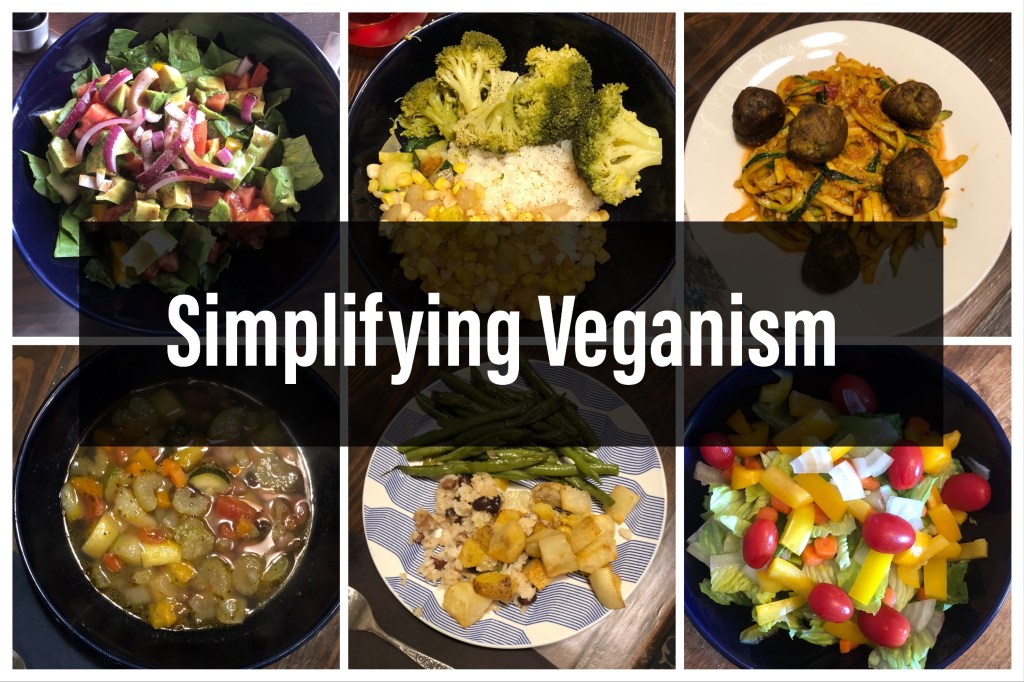
Simplifying Veganism

Simplifying Veganism

When I first tried a vegan diet, about two years ago, I began by searching for vegan recipes on Pinterest. The results were disappointing – tofu nuggets, cauliflower Alfredo, eggplant lasagna, and vegan “crab” cakes. Turns out that a lot of the vegan food out there is just a creative twist on a classic. But I wanted to be vegan without having to go to the grocery store and fill my entire fridge with vegan versions of all the foods I used to eat. I didn’t want to eat processed foods that came packaged in a box or freezer bag.

I wanted to eat food that was simple and natural, not complex and unusual.

[I actually already wrote about this back in March when I posted tips for simple plant-based meal ideas: [Nearly] Zero Waste Kitchen: Plant Based Meals.]

Then last month I decided to go full-fledged vegan [which I wrote about in Why I’m Going Vegan [and why you should too]] and now I’m going to show you what being vegan looks like for me.

[Next week, I’ll be sharing how I’ve been managing to eat vegan while dining out – which originally seemed like such a daunting task I didn’t even want to go out to eat, but now I’ve come to enjoy the challenge – and the food.]

Being vegan for me looks a lot like A Week of My [Nearly] Vegetable-Only Diet, which I have written about several times and continue to be my most viewed posts on this blog.

Vegan Breakfast

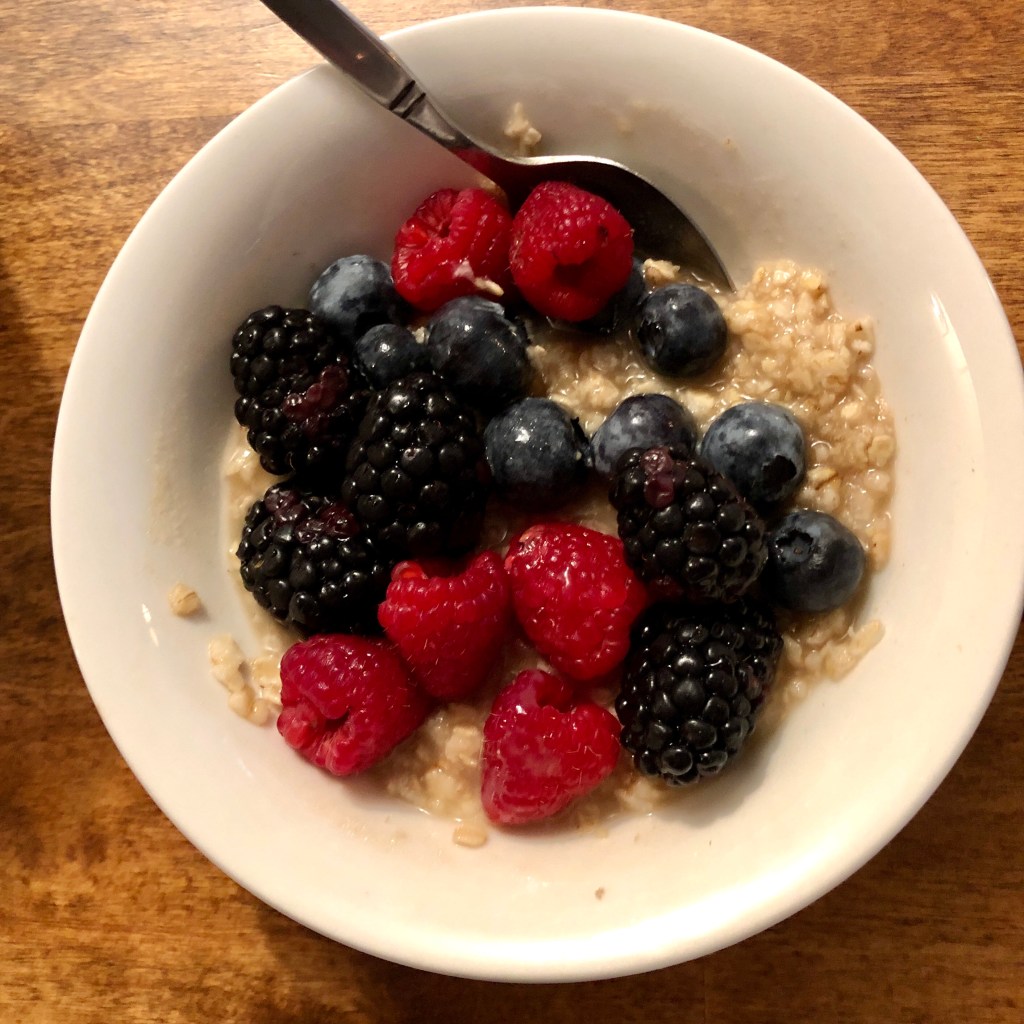
I’m still eating oatmeal every morning. I just love oatmeal! Ever since I took control of my health [twelve years ago now – sheesh!], I’ve been eating a quarter cup of oatmeal with fresh fruit and a teaspoon of brown sugar and cinnamon for nearly every breakfast. There are exceptions of course, but I have consumed A LOT of oatmeal. So this part of my diet has not changed.

Oatmeal is a great breakfast because in the morning your body needs a healthy carbohydrate for energy that also contains protein and is filling. Oatmeal checks all the boxes. The only risk with oatmeal is overdoing it with sugar or sweeteners, so adding fresh fruits [which are obviously also full of health benefits] sweetens oatmeal naturally.

I do keep on hand homemade oat milk or almond milk for my kids to have cereal [only on the weekends because, ya’ll, cereal is NOT real food] or to make vegan banana muffins or vegan pancakes – none of which are particularly healthy due to the high sugar content, but at least there are some other options for special occasions.

You could get all funky and make vegan sweet potatoes and black bean breakfast burritos…but who has that kind of energy in the morning???

Vegan Lunch

I’m still eating a salad every day for lunch. The only exception is when I eat leftovers.

This is pretty self-explanatory, but I’ll tell you why I [nearly] always eat a salad for lunch: because eating raw vegetables is super important and the easiest way to eat raw vegetables is in a salad.

I always start with a green [romaine, spinach, kale, and butter lettuce are my favorites] and then pile on all the vegetables I have in my fridge [carrots, peppers, onions, cucumbers, tomatoes, capers, olives, etc].

Salads are a great way to load up on a variety of fresh vegetables; however, they are often soaked in sugary dressings which turn what would be a healthy meal into a calorie bomb. [Side note: in restaurants, I always order a vegan dressing on the side and skip the meat, croutons, tortilla strips, cheese, etc.] At home, I always make my own salad dressing which, at its simplest, can be a squeeze of fresh lemon juice or, if I’m feeling fancy, a homemade vinaigrette. But I usually just drizzle some olive oil and vinegar and call it a day.

Vegan Dinner

Here’s where things get a little…shall we say, weird.

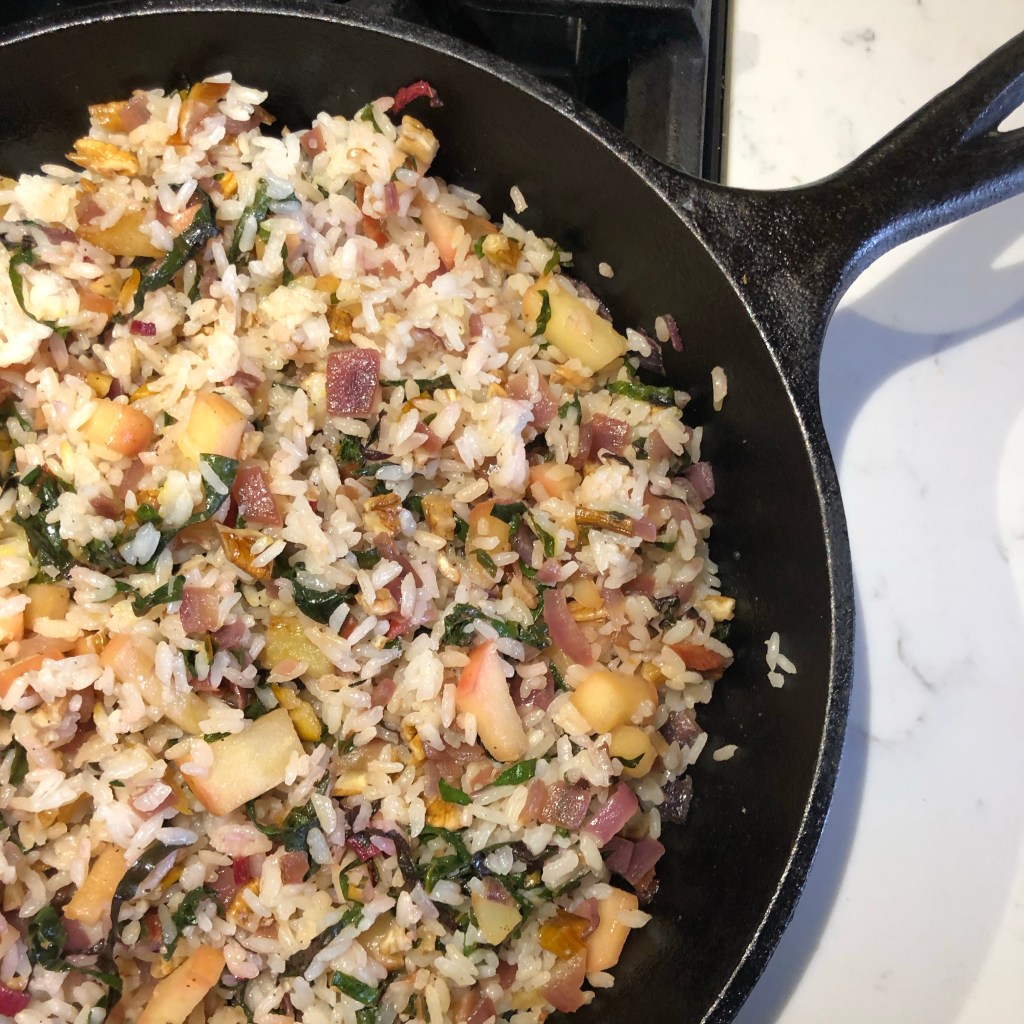
This is a vegan skillet that Brett made using rice, apples, onions, Swiss chard, and some seasonings. He stuffed it into roasted delicata squashes. If this sounds strange to you, it did to me too, but it was delicious. That night, the whole family was vegan and I think we should get bonus points because not a single food was processed.

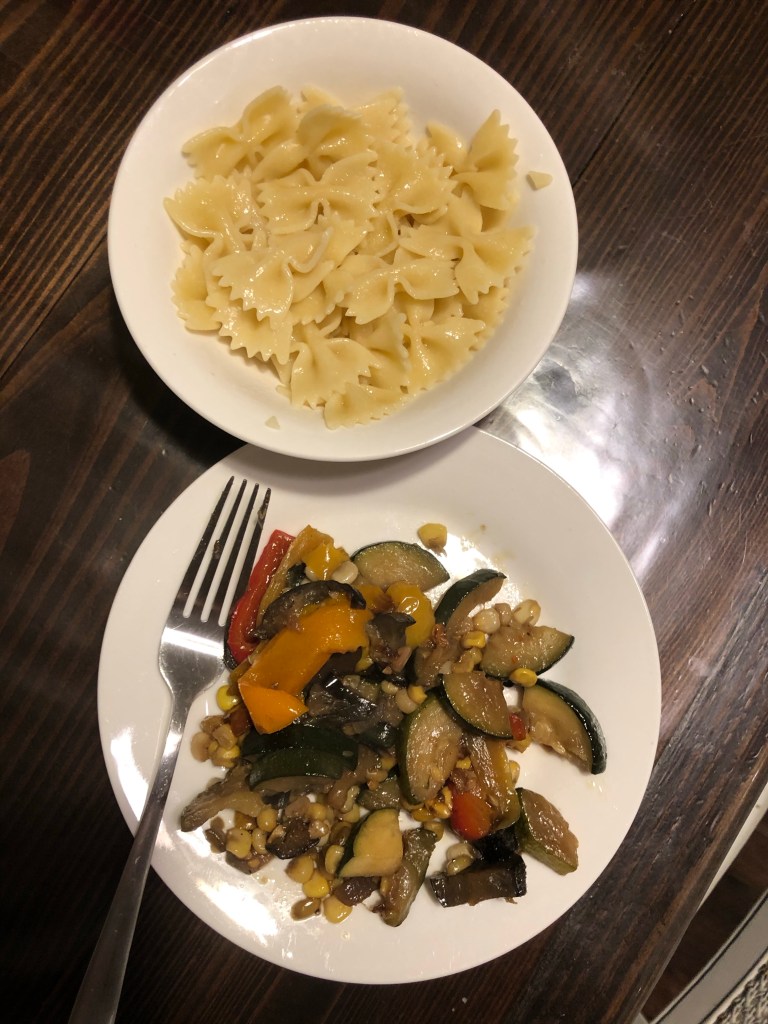
The next night my family had pasta with a store bought sauce that was not vegan, so I set aside some noodles to have with vegan butter. Store-bought noodles are typically vegan, but highly processed and containing very little nutrition, so I typically avoid them altogether – except in rare instances like this. I also had leftover sautéed vegetables [zucchini, peppers, onions, corn].

A very common meal in our home [about once a week] is grilled chicken with rice and vegetables. I make this meal vegan by not eating the chicken. Again, no processed food, just simple, from-the-earth ingredients, cooked and slightly seasoned.

Vegetable soup is of course a staple, both for the healthful and heartiness of it, and for the waste-saving benefits since we just throw any leftover vegetables into a pot with water. I like to top mine with some hot sauce [ok, a lot of hot sauce]. In this meal, the only thing processed is the hot sauce [which, by the way, I am dying to make myself].

We usually have sourdough bread as a side with all of our soups. [Thank goodness most bread is vegan!!!]

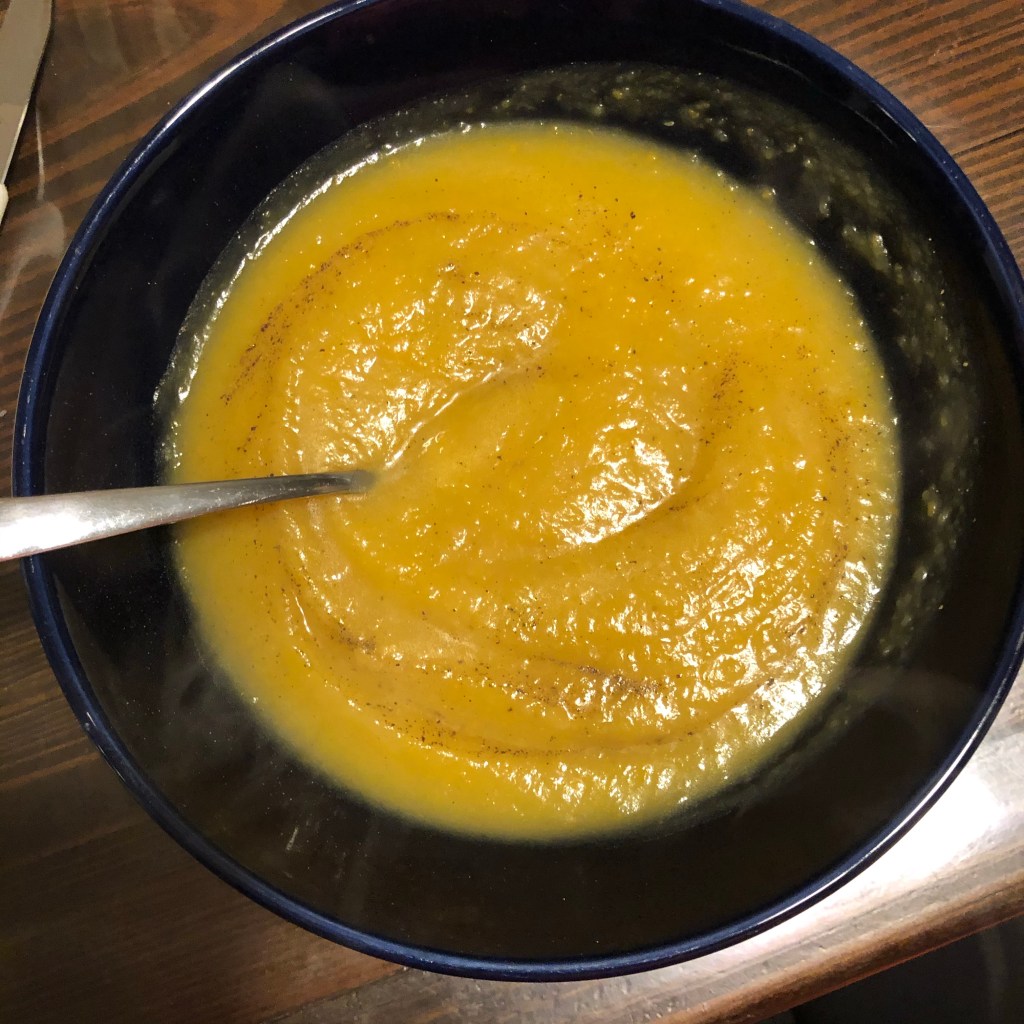
This homemade squash soup, made by Brett, is my FAVORITE! Some recipes call for a cream, but not Brett’s soup. This soup is made with onions, carrots, apples and squash [butternut, acorn, or delicata all work]. Mmm mmm good! Sometimes if we are really lucky, Brett will make homemade croutons out of the ends of my homemade bread. TO DIE FOR!

[It’s a good thing it’s fall so my obsession with soup is not as strange as when I’m writing about it in July.]

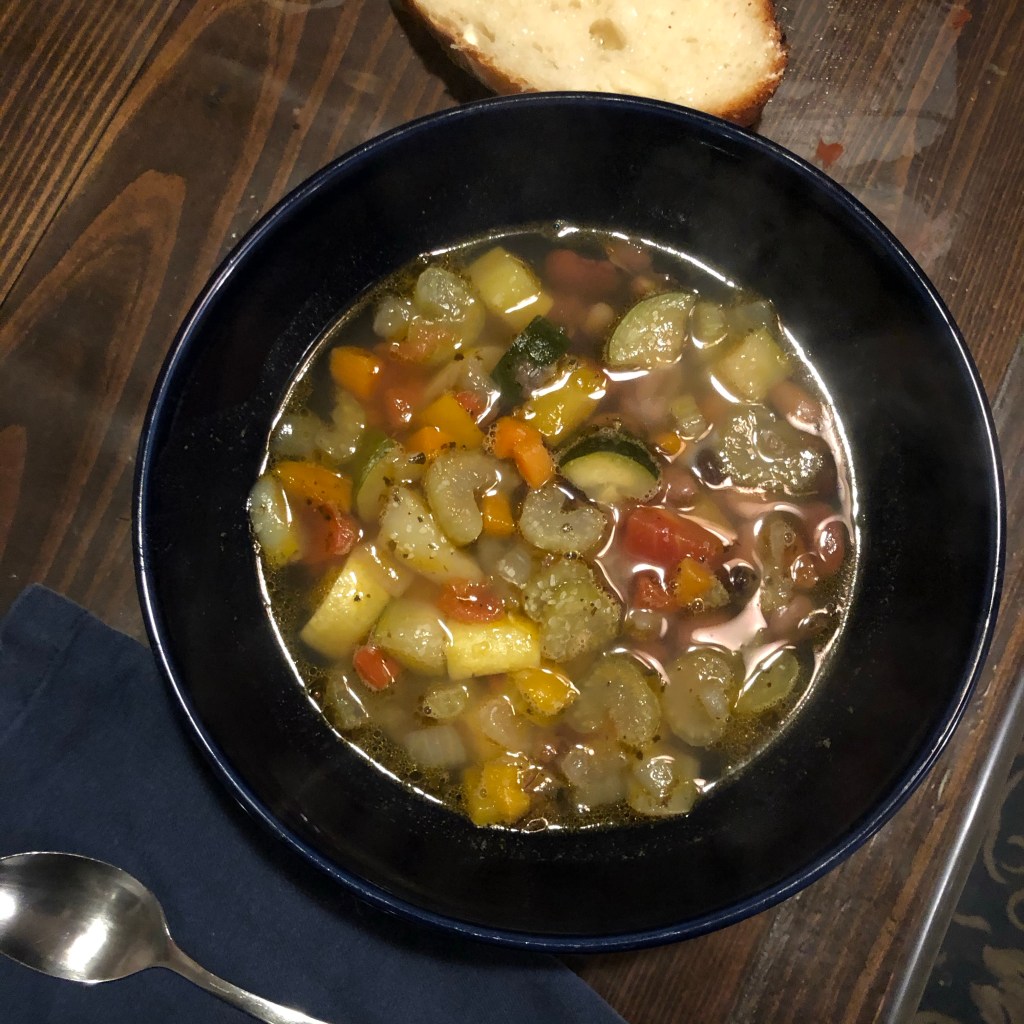
Four bean vegetable soup. [I warned you that I’m obsessed with soups.] Beans are a big staple of a vegan diet. They are great in soups, in tacos, in burger patties, in brownies, in dips, in chili, in a bowl with salt and a dash of hot sauce [ok, a lot of hot sauce!].

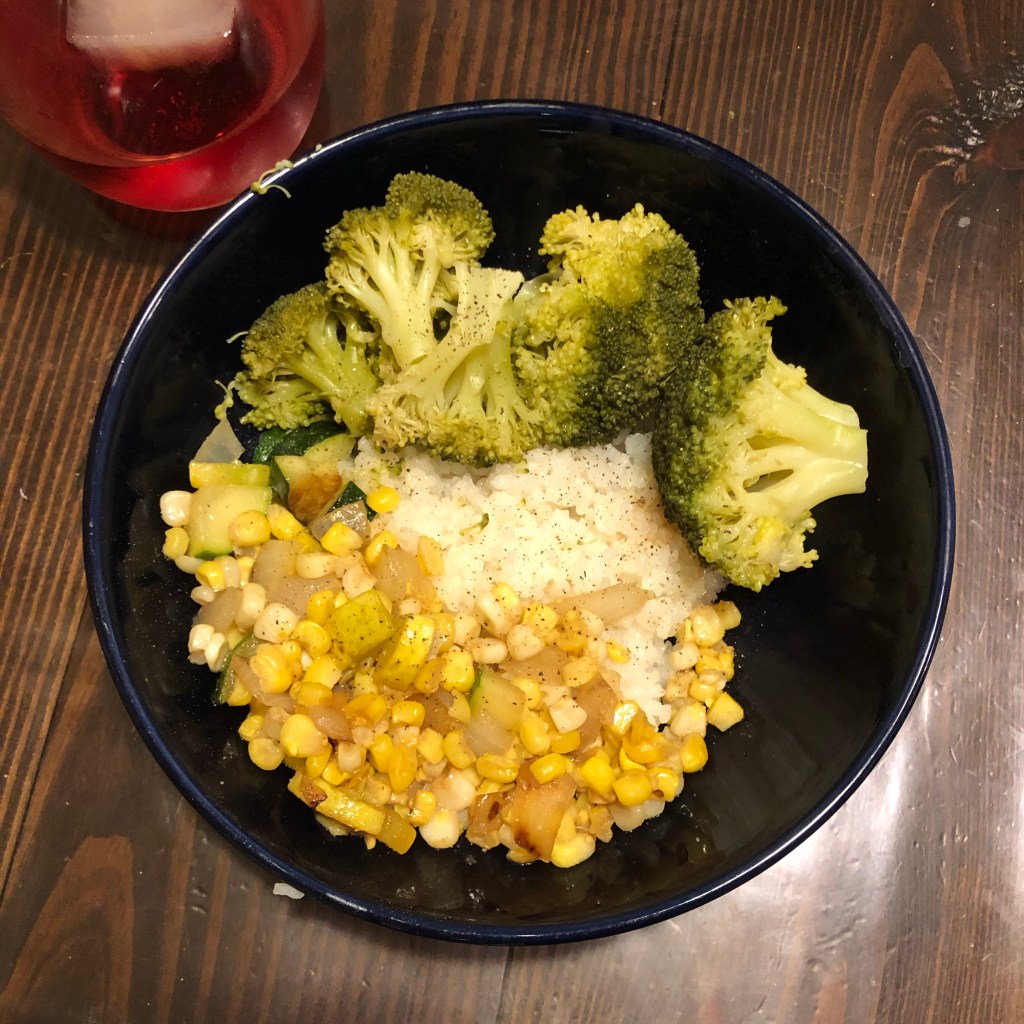
This terrible photo is of a burrito bowl…of sorts. Rice, beans, peppers, onions, tomatoes, lettuce and – you guessed it! – hot sauce.

Honestly, if you’re going vegan I sincerely hope you like hot sauce because it is the best replacement for cheese. Of course, Brett would argue that it is a great addition to cheese, but if I can’t have cheese, I’ll just take the hot stuff.

[Fun fact: there are some health benefits to hot sauce. Hot sauce is supposedly an appetite suppressant and when eating spicy foods people tend to drink more water and therefore eat less! Hot sauce is also zero calories so a better alternative than mayo or ketchup – if you like things spicy!]

Last night I had roasted potatoes, sautéed green beans [my favorite] and leftover rice and beans.

You are probably beginning to notice a trend – lots of vegetables. In my opinion, the best way to be vegan is not with fancy “vegan” cheese or “vegan” burgers, but with all the foods that are naturally vegan: vegetables, fruits, legumes, grains, and nuts.

And tonight I ate zoodles with vegan marinara and veggie balls. Despite what I just said above, sometimes it’s nice to try a vegan alternative like beyond meat and tofurkey…why not? But, in general, I stick with foods in their natural form.

Well, I’m sure my meals [and my terrible photography] haven’t convinced anyone to become vegan. But, I bet Darin Olien will if you read his book, Superlife, which I just finished. This book is FANTASTIC and I highly recommend it for anyone truly interested in improving their health.

According to Darin, the key to healthy nutrition is eating a wide variety of whole foods from plant sources, and eating a large portion of it raw. I couldn’t agree more. My 10+ years of searching for the healthiest lifestyle habits have led me here: to veganism. And it’s not as hard as it may seem.

Next week, I’ll be posting some strategies for vegan eating at restaurants. Truthfully, there has never been a better time to be a vegan!

🌱 🌱 🌱

Karis