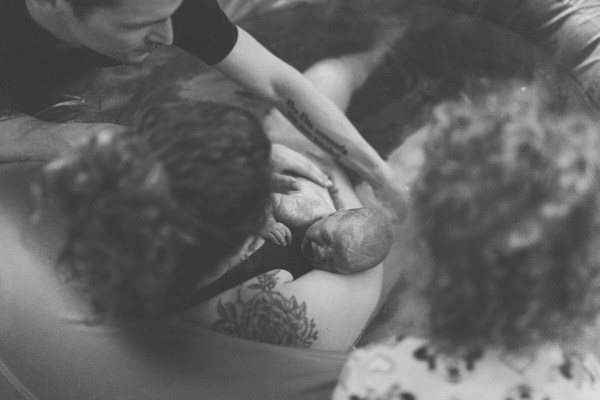
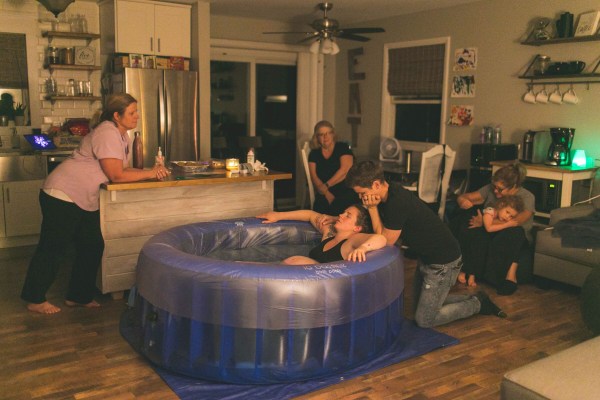
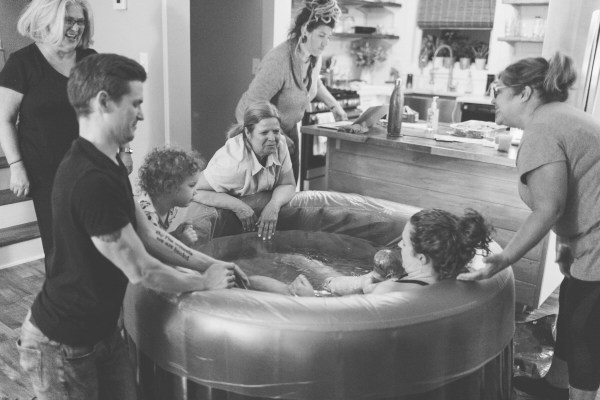
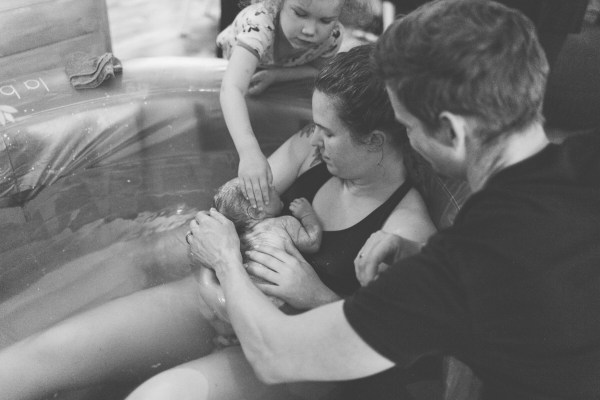
On June 7th, I gave birth to my fourth baby – a beautiful girl. We named her Eleanor.
She was born in our living room surrounded by family and friends.
It was the perfect conclusion to my childbearing years. The most precious part of the experience was having my first born there to witness her sister enter the world.
I still can hardly believe that five years ago I gave birth to my first baby and now I’ve given birth to my fourth and last baby [knock on wood].
I feel as though I’ve been pregnant for five years straight – and, in fact, I pretty much have been, since I became pregnant for the first time in October of 2013 and I haven’t experienced a full calendar year without being pregnant since.
As wonderful as my children are, I’ve never enjoyed being pregnant so I couldn’t be happier to leave all the morning sickness and swollen ankles and weight gain and hip pain and not being able to eat sushi or drink wine BEHIND ME AT LAST.
Anyway, all that to say that I haven’t been posting because I’ve been fully consumed with newborn life – nursing around the clock, rocking the baby for hours on end, and changing what feels like a gazillion diapers. All in addition to the job of caring for three other toddlers.
Sheesh.
But I intend to be back. I may not be writing, but I’m still busy zero-wasting and making everything for scratch and rethinking how we shop, etc. If nothing else, having another baby [my first since going green] has shown me how much the zero waste movement is missing resources for parents and children.
Plastic Free July is here and [of course] I’m participating! I’ve already been avoiding single-use plastics for a year and have made my stainless steel water bottle, cotton produce bags, and reusable shopping bags a normal habit…but I still have struggled with avoiding the plastic that comes with take out, fast-food, and even dine-in meals.
So these are my three commitments to reduce my single-use plastic waste this month [and hopefully forever]:
Refuse plastic straws and disposable beverage cups. Even though I really hate plastic straws, I do occasionally end up with them in my [or my kids’] drinks. So this month, I am committed to not buying beverages out at all. We will just bring our reusable water bottles and drink water when we go to restaurants. [It is healthier anyway!]
Bring my own reusable container for restaurant leftovers. I have yet to bring my own container to a restaurant for the leftovers – and with four little kids, we ALWAYS have leftovers. So, this month, I will keep a reusable container [or two] in my car for this purpose.
Buy ONLY plastic-free groceries. I’m pretty good about this, but not perfect. I never use the plastic produce bags and I always choose the loose produce over the bagged options – but not all foods can be found package free at my grocery store. My kids love grapes and they always come in a plastic bag. I love berries, but I can’t find them without plastic packaging either. I often end up compromising on some of these items. So, this month, I am committed to doing without any food that I can’t find plastic-free. But it won’t be much of a hardship because I LOVE pineapples and apples and watermelons.
It took me almost 30 years to fully recognize and acknowledge that I was born into privilege – and for the past two years, I’ve struggled with what my responsibility to the world is as a result. The answer, in part, is minimalism.
But first, let me back up and explain…
I was born into a white, middle-class, American family. For most of my childhood, my father was a pastor of a large church in Flint, Michigan. My mother was a stay-at-home mom. I have four siblings. My parents loved us and provided a wonderful life – full of family time, vacations, extra-curricular activities, medical care, a beautiful home, all the food we could eat, gifts at Christmas and birthdays, private education, help with paying for college, even braces for all five of us. Basically, we had everything we could possibly need provided for us. There were also intangibles like all the words of affirmation, hugs and kisses, training in important life principles like money management, hard work, perseverance, and kindness.
I enjoyed one of the most privileged lives a human being can have in this world – filled with safety, security, health and love.
And man, did I take it for granted…
Despite how great my life was, I spent most of my growing up years saying that we “weren’t rich.” I have literally said that countless times. I guess I thought my parents weren’t wealthy because we didn’t drive expensive cars or wear name brands clothes or eat at expensive restaurants like some of my friends did.
Then as an adult, I had the same perspective – that I wasn’t wealthy despite living a life of total luxury where I wanted for nothing. Yeah, I still don’t drive expensive cars or book vacations at Disney World and we live on one income in a wealthy Chicago suburb – but I will never again be foolish enough to think I’m not wealthy.
Why is it that the American middle class is so set on denying their own wealth? Everyone is looking at the small percentage of people wealthier than themselves, rather than the 3 billion people less fortunate. When I switched my perspective to intentionally noticing all the needs in the world, I became more and more aware of my own wealth.
What is more, I had to acknowledge that I hadn’t done anything to deserve being born into the family that I did – any more than those born in difficult situations deserved their lot in life.
This caused me a lot of guilt.
But guilt that produced action. Because I no longer felt that it was acceptable for me to live only for myself and my family.
But I was also very conflicted. On the one hand, I want to enjoy a comfortable life and provide nice things for my kids – but on the other hand, how do I justify spending all of my resources taking care of myself and my family when people are literally dying from preventable causes around the world? And what exactly constitutes “taking care of my family”? Where is the line between “needs” and “wants” in this consumerist society?
I began to struggle to justify any purchases outside of legit needs like food and medical expenses for my family. I feel guilty buying another shirt when my closet is already full of shirts that I don’t even wear. I feel guilty buying a fancy appliance for my kitchen when some simple elbow grease will do the job. I feel guilty throwing out food because I “didn’t feel like eating it,” when people go hungry all the time in this world. How can I spend $50 on decorative throw pillows for my couch when I know that I could pay for two months of education, food and medical care for a child in Uganda at that price?
The natural result was minimalism.
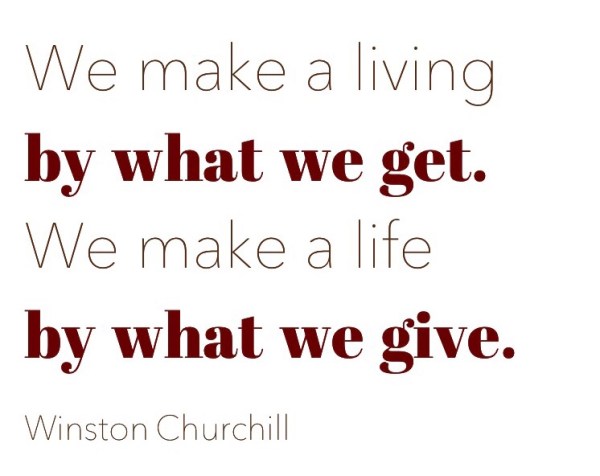
Minimalism, to me, means living with less, so I can give more.
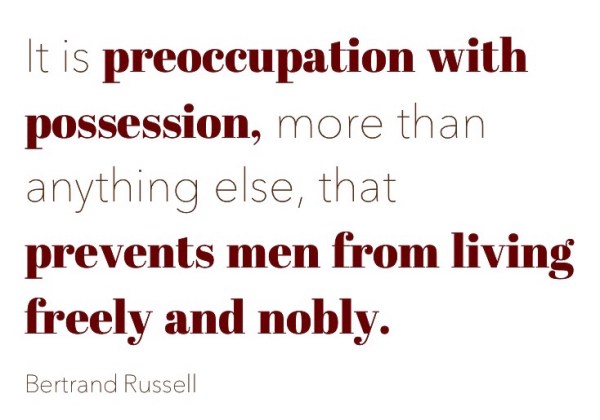
Many people consider minimalism to be “extreme,” but it’s not. The materialism in America is extreme. The way we’ve all been brainwashed into thinking that we’re not rich is extreme. Minimalism is just the natural byproduct of recognizing our wealth and privilege in comparison to the rest of the world.
Minimalism has freed us from materialism and a love of money and has freed us to prioritize things that matter the most to us – family, travel, and most importantly, giving to causes and organizations that are working towards a better world for all of us.
For me, minimalism was my path to a more intentional, fulfilling life. But it may not be the answer for everyone.
The big question is not “are you a minimalist?” but “what are you doing to change the world?”
On May 28th, this blog turned 1 – on the same day that I turned 32. This past year has been the most transformative that I have experienced in my adult life. This blog has been a place for me to share how my family and I have changed our views, values, and lifestyle in favor of simplicity and authenticity.
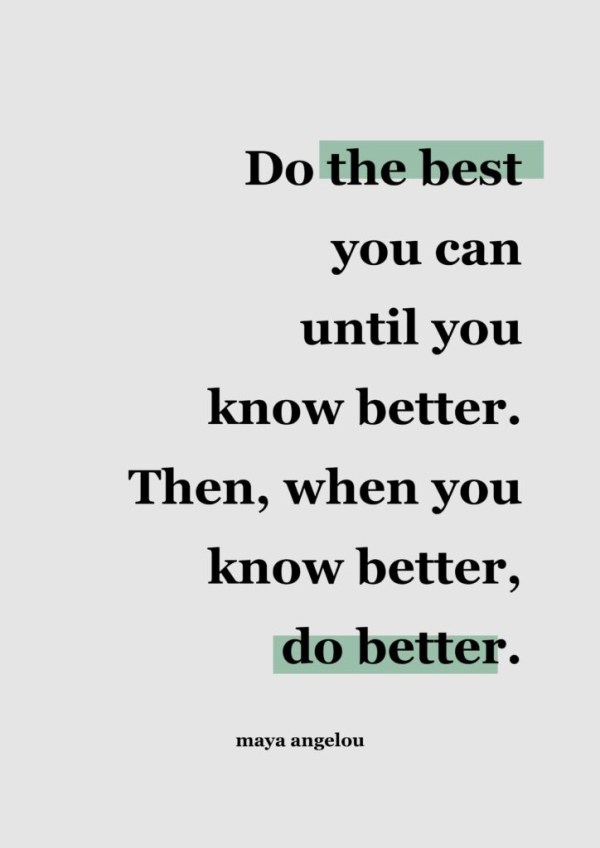
Maya Angelou once said, “Do the best you can until you know better. Then when you know better, do better.”
This has become my life’s motto. And this past year has been all about learning more so I know better, so I can do better.
So, in honor of the blog’s first birthday, I wanted to recap all the changes [to our lifestyle and also our perspective] that my family and I have been working on over the past year.
Minimalism
The changes we have made started with an interest in minimalism. I had grown tired of chasing the “American dream” of wealth and success, which seemed to equate to bigger homes and fancier cars and more stuff, while meaningful relationships, time with family, concern for the less fortunate and other social/environmental causes are ignored. I was anxious for a simpler, more intentional life. I was wanting our life to be about a greater purpose than satisfying our own desires for more.
So, minimalism taught us to purge what we own down to things that are essential or truly appreciated AND to refuse all the excess that society is constantly telling us we “need.” We played the 30-day minimalism game and between Brett and I, removed 930 items from our home.
Mindful Consumerism
My interest in minimalism lead me to Cait Flanders’ book, The Year of Less, which was so impactful that after reading it, I started this blog to document all the ways I intended to end my own mindless consumption.
I began asking myself whether I really needed something before buying it. I continued to purge our stuff without replacing any of it. I committed to first do without, then use what I have, then buy used – and only when all else failed, to buy new.
Slow Fashion
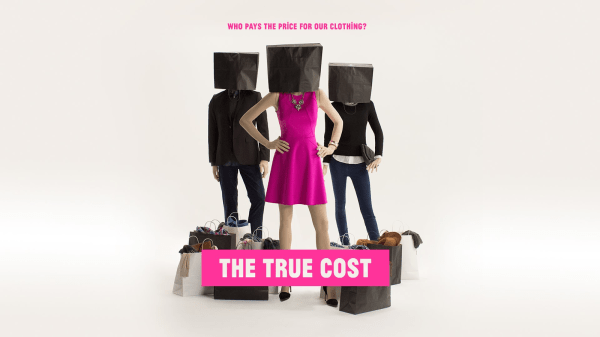
Around this time, I watched the documentary, The True Cost, which describes the fast fashion industry and how the American demand for cheaper and faster clothing is wreaking havoc around the world. I couldn’t believe that I had never considered the wastefulness of my own clothing habits before or how harmful my “take and toss” mentality truly was to the environment and to people around the world.
As a working middle class American, I had always prioritized buying cheap clothing as a way to “manage my money wisely” and thought of myself as some sort of martyr for never buying expensive brands and always shopping the clearance rack in the service of frugality.
Wow, I was so wrong. I am happy to say that I have finally learned to appreciate my belongings enough to spend what they are worth – and I now care enough about my fellow humans, no matter how far away they live, to pay whatever it costs to protect their rights.
Zero Waste
From there, I stumbled upon the zero waste movement, which I had never heard of previously. On a whim I picked up the book, Zero Waste, by Shia Su from the library. I had no idea how significantly this book would change my life.
This book gave me confidence to reduce my waste [it really is so easy!] and opened my eyes to yet another sad side affect of our constant consumption: waste.
Seriously, the waste problem in America is huge. I don’t know why more people aren’t concerned.
So I started trying to reduce my family’s waste. We began recycling, composting, and bulk shopping. This became a passion [bordering on obsession] for me that led to so many other important changes for my family like eliminating processed foods, making most of our food from scratch, and purchasing our first CSA share. It has been a process, and we still are not storing our trash in a mason jar [that is not a realistic goal for us anyway], but we have made HUGE improvements. We only take out one 4 gallon trash bag per week and we have even reduced the amount that we recycle significantly, needing trash and recycling pick up only monthly [or even possibly quarterly] now.
Ethical Shopping
Next, I committed to ethical shopping by supporting brands that are concerned about sustainability and fair, ethical treatment of all members within the supply chain[animals included].
This one is tougher because it is hard to know whether a company is ethical or not and requires researchwhich requires time, but it’s not so bad because we don’t buy very many things, so purchases can be thoughtfully and intentionally made with our values in mind.
Yes, I am boycotting Wendy’s. Yes, I pay more for Fair Trade coffee and chocolate and bananas. Yes, I adore Patagonia.
Simple Living
Then I began to focus on eliminating some of the distractions that caused me to always feel like I never had enough time. We moved our only television into the lower level. I started using the “screen time”feature on my iPhone to limit my time on certain apps. I turned off all notifications on my phone. ALL of them. If you call me and I don’t physically have my phone in my hand, I won’t know it until I actually open my phone app…which I do every couple days. I’m harder to reach, but by responding to texts and calls and emails on my own time, I am no longer a slave to my phone.
The kids and I began spending more time outside after I read the inspiring book, There’s No Such Thing as Bad Weather, by Linda Åkeson McGurk.
We started having a Monday movie night with the kids as their only screen time for the week. I simplified my cleaning routine to improve efficiency so I don’t have to spend a lot of time cleaning. We purged A TON of toys [with the kids’ help], which cut back on the chaos of living with three toddlers.
I also read Slow by Brooke McAlarywhich was full of inspiration for living a more intentional and less frantic life.
Giving Back to the World
Last, but most importantly, we rearranged our finances to prioritize giving to charities that we believe are doing good around the world. I wish I could be the one doing the good myself, but at this stage in my life, I am chasing toddlers all day and working part-time, so I am prioritizing what I can do, which is give money to those who will use it to help people. I look forward to volunteering regularly and giving back in other ways in the future, as I believe that this is one of our most important purposes on this earth – not to merely look out for our own interests and our family’s well-being, but to care for the less fortunate and fight for a better world.
But, more on that another day.
I am looking forward to improving in all of these areas and more over the next year.
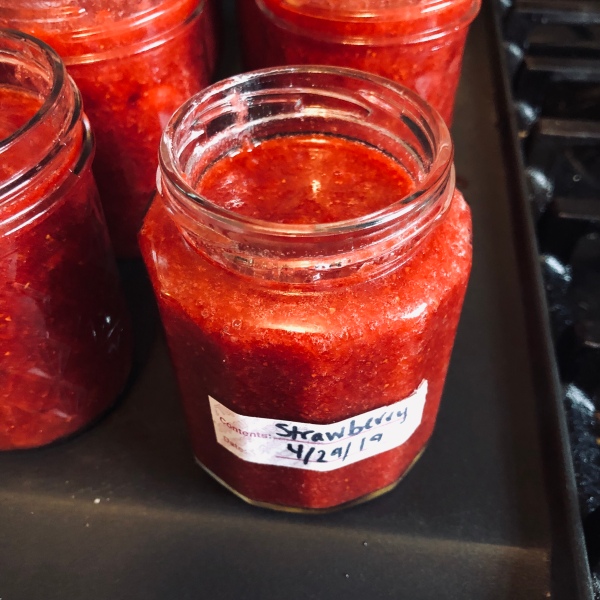
Two years ago, I read a small sidebar – maybe three or four sentences – in Martha Stewart Living Magazine about how she makes a pectin-free strawberry jam. It sounded so simple that I immediately bought some strawberries and gave it a try. I’ve been happily making my own jam ever since.
[Thanks, Martha!]
Since then, I’ve experimented with reducing the sugar and adjusting the steps to suit my time constraints and personal preferences until I can now say that I have created an even simpler and healthier way of making strawberry jam!
[Sorry, Martha, it’s true.]
So, here’s all you need to do.
1. Hull and rinse strawberries. [I usually quarter them, but that is not necessary.]
2. Put berries in a big bowl and mix with half a cup of sugar per one pound of strawberries [Martha’s recipe called for double the sugar] and juice of one lemon.
Side note: I’ve tried even less sugar and even no sugar recipes but the jam always tastes really tart and doesn’t thicken the way this version does.
3. Cover and refrigerate overnight. [Martha never specified how many hours to refrigerate them so I just make the jam sometime the next day.]
4. Heat on the stove in a big stock pot until sugar is dissolved. This doesn’t take long – maybe 10 minutes.
5. Remove the berries and boil the remaining juice until it reaches 221°. This takes longer – maybe 40 minutes to one hour, depending on how much jam you are making.
6. Blend [or mash] berries and add back to the juice. [You could also leave the strawberries whole.] Boil for five more minutes.
7. Pour into sterilized jars. Let cool on the counter then refrigerate or freeze.
The jam thickens as it cools and even more once it’s in the fridge, but it never gets as thick as a jam made with pectin. Still, it works perfectly for PBJ or as a sauce for dessert [like cheesecake or angel food cake or vanilla ice cream] or a topping for toast.
To keep the cost down, I only make jam when strawberries are on sale. Today, I used seven pounds of strawberries and three cups of sugar and made roughly two quarts of jam – for about $7.
I’m not sure if that’s a savings, but it is zero waste AND zero high fructose corn syrup!
Preschool has been tough for my zero-wasting heart. Besides countless papers and craft projects, my daughter has brought home bags of Valentine’s Day gifts, Halloween candy, plastic Easter eggs, and, of course, the birthday favors from her 17 classmates. This is all very sweet and well intended, but it produces a lot of waste.
Still, I can only do what I can do, so we have tried to reduce the waste that we send into the classroom as much as possible. I pack Evangeline’s snack [always fruit or vegetables] in a beeswax wrap, and I send her with a reusable silicone bag to collect the compostable items from her class [a task that she LOVES].
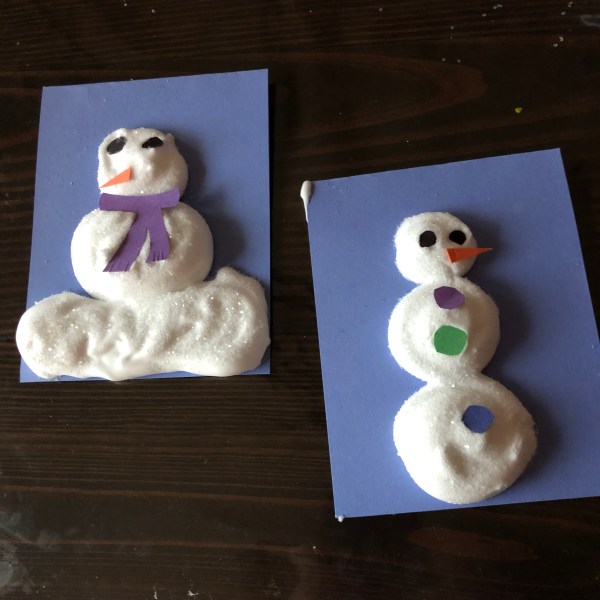
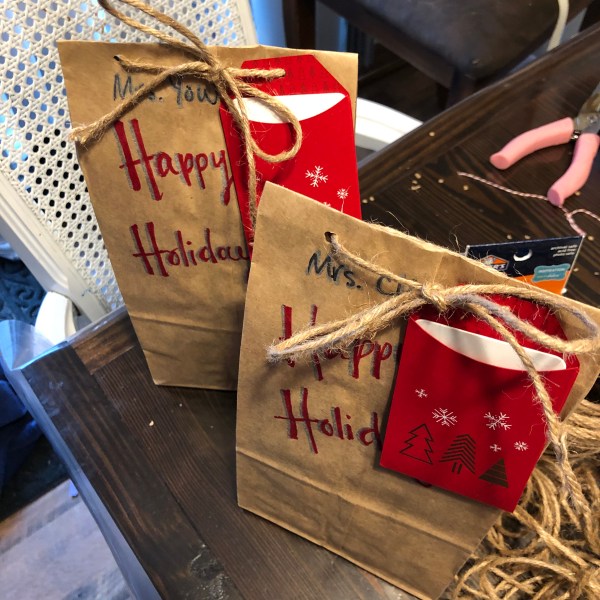
We made homemade cards and zero-waste Christmas gifts for her teachers and wrapped them in simple brown paper bags.
And we gave cuties as Valentine’s Day gifts, tied with compostable string and tag.
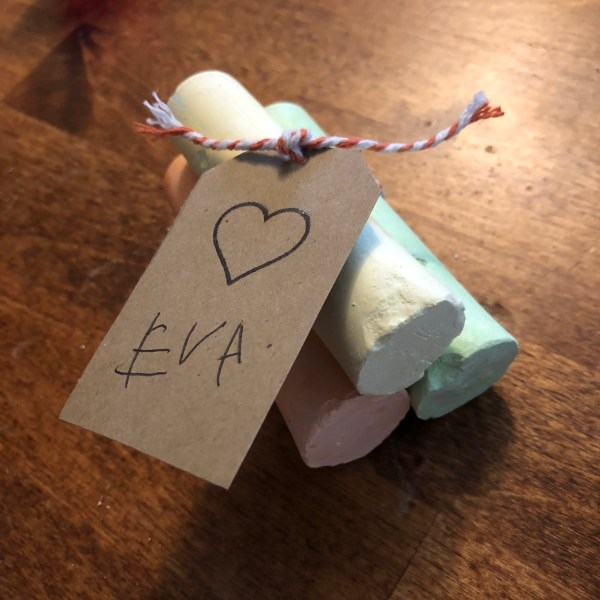
I was thinking that since my daughter’s birthday was in the summer I could just avoid the whole “birthday treat” tradition altogether. But I received a letter that they would be celebrating the summer birthdays after all. They encouraged a non-edible gift of some sort – which eliminated my idea of sending home baked cookies wrapped in paper. Instead, I decided to send sidewalk chalk.
I figured that these could be purchased in cardboard boxes and tied with string. And what child doesn’t love sidewalk chalk?
Well, imagine my horror when I opened the box of chalk to find the sticks wrapped in plastic!!
🤦♀️
You win some, you lose some, I suppose. They made a cute gifts anyway.
Of course, now I’ve found tutorials showing how to make chalk from household items like cornstarch or EGG SHELLS! What?!?
We are officially a fourth of the way through 2019! So, I thought I’d share how my resolutions are holding up.
I posted about my original goals for the year here.
Health-wise, I want to practice yoga. I have been faithfully practicing prenatal yoga at least once a week – the only exceptions being when we have been on vacation. I have even bumped up my practice from 15 minutes [yeah, I really don’t like yoga] to 45 minutes! It’s almost growing on me! It’s actually a nice break from my typical workouts which are getting harder and harder as I get further along in this pregnancy.
Oh, and floss daily. I have been flossing [nearly] every day using my water flosser, which I love. This is also a nice zero waste option – though unsightly and taking up a lot of space on my bathroom counter.
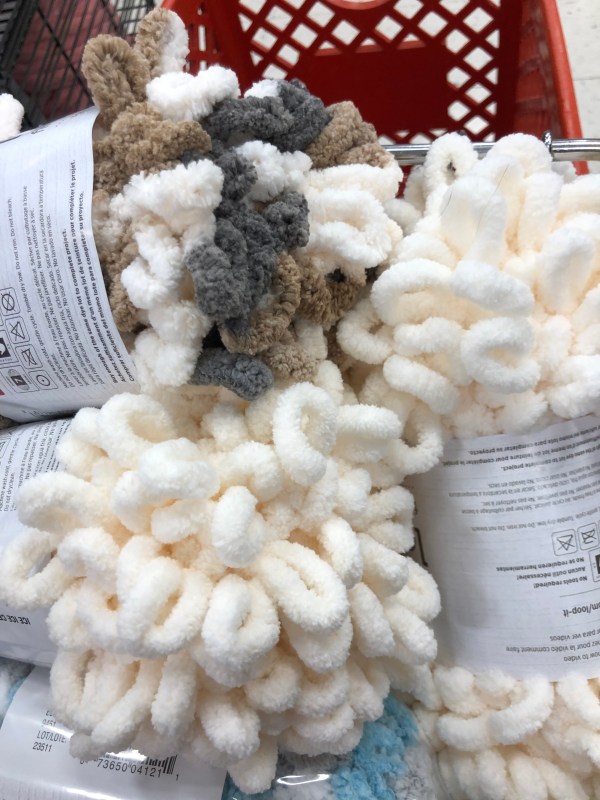
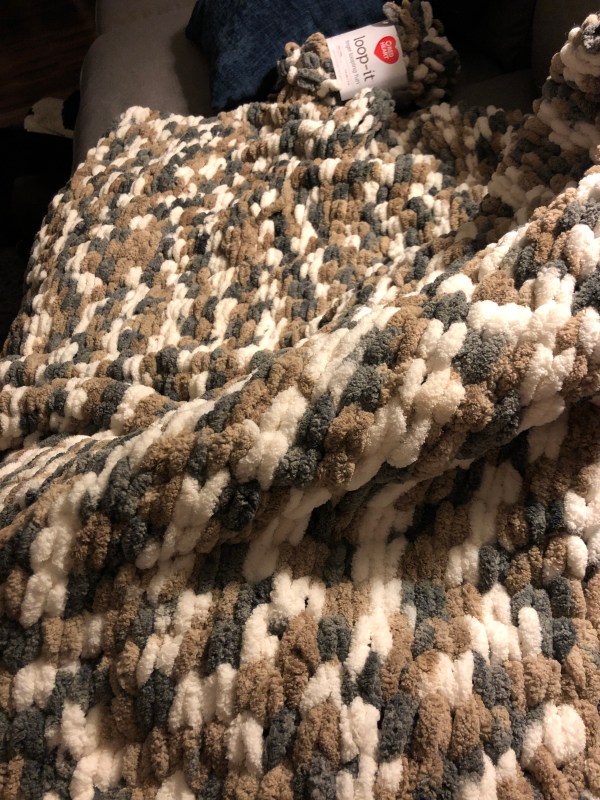
New skill this year is knitting. In January, I knitted three blankets as gifts for family and friends, but I cheated and did “finger knitting” using Loop-It yarn.
BUT the experience did help me to understand knitting better. Since then I haven’t done ANY knitting because I haven’t made it a priority to go buy some yarn and pick out a pattern. But I intend to make this a focus of Q2 so I can make that baby blanket for my baby girl arriving in TWO MONTHS! Ahhh!
At home, I want to start making my own cleaning products. I still haven’t run out of any cleaning products. We had quite a collection and a huge selection. But I am ready with my vinegar and essential oils for when the time is right.
I hope to reduce our trash [and recycling] even more. We are improving in the trash and recycling area. I now empty the three trash cans in our home once every other week. We didn’t put the cans out on the curb at all for the entire month of March because they were never full. Truthfully, they weren’t full when we finally did put them out last week, but we might as well let the truck stop at our place.
Some weeks we have more trash, some weeks less. But overall, we are definitely continuing to reduce the waste.
Personally, I would like to read two books a month: one fiction and one non-fiction. I have been reading WAY more than two books a month. In Q1, I read a total of twelve books and I’ve already finished two for this month. I have a lot more time to read a) because Brett has been working a lot of late nights lately and b) I barely spend any time on my phone or watching tv anymore. I’ve read some fiction classics that I hadn’t gotten around to yet, plus some religious books, some feminist books [I’m currently working on Emma Watson’s book club list], a biography, a book on posture alignment, and three books on poverty and how to put an end to it. So I’ve been busy…
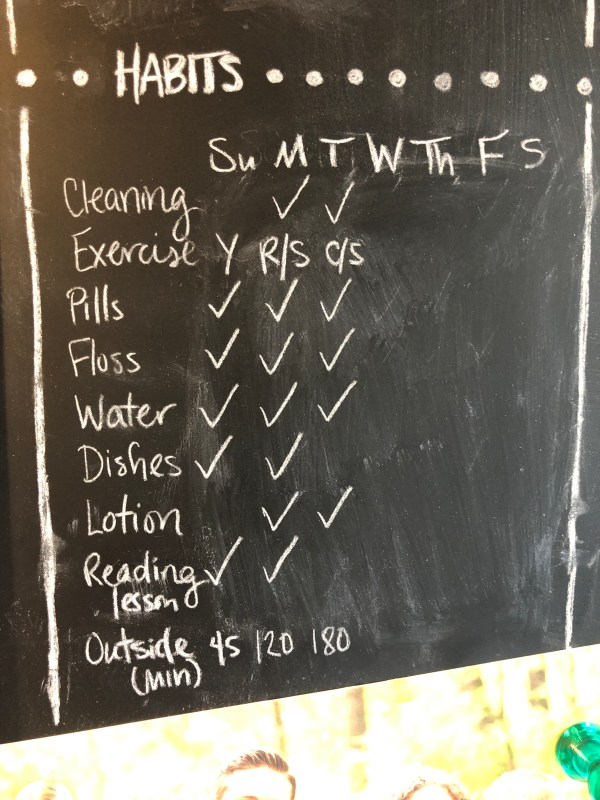
For my family, I want to spend more time outside. We didn’t do great during the cold months, but now that it’s warmer we’ve been spending lots of time outdoors. In order to make it a priority, I’ve added “outside” time to my daily habits list on my chalkboard planner.On rainy days, it’s my first inclination to keep them indoors, but I have been reminding myself that it’s not harmful and sending them out with raincoats and boots. It’s a muddy mess, but they are still getting time outside.
And for this pregnancy, I want eat welland enjoy it as much as I can, because it will [hopefully] be my last. Well, I’ve definitely been enjoying it – if by “enjoy it” I was referring to lots of ice cream and bacon cheese fries at midnight. Hey, I’m only human…
Thirty dollars. Two stores. One week’s worth of food for my family of five.
[The thirty dollars also covered a bag of red potatoes, two apples, and a banana which are not pictured here.]
Everything pictured was on sale and at or below my price limit of $1/lb for produce and $2/lb for meat.
This doesn’t include the dry goods that we already have on hand – nuts, oats, rice, beans, coffee, sugar, and flour – which we only buy about once a month and don’t need to restock at this time.
No more snacks
The biggest change to my grocery shopping habit, besides buying only what’s on sale, is that I don’t buy traditional snacks. No more pretzels or crackers or applesauce or fruit cups or yogurt cups or string cheese or fruit snacks or boxes of raisins, etc. I used to buy all of those things regularly, but then I realized that I didn’t need to buy any of that in order to give my kids snacks, or even to enjoy a snack myself. Now, when my kids want a snack, they have apple slices with peanut butter, bananas, oranges, grapes, red pepper slices, cucumbers, or nuts. And when I want a snack, I have the same thing.
If I’m feeling really ambitious, I’ll bake banana bread muffins or make my own applesauce in the crock pot or even bake my own granola bars, crackers, or pretzels – but I don’t typically have time for that. So bananas and apples are the perfect snack to have on hand that require no prep work at all – and they are also great on the go.
[Side note: I also don’t buy frozen foods anymore – except the occasional ice cream carton 😬 – because plastic packaging for frozen foods is made differently apparently and, as a result, is not recyclable. I used to buy a large amount of frozen vegetables, but I have transitioned to 100% fresh veggies.]
No more, no less
It might not look like a lot of food, but it is plenty for our family of five for a week. The meat and milk and eggs will actually last longer than a week because we don’t eat meat every night or eggs every morning. I have enough vegetables for sides for all of our meals and enough fruit for breakfast, lunch, and snacks.
The goal is to buy just the right amount so everything gets eaten and nothing gets lost in the back of the fridge and goes bad. [This way I make sure to avoid food waste – which is a big problem in America.]
The meal plan
So now that I’ve got the food, I decide what we are going to eat for the week. Breakfast is always oatmeal or eggs with fruit. Lunch is always PBJ with fruit and veggies for the kids and a salad for me.
Dinners will look something like this:
Tuesday [tonight] – Vegan Burrito Bowls
Wednesday – Veggie Omelets and Roasted Potatoes
Thursday – Chicken, Grilled Romaine and Asparagus
Friday – Pork Chops, Brown Rice and Green Beans
Saturday – Leftovers
Sunday – Mexican Rice and Bean Skillet
Monday – Southwest salad
The schedule may change. I don’t like to set my meal plan in stone because my work schedule often changes suddenly and sometimes I have to just throw something together. But at least I have food and ideas.
New grocery deals come out tomorrow, so I will likely make another grocery run in the next week to take advantage of new sales – but for now we’re stocked and I’m feeling good about our healthy [and fresh] food.
My son, Theo, turned three a few days ago. In keeping with our new sustainability and zero waste principles, we made a big deal of our time together [at Chuck E Cheese for the afternoon] and downplayed the gift portion of the celebration. We actually never even mentioned a gift and he never asked for one.
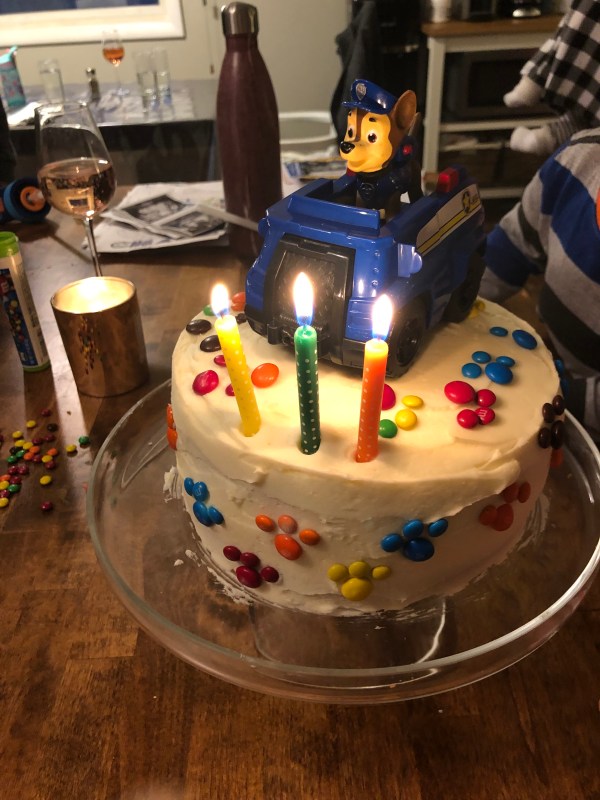
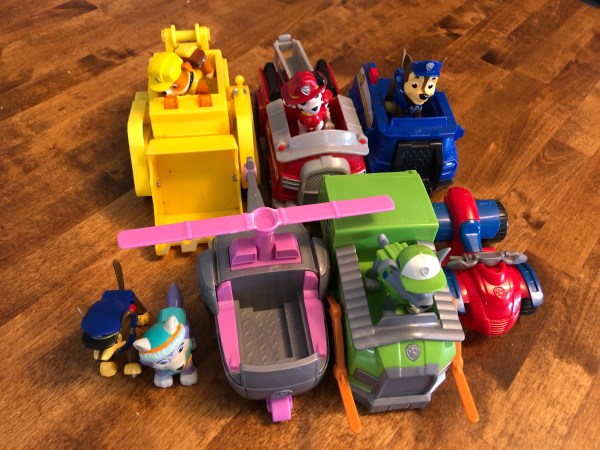
But, of course, we did give him a gift – a set of used Paw Patrol characters and their vehicles [one of which I used to decorate his “Paw Patrol” birthday cake that all the kids helped decorate.]
A few weeks ago we began looking for someone selling a used set of these Paw Patrol trucks because we knew how much Theo would love them. Living in the Chicagoland area meant that they were easy to find. We ended up buying a set of six vehicles and eight characters for $15. At Target, these Paw Patrol vehicle/character sets sells for $15 each.
We’ve already lost a few characters…
But the point here is that it’s actually not about the money at all. Yes, there was a savings, but it’s not like we couldn’t afford to buy it all brand-new.
Why buy used?
The motivation for buying used is to give a second [or third or fourth] life to something bound for the garbage bin. Rather feeding the machine that is constantly making new toys [especially plastic toys] we should be intentionally prolonging the life of the current toy population. I basically rescued these trucks from a landfill. I am essentially a super hero. And they are perfectly fine toys. In fact, my son ADORES them and couldn’t care less whether they were purchased new.
Why not buy used?
So it got me thinking about why I would still never show up at another kid’s birthday party with a gift purchased second-hand. It’s one thing to buy a used gift for my own kid, but a completely different story if I’m going to give a gift to someone else.
There is some unwritten social code that says it’s unacceptable to give gifts that are second-hand.
We even frown [although slightly less so] on “re-gifting” and most people would agree that the appropriate way to re-gift an item is if the recipient doesn’t know it’s re-gifted.
Isn’t that strange? Why should it matter?
Gift giving today is about the represented dollar value, not how much it will be appreciated.
I think that what has happened to our society is that gift giving has become more about the ritual [i.e. gifts are required at certain holidays and events] and the dollar value [i.e. gifts need to be within a certain price range] than it is about the recipient’s enjoyment of the gift.
At my first baby shower, a cousin of mine gave me a gift for the baby – purchased new, obviously. After I opened it, she handed me a pair of baby girl Sperrys that she had found used and thought were so cute she had to get them for my baby, but she gave them to me separately because she wanted to explain that they were second-hand.
I LOVE those pink cheetah-print baby Sperrys! It didn’t matter if they were new or not. Both of my baby girls have worn them – and I’m sure this third baby girl will as well.
I find it perplexing and rather sad that we don’t feel free to give gifts just for the sake of their enjoyment value.
Similarly, when I started dating my husband, he and his siblings had a Christmas tradition of trading names for a gift exchange. They had set a value of $75 and then provided a detailed list of things they wanted. I went shopping with Brett that year and watched him cross items off the list and tally up the total dollar amount for his sister-in-law.
I couldn’t even believe it. Is this what gift-giving has become? I felt, even back then, that this was the total antithesis of what giving a gift should be.
Have you been out shopping for a gift and had some sort of mental idea of how much you needed to spend? Somewhere between being “too cheap” and being “too flashy”? And have you been invited to a party or shower or event and known without any overt statement that a gift is a requirement – or at least you would be viewed as a party crasher if you showed-up empty-handed? Have you tried to make sure that each of your kids gets the same general value of gifts or the same number of packages on Christmas morning?
Can we go back?
Can we go back to giving a gift purely because we want to, rather than because it’s required? Can we go back to giving a gift just because we know someone will love it and not care about how much it cost or where it came from?
I’m hoping that by continuing to exchange used gifts [whenever possible] in my immediate family that I will teach my children that gifts are for the purpose of making people feel loved and appreciated by giving something that they will love – not out of obligation or to follow social customs or to show that we have the means to buy new, expensive things.
Buying used isn’t being cheap, it’s being responsible.
Theo was so excited about those Paw Patrol toys that he didn’t even want to eat cake. Everyone else ate cake while Theo played with the trucks. All the other kids came to the table for cake eventually, but Theo only wanted to play.
These toys were the perfect gift – because they were used and because no one cared that they were used. They represented our commitment to sustainability and our belief that the value of a gift doesn’t come from how much is spent or where it is purchased, but from whether it is given out of love.
Theo’s Birthday Video
As is my new tradition for the kids, here is a short video highlighting Theo’s third year.
Since I first moved out on my own, I have been trying to figure out this whole grocery shopping thing – how to eat well without overspending money or time.
I have tried everything – from couponing to rebate apps to stockpiling boxes of granola bars[not healthy, by the way]. I shopped exclusively at Aldi for a time. I followed popular shopping bloggers and ran to the store every time they said there was a good deal.
None of these things worked for me. They were all time-consuming and exhausting and didn’t actually seem to save me much money and on top of all that, we weren’t eating healthy foods.
So I’ve been trying to figure out how to spend less on groceries without sacrificing quality or healthfulness.
After ten years, I have FINALLY reached a place where grocery shopping is no longer expensive, time-consuming, or unhealthy. I spend less time meal planning, less time at the grocery store, and less time stressing over the grocery budget than I ever have.
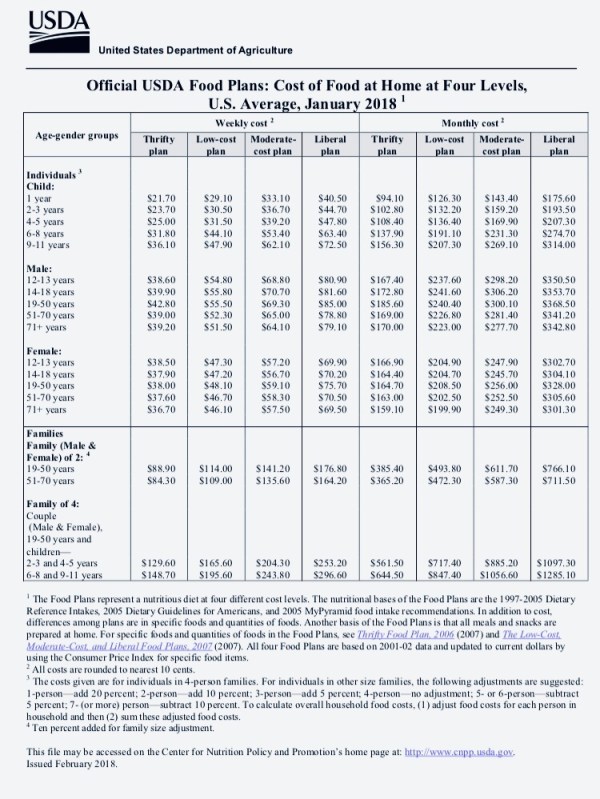
To give you an idea of how much you can save, here are USDA’s recommended grocery budgets.
They vary based on the number and ages of you family members and based on whether you are living lean [“Thrifty plan”] or high on the hog [“Liberal plan”].
So according to this chart, for my family of five, a thrifty plan would be $561.50 per month, if I don’t count my youngest who is only 18 months old, or $655.60 if I do count her.
Doesn’t really matter because our budget is $400/month. This doesn’t include our eating out budget which is $60/month and allows us to eat out about twice per month. Also, every other month we cut our budget in half [a lengthy explanation of which I may write and post someday]. So, technically, we feed our family for $300/month, if we average it out.
That may sound like a lot or a little to you depending on your situation, but for us, it is less than half of what Brett and I were spending back when it was just the two of us – and we weren’t eating nearly as healthy as we do now.
[I’m harping on the healthy thing because anyone can eat ramen noodles every day and save tons of money, but I have found that I can eat super healthy – I’m talking fresh produce and high quality foods – and still save money. So if you are one of the many people today who believe that eating healthy is more expensive, please read on.]
So how do we feed our family healthy foods with so little money? Well, for starters we buy very few processed foods [for our health] and we do our best to avoid packaged foods [for the health of our planet]. Those two things contribute a little bit to our savings – but I know that they are not the reality for the average American [though I wish they were].
The bulk of the money and time is saved by following these five simple rules:
1. Buy what is on sale.
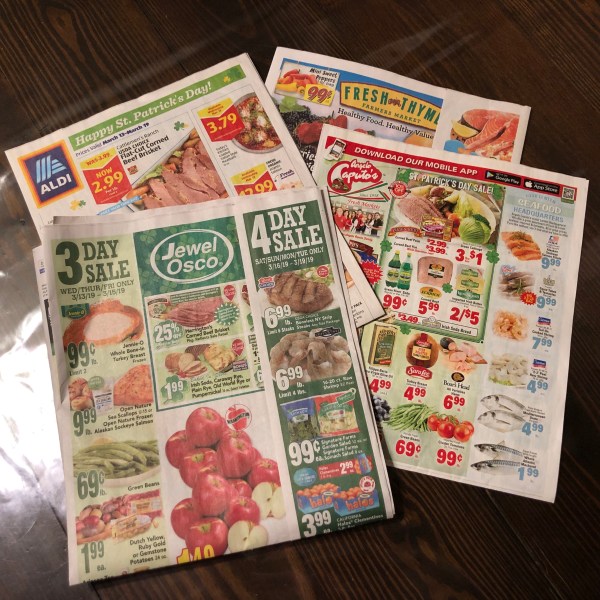
Rather than creating a meal plan and then buying the ingredients regardless of the price, I let the weekly ads determine what we eat each week. In my area, each Wednesday, grocery stores roll out new ads with new deals. I compare the ads from four different local grocers and then choose the one [or maybe two] with the best sales and that’s where I’ll be shopping that week.
Besides simplifying meal planning, another benefit of this rule is that it saves a lot of time at the grocery store. I know exactly what I’m going in to get. I don’t need to price compare a bunch of different options, or stroll down aisles looking at different food choices, or fall prey to the clever marketing tricks like flashy signs and end-caps. I go in, get what’s on sale, get out.
Bottom line, if it’s not on sale, I don’t buy it.
[As with all rules, there are exceptions. In the case of rule #1, I don’t buy my bulk dry goods on sale because most stores don’t offer regular sales on bulk goods. In this case, I am prioritizing my obligation to the health of the planet over money – ALWAYS a good choice, by the way. But I still save plenty of money.]
2. Set price limits.
Over the past two years I’ve learned what a good sale price is for most items and I have set rules for how cheap they need to be. Simply being “on sale” is not necessarily good enough. Not all sale prices are created equal. For example, it is extremely rare that I will buy produce at Aldi because their sale prices are never as good as my other local grocers. If you [as most people do] assume that Aldi is cheaper for everything simply because it’s Aldi, then you are overpaying.
This week, 1lb of strawberries is $1.69 at Aldi and $.88 at Fresh Thyme. In fact, everything on this Aldi ad can be found cheaper elsewhere.
In order to figure out what a good sale price is, you have to pay attention to sales in your area over a period of months. My price limits are still changing as time goes on. For example, I used to only buy boneless chicken if it was under $2/lb, but after a while I learned that I could find it at least once a month for $1.49/lb. So that became my new price limit.
Here are some examples of my price limits [understand that prices will vary greatly depending on your location]:
I won’t buy produce for more than $1/lb. Sometimes I do buy blackberries at $.88/6oz package and I will buy avocados if they are $.79/each or less, but I don’t make a habit of buying these items because they are so expensive compared to normal produce.
I won’t buy cheese for more than $1.50/8oz package. If cheese is not on sale for this price or less, we just do without cheese. It’s not even really a hardship. In fact, I think it has improved my children’s appreciation for the taste of real foods not covered in cheese.
I won’t buy eggs for more than $1/dozen. Though, I admit, I am going to buy eggs from our farm CSA this summer at $5/carton, but in this case, I am prioritizing supporting local agriculture and health over saving money. I will also be limiting our eggs to one carton per week.
Your rules will depend on what eat, but everything should have a price limit required for purchase. There will always be off cases when you simply must have something – like butter to make buttercream for your son’s birthday cake – and it’s not on sale. Okay. Sometimes we have to bend the rules.
3. Eat less meat…and live longer and healthier lives.
I’m a fitness professional, not a registered dietician or nutritionist, so you don’t have to agree with me on the healthful side of this rule. Eat meat if you want, but know this, meat is WAY MORE expensive than plant-based foods. We used to make two or three chicken breasts for our family of five for dinner. Now, we all share one chicken breast [oftentimes less] and fill the majority of our plates with vegetables, fruits, grains and legumes.
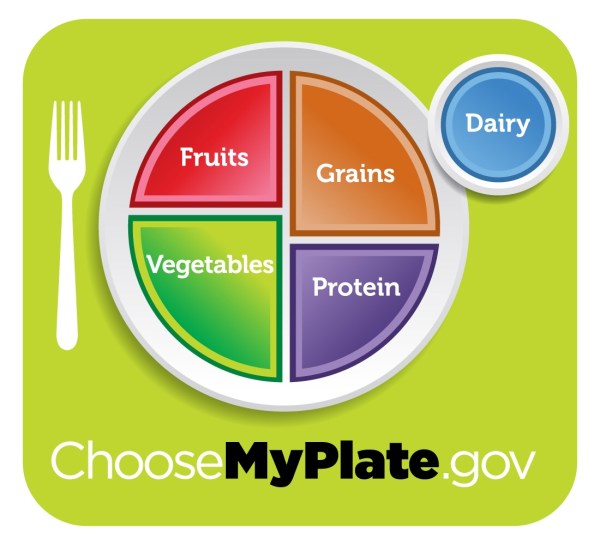
This is the USDA’s newest recommendation for healthy eating which has replaced the typical food pyramid we all learned in grade school.
Notice that three quarters of the plate are filled with plant-based foods. Now think about how your dinner plate typically looks. Most Americans eat a meat heavy diet, with the protein being the main course and the vegetables and fruits being “sides.”
If you need further evidence, watch the documentary, In Defense of Food, or read the book with the same title by Michael Pollan.
Time to rethink the way we eat…and hopefully soon because the health epidemic in our country is quite literally frightening. But the good news is, eating more plant-based foods is CHEAPER!
Also, according to the chart below by health.gov, over 85% of the population is not eating the recommended amount of vegetables…
C’mon, people. Let’s eat some more veggies!
[Someday I’ll go into greater detail about how to eat healthy on a budget. It is not hard, folks. I promise you!]
4. Buy less food.
This might sound obvious, but apparently it needs to be stated anyway because we have a bit of an overeating problem in America.
According to the CDC, 39.8% of adults in the US are obese [read about it here.] And, shockingly, according to this article by NPR, 75% of Americans believe themselves to be eating healthy…so why are obesity rates so high?
There are lots of factors that contribute to the obesity issue, but no matter where you look, portion size and overeating are partially to blame.
Nutrition scholarMarion Nestleat New York University says portion size — just eating too much — is an issue. “I’d vote for that as a major cause of obesity,” Nestle told us by email.
“Some of the problem is that individuals pay more attention to getting good things in their diet than they do to limiting overall intake,” addsDavid Just, a behavioral economist who studies food psychology at Cornell University.– npr.org
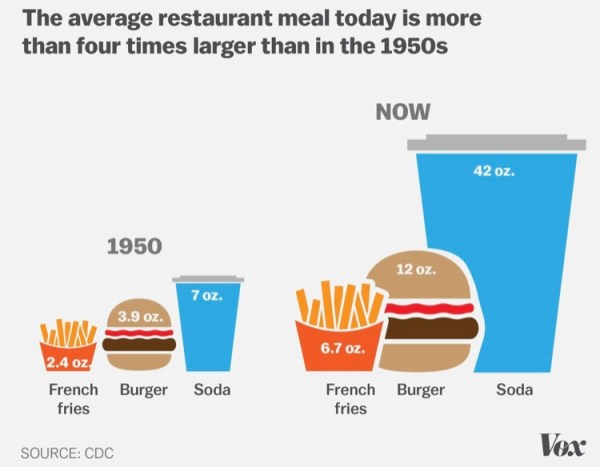
The accessibility of food in our society has made overeating too easy. Yes, restaurants serve us too much food, but we also serve ourselves too much food at home. We also stock too much food in our kitchen, making it too easy to eat whatever we want whenever we feel like it.
Let’s all do ourselves a favor and buy less food. There is no reason to stockpile canned goods as if we are fearing an imminent apocalypse…unless you are fearing an imminent apocalypse…in which case, there is no need to save your money because it will be useless when the zombies take over.
Some basic ways to buy less food is:
Go grocery shopping once a week and only buy what you need for that week.
Buy fresh produce so you CAN’T stockpile it. Fresh food is healthier, more likely to be local, and tastes WAY BETTER!
Don’t buy [or buy very little] unhealthy snacks and treats. Don’t spend your hard-earned money on food that is going to make you sick and unhappy in the long run.
Avoid processed and packaged foods – for the sake of your wallet, your health, and the planet.
5. Eat all the food you buy.
Again, this seems obvious…but apparently it’s not because 40% of food in America is thrown away.
In 2012, NRDC published a groundbreaking report that revealed that up to 40 percent of food in the United States goes uneaten. That is on average 400 pounds of food per person every year. Not only is that irresponsible—it’s expensive [emphasis mine]. Growing, processing, transporting, and disposing that uneaten food has an annual estimated cost of $218 billion, costing a household of four an average of $1,800 annually. – NRDC report by Dana Gunders, source
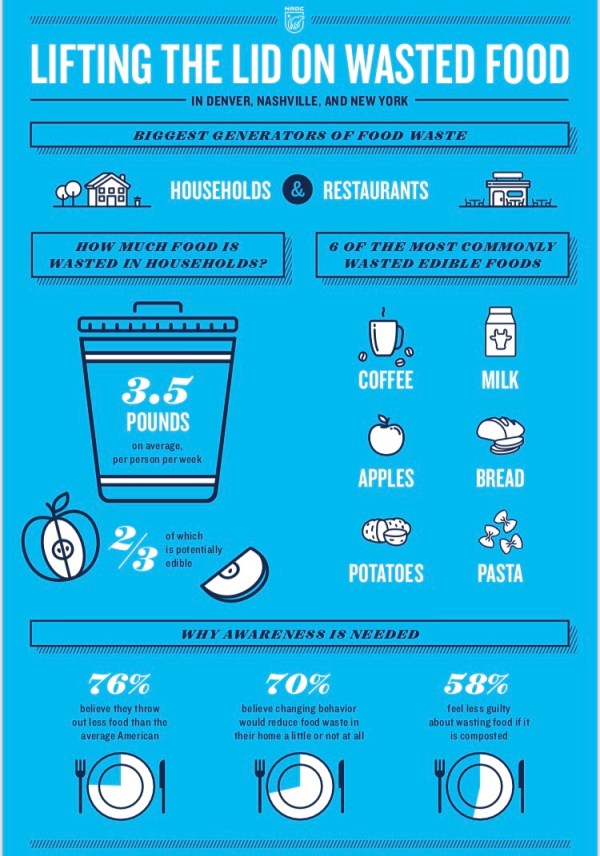
And before you go blaming it all on grocery stores, this infographic created by the NRDC says that households and restaurants are the biggest generators of food waste [at least in Denver, Nashville and New York].
Of course, on the other hand, we have lots of families in our country who struggle to put food on the table.
So besides the cost of wasted food, I feel just plain terrible knowing that I am throwing food awaywhen some people are not eating today. And I feel like a terrible hypocrite if I talk about our grocery budget being “tight” while I’m throwing food in the trash – or even in the compost bin.
In my home, we do everything we possibly can to avoid wasting food. Some of the ways to reduce our food waste are:
Eat all the leftovers. I set designated days at least once but often twice per week to eat whatever we have that is close to expiring.
Only buy what you need for a week. You may not know what you need for a week, but if you find yourself throwing food out, then you know for next time that you need less. Obviously some things with longer shelf lives, like dairy products and dry goods, don’t need to be purchased weekly. That leads me to the next tip:
Don’t buy more if you still have food to eat. I don’t know why we do this but it seems that it’s totally normal to go buy a full cart of groceries when we still have enough food in our home to feed our family for the next six months. I’m not joking. When we got ready to sell our last home, I started using up all the food that we had in our cabinets and pantry and – oh my gosh – our second freezer. Lo and behold, we had enough food to feed us for months. I decided then and there that stocking so much food in our house was wasteful and expensive and I stopped doing it.
A word on frozen and non-perishable foods: Some people prefer to buy non-perishables because they feel like they throw out more food when they buy fresh – which they really might. The problem is not the fresh food – it’s that there is a disparity between the amount they are buying and the amount they are eating. As I said previously, fresh food is healthier, more likely to be local, and tastes WAY BETTER! Buy fresh food – just not so much – and then EAT IT!
So, this has been a book. If you’ve stuck with me, I hope you’ve found some useful information and, hopefully, some motivation to improve your spending and eating habits.
These are all things I wish someone had told me a lot earlier, but everything I found about saving money on groceries revolved around making a list, not shopping hungry, and clipping coupons. I wanted something that saved me time AND money AND made me a healthier consumer.
For me, this is it.
If you’ve found a method that works for you, share it in the comments! We all have room for improvement!
 It took me almost 30 years to fully recognize and acknowledge that I was born into privilege – and for the past two years, I’ve struggled with what my responsibility to the world is as a result. The answer, in part, is minimalism.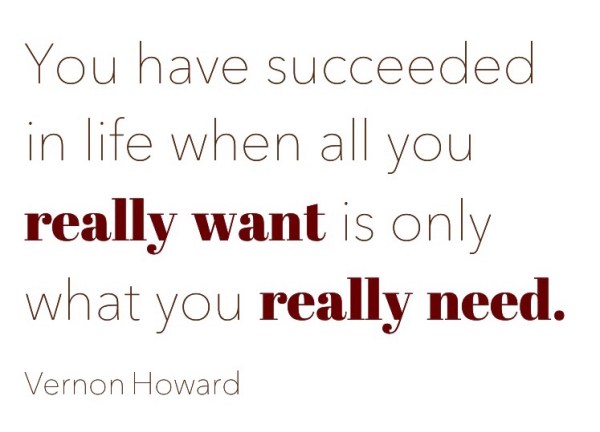
















 No Makeup Mama