My 34 Ways to Go Zero Waste

My 34 Ways to Go Zero Waste

It’s been exactly one year since I read my first zero waste book, Zero Waste: Simple Life Hacks to Drastically Reduce Your Trash by Shia Su, which was my first introduction to the world of bulk bins and muslin bags and stainless steel straws and bamboo cutlery. And my life has been forever changed.

Thanks, Shia! [I LOVE HER!]

This book made me believe that reducing my waste is totally achievable – not extreme or inconvenient, as it is commonly perceived – and gave BRILLIANT tips and hacks and photos to convince me that, YES, I can do it!

Since then, I’ve made a lot of changes to reduce my household’s waste.

Then, a few days ago, I picked up this new book: 101 Ways to Go Zero Waste by Kathryn Kellogg, which is another super practical guide for reducing your waste.

This book is so fabulous that I read the entire thing in two days – which basically means a few hours.

As someone who is outspokenly “low waste,” this book was part slap on the back [“yeah, look at you go! No more paper towels in your home!”] and part slap on the wrist [“don’t call yourself zero waste when you still accept disposable straws at the drive-thru!”].

I’ve clearly got some more work to do.

Out of the 101 ways in the book, 20 are not applicable to me [I don’t use hairspray] or are impractical [I can’t walk, bike, or take public transportation because of where I live and the fact that I always have three toddlers in tow]. Out of the 81 that are left, I’ve already been doing 47! [Go me!] But that still leaves 34 ways to go zero waste that I have not gotten a handle on yet.

Yes, one of them is the straw issue…

So, since my clothing ban officially ends next month, I’m going to use the next twelve months to focus on these remaining 34 areas.

Here they are:

  1. Say “No” to straws
  2. Go to the farmers market
  3. Go to the butcher
  4. Specialty stores and restaurants
  5. Compostable dish scrubs*
  6. Swapping out toxic items
  7. Toothpaste*
  8. Toothbrush
  9. Toilet paper
  10. Tissues
  11. Razor*
  12. Lotion*
  13. Deodorant*
  14. All-Purpose cleaner*
  15. Deodorizing spray*
  16. Room deodorizer*
  17. Carpet deodorizer*
  18. Tub and toilet cleaner*
  19. Floor cleaners*
  20. Dishwasher detergent
  21. Air drying
  22. Shipping packaging
  23. Fountain pen*
  24. Recycled and double sided paper*
  25. Office-wide initiatives
  26. Take out
  27. Out to eat
  28. Zero waste travel kit
  29. Buying carbon offsets
  30. Zero waste vacations
  31. Zero waste pets
  32. Find community
  33. Work locally
  34. Get involved with local government
  • [*I haven’t been buying these for the past year and I am still trying to use up what I have so that I can switch to a sustainable or DIY alternative.]
  • Geez, that is a long list. Luckily, many of these things can be combined. Also, many of these won’t be accomplished in a year because I’m still working through using up my bajillion bottles of lotion and my fifteen packages of disposable razors [don’t ask].
  • And now, I will leave you with my favorite quote from the book:

    “In today’s world, one of the most radical things you can do is find contentment.” – Kathryn Kellogg, 101 Ways to Go Zero Waste

    Doesn’t sound related to zero waste, but that is at the heart of the zero waste movement – to stop the constant consumption and need for more that drives our linear economy. Finding contentment with what we have is the first step to counteracting our wastefulness.

    Karis
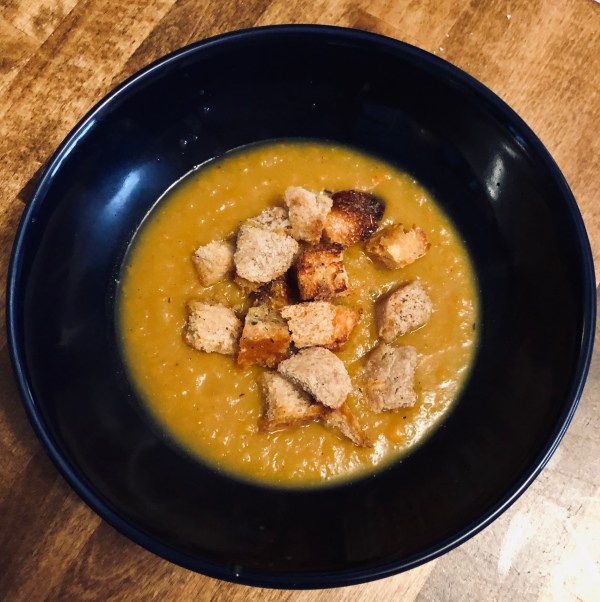
    Homemade croutons

    Homemade croutons

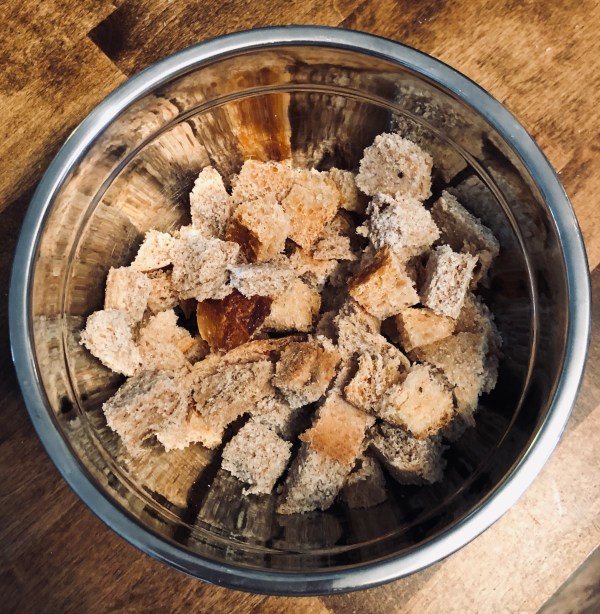
    When I’m reaching the end of my homemade bread loaves, I usually have some dried ends hanging around because of the shape of my loaf pans. Rather than let these go to waste, I use them to make croutons.

    I originally got the idea from back in the day when I worked for Panera. Did you know that they make their own croutons out of their freshly baked bread? Well, at least that’s how they did it ten years ago…

    Anyway, nowadays I do the same thing when I’m looking for ways to use the bread before it goes bad.

    It’s SO simple and a great zero waste option if you love croutons as much as I do.

    How to make your own croutons:

    1. Cube the bread.
    2. Add enough oil and seasonings to coat lightly. [I use the same seasoning mix I use for my homemade salad dressing here, or you could use regular Italian seasoning.]
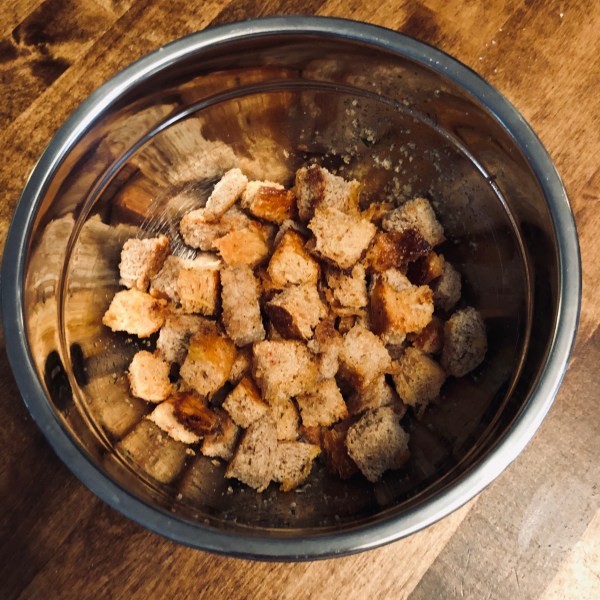
    3. Spread on a baking sheet and bake at 450° for roughly 8 minutes, shaking the tray once to stir. [Time will depend on how dry the bread is to begin with, so watch closely.]
    4. Enjoy in soups or salads or, as my kids like to have them, as a crunchy snack.

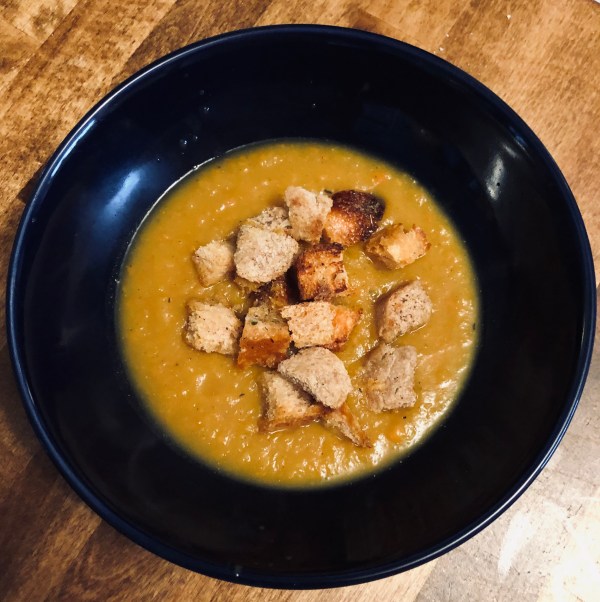
    For dinner tonight I had day old bread that needed to be used up, so I made grilled cheese sandwiches and used the ends of the loaf to make these croutons to top squash soup which my Auntie Paula had given us.

    Mmm-mmm. Delicious.

    Karis

    Zero Waste: Shampoo Bars

    Zero Waste: Shampoo Bars

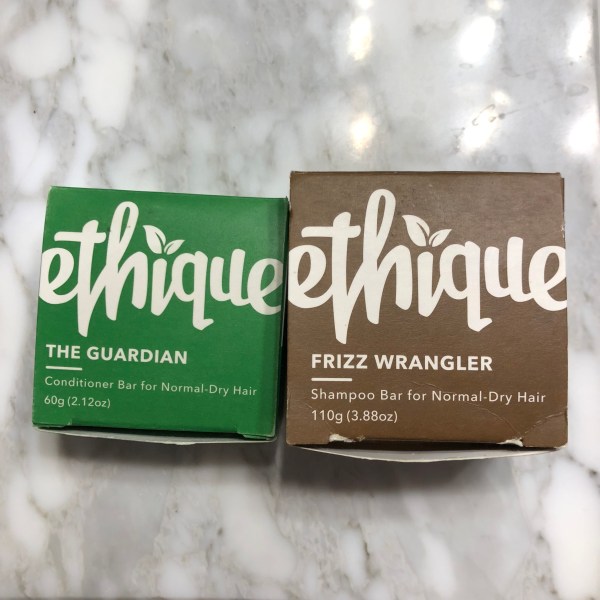
    Last November, I ordered our first shampoo and conditioner bars.

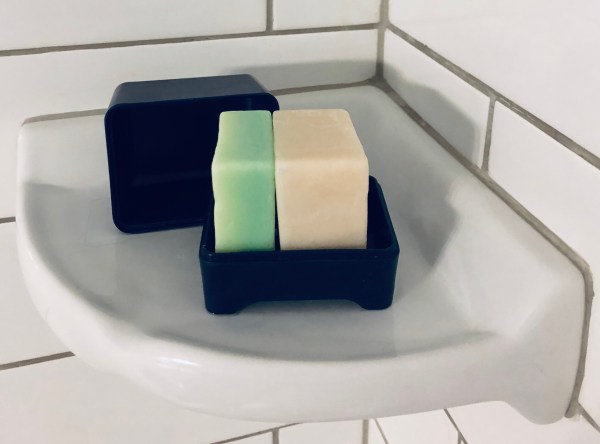
    These Ethique bars come in biodegradable boxes and are cruelty free, sustainably sourced, fair trade, palm-oil free and plant- based.

    Are they cost effective?

    I was curious to see how long the bars would last because I paid a whopping $33.20 for them. With my husband and I both using them exclusively, the shampoo bar ran out in the beginning of March – so basically four months. The conditioner bar is still going strong five months later.

    Note: I also purchased the shower container [pictured above] to store them in because they logically need to be kept out of the water in order to last longer. The container is also biodegradable. 👍🏻

    I’m honestly not quite sure whether these bars save money because I’ve never kept track of how many bottles of shampoo I was buying or how long they were lasting or how many washes I was getting out of them.

    Then why switch?

    Well, let me tell you…

    Whether shampoo bars save money is not really the issue. I don’t use them because they save me money. I use them because they save a TON of plastic.

    80 billion plastic bottles are thrown out around the world each year from shampoo and conditioners alone.

    Plastic bottles take 400 years to breakdown – and will NEVER decompose.

    8 million tons of plastic end up in the ocean each year.

    So, the answer to “why” is simply that we have a responsibility to this planet that we enjoy so much. And plastic is literally destroying it.

    Bars are also less wasteful in general. With bottles, there is no measuring device that keeps you from wasting the product. In fact, I’m pretty confident [now that I’m using bars] that I’ve been using way too much shampoo for years. With a bar, you run it over your hair [or in your hands, as my husband prefers] and then lather and rinse. You’re not pouring an unspecified amount into your hands.

    When our shampoo bar ran out, we got a bar from Lush – another great ethical company that produces cruelty-free, sustainable bath products.

    Not very exciting to look at, but I actually like this bar a little better, though it is more expensive per ounce than the Ethique bar. It lathers like a dream and works great. Lush also has brick and mortar stores in the US so you don’t have to have them shipped to you. My husband conveniently works in a mall with a Lush location which makes these super sustainable and convenient.

    Have you tried shampoo bars? Any recommended brands?

    Happy hair washing!

    🧼 🧼 🧼

    Karis

    A week’s worth of groceries for $30

    A week’s worth of groceries for $30

    A while back, I wrote about how I buy healthy groceries on a budget. So, here is a real-life example.

    Thirty dollars. Two stores. One week’s worth of food for my family of five.

    [The thirty dollars also covered a bag of red potatoes, two apples, and a banana which are not pictured here.]

    Everything pictured was on sale and at or below my price limit of $1/lb for produce and $2/lb for meat.

    This doesn’t include the dry goods that we already have on hand – nuts, oats, rice, beans, coffee, sugar, and flour – which we only buy about once a month and don’t need to restock at this time.

    No more snacks

    The biggest change to my grocery shopping habit, besides buying only what’s on sale, is that I don’t buy traditional snacks. No more pretzels or crackers or applesauce or fruit cups or yogurt cups or string cheese or fruit snacks or boxes of raisins, etc. I used to buy all of those things regularly, but then I realized that I didn’t need to buy any of that in order to give my kids snacks, or even to enjoy a snack myself. Now, when my kids want a snack, they have apple slices with peanut butter, bananas, oranges, grapes, red pepper slices, cucumbers, or nuts. And when I want a snack, I have the same thing.

    If I’m feeling really ambitious, I’ll bake banana bread muffins or make my own applesauce in the crock pot or even bake my own granola bars, crackers, or pretzels – but I don’t typically have time for that. So bananas and apples are the perfect snack to have on hand that require no prep work at all – and they are also great on the go.

    [Side note: I also don’t buy frozen foods anymore – except the occasional ice cream carton 😬 – because plastic packaging for frozen foods is made differently apparently and, as a result, is not recyclable. I used to buy a large amount of frozen vegetables, but I have transitioned to 100% fresh veggies.]

    No more, no less

    It might not look like a lot of food, but it is plenty for our family of five for a week. The meat and milk and eggs will actually last longer than a week because we don’t eat meat every night or eggs every morning. I have enough vegetables for sides for all of our meals and enough fruit for breakfast, lunch, and snacks.

    The goal is to buy just the right amount so everything gets eaten and nothing gets lost in the back of the fridge and goes bad. [This way I make sure to avoid food waste – which is a big problem in America.]

    The meal plan

    So now that I’ve got the food, I decide what we are going to eat for the week. Breakfast is always oatmeal or eggs with fruit. Lunch is always PBJ with fruit and veggies for the kids and a salad for me.

    Dinners will look something like this:

    • Tuesday [tonight] – Vegan Burrito Bowls
    • Wednesday – Veggie Omelets and Roasted Potatoes
    • Thursday – Chicken, Grilled Romaine and Asparagus
    • Friday – Pork Chops, Brown Rice and Green Beans
    • Saturday – Leftovers
    • Sunday – Mexican Rice and Bean Skillet
    • Monday – Southwest salad

    The schedule may change. I don’t like to set my meal plan in stone because my work schedule often changes suddenly and sometimes I have to just throw something together. But at least I have food and ideas.

    New grocery deals come out tomorrow, so I will likely make another grocery run in the next week to take advantage of new sales – but for now we’re stocked and I’m feeling good about our healthy [and fresh] food.

    👍🏻

    Karis

    March Clothing Donation

    March Clothing Donation

    It has been ten months since I committed to one year without buying any clothes and to donating 26 clothing items per month – my self-imposed clothing ban.

    Since then, I have not bought any clothing for myself or my kids [though my husband did buy me a sweater a few months ago] and I have donated 297 items of clothing from my wardrobe.

    And I still don’t need any new clothes.

    In fact, I feel like I still have an excessive amount of clothes – but, after I have this baby, I will be able to give away all of my maternity clothes and, after I get back to my regular size, I will be able to give away all my postpartum stuff as well. That will probably cut my wardrobe in half – again.

    Last year, I heard about fast fashion for the first time when I watched the documentary The True Cost, which highlights many of the ways that fast fashion hurts not only our planet but people all over the world.

    “It’s no secret that fast fashion has been responsible for a catastrophic level of environmental pollution. The trifecta of overt use of raw materials, water pollution and greenhouse gas emissions are only a part of the story. Not only is this circular buy, wear and toss behavior impacting landfills and becoming a major carbon contributor, but that may not be the worst of it. Fast fashion has played a very dark role in contributing to black-market trafficking of forced labor, as evidenced in the New York Times documentary, Invisible Hands, by journalist Shraysi Tandon.” – Forbes (read the article here)

    I honestly had never considered how my “buy, wear, and toss” consumer mentality towards clothes [and all products] was affecting the world around me.

    And it IS affecting the world. The only question was, did I care enough to change my spending habits? Hence the clothing ban.

    This clothing ban has left me permanently changed. It may be over in May, but I will never be able to go back to my old ways of spending money.

    Once again, if you haven’t watched The True Cost, DO IT!

    Karis

    Food Waste: The Problem and What We Can Do About It

    Food Waste: The Problem and What We Can Do About It

    There was a time [not too long ago] when I wouldn’t have thought twice about throwing away the ends of the bread loaf or the bag of wilted spinach, and I have most definitely been guilty of tossing leftovers that I willfully ignored until they were no longer edible. But now, every time I throw away food – even into the compost bin – it is a reminder of my life of excess which provides me with so much food that I’m letting it go bad and throwing it away, and even more importantly, it is a reprimand for not being a responsible consumer of one of life’s most essential resources. Needless to say, I don’t throw food away without feeling badly about it anymore.

    As a family, we began actively trying to reduce our waste [in general] at the start of 2018. To be honest, food waste wasn’t a primary focus until a few months ago when I read statistics about food waste in America being as high as 40% [read it for yourself here].

    I am APPALLED at that number – especially when I think of the 49 million Americans who struggle to put food on the table , not to mention the millions around the world who will go to bed hungry tonight. And here I am, throwing out grapes because they are a little squishy…

    Part of the solution to this problem is recognizing that I am a contributor to the food waste problem in the world and accepting that it is my responsibility to reduce my waste as much as I am capable.

    So, in our home, we’ve been taking extra measures to reduce our food waste. I’m going to share them below, but before I do, here are the statistics that I hope you will find as shocking as I did and will motivate you to join the cause.

    Food Waste Statistics

    The waste is HUGE.

    • An estimated 40% of food in America is wasted. (Source: NRDC.org, read it here.)
    • On average, 197 pounds of perfectly good food goes to landfills EVERY DAY. (Source: FeedingAmerica.org)

    The problem is serious, and seriously EXPENSIVE.

    • Approximately $161 billion worth of food is wasted each year in the US. (Source: USDA, read it here.)
    • Food waste is costly to our environment as well – using 21% of fresh water, 18% of crop land, and taking up 21% of our landfills. (Source: ReFED)
    • We are paying $218 billion annually to produce and ship and dispose of food.

    American consumers, businesses, and farms spends $218 billion a year, or 1.3% of GDP, growing, processing, transporting, and disposing food that is never eaten. That’s 52 million tons of food sent to landfill annually, plus another 10 million tons that is discarded or left unharvested on farms. Meanwhile, one in seven Americans is food insecure.” ReFED.com

    The biggest problem is in American homes – not grocery stores and restaurants.

    • 43% of wasted food is happening at the consumer level.

    The chart above, from FeedingAmerica.org, shows the breakdown of where the food waste is happening.

    What you can do about it

    1. Buy only what you need. Only buy enough fresh food to last you a week or two, depending on the item’s shelf life. Then EAT IT. Don’t stock up on foods with expiration dates unless you are certain you will eat them.

    2. Eat leftovers – including leftovers from restaurants. Store them in clear containers so you know what you have available in your fridge. Set up a “first in, first out” rule, eating oldest leftovers first.

    3. Store food properly. Prolong the life of your fresh foods by storing them properly.

    4. Freeze or preserve excess. When foods are nearing their expiration, eat or freeze or preserve them. Don’t just let them rot and then toss them in the trash.

    5. Take inventory regularly. Make it a habit to frequently take inventory of the contents in your fridge and freezer and pantry – noting expiration dates – so that you know what you have, what needs to be eaten soon, and what you need to purchase.

    6. Compost your food scraps. Composting is not as intimidating as it sounds and while it is easier to do if you own land, there are a growing number of urban composting resources to help you compost in your apartment or townhome or penthouse with a view. [Read this article by The Washington Post about how to get started.]

    7. Donate to organizations that are rescuing food like Feeding America and ReFED. Look for organizations in your area and donate or volunteer.

    8. Spread the word. We all have a sphere of influence and are capable of multiplying our impact by encouraging our social circles to join us in ending food waste.

    Food is one of life’s most vital resources. Let’s not waste it.

    👍🏻 👍🏻 👍🏻

    Karis

    Lessons in Motherhood and Giving Used Gifts

    Lessons in Motherhood and Giving Used Gifts

    My son, Theo, turned three a few days ago. In keeping with our new sustainability and zero waste principles, we made a big deal of our time together [at Chuck E Cheese for the afternoon] and downplayed the gift portion of the celebration. We actually never even mentioned a gift and he never asked for one.

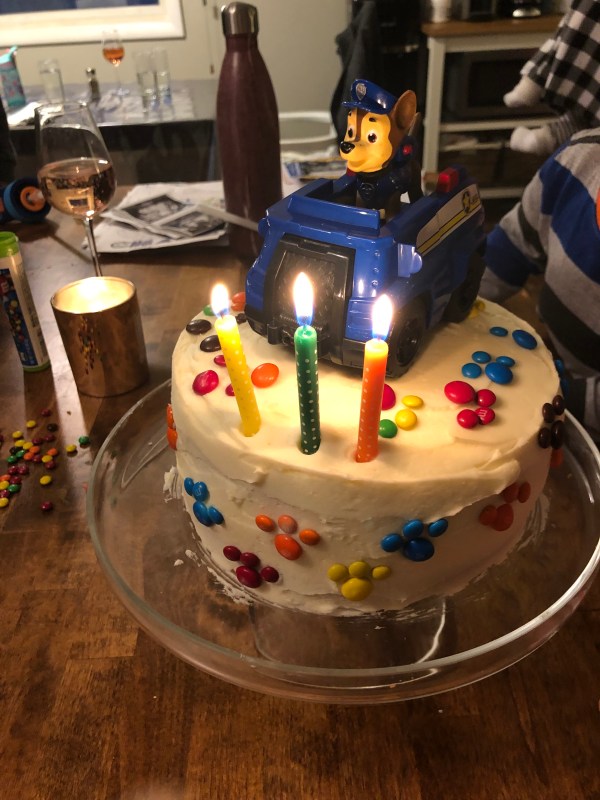
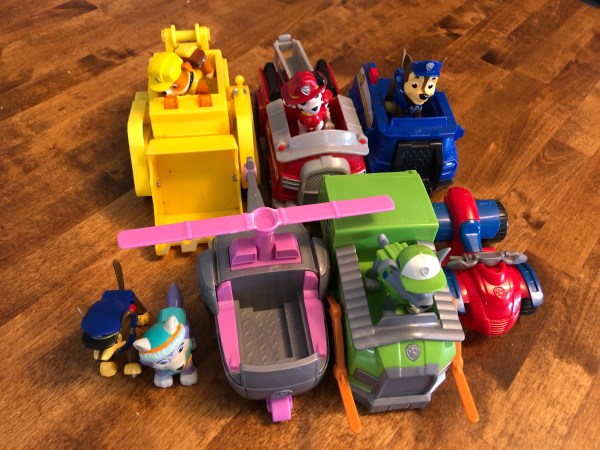
    But, of course, we did give him a gift – a set of used Paw Patrol characters and their vehicles [one of which I used to decorate his “Paw Patrol” birthday cake that all the kids helped decorate.]

    A few weeks ago we began looking for someone selling a used set of these Paw Patrol trucks because we knew how much Theo would love them. Living in the Chicagoland area meant that they were easy to find. We ended up buying a set of six vehicles and eight characters for $15. At Target, these Paw Patrol vehicle/character sets sells for $15 each.

    We’ve already lost a few characters…

    But the point here is that it’s actually not about the money at all. Yes, there was a savings, but it’s not like we couldn’t afford to buy it all brand-new.

    Why buy used?

    The motivation for buying used is to give a second [or third or fourth] life to something bound for the garbage bin. Rather feeding the machine that is constantly making new toys [especially plastic toys] we should be intentionally prolonging the life of the current toy population. I basically rescued these trucks from a landfill. I am essentially a super hero. And they are perfectly fine toys. In fact, my son ADORES them and couldn’t care less whether they were purchased new.

    Why not buy used?

    So it got me thinking about why I would still never show up at another kid’s birthday party with a gift purchased second-hand. It’s one thing to buy a used gift for my own kid, but a completely different story if I’m going to give a gift to someone else.

    There is some unwritten social code that says it’s unacceptable to give gifts that are second-hand.

    We even frown [although slightly less so] on “re-gifting” and most people would agree that the appropriate way to re-gift an item is if the recipient doesn’t know it’s re-gifted.

    Isn’t that strange? Why should it matter?

    Gift giving today is about the represented dollar value, not how much it will be appreciated.

    I think that what has happened to our society is that gift giving has become more about the ritual [i.e. gifts are required at certain holidays and events] and the dollar value [i.e. gifts need to be within a certain price range] than it is about the recipient’s enjoyment of the gift.

    At my first baby shower, a cousin of mine gave me a gift for the baby – purchased new, obviously. After I opened it, she handed me a pair of baby girl Sperrys that she had found used and thought were so cute she had to get them for my baby, but she gave them to me separately because she wanted to explain that they were second-hand.

    I LOVE those pink cheetah-print baby Sperrys! It didn’t matter if they were new or not. Both of my baby girls have worn them – and I’m sure this third baby girl will as well.

    I find it perplexing and rather sad that we don’t feel free to give gifts just for the sake of their enjoyment value.

    Similarly, when I started dating my husband, he and his siblings had a Christmas tradition of trading names for a gift exchange. They had set a value of $75 and then provided a detailed list of things they wanted. I went shopping with Brett that year and watched him cross items off the list and tally up the total dollar amount for his sister-in-law.

    I couldn’t even believe it. Is this what gift-giving has become? I felt, even back then, that this was the total antithesis of what giving a gift should be.

    Have you been out shopping for a gift and had some sort of mental idea of how much you needed to spend? Somewhere between being “too cheap” and being “too flashy”? And have you been invited to a party or shower or event and known without any overt statement that a gift is a requirement – or at least you would be viewed as a party crasher if you showed-up empty-handed? Have you tried to make sure that each of your kids gets the same general value of gifts or the same number of packages on Christmas morning?

    Can we go back?

    Can we go back to giving a gift purely because we want to, rather than because it’s required? Can we go back to giving a gift just because we know someone will love it and not care about how much it cost or where it came from?

    I’m hoping that by continuing to exchange used gifts [whenever possible] in my immediate family that I will teach my children that gifts are for the purpose of making people feel loved and appreciated by giving something that they will love – not out of obligation or to follow social customs or to show that we have the means to buy new, expensive things.

    Buying used isn’t being cheap, it’s being responsible.

    Theo was so excited about those Paw Patrol toys that he didn’t even want to eat cake. Everyone else ate cake while Theo played with the trucks. All the other kids came to the table for cake eventually, but Theo only wanted to play.

    These toys were the perfect gift – because they were used and because no one cared that they were used. They represented our commitment to sustainability and our belief that the value of a gift doesn’t come from how much is spent or where it is purchased, but from whether it is given out of love.

    Theo’s Birthday Video

    As is my new tradition for the kids, here is a short video highlighting Theo’s third year.

    Happy Birthday to my sweet, handsome boy!

    ❤️ ❤️ ❤️

    Karis

    [Nearly] Zero Waste at Fresh Thyme vol.2

    [Nearly] Zero Waste at Fresh Thyme vol.2

    Fresh Thyme Farmers Market finally opened a new location close to my home!

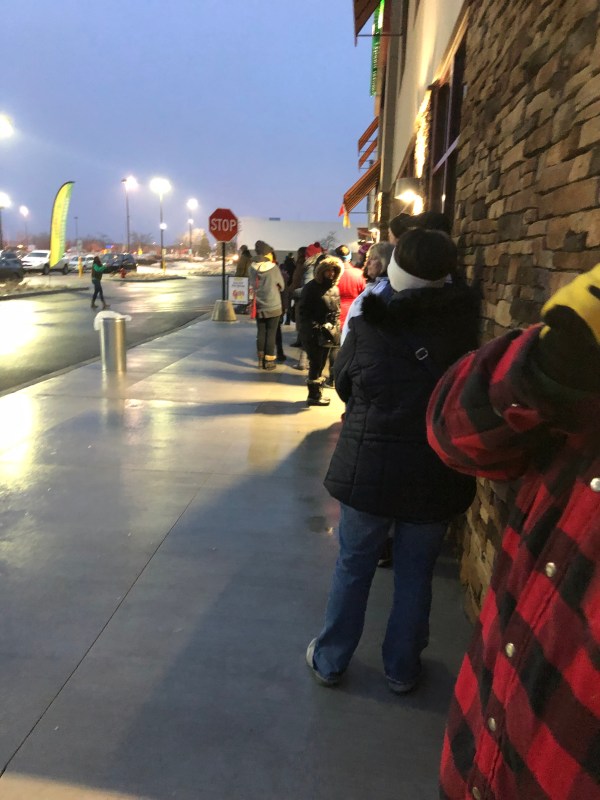
    Yes, I was there on opening morning waiting in line with some one hundred other people.

    No, I am not ashamed.

    Though…I did accept the bag of free groceries that was FULL of packaging.

    I am slightly ashamed of that…

    Still, I was glad to show my support for a grocery store that encourages customers to reduce their waste by putting bulk bins front and center and by making it easy to bring your own containers.

    I’ve been a few times since they opened, but most recently I made my first bulk liquid purchase.

    I brought my own jars [and a dry erase marker] and weighed them with the cashier before filling them with maple syrup, local honey, and freshly ground peanut butter [it literally ground the peanuts right into my jar – doesn’t get any fresher than that].

    Fresh Thyme also sells bulk oils, vinegars, nut butters, and even kombucha – which I fully intend to purchase in the future.

    I frickin LOVE this store.

    And on top of that, the prices are reasonable. I paid less for the maple syrup than I do for a jar of pure maple syrup from Aldi.

    They also don’t give me side eye for checking out with cloth bags and my own jars. My cashier even said it was “so cute.”

    🤷‍♀️

    Just doin’ what I do. Being cute AND saving the planet.

    The only waste from the purchase was [once again] produce stickers and the receipt.

    All in all, a huge success!

    Karis

    February Clothing Donation

    February Clothing Donation

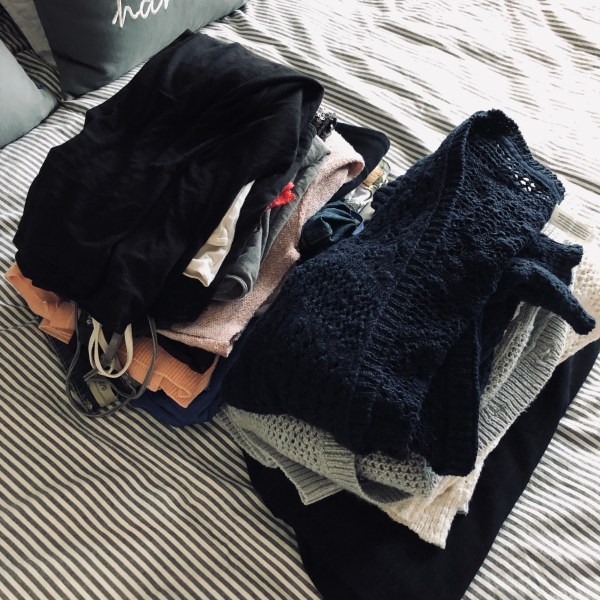
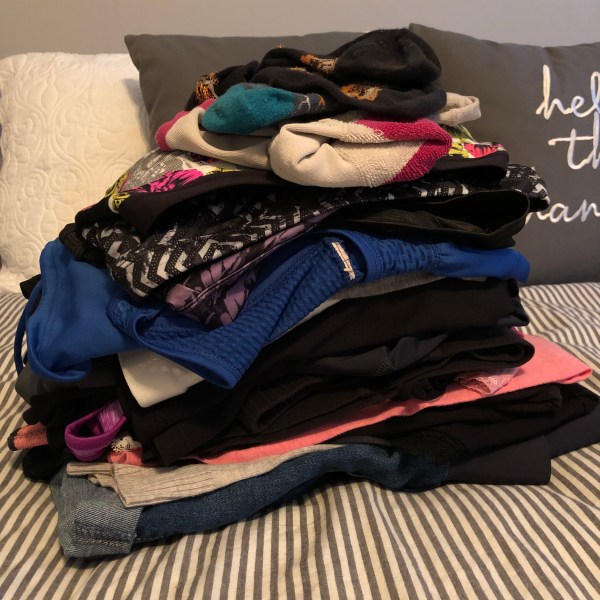
    This month, I’m donating [or recycling] 27 items of clothing plus three maternity pieces. [Maternity clothes don’t count towards my total because I didn’t count them in my original clothing inventory].

    It’s crazy how much my perspective on my possessions – especially my clothes – has changed over the past ten months. I look in my closet now and I still have way too much, even after giving away more than 270 items from my wardrobe. How on earth did I ever justify buying new clothes? And at the same time I was probably complaining about money being “tight.”

    I must have been crazy.

    There have been moments when I could have bought more clothes. Believe it or not, I have actually worn my maternity workout pants straight from the washer a few times because I only have one pair and I exercise six days a week, so sometimes when I haven’t had time to dry them [or I forgot about them in the wash…oops], I just put them on straight from the washer. Other times I just wear them over and over again until laundry day. I’ve thought about how nice it would be nice to buy another pair. But I’m only going to be pregnant for a few more months and I don’t really need need them.

    So I just do without. And I’ve been doing just fine. [I might be a little smelly…but hopefully no one notices.]

    Even though my clothing ban technically ends in two months, I can’t imagine needing to buy any clothing for a very long time. I originally was planning to purchase something from Patagonia, which is one of my preferred ethical brands, as a way of ending the ban in May, but I can’t even justify that because I literally don’t need any clothes. When I do need something though [as in really need something], I look forward to using my consumer dollars to support a company who is transparent and ethical in its treatment of all members of the supply chain AND committed to sustainable and eco-friendly practices [like Patagonia].

    If you haven’t read Cait Flander’s book, The Year of Less, or watched the documentary The True Cost, both of which inspired the start of my clothing ban last May [and my subsequent transformation], YOU SHOULD DO IT ASAP. They will not leave you unchanged.

    Karis

    [Nearly] Zero Waste Cutie Valentine’s Day Gifts

    [Nearly] Zero Waste Cutie Valentine’s Day Gifts

    Now that my oldest is in preschool, I get to prepare the obligatory Valentine’s Day gifts for my daughter to distribute to her classmates. As an avid Pinterest user and someone who loves all things crafty, I’ve been looking forward to this day, imagining all the cute, clever homemade card possibilities. However, I had the added challenge of finding something eco-friendly and plastic free and not candy and not wasteful and not crap that the other parents are just going to throw out and not wrapped in a plastic bag and [hopefully] not requiring me to go to the store and spend any money at all.

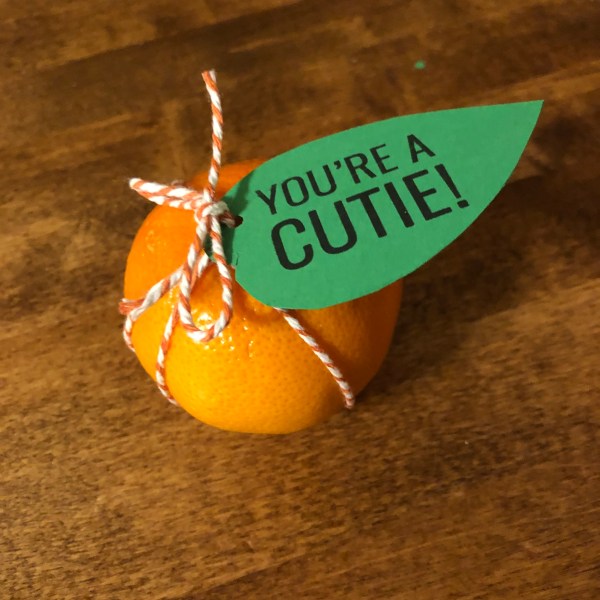
    My solution: the cutie.

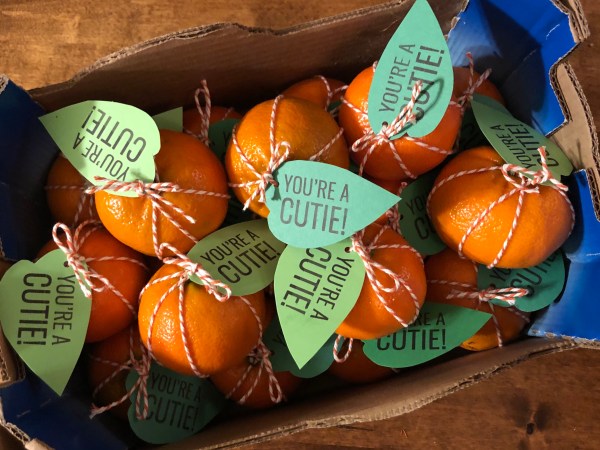
    I did have to buy the cuties, but they happened to be on sale this week at my grocer and I had everything else at home – which was very important because, even though I was looking forward to this occasion, it snuck up on me, and yesterday I found myself scrambling to put together seventeen preschool Valentine’s Day gifts.

    I didn’t want to wrap them in plastic bags, so I carefully tied them with string and put a cute little card to the top that I printed on green card stock. [Thank you, prettyprovidence.com for the free printable!]

    My daughter drew hearts and her name on the back of each leaf. And since cuties are her favorite snack, she was very excited to give these to her classmates.

    What I love most is that every part of this Valentine’s Day gift is either edible or compostable. I have no idea how many other families compost – but at least I know I have done my part.

    [Update: other zero waste valentines that my kids have distributed at school are:

    [Nearly] Zero Waste Valentine’s Day Coloring Bookmarks

    [Nearly] Zero Waste Valentine’s Day Pencil Arrows]

    Happy Valentine’s Day to you all!

    ❤️ ❤️ ❤️

    Karis