The last few days have been CRAZY. By now the coronavirus pandemic has affected everyone in some way or another, and my family is no different.
Earlier this month, I announced that my family is moving to downtown Chicago because my partner took a new job in the city, working with the Chicago Cubs. We already had a contract on the house, we were aggressively apartment hunting, and we were already packing boxes for the move. Now, however, the new job, the house sale, the moving plans, and my daughter’s schooling are all on hold until further notice. This is definitely an uncertain time for all of us.
[This feels like something out of a horror film, am I right???]
And yet, despite all the fear and panic surrounding this pandemic, despite all the unknowns about our house and our income and our future, I feel quite calm.
This whole situation is entirely out of my control, so I am doing the only thing I can do: staying home. Social distancing is extremely important right now, and we have committed to it fully. Other than necessary trips to the store, my family is staying home to help slow the spread of this thing [or “flatten the curve”] and I can only hope that everyone else is doing the same.
Of course, we could freak out, stare at our TVs all day, wring our hands, stock up on household essentials, and prepare for the end of the world as we know it. But it is much more productive [not to mention enjoyable] to spend time as a family, relax, spring clean, read books, cook from scratch, and spend time outside together.
I choose the latter.
Simple Living
So we have been enjoying the simple life, free from the pressure of work schedules, school activities, long commutes, social events, and even media overload. This has been a great time to unplug and unwind and hang out together AT HOME.
Spending Time Together
My cousin, Stacey, shared this GIANT list of at-home activities to keep kids busy:
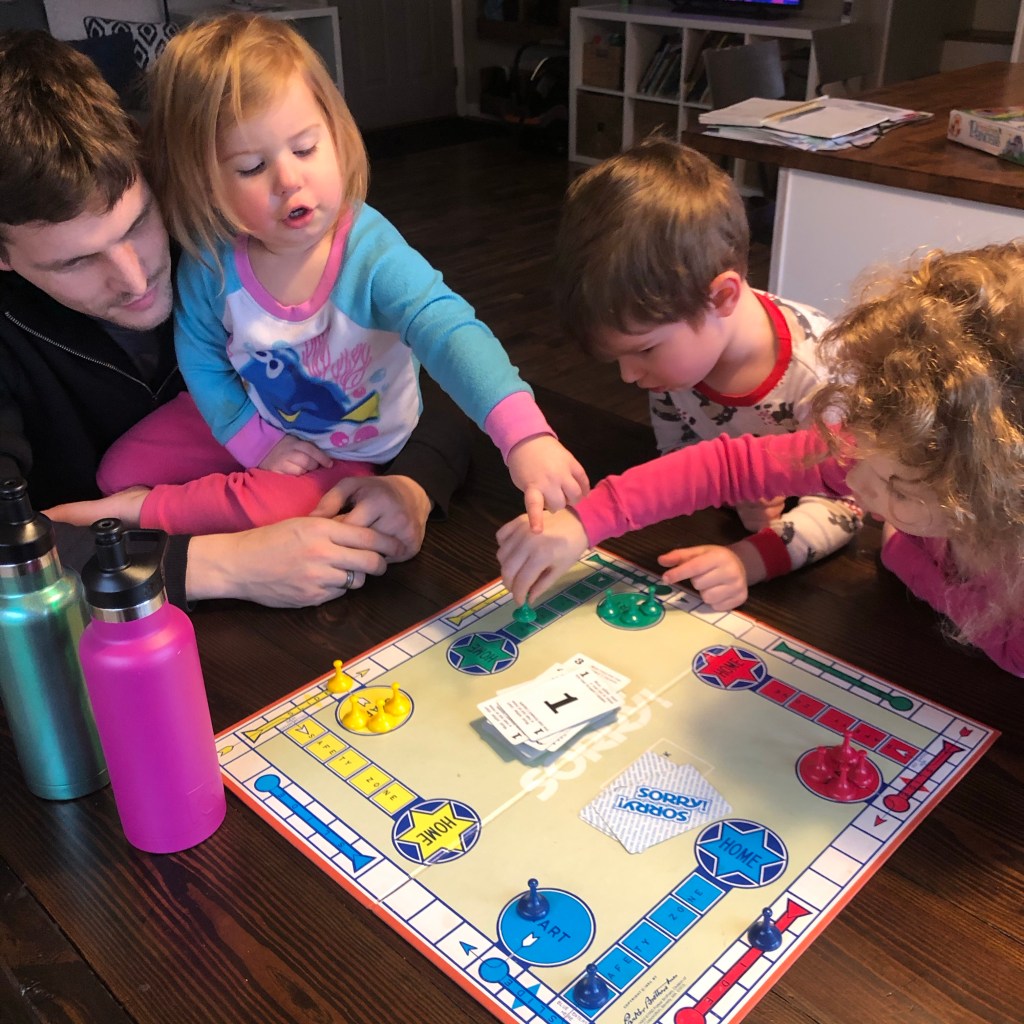
We’ve been choosing a few of these activities to do each day. One day we used all of our building blocks [including duplos, legos, k’nex, magnet blocks, and even wooden blocks] to make one huge tower. We’ve been playing a lot of board games. We painted pictures and then made up stories to tie all the pictures together.
We have NOT spent time watching tv [other than the news for a little bit each evening to stay up-to-date]. We haven’t been stressed out or frightening our kids about what’s happening. We have also not been glued to our phones [other than my daily Spanish lessons]. We have been present and attentive and enjoying each other.
Eating Real Food
This has been a great time to cook more from scratch. I usually cook a lot from scratch, but since I haven’t had much else to do, I’ve been spending more time in the kitchen.
Food from scratch is SO MUCH better than the convenient, pre-made boxed stuff. If you normally don’t have time to cook or bake from scratch, this is a great time to try it!
Exercising At [or near] Home
Exercise is a big part of my life and I am enjoying exercising outdoors now that the weather is warming up. I also have workouts that I can do at home through BeachBody On Demand. And yesterday, after my yoga workout, my kids did their own Cosmic Kids Yoga [you can check out these great yoga videos on YouTube].
Zero Waste
When I started on my low waste journey three years ago, I never expected to encounter this type of doomsday preparation where basic household “necessities” are being fought over in the grocery aisles. But here we are – and having already adjusted to [nearly] zero waste living is a huge advantage. Being out of toilet paper is no big deal in my home where we have a bidet and plenty of reusable “wee wipes” [which are usually reserved for the baby, but can be used by anyone when necessary]. The same goes for all the other disposables that have become household staples here in America. We never use them anyway, so we are not worried. We have plenty of reusable diapers for the baby, towels for the kitchen, a Brita for our water, and everything else we may need. The only thing we need to buy is our food, which doesn’t seem to be in short supply at this time.
Speaking of food, a [nearly] zero waste pantry is also a big advantage at times like these because I already know how to make a wide variety of meals from scratch using pantry staples like rice, quinoa, beans and flour. So, should groceries become scarce, we would be set for a long time with just the dry goods in my pantry.
For example, if pizza delivery services shut down, I already make my own pizza dough for homemade pizza each Friday and I can even make an Alfredo sauce from cashews if we experience a shortage of cheese. Once a week we have vegan burrito bowls, which I can easily turn into tacos or tostadas by making homemade tortillas which only require flour, oil, and salt. I can make my own almond milk and nut butters. With just potatoes and flour, I can make homemade gnocchi. Lasagna noodles are also a cinch. Vegan chili is made with quinoa, black beans and kidney beans. With a simple bag of flour and a jar of yeast the options are practically limitless.
You would be AMAZED the things you can make with dry goods you can keep in your pantry. And you don’t need to buy any of these items in packaging.
[In fact, I had already been planning to share my favorite SIMPLE plant-based zero-waste meals – which I will still do later this week.]
I’ll write more about this later this week, but the truth about my journey to baking/cooking is that I never even cared to learn until I was motivated by the low waste movement to try. Sometimes it just requires the right motivation. And now, I love to cook and bake and have improved my skills exponentially.
Maybe this world-wide catastrophe will provide more people with the motivation to reduce their waste, improve their health, cut back their reliance on disposable and packaged goods, and start making more earth-friendly choices.
That would be another silver lining of an otherwise terrible situation.
As I’m writing this, my son is in surgery. It’s a common surgery for kids [tonsillectomy and adenoidectomy] but still requires a general anesthetic, an OR that I’m not allowed to enter, a two week recovery time, and a fair amount of fear.
I could go into all the reasons we decided to have this done – but the truth is, we are trusting our doctors. Theo was hospitalized twice before he turned one and has always struggled with breathing issues and chronic ear infections and mouth breathing. So there are reasons. But we didn’t have to have the surgery. We could have continued to treat his issues as we have been. We could have waited to see if he grows out of it. We could have told the doctors that we don’t think he should have this done because he’s so young and there are risks.
But I can’t pretend that I know more than the doctors who have recommended this procedure. And I know that they are recommending it because they are trying to do what is best for my son.
In the end, I’m not a doctor and I don’t know anything about tonsils or adenoids. I take my kids to see a pediatrician I trust regularly because I am not knowledgeable enough about healthcare. I need a professional’s help.
Like the first time I took Theo for a routine well visit and told the doctor that he was fine. Two breathing treatments later we were headed for the ER where he was hospitalized for a week. Or the time I took him into the pediatrician because I was worried about his hearing and it turned out that he had a double ear infection that required two rounds of antibiotics.
I clearly need doctors for my kids.
In the western world today, it is common to question the doctor, to look for advice on the internet and from friends, and to think that we know better than the professionals. And while I think it is important to advocate for yourself and make the best choices you can for yourself and especially your kids [I gave birth to my babies at home, you may recall], there comes a time when you have to trust your doctors.
I’ve been thinking a lot about this recently – even before this surgery came up – because I saw a rant on Instagram about doctors hiding lots of vital, black label information from patients. As if the entire medical world is out to get us. Trying to trick us into doing all these things [vaccinations, flu shots, epidurals, etc] that are really going to hurt us instead of help us.
I don’t believe that the medical world is out to get us and I think it’s a sad perspective to have of a profession that is trying to make [and keep] people healthy.
I, of course, realize that the issue is more complex than I’m making it out to be in this short post, but the main point is that we all need doctors eventually and all we can do is find the best doctors available and then trust them.
Theo is fine, by the way. And hopefully on his way to fewer encounters with doctors in the future.
I originally intended to write about how I learned to accept my postpartum body – until I realized that I most definitely did NOT accept my postpartum body. And, honestly, that’s okay.
But first, a [lengthy] preface.
The Preface
I recently read Girl, Wash Your Face by Rachel Hollis and Hunger by Roxane Gay. Both of these women endured trauma – like earth-shattering, heart-breaking, I-cannot-even-imagine-going-through-that kind of trauma – and both women responded very differently. [Theirs are not my stories to share, but you can check out their books to see what I mean.] Reading their very personal stories from their own perspectives gave me some perspective of my own – and reminded me of two very important things regarding body image issues.
We are all different.
These women responded differently, and society would have us believe that one was right and the other wrong. But, that is not the case. Their responses were different because [DUH!] they are different people.
One of the biggest mistakes we make regarding the human body is to assume that there is a one-size-fits all way to look, eat, exercise and be healthy. Every human body is unique and has to be treated differently. And every human body is occupied by a different soul that is dealing with real life shit [excuse my language, mom] that will have an effect on their body. That’s ok. There is no set standard, set weight, set body fat percentage, set pant size or anything else that everyone must strive to reach. The standard of health – what it looks like and what it takes to achieve it – will be different for every human being.
Because, look, we are all different.
We are all complicated.
I’m going to share my personal journey and my perspective, but I will be the first to admit that this stuff is complicated because we are complicated. It’s not as simple as just eating a 1,200 calorie diet and spending 30 minute on a treadmill each day. There is so much more that goes into health and wellness, so much societal pressure to conform, somuch baggage we have to carry around, so much pain and fear and anxiety – and all of it affects our bodies. We cannot expect to find simple answers – or that the answer we find for ourselves will be the answer for everyone.
But, we do have to find that truth for ourselves.
My Truth for My Body
My truth is that I am happiest when I am healthiest – and that means exercising regularly, eating clean and getting enough sleep.
Fitting into my jeans is just a perk.
Before I had babies, I worked really hard for four years to become the healthiest version of myself. I started running [and back then I HATED running]. I learned to cook [and man, I REALLY HATED cooking]. I cut back on the alcohol consumption [and I REALLY LOVE sangria] and fast food consumption [and I REALLY REALLY REALLY LOVE French fries].
But I was terrified that these healthy habits that I worked so hard to establish would be derailed by having a baby. I was terrified that I would never lose the dreaded “baby weight.”
[I’m super ashamed to admit this because “baby weight” – or gaining any weight – is a privilege that many do not get to enjoy. But that is my truth.]
With each of my four pregnancies I gained 50-60 pounds. And after I had each of those babies, I knew that for me to get back to the level of health and energy and activity that I love so much, I needed to lose that weight.
So, I chose to change my postpartum body rather than accept it.
But, at the same time, I have accepted the things I cannot control.
I’m fine with my stretch marks and my wrinkly stomach and stretched out belly-button, and all that. [It’s a little weird but I actually like my stretch marks because I intend to have a badass body again and stretch marks will be the only proof that this body birthed four babies.]
I guess what I’m trying to say is that there is nothing wrong with wanting to change your body – or improve yourself in any way. I want to love myself, but I also want to work on myself. I accept that I’m not perfect, but that doesn’t mean I can’t improve. I will never have the perfect body or be perfectly healthy, but that is not an excuse to not do what I can.
Of course, as a personal trainer, my wish is for everyone to be on a journey to their healthiest self – but I also recognize that some people are on different journeys, pursuing other things. And that’s ok. The other side of this issue is that we never have the right to judge another person’s journey.
I hope whatever journey you are on it is in pursuit of your best self – whatever that may look like for you.
Before I get started talking about my highly customizable, completely zero waste, delicious and hearty vegetable soup, I need to admit a few things…
First, I am not a chef. I would barely qualify as a cook if it weren’t for the fact that I now find myself in the unfortunate position of needing to cook…A LOT. I don’t know if the sheer quantity of meals I prepare is enough to call me a cook, but I still don’t feel like one. In fact, I’ve always hated cooking.
“Baking have I loved and cooking have I hated.” [Good ol’ scripture reference from the religion of my youth.]
Anyway, to be fair, I’ve become a decent cook. I can prepare a whole meal without needing to consult allrecipes.com and I very frequently “wing it” with good results. I’ve even found myself creating my own recipes!!! This is totally out of character for me – but, as they say, necessity is the mother of invention. [At least, I think that’s a saying…]
🤷♀️
Secondly, this is not a recipe.
Sorry about that.
This is more about encouraging everyone to look through the fridge or the pantry and find what’s just hanging around unused and forgotten and throwing it all in a big pot with some water and seeing what happens.
It’s an adventure really. And I love adventure!
So, let’s get on with it.
Why Vegetable Soup is AWESOME
Vegetable soup is a staple in my home for many reasons:
1. It is versatile. I have never met a vegetable that didn’t like to be in a vegetable soup. I also love to add quinoa, lentils or rice in for fun sometimes.
2. It is zero waste. I never have to add the ingredients for this soup to my shopping list because the whole point is to use up what I have lying around. And, believe me, I’ve thrown some random things in my vegetable soups [all edible, I assure you].
3. It is easy to make ahead and reheat. In fact, I usually make this while my kids have their quiet time so that I don’t have to worry about four staving children nagging me for dinner. I also always make this when my husband works late because I can make it earlier in the day so dinner time is a breeze. Soup is also great for freezing.
4. My kids love it. I love it too. [My husband is iffy on it, but that’s only because he doesn’t believe that anything without meat or cheese is real food, so don’t listen to him.] In fact, my vegetable soup is the only thing that I can count on my picky two-year-old consistently eating.
5. It is SO GOOD FOR YOU! I frequently encourage my personal training clients to up their vegetable intake by trying to have two different types of vegetables at every meal. This soup could haveDOZENS! Most people are not getting enough vegetables, so this soup can really help [and a salad at lunch goes a long way too].
How to Make the Vegetable Soup
Ok, so I already admitted that this is not a recipe, but I will walk you through the basics.
Step 1: Find and chop all the vegetables you want to use. Literally any and all vegetables will do.
Step 2: Cook them in a stock pot with a little oil starting with the hardest vegetables and then moving to the softest. [Or just throw them all in at once and move to step three. Feel free to be lazy with it. It’s all going to simmer in the end anyway.]
Step 3: Add water to cover and bring to a boil.
Step 4: Add anything else like beans, potatoes, quinoa, rice, sweet potatoes, other vegetables you might have forgotten, anything else you found lying around in the fridge like a leftover jar of pasta sauce, etc.
Step 5: Let boil as long as is needed for everything to soften then let it simmer for…as long as you want. Or take it off the heat and let the flavors meld. Or serve it up right away. Up to you.
Note: always taste and season as you go. May need some salt. Maybe some pepper. Maybe some chili powder. Maybe some garlic. Maybe some onion powder.
[Again, this is not a recipe.]
This is literally how I’ve made soup once a week for the past year and it has always been delicious.
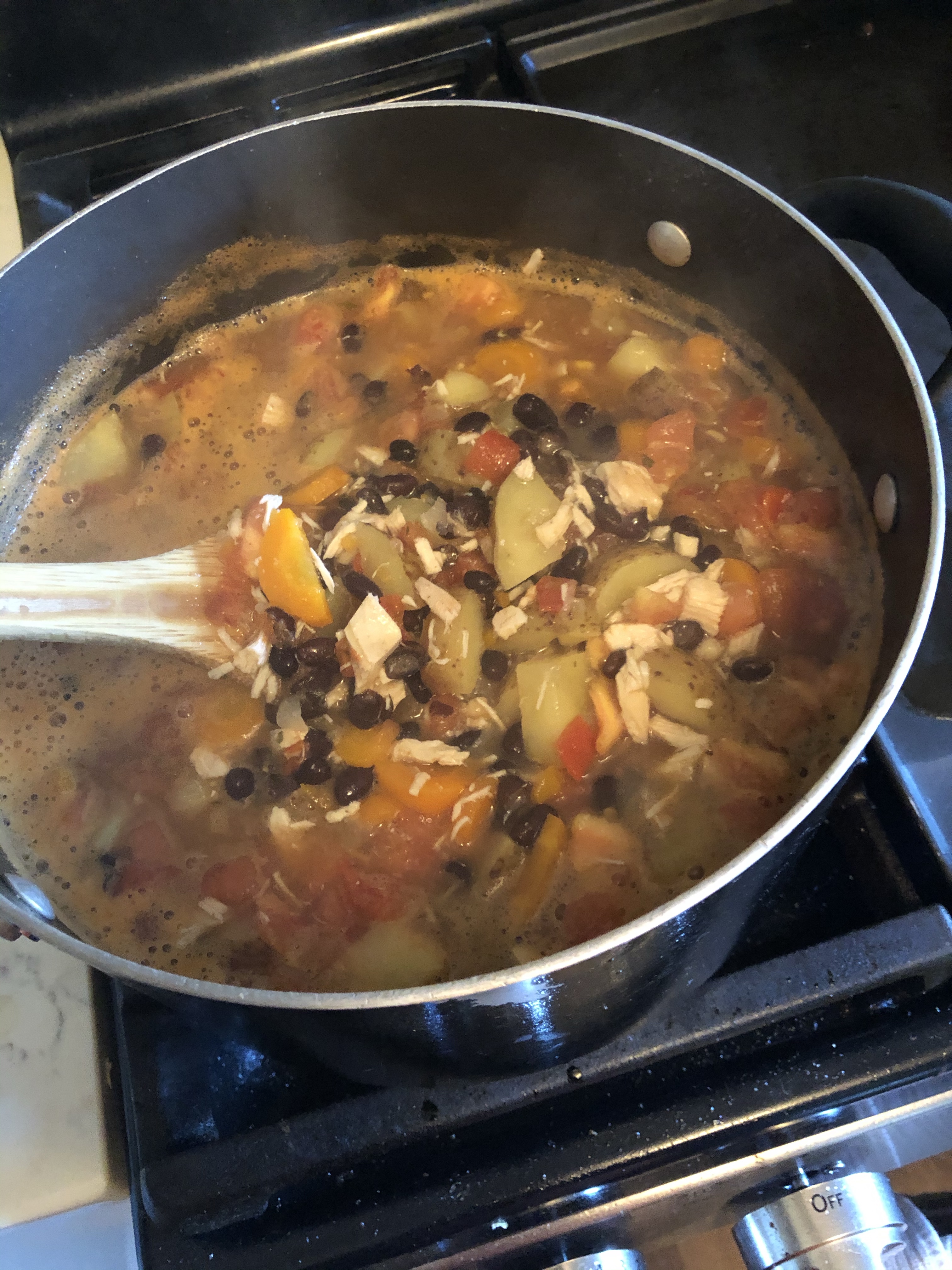
…but it clearly doesn’t always look appetizing…
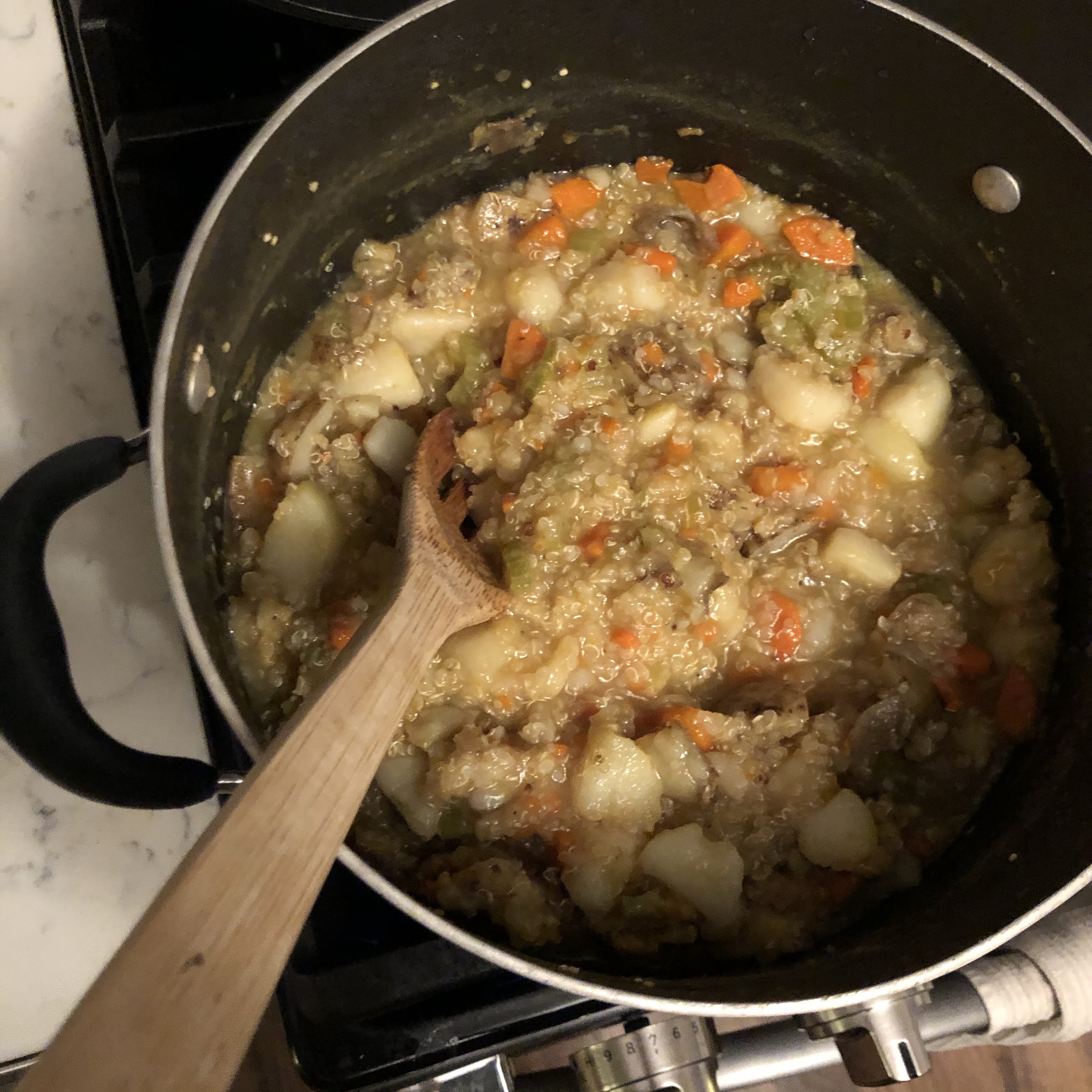
Pictured above is a corn, onion, celery, potato, quinoa soup – which turned into more of a stew cuz that quinoa really soaks up the liquid. Very hearty and delicious.
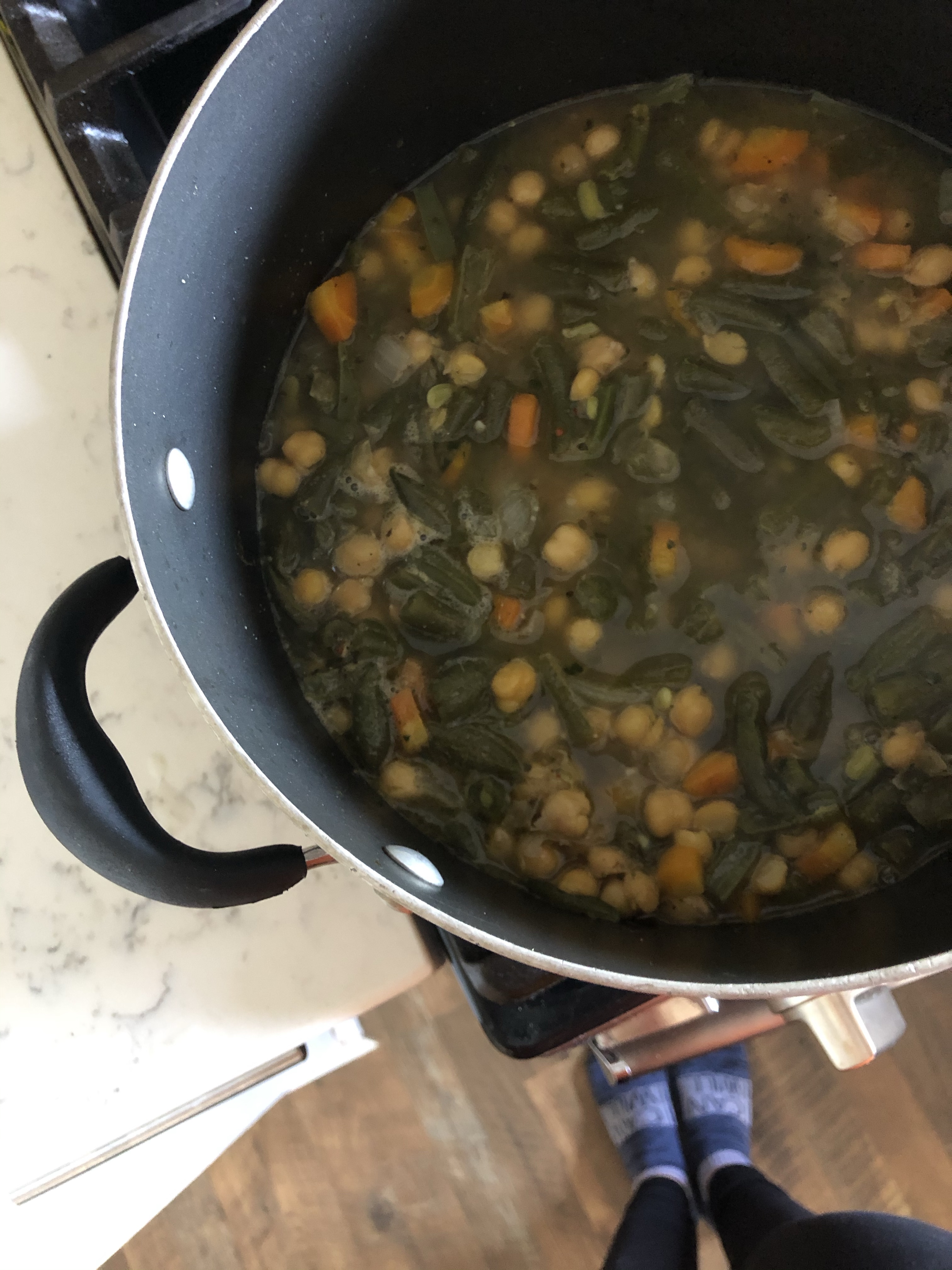
Here is a carrot, onion, corn, green bean, and chickpea soup.
Now this soup had A LOT in it: carrot, onion, tomato, sweet potato, black beans, quinoa, kale, and a few other things I can’t remember…
Ok, in this one I added shredded chicken, BUT IT WAS GOING BAD, I swear! If you’re a meat eater then it’s totally fine to add some meat! And top it with cheese! [But really, I’d prefer you not because a plant-based diet is better for you and the planet.]
Just had to throw that in there.
🤷♀️
Anyway, vegetables. Eat them. Throw them in a pot with some water and salt. Delicious.
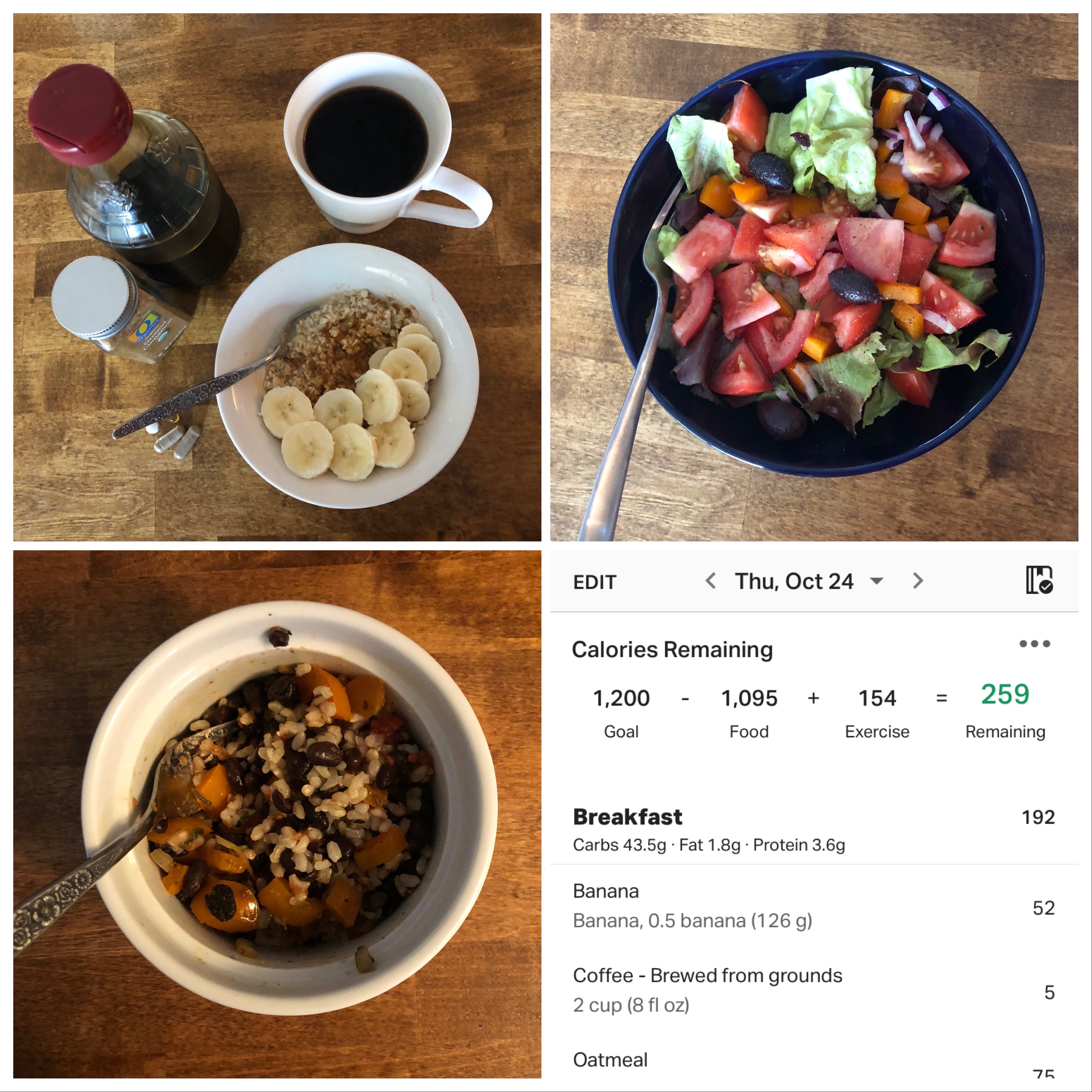
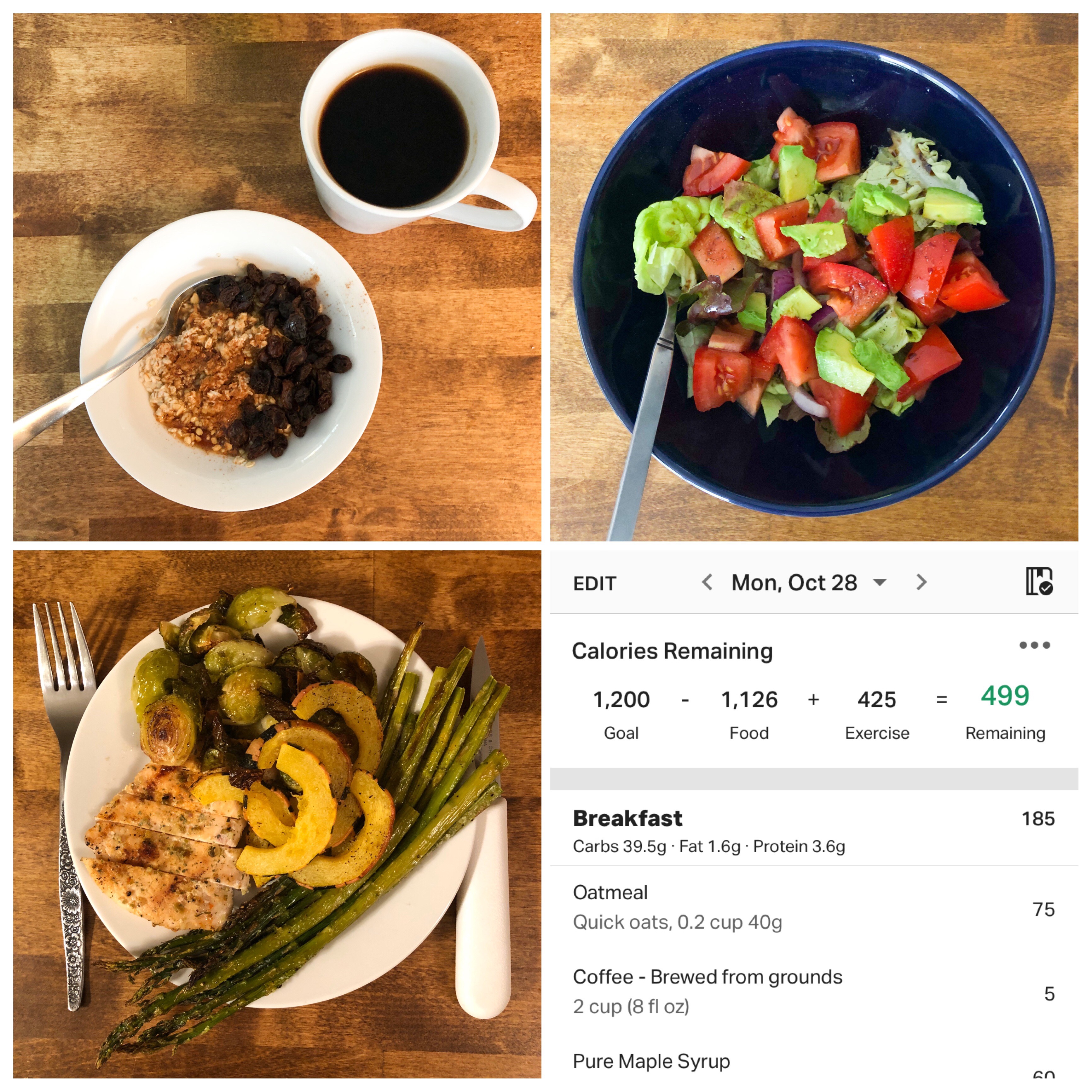
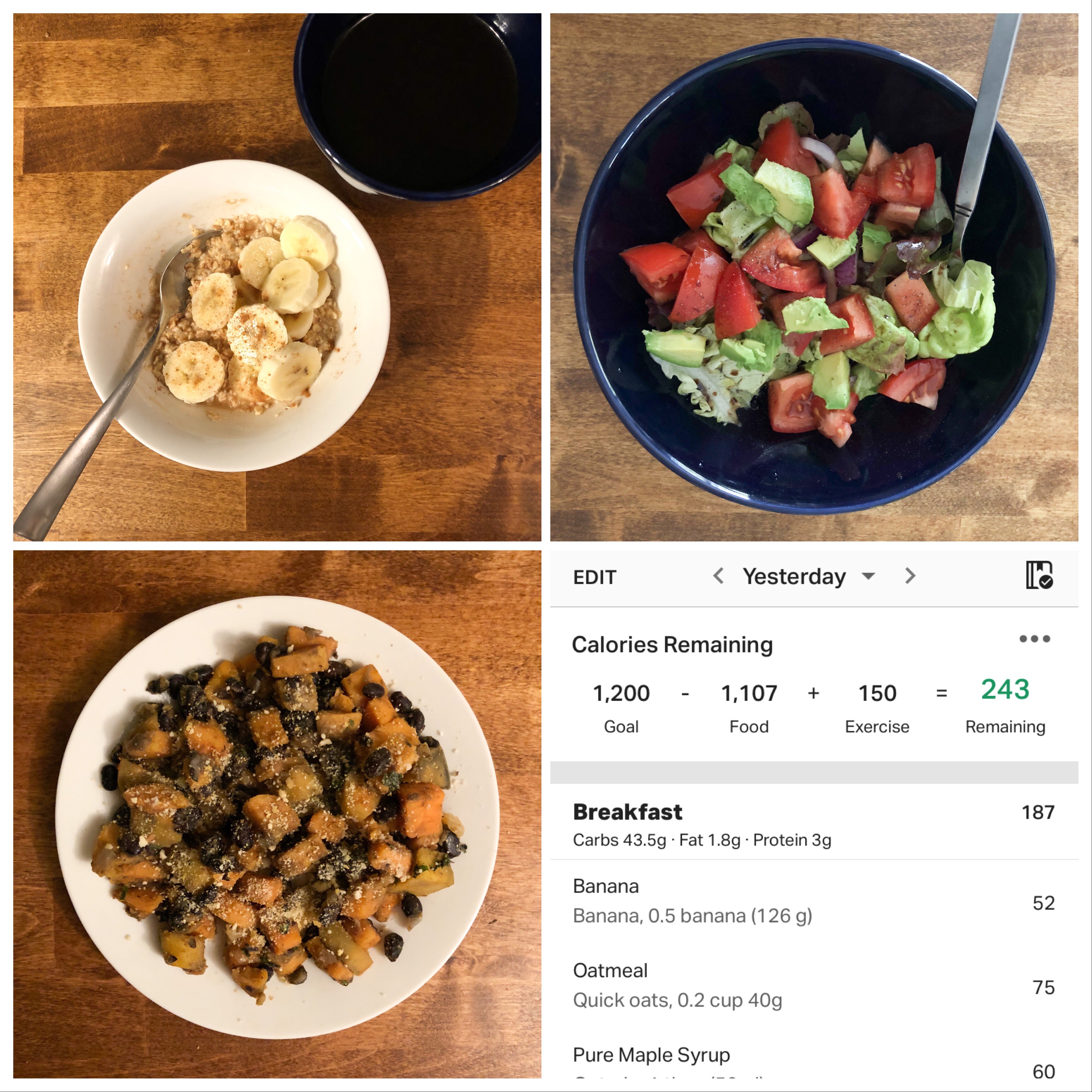
As promised, I have tracked my food for one week and am going to show you what my meals look like on my plant-based, no processed, mostly vegetable diet.
But first…
The Problem
Let me tell you a story.
Yesterday, I was in the Panera drive-thru ordering three chocolate chip cookies for my kids [it was flu shot day], and the employee tells me that it is cheaper to buy four cookies than it is to buy three. So, of course, I order four cookies.
The problem is, I only have three kids who are old enough to eat cookies. I’m not sure what I was expecting to happen to the fourth cookie…
But I definitely ate it, despite telling myself that it could just sit there uneaten all day.
That cookie was 440 calories!!!! That is more than a THIRD of my total caloric goal FOR THE DAY! ONE COOKIE!
No wonder so many of us have trouble managing our weight.
So that brings me to the veggie diet.
The [Nearly] Vegetable-Only Diet
Some things I need to mention:
1. I am not pretending to be a dietician or nutritionist.
2. I aim for between 1,100-1,200 calories per day, which is less than I need because I am trying to lose weight. But I always eat when I am hungry and never eat less than 1,000 calories. This is also a CARB HEAVY diet.
3. There are some foods I eat that I don’t track such as some raw vegetables that have very little caloric value and I don’t measure and track the olive oil I use for cooking. So my total calorie amount is higher than what my tracker shows. [I didn’t take pictures of my snacks which varied and usually made up about 300 calories each day.]
4. I exercise every day – usually twice, sometimes three times…so this helps me with weight loss. [Hence, the large amount of carbs I eat.]
5. This is baby weight.
Ok, so here we go:
Day 1
Brown rice, black beans, peppers and onions for dinner. 100% vegan and made from scratch. 👍🏻
Day 2
Eggs with sweet potato and black bean hash for dinner. Otherwise, vegan and made from scratch.
Day 3
Egg for lunch. Spaghetti squash with homemade tomato sauce for dinner. 👍🏻
Day 4
A random assortment of vegetables for dinner. 100% vegan and made from scratch. 👍🏻
Day 5
Grilled chicken with roasted Brussels sprouts, asparagus, and squash.
Day 6
Vegetable frittata for lunch [made by Brett!!], and homemade vegetable stew for dinner. 👍🏻
Day 7
Leftover sweet potato and black bean hash, with vegan Parmesan. 100% vegan whole foods made from scratch. 👍🏻
Before and After
I lost five pounds and I never went hungry.
As you can see, I like oatmeal for breakfast and salad for lunch. What can I say? I like routine.
One week postpartum and earlier today.
Here is our family photo a week after Nora was born:
And here is me with the kids tonight before going out trick-or-treating:
[By the way, how adorable are these kids?!?]
And the week is over just in time to enjoy Halloween!
Now, it’s time to go eat some candy!
Confession: I definitely fall into the 44% category!
Last July, I posted about the diet I used to drop 20lbs of baby weight in a month.** This way of eating is simple and basically consists of no processed foods and mostly vegetables. [Read about it here.]
**As a personal trainer, I have to tell you that the recommended maximum for healthy weight loss is 1-2 pounds per week. My results were accelerated because it was weight gained in just a few months during pregnancy.
Well, I’ve had another baby since then, so it’s time to revisit the diet – because, folks, I gain 50-60lbs with each pregnancy!
This is me with my firstborn, Evangeline, literally in the middle of labor with my fourth [and final] baby. I am looking quite huge, but that’s to be expected when I am about to birth a baby – so I don’t feel badly about it.And I am anxious to lose all that extra weight. [Of course – to all my postpartum ladies out there – no need to rush the weight loss after having a baby. Enjoy the cuddles, take lots of naps, and worry about your pant size later. But for me, after doing this four times in five years, I’m ready to lose this extra weight for good!]
This is me and my kiddos on Mother’s Day, looking every bit of 36 weeks pregnant. Again, no shame in my game.
So I’m back on the [nearly] vegetable-only diet to get back into my pre-pregnancy pants.
But this time, there are some modifications to make the weight loss more gradual and sustainable.
I am still not eating processed foods and I still eat mostly vegetables, but I occasionally eat eggs and lean meats in small portions. Still no dairy, which I still do not miss…except ice cream. [Time to buy that dairy-free Häagen Dazs ice cream again!]
This is me a week after my baby was born.
Just like last time, I’m logging my meals and on Thursday I’ll will post what a week of eating this way looks like – just in time for me to binge on my kids Halloween candy.
😆
[What can I say? We all have our vices…]
I may even share a before and after photo….[well, I’ve already shared the “before” photos.]
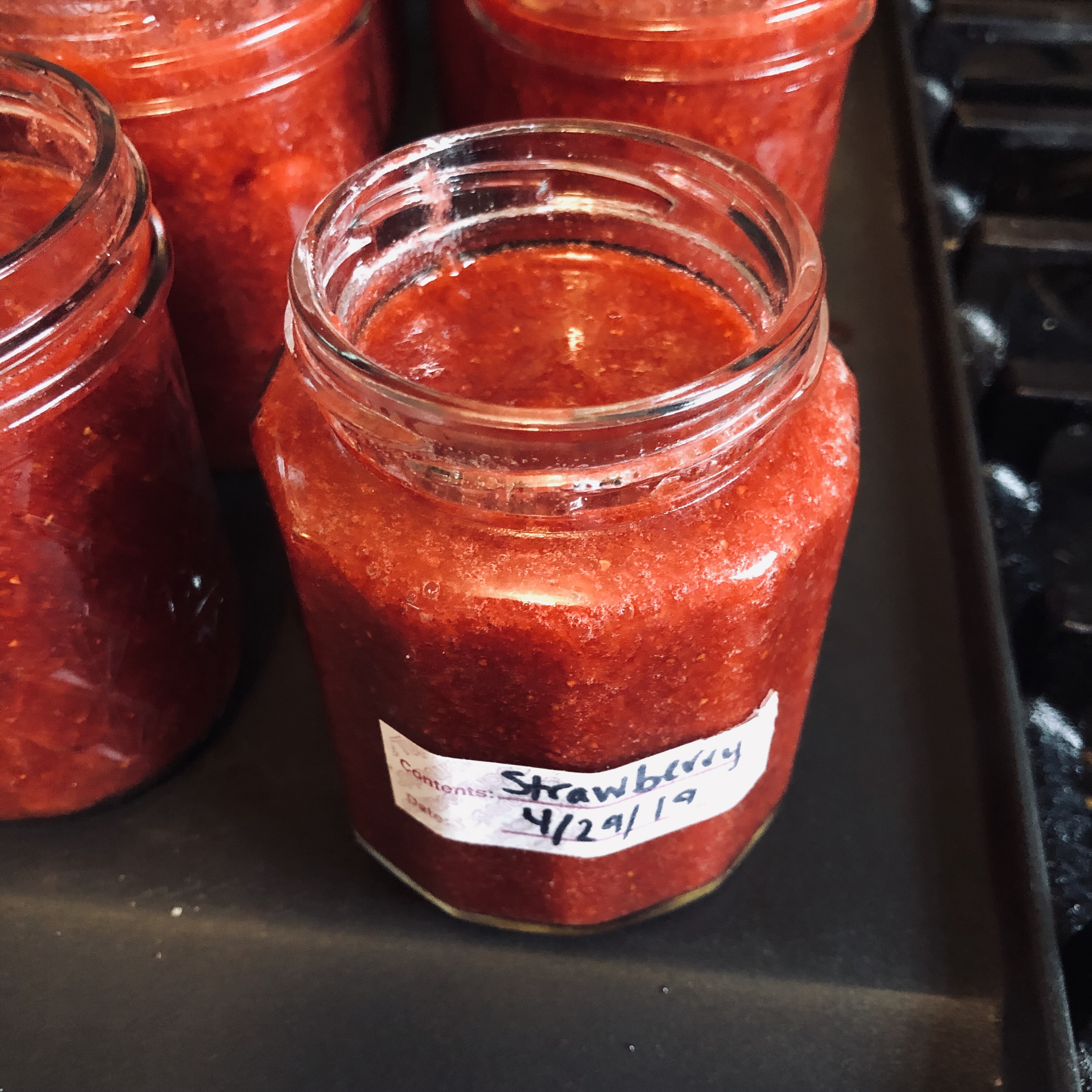
Two years ago, I read a small sidebar – maybe three or four sentences – in Martha Stewart Living Magazine about how she makes a pectin-free strawberry jam. It sounded so simple that I immediately bought some strawberries and gave it a try. I’ve been happily making my own jam ever since.
[Thanks, Martha!]
Since then, I’ve experimented with reducing the sugar and adjusting the steps to suit my time constraints and personal preferences until I can now say that I have created an even simpler and healthier way of making strawberry jam!
[Sorry, Martha, it’s true.]
So, here’s all you need to do.
1. Hull and rinse strawberries. [I usually quarter them, but that is not necessary.]
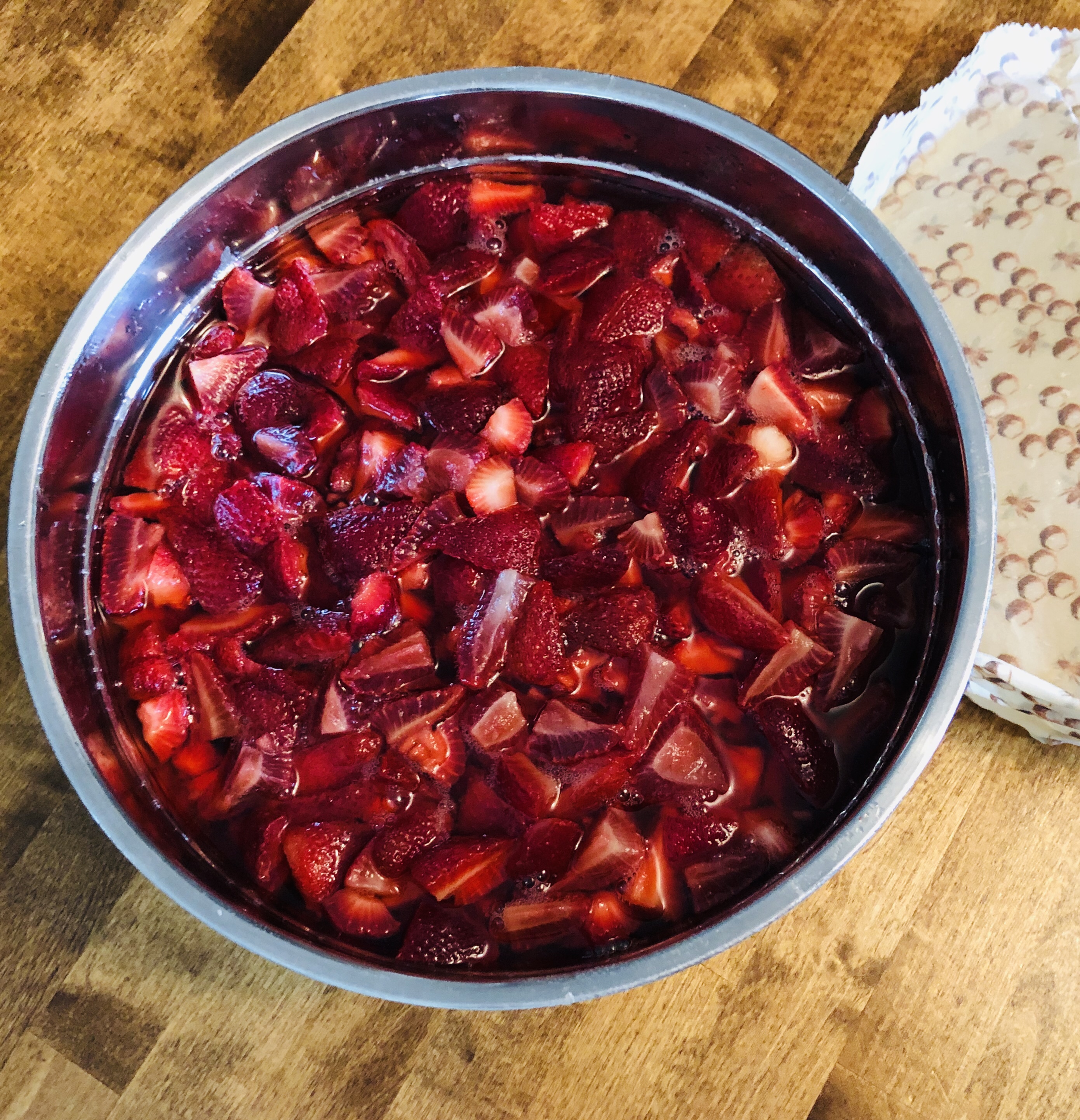
2. Put berries in a big bowl and mix with half a cup of sugar per one pound of strawberries [Martha’s recipe called for double the sugar] and juice of one lemon.
Side note: I’ve tried even less sugar and even no sugar recipes but the jam always tastes really tart and doesn’t thicken the way this version does.
3. Cover and refrigerate overnight. [Martha never specified how many hours to refrigerate them so I just make the jam sometime the next day.]
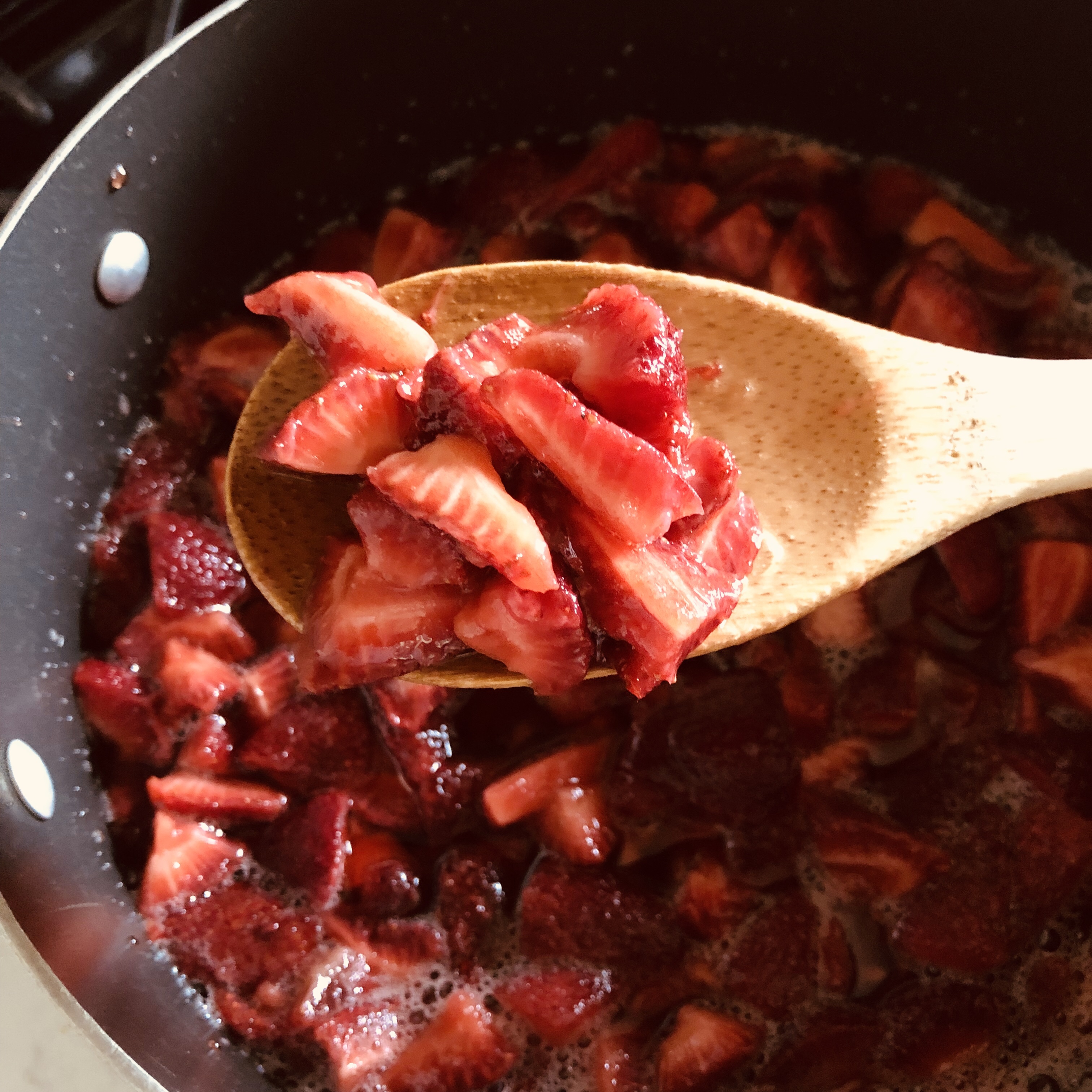
4. Heat on the stove in a big stock pot until sugar is dissolved. This doesn’t take long – maybe 10 minutes.
5. Remove the berries and boil the remaining juice until it reaches 221°. This takes longer – maybe 40 minutes to one hour, depending on how much jam you are making.
6. Blend [or mash] berries and add back to the juice. [You could also leave the strawberries whole.] Boil for five more minutes.
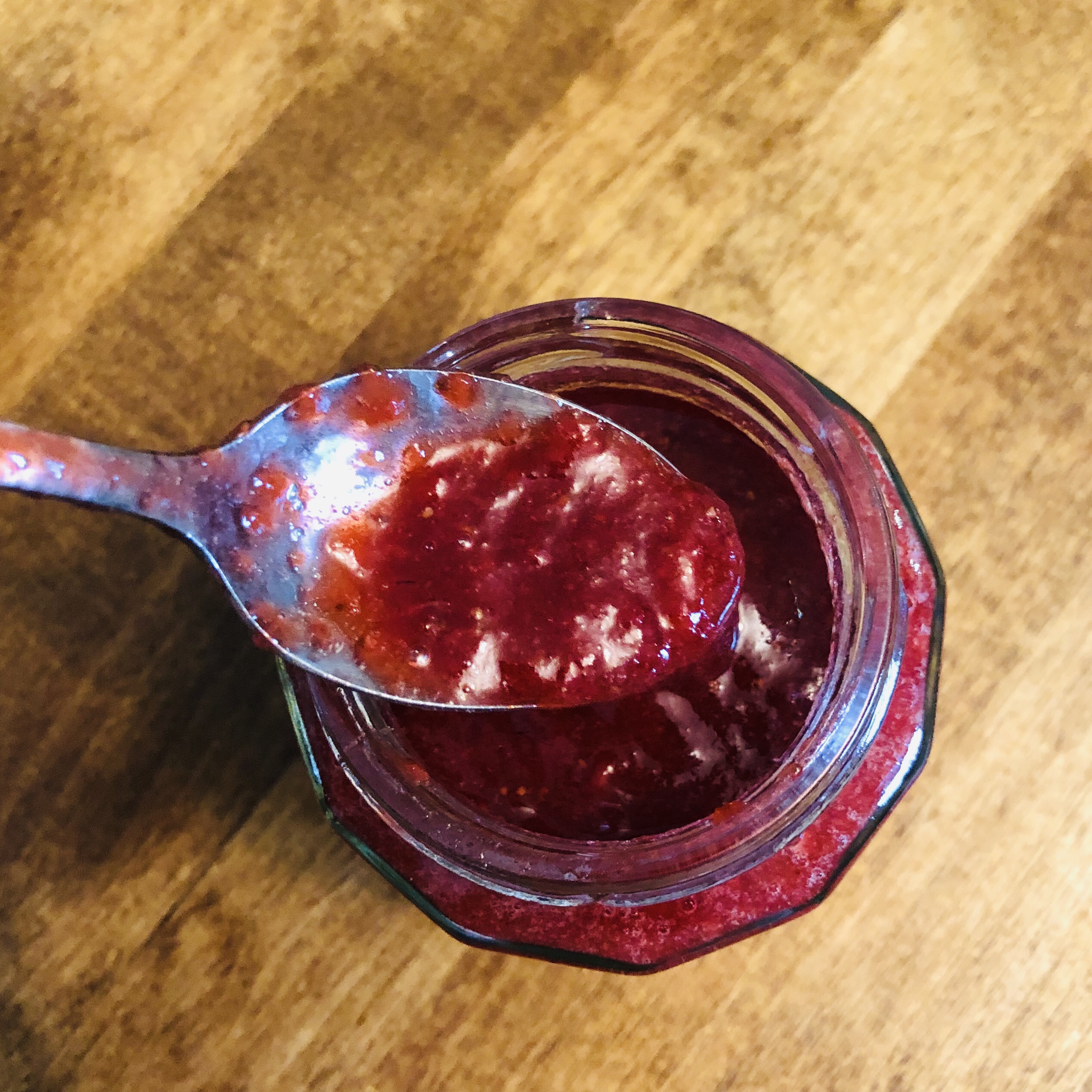
7. Pour into sterilized jars. Let cool on the counter then refrigerate or freeze.
The jam thickens as it cools and even more once it’s in the fridge, but it never gets as thick as a jam made with pectin. Still, it works perfectly for PBJ or as a sauce for dessert [like cheesecake or angel food cake or vanilla ice cream] or a topping for toast.
To keep the cost down, I only make jam when strawberries are on sale. Today, I used seven pounds of strawberries and three cups of sugar and made roughly two quarts of jam – for about $7.
I’m not sure if that’s a savings, but it is zero waste AND zero high fructose corn syrup!
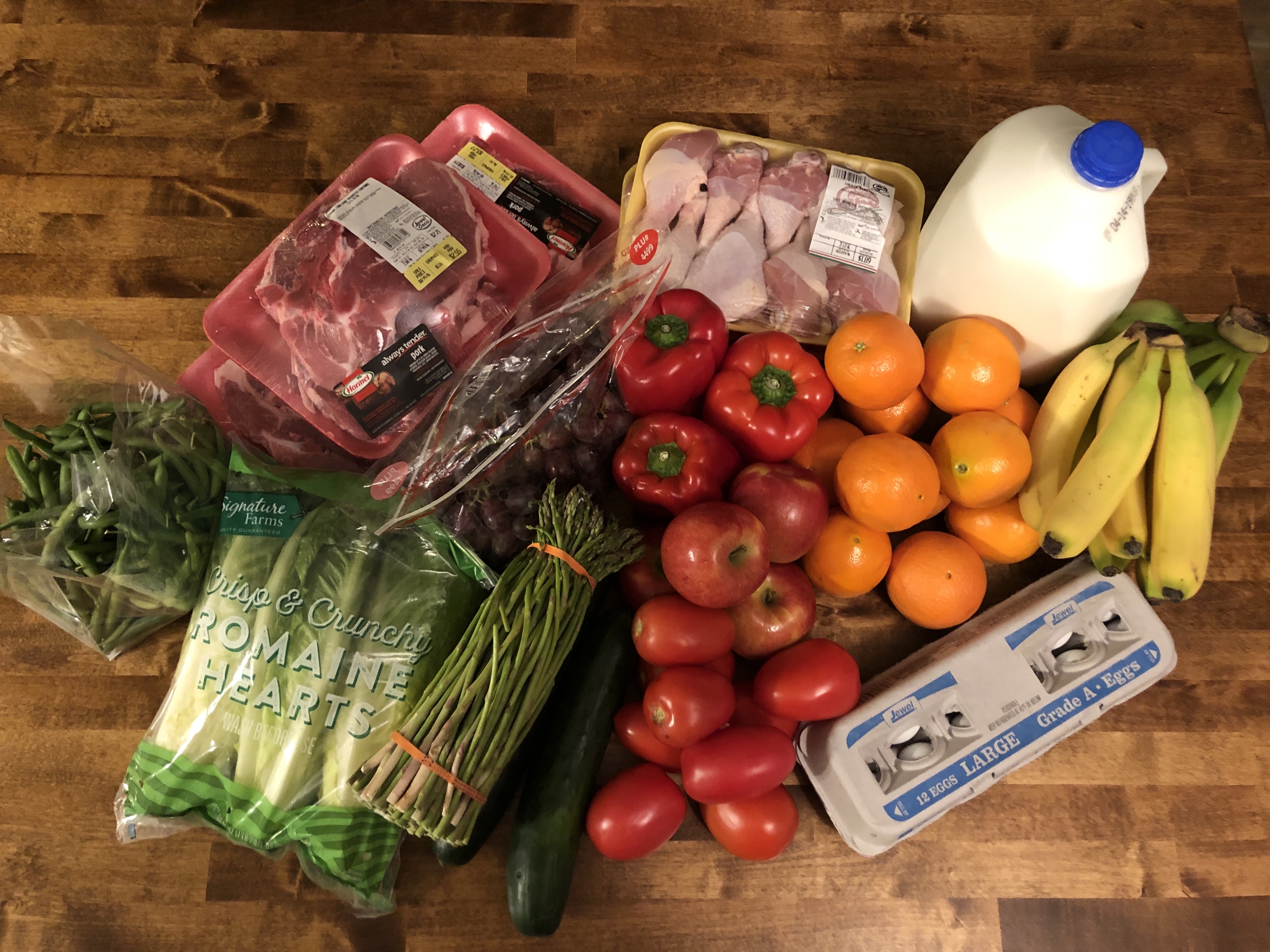
Thirty dollars. Two stores. One week’s worth of food for my family of five.
[The thirty dollars also covered a bag of red potatoes, two apples, and a banana which are not pictured here.]
Everything pictured was on sale and at or below my price limit of $1/lb for produce and $2/lb for meat.
This doesn’t include the dry goods that we already have on hand – nuts, oats, rice, beans, coffee, sugar, and flour – which we only buy about once a month and don’t need to restock at this time.
No more snacks
The biggest change to my grocery shopping habit, besides buying only what’s on sale, is that I don’t buy traditional snacks. No more pretzels or crackers or applesauce or fruit cups or yogurt cups or string cheese or fruit snacks or boxes of raisins, etc. I used to buy all of those things regularly, but then I realized that I didn’t need to buy any of that in order to give my kids snacks, or even to enjoy a snack myself. Now, when my kids want a snack, they have apple slices with peanut butter, bananas, oranges, grapes, red pepper slices, cucumbers, or nuts. And when I want a snack, I have the same thing.
If I’m feeling really ambitious, I’ll bake banana bread muffins or make my own applesauce in the crock pot or even bake my own granola bars, crackers, or pretzels – but I don’t typically have time for that. So bananas and apples are the perfect snack to have on hand that require no prep work at all – and they are also great on the go.
[Side note: I also don’t buy frozen foods anymore – except the occasional ice cream carton 😬 – because plastic packaging for frozen foods is made differently apparently and, as a result, is not recyclable. I used to buy a large amount of frozen vegetables, but I have transitioned to 100% fresh veggies.]
No more, no less
It might not look like a lot of food, but it is plenty for our family of five for a week. The meat and milk and eggs will actually last longer than a week because we don’t eat meat every night or eggs every morning. I have enough vegetables for sides for all of our meals and enough fruit for breakfast, lunch, and snacks.
The goal is to buy just the right amount so everything gets eaten and nothing gets lost in the back of the fridge and goes bad. [This way I make sure to avoid food waste – which is a big problem in America.]
The meal plan
So now that I’ve got the food, I decide what we are going to eat for the week. Breakfast is always oatmeal or eggs with fruit. Lunch is always PBJ with fruit and veggies for the kids and a salad for me.
Dinners will look something like this:
Tuesday [tonight] – Vegan Burrito Bowls
Wednesday – Veggie Omelets and Roasted Potatoes
Thursday – Chicken, Grilled Romaine and Asparagus
Friday – Pork Chops, Brown Rice and Green Beans
Saturday – Leftovers
Sunday – Mexican Rice and Bean Skillet
Monday – Southwest salad
The schedule may change. I don’t like to set my meal plan in stone because my work schedule often changes suddenly and sometimes I have to just throw something together. But at least I have food and ideas.
New grocery deals come out tomorrow, so I will likely make another grocery run in the next week to take advantage of new sales – but for now we’re stocked and I’m feeling good about our healthy [and fresh] food.
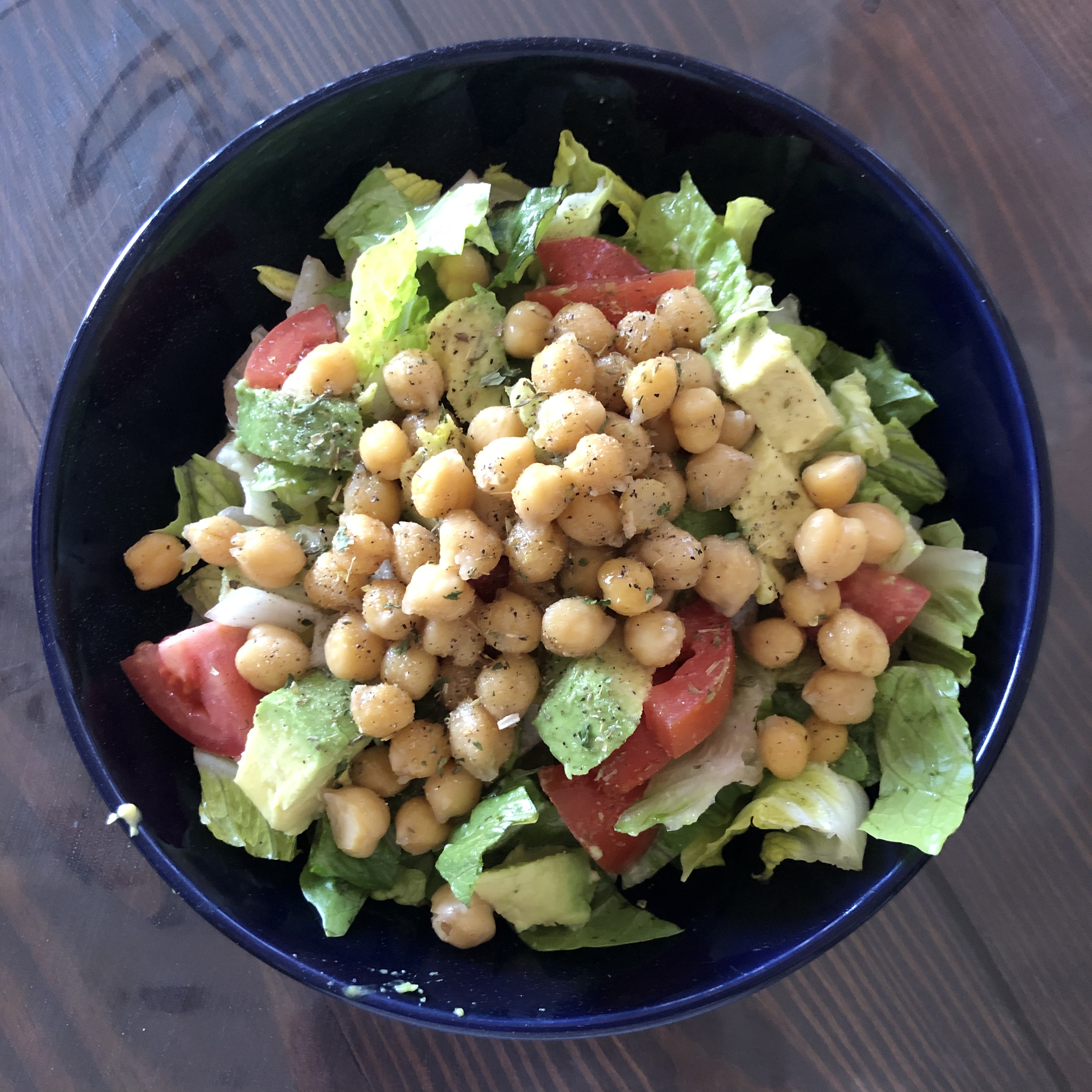
One of my secrets for getting lots of fresh vegetables in my diet is to eat a salad every day for lunch. I make the salad and dressing myself – prepping and packing it to go when necessary.
Salads are a very healthy choice, but salad dressings are usually full of calories, sodium, added sugars, and saturated fat. In fact, ordering a salad at a restaurant is usually not going to be the healthiest option on the menu, despite what you would assume.
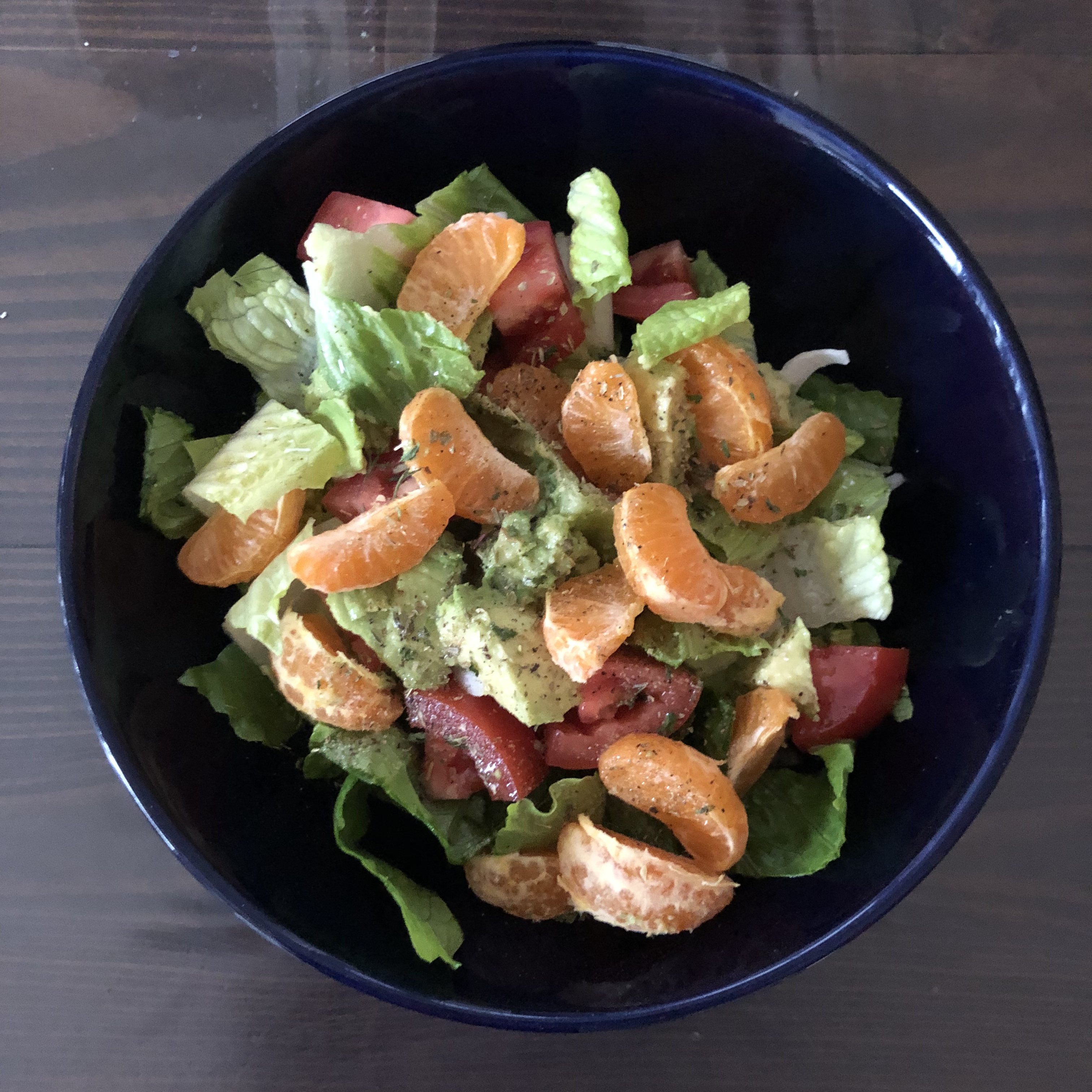
So, I’ve been creating my own salad dressings to avoid unhealthy store-bought varieties. For a time, I would premix a vinaigrette of sorts, but I got lazy and wanted something I didn’t actually have to make ahead. Now, I create my salad dressing right in the bowl with the following ingredients:
Extra virgin olive oil
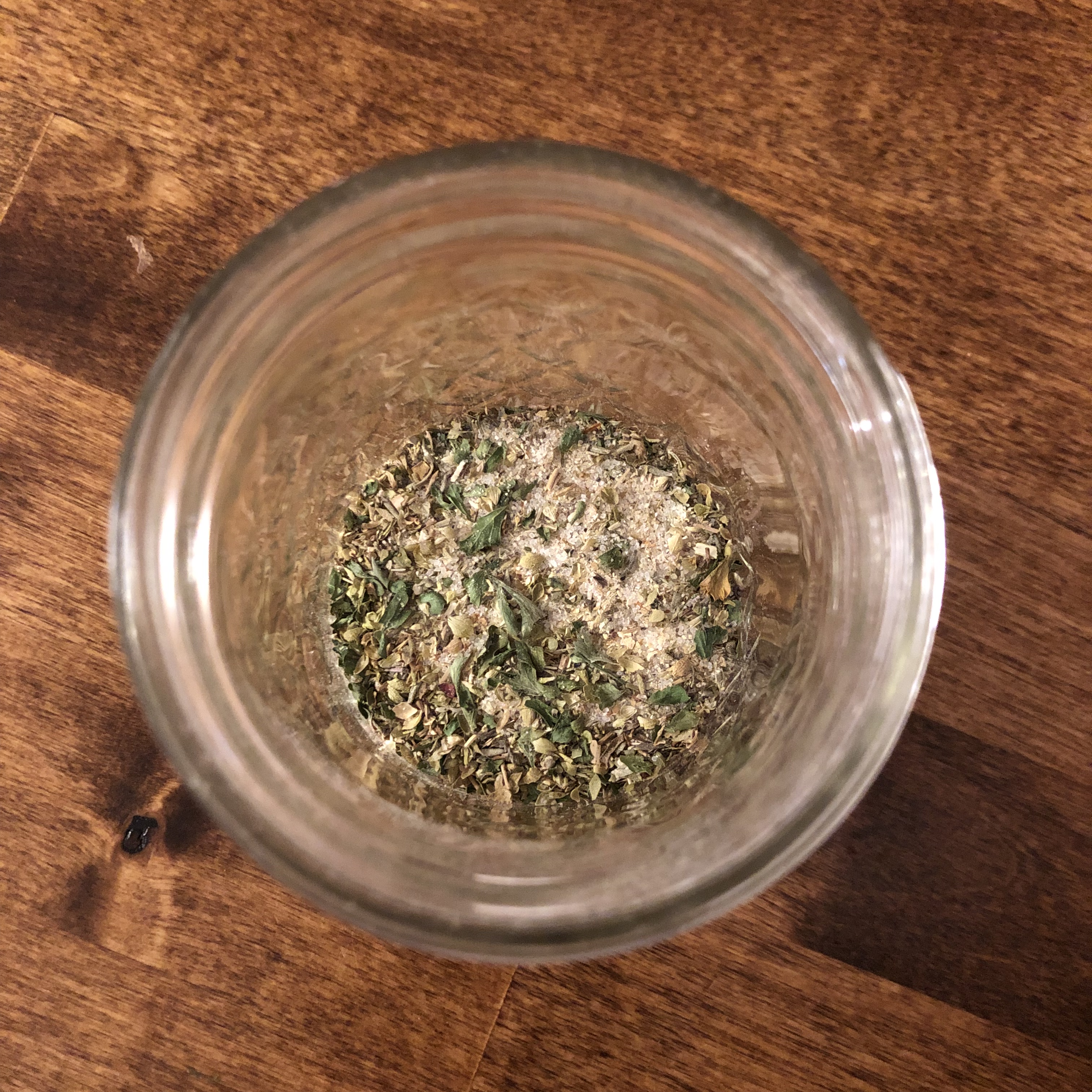
Italian dressing seasoning mix (homemade according to this recipe by The Midnight Baker)
Lemon juice (freshly squeezed, when possible)
You could use the Italian dressing mix to – duh – make Italian dressing, but this stuff is DELICIOUS as just a plain seasoning. I originally found the recipe in order to marinate some chicken. The chicken turned out delicious and the dressing really tasted like Italian; however, I wanted to just mix my dressing in my bowl with a few ingredients I always have on hand.
I essentially make the dressing, but in my bowl – and I use lemon juice instead of vinegar because it’s a more natural option and adds a more summery, citrus flavor. I just cut a lemon in half and squeeze a little juice right into the bowl.
This salad dressing tastes like summer. I’m not kidding.
Then I get creative with my toppings.
Other toppings I frequently add: almonds, capers, olives, peppers, cucumbers, etc
Don’t let your salad get boring!
And don’t let your salad dressing derail your healthy eating habits!
Since I first moved out on my own, I have been trying to figure out this whole grocery shopping thing – how to eat well without overspending money or time.
I have tried everything – from couponing to rebate apps to stockpiling boxes of granola bars[not healthy, by the way]. I shopped exclusively at Aldi for a time. I followed popular shopping bloggers and ran to the store every time they said there was a good deal.
None of these things worked for me. They were all time-consuming and exhausting and didn’t actually seem to save me much money and on top of all that, we weren’t eating healthy foods.
So I’ve been trying to figure out how to spend less on groceries without sacrificing quality or healthfulness.
After ten years, I have FINALLY reached a place where grocery shopping is no longer expensive, time-consuming, or unhealthy. I spend less time meal planning, less time at the grocery store, and less time stressing over the grocery budget than I ever have.
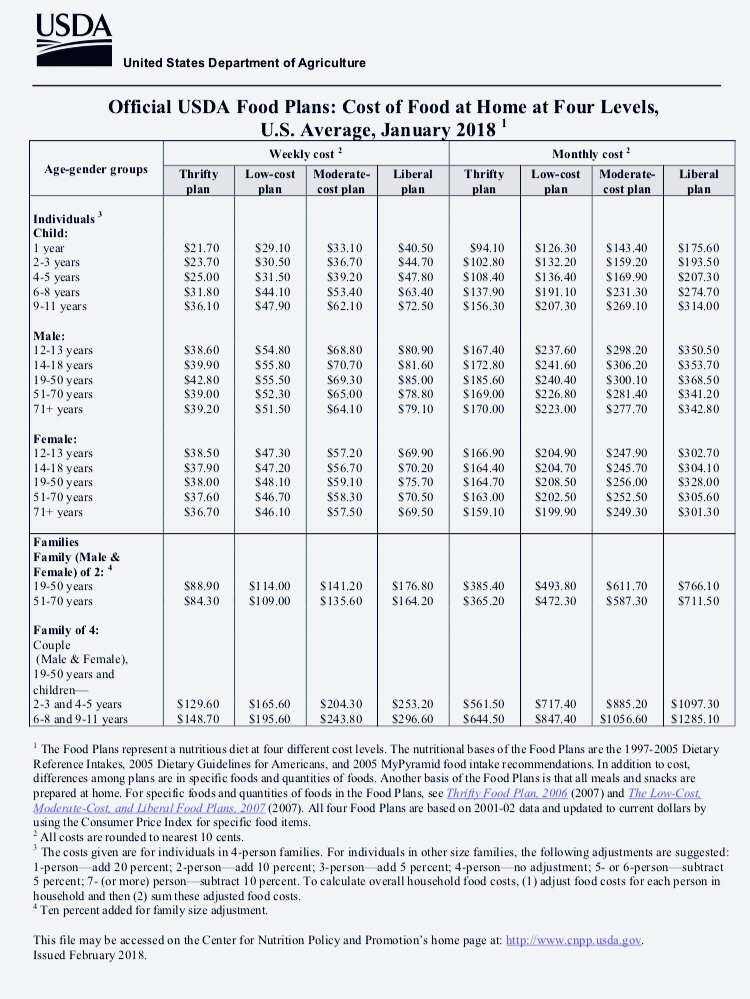
To give you an idea of how much you can save, here are USDA’s recommended grocery budgets.
They vary based on the number and ages of you family members and based on whether you are living lean [“Thrifty plan”] or high on the hog [“Liberal plan”].
So according to this chart, for my family of five, a thrifty plan would be $561.50 per month, if I don’t count my youngest who is only 18 months old, or $655.60 if I do count her.
Doesn’t really matter because our budget is $400/month. This doesn’t include our eating out budget which is $60/month and allows us to eat out about twice per month. Also, every other month we cut our budget in half [a lengthy explanation of which I may write and post someday]. So, technically, we feed our family for $300/month, if we average it out.
That may sound like a lot or a little to you depending on your situation, but for us, it is less than half of what Brett and I were spending back when it was just the two of us – and we weren’t eating nearly as healthy as we do now.
[I’m harping on the healthy thing because anyone can eat ramen noodles every day and save tons of money, but I have found that I can eat super healthy – I’m talking fresh produce and high quality foods – and still save money. So if you are one of the many people today who believe that eating healthy is more expensive, please read on.]
So how do we feed our family healthy foods with so little money? Well, for starters we buy very few processed foods [for our health] and we do our best to avoid packaged foods [for the health of our planet]. Those two things contribute a little bit to our savings – but I know that they are not the reality for the average American [though I wish they were].
The bulk of the money and time is saved by following these five simple rules:
1. Buy what is on sale.
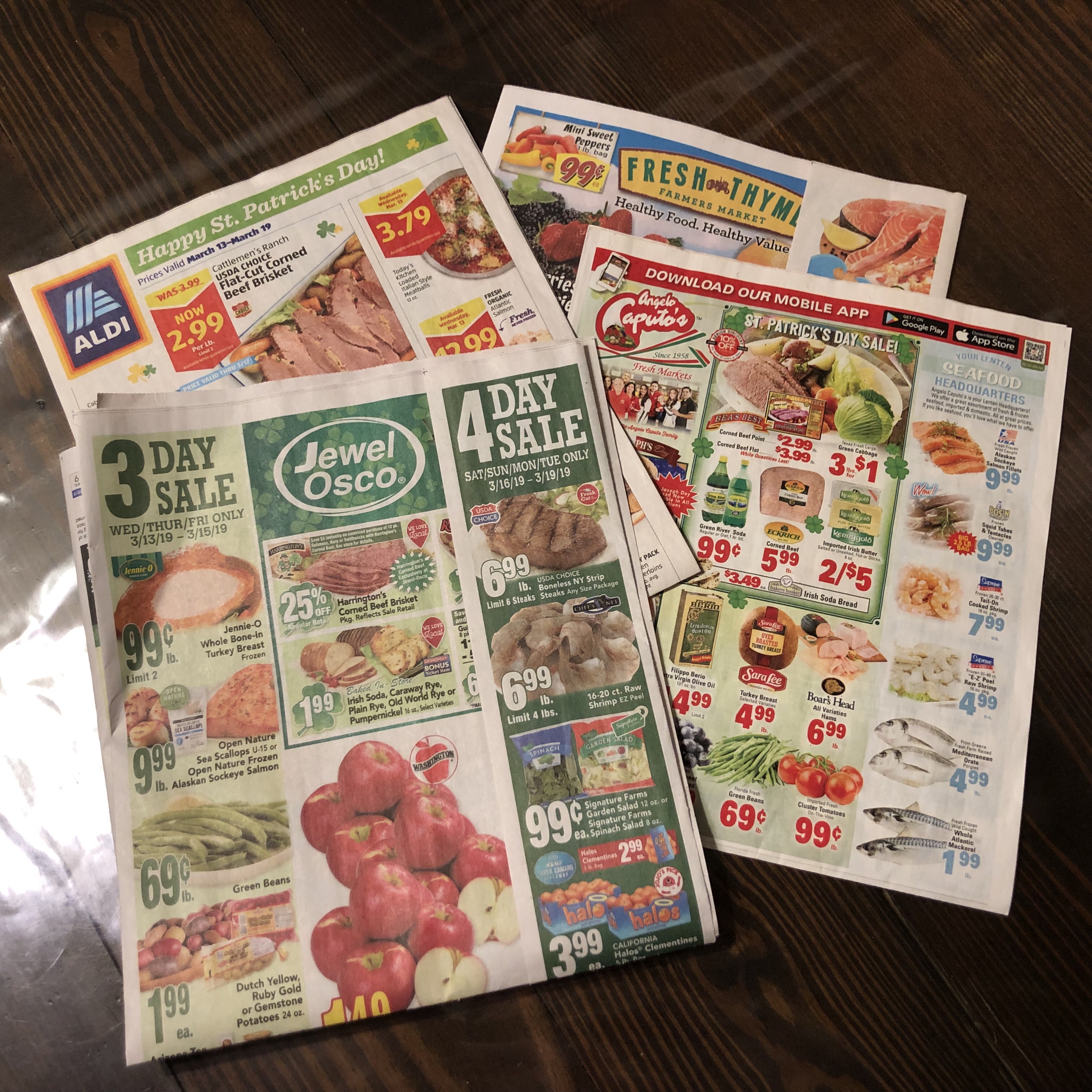
Rather than creating a meal plan and then buying the ingredients regardless of the price, I let the weekly ads determine what we eat each week. In my area, each Wednesday, grocery stores roll out new ads with new deals. I compare the ads from four different local grocers and then choose the one [or maybe two] with the best sales and that’s where I’ll be shopping that week.
Besides simplifying meal planning, another benefit of this rule is that it saves a lot of time at the grocery store. I know exactly what I’m going in to get. I don’t need to price compare a bunch of different options, or stroll down aisles looking at different food choices, or fall prey to the clever marketing tricks like flashy signs and end-caps. I go in, get what’s on sale, get out.
Bottom line, if it’s not on sale, I don’t buy it.
[As with all rules, there are exceptions. In the case of rule #1, I don’t buy my bulk dry goods on sale because most stores don’t offer regular sales on bulk goods. In this case, I am prioritizing my obligation to the health of the planet over money – ALWAYS a good choice, by the way. But I still save plenty of money.]
2. Set price limits.
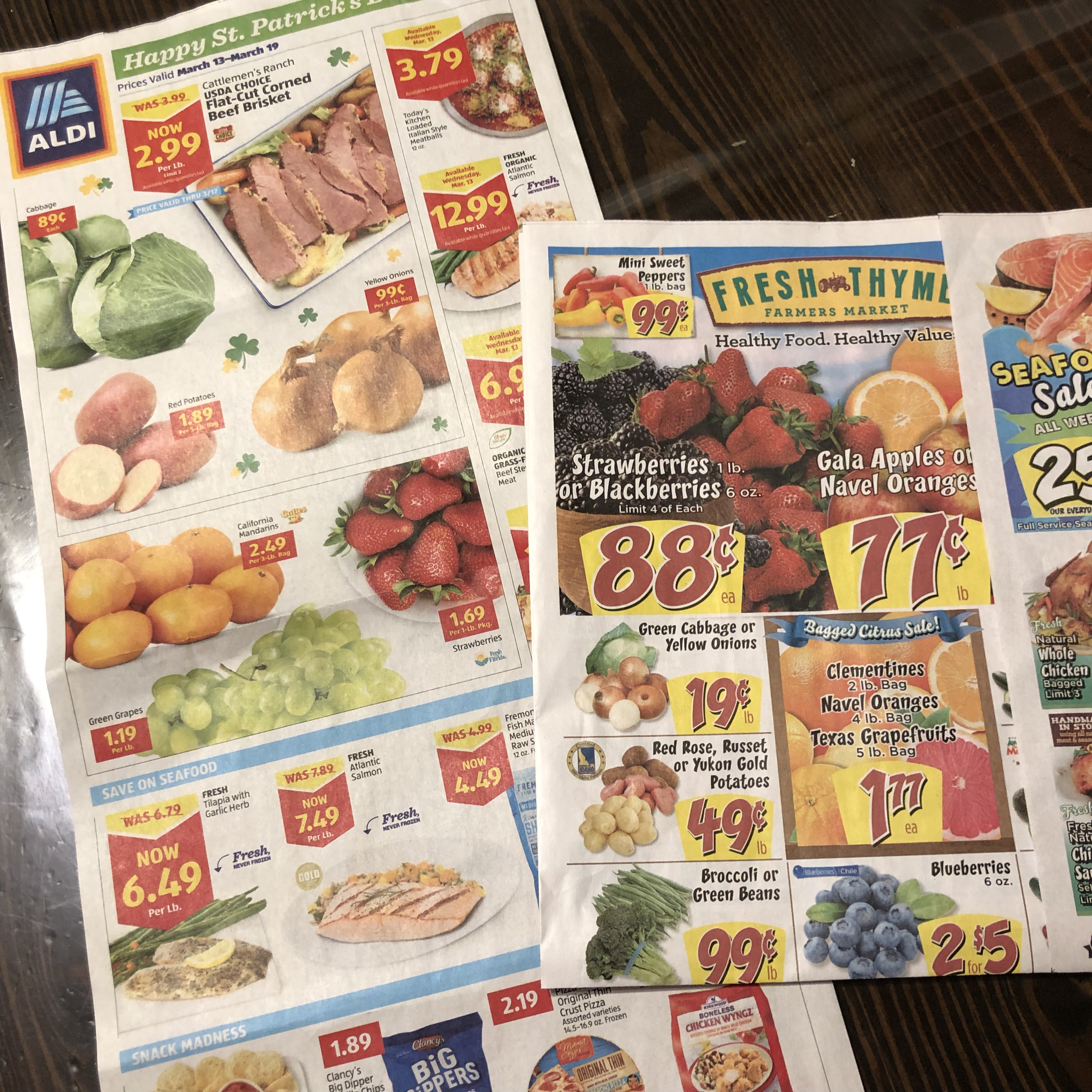
Over the past two years I’ve learned what a good sale price is for most items and I have set rules for how cheap they need to be. Simply being “on sale” is not necessarily good enough. Not all sale prices are created equal. For example, it is extremely rare that I will buy produce at Aldi because their sale prices are never as good as my other local grocers. If you [as most people do] assume that Aldi is cheaper for everything simply because it’s Aldi, then you are overpaying.
This week, 1lb of strawberries is $1.69 at Aldi and $.88 at Fresh Thyme. In fact, everything on this Aldi ad can be found cheaper elsewhere.
In order to figure out what a good sale price is, you have to pay attention to sales in your area over a period of months. My price limits are still changing as time goes on. For example, I used to only buy boneless chicken if it was under $2/lb, but after a while I learned that I could find it at least once a month for $1.49/lb. So that became my new price limit.
Here are some examples of my price limits [understand that prices will vary greatly depending on your location]:
I won’t buy produce for more than $1/lb. Sometimes I do buy blackberries at $.88/6oz package and I will buy avocados if they are $.79/each or less, but I don’t make a habit of buying these items because they are so expensive compared to normal produce.
I won’t buy cheese for more than $1.50/8oz package. If cheese is not on sale for this price or less, we just do without cheese. It’s not even really a hardship. In fact, I think it has improved my children’s appreciation for the taste of real foods not covered in cheese.
I won’t buy eggs for more than $1/dozen. Though, I admit, I am going to buy eggs from our farm CSA this summer at $5/carton, but in this case, I am prioritizing supporting local agriculture and health over saving money. I will also be limiting our eggs to one carton per week.
Your rules will depend on what eat, but everything should have a price limit required for purchase. There will always be off cases when you simply must have something – like butter to make buttercream for your son’s birthday cake – and it’s not on sale. Okay. Sometimes we have to bend the rules.
3. Eat less meat…and live longer and healthier lives.
I’m a fitness professional, not a registered dietician or nutritionist, so you don’t have to agree with me on the healthful side of this rule. Eat meat if you want, but know this, meat is WAY MORE expensive than plant-based foods. We used to make two or three chicken breasts for our family of five for dinner. Now, we all share one chicken breast [oftentimes less] and fill the majority of our plates with vegetables, fruits, grains and legumes.
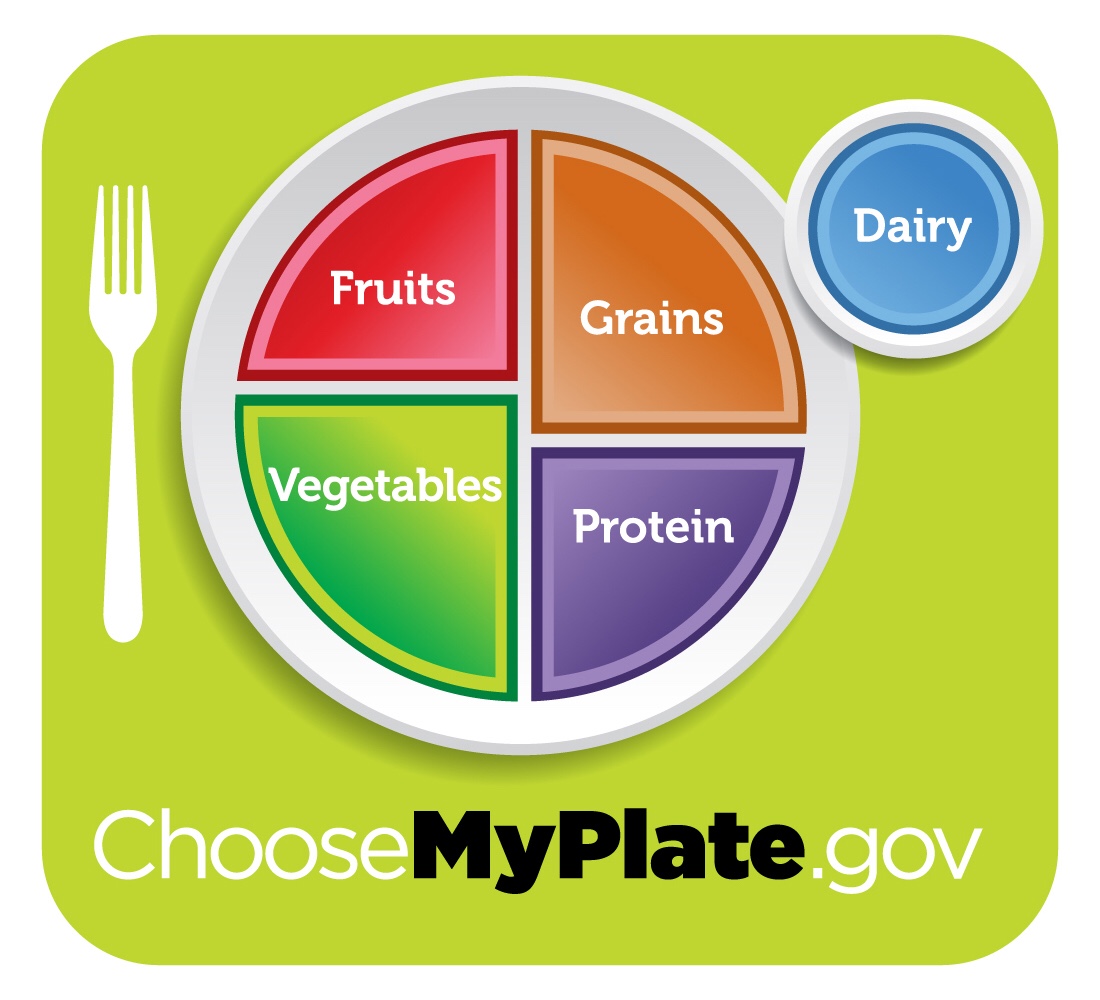
This is the USDA’s newest recommendation for healthy eating which has replaced the typical food pyramid we all learned in grade school.
Notice that three quarters of the plate are filled with plant-based foods. Now think about how your dinner plate typically looks. Most Americans eat a meat heavy diet, with the protein being the main course and the vegetables and fruits being “sides.”
If you need further evidence, watch the documentary, In Defense of Food, or read the book with the same title by Michael Pollan.
Time to rethink the way we eat…and hopefully soon because the health epidemic in our country is quite literally frightening. But the good news is, eating more plant-based foods is CHEAPER!
Also, according to the chart below by health.gov, over 85% of the population is not eating the recommended amount of vegetables…
C’mon, people. Let’s eat some more veggies!
[Someday I’ll go into greater detail about how to eat healthy on a budget. It is not hard, folks. I promise you!]
4. Buy less food.
This might sound obvious, but apparently it needs to be stated anyway because we have a bit of an overeating problem in America.
According to the CDC, 39.8% of adults in the US are obese [read about it here.] And, shockingly, according to this article by NPR, 75% of Americans believe themselves to be eating healthy…so why are obesity rates so high?
There are lots of factors that contribute to the obesity issue, but no matter where you look, portion size and overeating are partially to blame.
Nutrition scholarMarion Nestleat New York University says portion size — just eating too much — is an issue. “I’d vote for that as a major cause of obesity,” Nestle told us by email.
“Some of the problem is that individuals pay more attention to getting good things in their diet than they do to limiting overall intake,” addsDavid Just, a behavioral economist who studies food psychology at Cornell University.– npr.org
The accessibility of food in our society has made overeating too easy. Yes, restaurants serve us too much food, but we also serve ourselves too much food at home. We also stock too much food in our kitchen, making it too easy to eat whatever we want whenever we feel like it.
Let’s all do ourselves a favor and buy less food. There is no reason to stockpile canned goods as if we are fearing an imminent apocalypse…unless you are fearing an imminent apocalypse…in which case, there is no need to save your money because it will be useless when the zombies take over.
Some basic ways to buy less food is:
Go grocery shopping once a week and only buy what you need for that week.
Buy fresh produce so you CAN’T stockpile it. Fresh food is healthier, more likely to be local, and tastes WAY BETTER!
Don’t buy [or buy very little] unhealthy snacks and treats. Don’t spend your hard-earned money on food that is going to make you sick and unhappy in the long run.
Avoid processed and packaged foods – for the sake of your wallet, your health, and the planet.
5. Eat all the food you buy.
Again, this seems obvious…but apparently it’s not because 40% of food in America is thrown away.
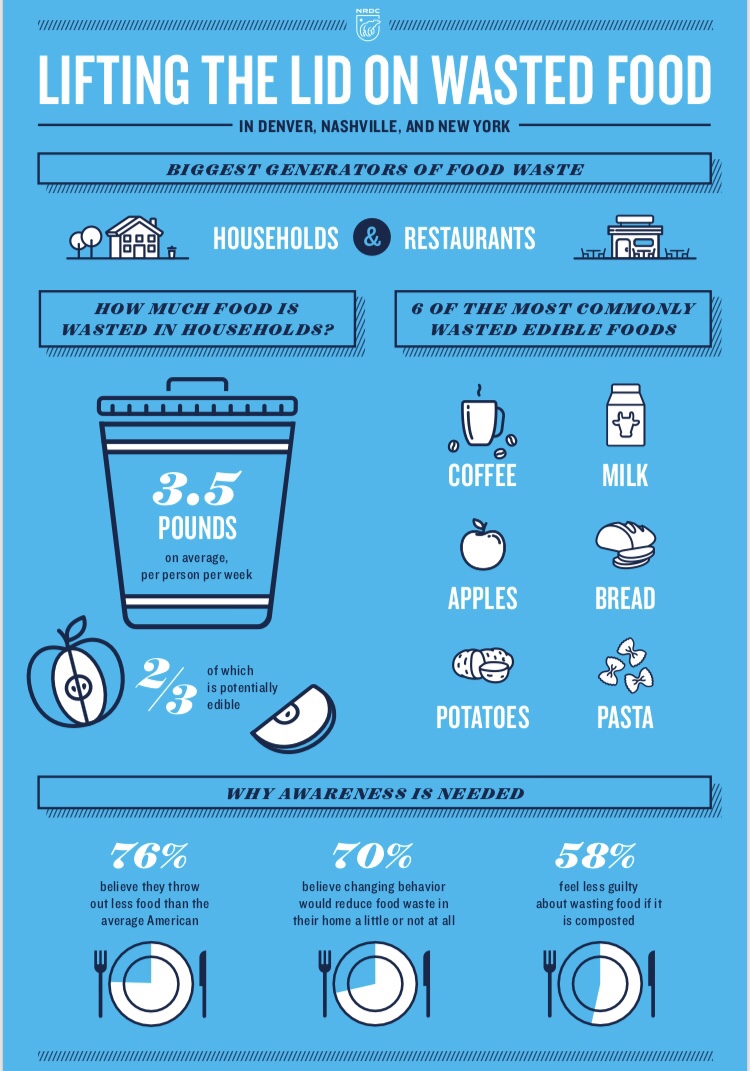
In 2012, NRDC published a groundbreaking report that revealed that up to 40 percent of food in the United States goes uneaten. That is on average 400 pounds of food per person every year. Not only is that irresponsible—it’s expensive [emphasis mine]. Growing, processing, transporting, and disposing that uneaten food has an annual estimated cost of $218 billion, costing a household of four an average of $1,800 annually. – NRDC report by Dana Gunders, source
And before you go blaming it all on grocery stores, this infographic created by the NRDC says that households and restaurants are the biggest generators of food waste [at least in Denver, Nashville and New York].
Of course, on the other hand, we have lots of families in our country who struggle to put food on the table.
So besides the cost of wasted food, I feel just plain terrible knowing that I am throwing food awaywhen some people are not eating today. And I feel like a terrible hypocrite if I talk about our grocery budget being “tight” while I’m throwing food in the trash – or even in the compost bin.
In my home, we do everything we possibly can to avoid wasting food. Some of the ways to reduce our food waste are:
Eat all the leftovers. I set designated days at least once but often twice per week to eat whatever we have that is close to expiring.
Only buy what you need for a week. You may not know what you need for a week, but if you find yourself throwing food out, then you know for next time that you need less. Obviously some things with longer shelf lives, like dairy products and dry goods, don’t need to be purchased weekly. That leads me to the next tip:
Don’t buy more if you still have food to eat. I don’t know why we do this but it seems that it’s totally normal to go buy a full cart of groceries when we still have enough food in our home to feed our family for the next six months. I’m not joking. When we got ready to sell our last home, I started using up all the food that we had in our cabinets and pantry and – oh my gosh – our second freezer. Lo and behold, we had enough food to feed us for months. I decided then and there that stocking so much food in our house was wasteful and expensive and I stopped doing it.
A word on frozen and non-perishable foods: Some people prefer to buy non-perishables because they feel like they throw out more food when they buy fresh – which they really might. The problem is not the fresh food – it’s that there is a disparity between the amount they are buying and the amount they are eating. As I said previously, fresh food is healthier, more likely to be local, and tastes WAY BETTER! Buy fresh food – just not so much – and then EAT IT!
So, this has been a book. If you’ve stuck with me, I hope you’ve found some useful information and, hopefully, some motivation to improve your spending and eating habits.
These are all things I wish someone had told me a lot earlier, but everything I found about saving money on groceries revolved around making a list, not shopping hungry, and clipping coupons. I wanted something that saved me time AND money AND made me a healthier consumer.
For me, this is it.
If you’ve found a method that works for you, share it in the comments! We all have room for improvement!























 No Makeup Mama